
Power outages can disrupt refrigeration, heating, communications, and remote work with little warning. The best portable backup generators give you a practical way to keep essential circuits or devices running when the grid goes down.
This lineup includes high-wattage gas and propane generators, tri-fuel options, inverter generators, and rechargeable power stations. Use the buying guide below to match capacity, fuel flexibility, runtime, and portability to your backup-power plan.
Best 10 Portable Backup Generators Picks for 2026
Best High-Output Dual-Fuel Pick

- 9,500 running watts on gasoline
- Remote, electric, and recoil start
- Gasoline or propane operation
Best For: High-demand home backup with fuel flexibility
Best Compact Battery Backup

- 1,070Wh battery capacity
- 1,500W output
- No fuel-powered engine
Best For: Portable power for lighter loads and essentials
Best Tri-Fuel Home Backup

- 11,500 running watts on gasoline
- Gasoline, propane, or natural gas
- Up to 19 hours at 25% load
Best For: High-demand residential backup with three-fuel flexibility
Best Long-Life Battery Station

- 2,010Wh LiFePO4 battery
- 1,500W continuous output
- Up to 400W solar input
Best For: Portable, fuel-free backup for essential loads
Best Solar-Powered Pick
Jackery Solar Generator 1000 v2

- 1,500W output and 3,000W surge capacity
- 23.8-pound LiFePO4 power station
- Includes a 200W solar panel
Best For: Quiet camping, road-trip, and emergency power
Best High-Output Home Backup
Westinghouse 14500W Dual Fuel Generator

- 11,500 running watts on gasoline
- Dual-fuel gasoline and propane operation
- Remote start and transfer-switch readiness
Best For: High-demand residential outage backup
Best Lightweight Essentials Backup

- 300W pure sine wave output
- Only 5.7 pounds with built-in LED light
- LiFePO4 battery rated for 3,500-plus cycles
Best For: Small electronics, camping, and emergency kits
Most Versatile
Generac GP9500 Tri-Fuel Portable Generator

- 9,500 running and 12,500 starting watts
- Runs on gas, propane, or natural gas
- Electric start with COsense shutdown
Best For: High-demand home backup and flexible fuel planning
Best Lightweight Option
Oxseryn 4400W Inverter Generator

- 3,400 running and 4,400 peak watts
- 56-pound portable open-frame design
- Up to 14 hours at 25% load with ECO mode
Best For: RV trips and lighter backup power needs
Best Midrange Backup
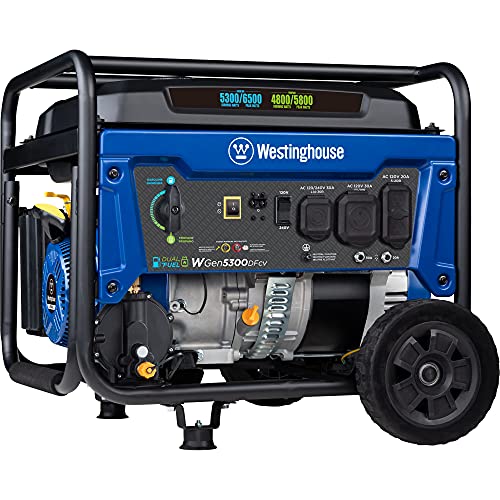
- 5,300 gas or 4,800 propane running watts
- Dual-fuel with RV and transfer-switch outlets
- Up to 14.5 hours of runtime
Best For: Residential backup and RV power with dual-fuel flexibility
Best High-Output Dual-Fuel Pick – Westinghouse WGen9500DF
For shoppers comparing portable backup generators, the Westinghouse WGen9500DF delivers substantial home-backup capacity with gasoline or propane flexibility. It produces up to 9,500 running watts on gasoline, includes remote electric start, and offers transfer-switch-ready connectivity.
Best For: Homeowners who need high output for multiple essential appliances and want dual-fuel flexibility.
Pros:
- Up to 9,500 running and 12,500 peak watts on gasoline
- Remote, electric, and recoil starting options
- Up to 12 hours of runtime on its 6.6-gallon gasoline tank
- Includes 120/240V outlets, a fuel gauge, hour meter, and rubber outlet covers
Cons:
- Large open-frame design may be less convenient to move or store
- Propane output is lower than gasoline output
- Transfer switch is not included
This is a capable choice when whole-home essentials require more power than a compact battery station can provide. Its dual-fuel operation and included starting accessories add practical flexibility, though its size and fuel-engine maintenance are worth planning for.
Best Compact Battery Backup – Jackery Explorer 1000 v2
The Jackery Explorer 1000 v2 is a compact battery-based option for shoppers seeking portable backup generators without a fuel-powered engine. Its supplied specifications identify a 1,070Wh capacity and 1,500W output, making it suited to smaller backup and portable-power needs.
Best For: Users who want a compact, rechargeable power source for lighter home-backup or portable applications.
Pros:
- Battery-powered design avoids gasoline or propane storage
- 1,070Wh capacity provides portable energy storage
- 1,500W output supports a range of smaller devices and appliances
Cons:
- Lower capacity and output than the fuel-powered generators in this roundup
- Supplied notes do not specify runtime, outlet configuration, or recharge options
The Explorer 1000 v2 is best evaluated as a compact battery power station rather than a whole-home generator. It can be a practical fit for portable essentials, but shoppers with high-wattage loads should compare appliance requirements carefully.
Best Tri-Fuel Home Backup – Westinghouse WGen11500TFc
Among portable backup generators, the Westinghouse WGen11500TFc stands out for combining high output with gasoline, propane, and natural-gas compatibility. It supplies up to 11,500 running watts, supports transfer-switch connections, and can run up to 19 hours at 25% load on gasoline.
Best For: Homeowners who want high-capacity backup power and the flexibility to choose among three fuels.
Pros:
- Up to 11,500 running and 14,500 peak watts on gasoline
- Operates on gasoline, propane, or natural gas
- Remote and push-button electric start
- Less than 5% THD, CO sensor, and automatic low-oil shutdown
Cons:
- Heavy 230-pound open-frame unit
- Transfer switch and interlock equipment are sold separately
- Higher capacity may be more than needed for basic emergency loads
This model is a strong fit for demanding residential backup plans, especially where natural-gas availability is important. Its tri-fuel versatility and long stated gasoline runtime add resilience, but installation accessories and the generator’s substantial weight should be considered.
Best Long-Life Battery Station – Anker SOLIX S2000
The Anker SOLIX S2000 offers a quieter, fuel-free alternative to conventional portable backup generators. Its 2,010Wh LiFePO4 battery, 1,500W continuous output, and 3,000W peak output support home-backup, emergency, and outdoor use, while its compact 35.7-pound design improves portability.
Best For: Shoppers seeking a compact battery station for essential appliances, emergency power, and outdoor use.
Pros:
- 2,010Wh LiFePO4 battery with a stated 15-year lifespan and 10,000 charge cycles
- 1,500W continuous and 3,000W peak output
- Supports up to 400W solar input and multiple charging methods
- 35.7-pound compact design with less than 10 ms switchover
Cons:
- No 12V DC port
- Lower sustained output than the large fuel-powered generators
- Actual appliance runtime varies with load and conditions
The S2000 is a practical choice when portability, low maintenance, and rechargeable operation matter more than maximum wattage. It can support essential appliances and emergency devices, but high-demand whole-home loads may require a fuel-powered generator.
Best Solar-Powered Pick – Jackery Solar Generator 1000 v2
The Jackery Solar Generator 1000 v2 is a versatile choice among portable backup generators for camping, road trips, and emergency power. Its 1,070Wh LiFePO4 battery, 1,500W output, and included 200W solar panel provide a practical balance of capacity, portability, and off-grid charging.
Best For: Campers, RV and road-trip users, and households wanting quiet emergency power for appliances and electronics.
Pros:
- 1,500W continuous output with a 3,000W surge rating
- Lightweight 23.8-pound design with a foldable handle
- LiFePO4 battery rated for more than 4,000 charge cycles
- Multiple AC, USB-C, USB-A, and DC outputs
Cons:
- Solar charging is limited to 200W with the included panel
- One-hour charging requires enabling emergency charging in the app
- Not designed for extended high-load operation without recharging
Choose this model if quiet, fuel-free operation and easy portability matter more than the extended runtime of a gas generator. App controls, solar input, and a long-life battery make it especially adaptable for off-grid use.
Best High-Output Home Backup – Westinghouse 14500W Dual Fuel Generator
The Westinghouse WGen11500DFc is a powerful option among portable backup generators for serious home backup needs. Its dual-fuel 550cc engine produces up to 11,500 running watts on gasoline, while remote electric start, a 50A outlet, and transfer-switch readiness support larger electrical loads.
Best For: Homeowners who need substantial backup capacity for outages and want gasoline or propane flexibility.
Pros:
- 11,500 running watts and 14,500 peak watts on gasoline
- Runs on either gasoline or propane
- Up to 19 hours of runtime at 25% load on a 9.5-gallon gas tank
- Remote electric start, CO sensor, and less than 5% THD
Cons:
- Heavy 230-pound open-frame design is difficult to move
- Transfer switch and interlock equipment are sold separately
- Fuel-powered operation requires ventilation and fuel storage
This generator is a strong fit when whole-home or high-demand backup takes priority over compact size. Its dual-fuel operation and transfer-switch compatibility add flexibility, but the weight and fuel requirements make it less suitable for casual camping.
Best Lightweight Essentials Backup – DaranEner 192Wh Power Station
The DaranEner NEOZ2 is a compact battery-based option for shoppers comparing portable backup generators for small electronics and essential devices. Weighing about 5.7 pounds, it delivers 300W of pure sine wave power and can recharge from an outlet, a vehicle, or a compatible solar panel.
Best For: Travelers, campers, and emergency kits needing lightweight power for phones, laptops, lights, fans, or CPAP machines under 300W.
Pros:
- Compact 5.7-pound design for easy transport
- 300W pure sine wave output with 600W surge capability
- LiFePO4 battery rated for 3,500-plus cycles
- Six-device charging and a built-in LED light with SOS mode
Cons:
- 192Wh capacity is limited for extended backup
- Cannot power high-wattage appliances such as hair dryers or rice cookers
- Solar panel and car-charging cable are not included
This is best viewed as a portable electronics backup rather than a substitute for a full-size home generator. Its low weight, multiple charging ports, and durable battery make it convenient for short outages and outdoor trips.
Most Versatile – Generac GP9500 Tri-Fuel Portable Generator
For shoppers comparing portable backup generators, the Generac GP9500 stands out for its tri-fuel flexibility and high output. It delivers 9,500 running watts and 12,500 starting watts on gasoline, with the option to use propane or natural gas for additional fueling flexibility.
Best For: Whole-home backup, high-surge appliances, job sites, and RV setups where multiple fuel options are valuable.
Pros:
- Runs on gasoline, liquid propane, or natural gas.
- High 12,500-watt starting capacity helps handle air conditioners, pumps, and power tools.
- Electric start, COsense shutdown, automatic voltage regulation, and transfer-switch compatibility add convenience and protection.
- Runs up to 9.5 hours at 50% load on gasoline, with a 7.5-gallon tank.
Cons:
- At 219 pounds, it is substantially heavier than the other generators in this selection.
- Its larger output and steel-frame design may be more than needed for basic camping or light-duty use.
The Generac GP9500 is a strong choice when backup capacity and fuel flexibility matter more than compact portability. Its electric start and safety features make it practical for residential emergency use, while its broad outlet selection supports demanding loads.
Best Lightweight Option – Oxseryn 4400W Inverter Generator
The Oxseryn 4400W is a compact gasoline option for shoppers seeking portable backup generators that are easier to move. It provides 3,400 running watts, 4,400 peak watts, and up to 14 hours of runtime at 25% load with ECO mode.
Best For: RV camping, lighter emergency backup needs, and users who prioritize a 56-pound design.
Pros:
- At 56 pounds, it is the easiest model in this group to relocate.
- ECO mode supports up to 14 hours of runtime at 25% load from a 2-gallon tank.
- Includes household AC outlets, a 12V DC port, and an RV port.
- Rated under 72 dBA from 23 feet away and includes low-oil shutdown and overload protection.
Cons:
- Gasoline is the only listed fuel option.
- Its 3,400 running watts are lower than the output of the other models here.
- The included manufacturer warranty is one year.
This Oxseryn model is a practical fit when portability, RV compatibility, and extended light-load runtime take priority over maximum power. It is less suited to simultaneously running several large household appliances.
Best Midrange Backup – Westinghouse WGen5300DFcv
The Westinghouse WGen5300DFcv balances household backup capability with a more manageable size than the largest portable backup generators. It supplies 5,300 running watts on gasoline or 4,800 on propane, includes 120/240V output, and can run for up to 14.5 hours.
Best For: Residential backup and RV use when dual-fuel operation, a 30A transfer-switch connection, and extended runtime are priorities.
Pros:
- Dual-fuel operation provides gasoline and propane flexibility.
- Includes an RV-ready TT-30R outlet and a transfer-switch-ready L14-30R outlet.
- Up to 14.5 hours of runtime from the 4.7-gallon tank.
- CO and automatic low-oil shutdown, rubber outlet covers, and a three-year limited warranty add practical value.
Cons:
- At 135.6 pounds, it is not as easy to carry as the 56-pound Oxseryn.
- It produces less output than the 9,500-watt Generac model.
- It uses a magneto ignition rather than electric start.
The Westinghouse is a well-rounded middle ground for home backup. Its dual-fuel capability, 30A connections, and long listed runtime make it more flexible than a basic gasoline-only generator without moving into the weight and output class of the Generac.
How We Picked These Portable Backup Generators
We selected models across the main categories buyers consider for emergency power: conventional generators for higher output, dual-fuel and tri-fuel units for added fuel flexibility, inverter generators for quieter operation, and battery power stations for indoor-friendly device backup. We prioritized useful capacity, starting method, outlet selection, transfer-switch readiness, portability, and features such as CO monitoring, eco modes, solar charging, and LiFePO4 battery chemistry.
Because power needs vary widely, no single model is best for every household. A large generator may run major appliances but require outdoor storage and careful fuel management, while a power station is easier to use but generally cannot support whole-home loads.
Quick Comparison
| Type | Best for | Main advantage | Main limitation |
|---|---|---|---|
| Large dual-fuel generator | Home backup and heavy loads | High output and fuel flexibility | Loud, heavy, and outdoor-only |
| Tri-fuel generator | Long-term outage planning | Can use gasoline, propane, or natural gas | Higher cost and more setup considerations |
| Inverter generator | RV use and sensitive electronics | Quieter, cleaner power delivery | Usually lower wattage |
| Portable power station | Phones, networking, lights, and small electronics | Quiet, no exhaust, and easy to use indoors | Limited runtime and appliance capacity |
Key Buying Factors for Portable Backup Generators
Wattage and Startup Demand
Add the running wattage of the devices you expect to use, then account for startup surges from refrigerators, pumps, furnaces, and compressors. Compare both running watts and peak or starting watts rather than relying on the largest number in a product name.
Fuel and Runtime
Dual-fuel models can use gasoline or propane, while tri-fuel units add natural gas. Fuel choice affects convenience, storage life, runtime, and output. Check the manufacturer’s runtime ratings at a stated load and keep fuel outdoors in approved containers.
Safety and Installation
Never operate a fuel generator indoors, in a garage, or near doors and windows. Use carbon-monoxide protection, follow grounding and ventilation instructions, and have a qualified electrician install a transfer switch or interlock. A power station avoids exhaust concerns but still needs suitable charging and storage practices.
Portability, Noise, and Outlets
Review weight, wheel and handle design, outlet types, RV compatibility, USB ports, and noise ratings. An electric start can be convenient, but verify battery maintenance requirements. For sensitive electronics, an inverter generator or battery power station may be preferable.
Who Should Buy Which Portable Backup Generators?
Choose a high-output dual-fuel or tri-fuel generator if you want to run several household circuits or major appliances during extended outages. A 6,500-watt-class model is a more manageable choice for essential loads, RV use, or buyers with lower power demands. An inverter generator suits campers and RV owners who value quieter operation and efficient performance.
Choose a power station if your priorities are silent operation, indoor use, and simple backup for internet equipment, phones, lights, laptops, or medical accessories. Models with around 1,000Wh or more offer substantially more flexibility than compact units, while solar-panel bundles can provide a recharge option during longer outages. Before buying, list the exact devices you need to run and compare their wattage, plug requirements, and expected runtime against the product’s usable capacity.
