
The best portable inverter generators balance clean, stable power with manageable noise, fuel flexibility, and enough capacity for the devices you actually need to run. This lineup includes compact gasoline models for travel and camping, plus larger dual-fuel and tri-fuel options for serious backup power.
Use the product sections below to compare output, starting methods, RV compatibility, safety features, and portability before choosing the generator that fits your loads and operating environment.
Best 10 Portable Inverter Generators Picks for 2026
Best Dual-Fuel Value
Champion 4000W RV-Ready Inverter

- Gasoline and propane operation
- Up to 25 hours on propane
- RV-ready outlet and CO Shield
Best For: RV owners seeking flexible fuel and clean power
Best Extended Runtime
Oxseryn 4400W Open-Frame Inverter

- 3,400 running watts
- Up to 14 hours in ECO mode
- Fuel gauge and RV port included
Best For: RV and home backup users needing long runtime
Best High-Output Dual-Fuel Pick

- 4,000 rated watts
- Electric start and dual-fuel engine
- Multiple RV, USB, and AC outlets
Best For: RVers and homeowners needing higher output
Best Quiet Compact Option
BILT HARD 4500W Dual-Fuel Inverter
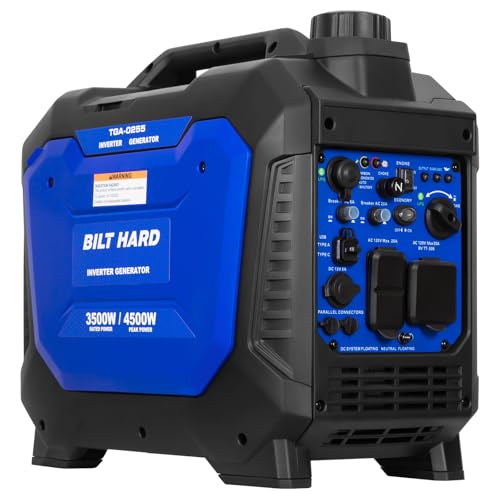
- 58 dBA at 23 feet
- Gasoline and propane operation
- RV outlet and CO sensor
Best For: Quiet camping and RV power
Best Lightweight Pick
WEN 2350W Super Quiet Inverter Generator
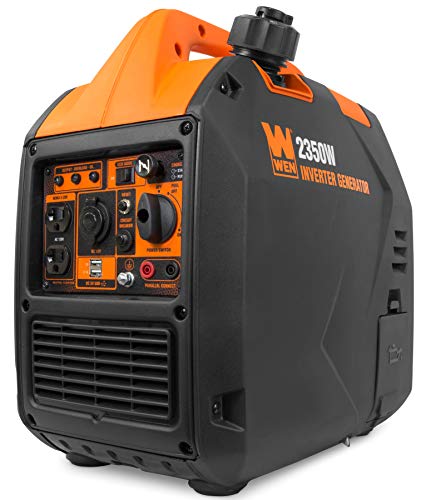
- 39-pound portable design
- 1,900 running watts of clean power
- Quiet operation with fuel shutoff
Best For: Camping and lightweight electronics backup
Best Whole-Home Backup
Westinghouse iGen12000TFc Tri-Fuel Generator

- Up to 12,000 peak watts
- Runs on three fuel types
- Remote start and transfer-switch-ready outlets
Best For: High-demand residential backup power
Best RV Dual-Fuel Option
WEN DF360iX 3600W Inverter Generator

- Gasoline and propane operation
- RV-ready TT-30R receptacle
- CO Watchdog and clean inverter power
Best For: RV trips and flexible camping power
Quiet RV Companion

- 5,000 peak and 3,900 rated watts
- Remote start and RV-ready TT-30R outlet
- Up to 18 hours of runtime at as low as 52 dBA
Best For: Quiet RV and essential-home power
Flexible Fuel Power
WEN DF680iX Dual-Fuel Inverter Generator

- Gasoline and propane operation
- Up to 6,800 surge and 5,100 rated watts
- 240V outlet, RV receptacle, and CO Watchdog
Best For: Dual-fuel camping, backup, and low-power EV charging
Whole-Home Fuel Flexibility
Westinghouse iGen8200TFc Tri-Fuel Generator

- Up to 8,200 peak and 6,600 running watts on gasoline
- Gasoline, propane, and natural gas operation
- 50A 120/240V outlet and less than 3% THD
Best For: High-output home backup with tri-fuel options
Best Dual-Fuel Value – Champion 4000W RV-Ready Inverter
The Champion 4000-watt dual-fuel model is a practical choice among portable inverter generators for RV use, camping, and basic home backup. It combines gasoline or propane operation with quiet running, clean power, and an RV-ready TT-30R outlet.
Best For: RV owners and campers who want flexible fuel options and dependable clean power.
Pros:
- Runs on gasoline or propane, with up to 10 hours on gasoline or 25 hours on propane.
- Provides 3,000 running watts on gasoline and 2,700 running watts on propane.
- Includes a 120V 25A TT-30R RV outlet and power under 3% THD.
- CO Shield, parallel capability, and a three-year limited warranty add useful safety and flexibility.
Cons:
- Parallel kit is sold separately.
- Uses recoil starting rather than electric start.
At 51.8 pounds, this Champion is relatively manageable for its output class. Its combination of dual-fuel runtime, RV compatibility, and clean electricity makes it a well-rounded portable inverter generator.
Best Extended Runtime – Oxseryn 4400W Open-Frame Inverter
The Oxseryn 4400-watt model offers useful capacity and long runtime for portable inverter generator shoppers who need power for RV camping or emergency home backup. Its ECO mode, fuel gauge, and 2-gallon tank support extended operation.
Best For: Buyers prioritizing long runtime and straightforward gasoline-powered backup.
Pros:
- Delivers 4,400 peak watts and 3,400 running watts.
- Runs up to 14 hours at 25% load with ECO mode.
- Includes two 120V AC ports, an RV port, and a 12V DC port.
- Fuel gauge, low-oil shutdown, and overload protection improve usability.
Cons:
- Gasoline-only operation does not provide dual-fuel flexibility.
- Rated noise is under 72 dBA, louder than the enclosed alternatives here.
- Warranty coverage is one year.
Weighing 56 pounds, the Oxseryn remains reasonably portable while providing more running wattage than the Champion. It is a practical option when runtime and output matter more than the quietest operation.
Best High-Output Dual-Fuel Pick – WEN DF480iX 4800W Inverter
The WEN DF480iX stands out among portable inverter generators for buyers who want higher output, dual-fuel capability, and electric starting. It produces clean power for sensitive electronics and includes a broad selection of household, RV, USB, and DC outlets.
Best For: RV users and homeowners who need 4,000 rated watts with electric start and dual-fuel operation.
Pros:
- Produces 4,800 surge watts and 4,000 rated watts on gasoline, with 4,000 rated watts on propane.
- Electric start, onboard wheels, and a telescoping handle simplify transport and startup.
- Includes four 120V receptacles, a TT-30R RV outlet, USB ports, and a 12V DC outlet.
- CO Watchdog, fuel shut-off, clean power, and a three-year warranty add practical value.
Cons:
- At 78.5 pounds, it is considerably heavier than the smaller models.
- Listed gasoline runtime is seven hours.
The DF480iX is the strongest fit when capacity and convenience outweigh portability. Its 224cc engine and electric start suit heavier RV or backup loads, while the inverter output helps protect electronics.
Best Quiet Compact Option – BILT HARD 4500W Dual-Fuel Inverter
The BILT HARD 4500-watt generator is a compelling option among portable inverter generators for campers and RV users who want quiet operation without giving up dual-fuel flexibility. Its enclosed design, ECO mode, clean inverter power, and compact handle support outdoor use.
Best For: Campers and RV users who prioritize quiet operation, portability, and clean power.
Pros:
- Provides 4,500 peak watts and 3,500 rated watts on gasoline.
- Runs on gasoline or propane and includes the LPG hose.
- Rated at 58 dBA from 23 feet, with ECO mode to reduce fuel use and noise.
- Includes an RV outlet, USB ports, CO sensor, and parallel capability.
Cons:
- Parallel kit is not included.
- Uses recoil start.
- Warranty details list one year.
At 57.7 pounds, the BILT HARD balances output with manageable portability. Its low stated noise level and less-than-3% THD make it especially appealing for campsites, RVs, and electronics-sensitive loads.
Best Lightweight Pick – WEN 2350W Super Quiet Inverter Generator
If portability is your priority, this WEN model is one of the more convenient portable inverter generators to carry and store. Its 39-pound body delivers 1,900 running watts, 2,350 surge watts, and clean power for sensitive electronics.
Best For: Campers and shoppers who want a lightweight generator for electronics, small appliances, and short-duration backup power.
Pros:
- Lightweight 39-pound design is easy to transport.
- Quiet operation is comparable to a normal conversation.
- Clean inverter power is suitable for phones, computers, televisions, and other sensitive electronics.
- Fuel shutoff helps use remaining carburetor fuel before shutdown.
Cons:
- Its 1,900 running watts are less than larger home-backup generators.
- Uses gasoline only.
With a 10-hour listed runtime, five outlet types, and a two-year warranty, the 56235i is a practical compact choice when easy handling matters more than maximum output.
Best Whole-Home Backup – Westinghouse iGen12000TFc Tri-Fuel Generator
For high-demand home backup, this Westinghouse is a powerful option among portable inverter generators. It supports gasoline, propane, and natural gas, while producing up to 12,000 peak watts and 9,000 running watts on gasoline.
Best For: Residential backup users who need substantial output, flexible fuel choices, remote starting, and transfer-switch-ready connections.
Pros:
- Tri-fuel capability supports gasoline, propane, and natural gas.
- Low THD output is designed to be safe for sensitive electronics.
- Runs up to 19 hours at 25% load on its 7.9-gallon gasoline tank.
- Includes a 50A outlet, remote start, CO sensor, and digital data display.
Cons:
- At 191 pounds, it is considerably heavier than compact portable models.
- Its large footprint may be less convenient for casual camping.
This is the strongest fit for serious backup power, combining substantial capacity with three fuel options and home-backup-ready outlets. Its weight and size are the tradeoffs for that capability.
Best RV Dual-Fuel Option – WEN DF360iX 3600W Inverter Generator
This WEN DF360iX combines dual-fuel flexibility with an RV-ready design, making it a versatile choice among portable inverter generators. It provides 2,900 running watts on gasoline or 2,600 on propane, with clean power for sensitive electronics.
Best For: RV owners and campers who want a relatively compact generator with gasoline and propane capability.
Pros:
- Runs on either gasoline or propane.
- Includes a TT-30R RV receptacle for RV use.
- Quiet operation is comparable to a normal conversation.
- CO Watchdog automatically shuts down the unit when dangerous carbon monoxide levels are detected.
Cons:
- Its listed runtime is five hours.
- Rated output is lower when operating on propane.
- At 49 pounds, it is heavier than the smaller WEN 2350-watt model.
The DF360iX is a well-rounded RV-focused option, especially if fuel flexibility and built-in CO protection are important. Its RV outlet and clean inverter power add useful convenience for camping trips.
Quiet RV Companion – Westinghouse iGen5000
The Westinghouse iGen5000 is a practical choice for shoppers comparing portable inverter generators for travel trailers, camping, or home essentials. It delivers 5,000 peak watts and 3,900 rated watts, with less than 3% THD, remote electric start, and an RV-ready outlet. Its enclosed design produces as little as 52 dBA and can run for up to 18 hours on a 3.4-gallon gas tank.
Best For: RV owners and homeowners who want quiet, gasoline-powered backup for essential appliances and electronics.
Pros:
- Remote, electric, and recoil starting options.
- RV-ready TT-30R outlet plus household and USB outlets.
- Up to 18-hour runtime with Economy Mode and a rotating digital display.
- Parallel capable and backed by a three-year limited warranty.
Cons:
- Gasoline-only operation limits fuel flexibility.
- At 104.7 pounds, it is substantial to move despite the wheel and handle kit.
Choose this model if low noise, long runtime, and straightforward RV compatibility matter more than dual- or tri-fuel capability. Its 3,900 running watts provide useful capacity for common travel and household loads.
Flexible Fuel Power – WEN DF680iX Dual-Fuel Inverter Generator
The WEN DF680iX stands out among portable inverter generators for its dual-fuel flexibility and 240V capability. Its 224cc engine produces 6,800 surge and 5,100 rated watts on gasoline, or 6,000 surge and 4,500 rated watts on propane. It also includes electric start, RV connectivity, CO shutdown protection, and a bonded-neutral configuration for low-power Level 2 electric-vehicle charging.
Best For: Campers and backup-power users who want gasoline and propane options, RV outlets, and EV charging support.
Pros:
- Runs on either gasoline or propane.
- Includes 120V/240V, RV, 12V DC, and USB receptacles.
- CO Watchdog automatically shuts down the unit when dangerous carbon monoxide levels are detected.
- Fuel shutoff helps use remaining carburetor fuel before shutdown and supports easier maintenance.
Cons:
- Listed runtime is six hours.
- Propane output is lower than gasoline output.
- Electric-vehicle charging is described as low-power Level 2 charging, not full-home EV charging.
This WEN is a strong fit when fuel availability and outlet variety are priorities. Its dual-fuel design adds flexibility, while the included safety and maintenance features make it more versatile for camping and emergency use.
Whole-Home Fuel Flexibility – Westinghouse iGen8200TFc Tri-Fuel Generator
The Westinghouse iGen8200TFc is a high-capacity option for shoppers seeking portable inverter generators with home-backup potential. It runs on gasoline, propane, or natural gas and provides up to 8,200 peak watts. A 50A 120/240V outlet makes it transfer-switch or interlock-kit ready, while inverter technology, less than 3% THD, and a CO sensor support safer, cleaner power for household electronics and appliances.
Best For: Homeowners who need high-output backup power with tri-fuel flexibility and a 50A connection.
Pros:
- Runs on gasoline, propane, or natural gas.
- 50A 120/240V outlet supports transfer-switch or interlock-kit installation.
- Produces less than 3% THD and includes a CO sensor.
- Up to 17-hour runtime at 25% load, with remote electric start and RV-ready output.
Cons:
- At 134.5 pounds, it is the heaviest model in this comparison.
- Only three total power outlets are listed.
- Natural-gas and propane output is lower than gasoline output.
This is the most capable choice here for planned home backup, especially where natural gas or propane access is valuable. Its larger size and weight are tradeoffs for higher output, 240V support, and three-fuel convenience.
How We Picked These Portable Inverter Generators
We selected models across several practical use cases rather than focusing on maximum wattage alone. The lineup includes lightweight units for camping and small electronics, midrange RV-ready generators for appliances and tools, and high-output models designed for home backup or transfer-switch installations.
We also considered fuel flexibility, inverter-style power delivery, starting options, portability features, noise-conscious design, CO monitoring, fuel shutoff systems, and parallel capability where listed. Specifications can vary by configuration, so confirm the manufacturer’s running watts, peak watts, outlets, dimensions, and operating weight before purchase.
Quick Comparison
| Best For | Look For | Featured Options |
|---|---|---|
| Camping and small electronics | Low weight, quiet operation, efficient eco mode | WEN 2350-watt model |
| RV use | RV-ready outlet, adequate running watts, manageable transport | Champion, WEN, BILT HARD, Westinghouse models |
| Flexible fuel access | Dual-fuel or tri-fuel capability | Champion, WEN, BILT HARD, Westinghouse models |
| Home backup | High output, remote start, transfer-switch readiness | Westinghouse 8200- and 12000-watt models |
Key Buying Factors for Portable Inverter Generators
Running and Starting Wattage
Running watts determine the continuous load a generator can support, while starting watts cover temporary surges from refrigerators, pumps, compressors, and power tools. Add the running wattage of essential devices, then account for startup demand. Avoid sizing a generator only by its advertised peak figure.
Fuel Type and Runtime
Gasoline is widely available and often delivers the rated output. Dual-fuel models can run on gasoline or propane, while tri-fuel units add natural gas for another backup option. Compare runtime at a stated load, not just tank size, and remember that propane output may differ from gasoline output.
Portability, Noise, and Safety
Wheels, folding handles, electric start, and reasonable operating weight matter when the generator must be moved frequently. For camping or close neighbors, pay attention to published noise ratings and eco modes. Operate every generator outdoors, far from doors and windows, and prioritize models with CO detection and automatic shutdown features.
Outlets and Installation
Check for the outlets you need, including an RV receptacle, USB ports, or higher-amperage connections. Transfer-switch-ready models can support a safer, more permanent home-backup setup, but installation should follow local electrical codes and be handled by a qualified professional.
Who Should Buy Which Portable Inverter Generators?
Choose a compact 2350-watt-class generator if your priorities are camping, tailgating, charging electronics, and powering a few small appliances. A 3600- to 5000-watt model is a better middle ground for RV air-conditioning support, refrigerators, tools, and broader emergency loads.
Buy a dual-fuel generator if propane storage and gasoline availability both matter. Choose a tri-fuel model when natural gas access and home integration are especially important. For larger homes or multiple high-draw appliances, the 6800-watt-and-up options provide more headroom, but they are heavier, louder, and more demanding to store and operate. Always match the final choice to your calculated load and never run a portable generator indoors, in a garage, or in an enclosed RV.
