
Power outages do not always justify the cost and complexity of a whole-home standby system. The best budget portable backup generators can keep essential appliances, electronics, tools, or communications running while remaining flexible enough for camping, RV trips, and emergency preparedness.
This roundup includes dual-fuel generators, conventional gas models, inverter generators, and battery power stations. The right choice depends on the wattage you need, how long you need power, fuel availability, noise tolerance, and whether indoor-safe battery operation or outdoor generator performance matters most.
Best 10 Budget Portable Backup Generators Picks for 2026
Best Dual-Fuel Value
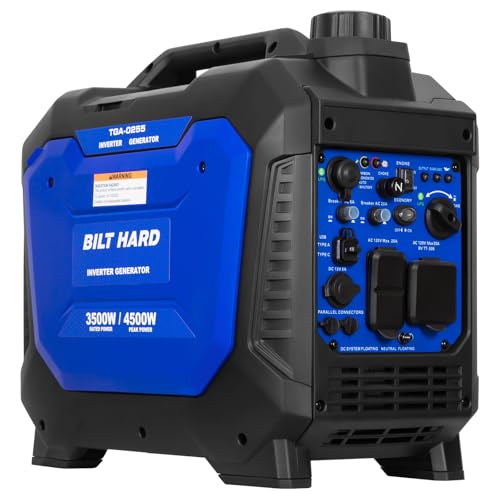
- Gasoline and propane operation
- Less than 3% THD inverter power
- RV-ready and parallel capable
Best For: Campers, RV owners, and flexible home backup
Best Large-Capacity Battery Backup

- 3584Wh battery capacity
- 3600W output with parallel expansion
- Wheeled design and four charging options
Best For: Quiet, longer-duration household backup
Best High-Output Inverter Value
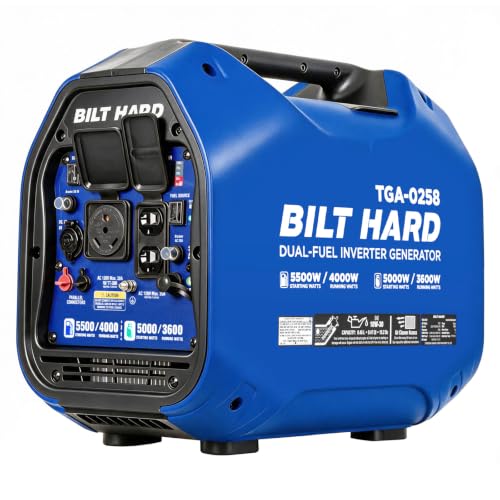
- Up to 4000 running watts on gasoline
- Dual-fuel gasoline/LPG operation
- Digital monitoring and CO shutoff
Best For: RV, outdoor work, and higher-output backup
Best Compact 3kWh Power Station

- 3072Wh capacity and 3600W output
- 20ms-or-less UPS switching
- Solar, AC, car, and generator charging
Best For: Quiet essential-home and RV backup
Best Compact Gas Option
Generac GP2500i Inverter Generator

- 2,200 running watts in a 46.6-pound design
- Clean inverter power under 3% THD
- Quiet operation with CO safety monitoring
Best For: Camping, tailgating, and short-duration essential-home backup
Best Long-Run Battery Option
Growatt HELIOS 3600 Power Station
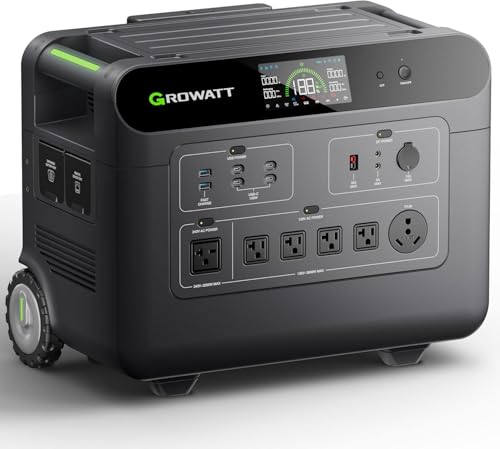
- 3,600Wh LFP battery and 3,600W output
- Supports 2,000W solar charging
- Expandable and equipped with EPS backup switching
Best For: Extended home outages, RVs, and off-grid power
High-Output Gas Model

- 8,000 running watts and 10,000 starting watts
- Listed 11-hour runtime with electric ignition
- Discontinued and weighs 211 pounds
Best For: Researching discontinued high-capacity residential generators
Best High-Capacity Pick
EBL Acc2400 Portable Power Station
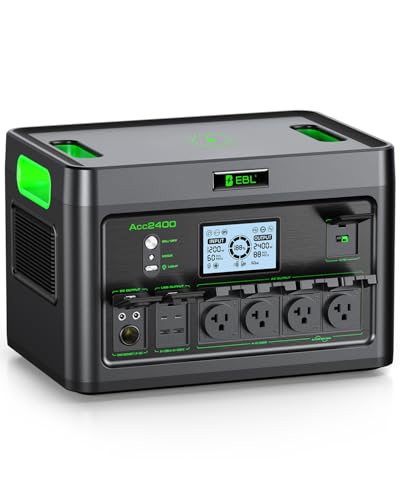
- 1,843.2Wh capacity with 2,400W output
- 12-device charging with varied ports
- 3,500+ cycle LiFePO4 battery
Best For: Home backup, camping groups, and mobile work
Best Gas-Powered Workhorse
DEWALT 10,000W Portable Generator

- 8,000 running watts and 10,000W output
- 420cc engine with electric start
- 7.5-gallon tank and smart monitoring
Best For: Home backup and demanding jobsites
Best Quiet Solar-Ready Pick
AFERIY P210 2400W Power Station

- 2,048Wh battery and 2,400W pure sine output
- Quiet operation below 30dB at full load
- 16 ports with optional solar charging
Best For: Quiet home backup, CPAP, and camping
Best Dual-Fuel Value – BILT HARD 4500W Generator
For shoppers comparing budget portable backup generators, the BILT HARD 4500W stands out with gasoline and propane flexibility, inverter-style power, and RV-ready outlets. Its 3500 rated watts on gas, 3200 rated watts on propane, and 58 dBA noise rating make it practical for camping, RV use, and limited home backup.
Best For: Campers, RV owners, and shoppers who want dual-fuel flexibility at a practical price.
Pros:
- Runs on gasoline or propane, with an LPG hose and regulator included.
- Produces less than 3% THD and includes USB, 120V, 30A RV, and 12V outputs.
- Features ECO mode, a CO sensor, and parallel capability.
Cons:
- Parallel kit is not included.
- Uses recoil start rather than an electric-start system.
- Its 57.7-pound weight may be substantial for one-person carrying.
This is a versatile budget option when fuel choice and RV compatibility matter more than ultra-light portability. The enclosed design and ECO mode add convenience for quieter outdoor use.
Best Large-Capacity Battery Backup – Jackery HomePower 3600 Plus
The Jackery HomePower 3600 Plus is a strong battery-powered alternative in the budget portable backup generators category for buyers who prefer quiet, fuel-free operation. It combines 3600W output with a 3584Wh capacity, fast hybrid charging, and a wheeled luggage-style design.
Best For: Households seeking quiet emergency power for appliances and longer-duration backup.
Pros:
- Provides 3600W output and can reach 7200W in parallel.
- Offers a 3584Wh capacity expandable up to 21kWh per unit.
- Supports AC, solar, hybrid AC+DC, and gas-generator charging.
Cons:
- At 77.2 pounds, it is heavier than smaller portable power stations.
- Only two outlets are listed in the supplied specifications.
- Home transfer-system use may require additional equipment or setup.
Choose this model if quiet operation, no fuel storage, and substantial battery capacity are priorities. Its wheels and telescoping handle help offset the weight when moving it around the home.
Best High-Output Inverter Value – BILT HARD 5500W Generator
Among budget portable backup generators, the BILT HARD 5500W model offers a useful step up in output while retaining dual-fuel operation. It supplies up to 4000 running watts on gasoline or 3600 on LPG, with an RV outlet, display, ECO mode, and parallel connectors.
Best For: RV use, outdoor work, and home backup buyers who need higher running output from a dual-fuel generator.
Pros:
- Delivers 5500 starting/4000 running watts on gasoline and 5000/3600 on LPG.
- Includes a digital display for voltage, frequency, amps, watts, runtime, and fuel level.
- Provides CO auto-shutoff, low-oil protection, breakers, and parallel capability.
Cons:
- At 61.7 pounds, it is not especially lightweight.
- Its 1.14-gallon tank is smaller than some conventional generators.
- Uses recoil start according to the supplied specifications.
This model is a good fit when running wattage and monitoring features outweigh the desire for the smallest generator. Dual-fuel support also gives you more flexibility when gasoline availability or storage is a concern.
Best Compact 3kWh Power Station – Jackery HomePower 3000
The Jackery HomePower 3000 is a compact battery option for shoppers evaluating budget portable backup generators without wanting engine noise or fuel. It offers 3072Wh of capacity, 3600W output, a 7200W surge rating, UPS functionality, and several ways to recharge.
Best For: Essential home backup, RV power, and users who want quiet battery operation with UPS protection.
Pros:
- Provides 3600W running output and 7200W surge capacity.
- Its UPS switches within 20ms for supported essential devices.
- Supports AC, solar, car, and gas-generator charging, plus USB and RV ports.
Cons:
- Solar panels are optional rather than included.
- Its 3072Wh capacity is lower than the HomePower 3600 Plus.
- At 59.5 pounds, it is portable but not lightweight for frequent lifting.
This is a practical choice for keeping refrigerators, routers, lights, fans, and similar essentials running during outages. Its smaller footprint and integrated battery design are especially appealing where quiet, indoor-friendly backup matters.
Best Compact Gas Option – Generac GP2500i Inverter Generator
For shoppers comparing budget portable backup generators, the Generac GP2500i is a compact gasoline inverter model suited to camping, tailgating, and short-duration home backup. It supplies 2,200 running watts and 2,500 starting watts in a 46.6-pound package.
Best For: Campers, tailgaters, and households needing portable power for essential devices during brief outages.
Pros:
- Produces clean power with less than 3% total harmonic distortion for sensitive electronics.
- Runs as quietly as 53 dB(A) at 25% load and offers an Economy Mode.
- Includes CO sensing with automatic shutdown, parallel capability, and a USDA-qualified spark arrestor.
Cons:
- Its 2,200 running watts are intended for essentials rather than heavy household loads.
- Parallel operation requires a separately sold kit.
- Gasoline operation requires fuel storage and routine engine maintenance.
The GP2500i stands out when portability, quiet operation, and clean electronics-friendly power matter more than maximum capacity. Its limited output makes it better for targeted backup than whole-home use.
Best Long-Run Battery Option – Growatt HELIOS 3600 Power Station
The Growatt HELIOS 3600 takes a different approach to budget portable backup generators by using a 3,600Wh LFP battery instead of gasoline. It delivers up to 3,600 watts, supports solar charging, and can provide extended emergency power for selected home devices.
Best For: Homeowners, RV users, and off-grid shoppers who want quiet, rechargeable backup power for outages and outdoor use.
Pros:
- Large 3,600Wh LFP battery can power daily devices for up to 15 hours and support refrigerators for one to three days, depending on load.
- Supports fast AC and 2,000W solar charging, with hybrid charging available.
- Offers under-15ms EPS switching, app controls, expandable capacity, and 240V operation when paired with a second unit.
Cons:
- Its battery-based design requires recharge planning during extended outages.
- Whole-home and 240V capability requires additional units and appropriate setup.
- Its large battery capacity may be more than needed for simple camping or occasional device charging.
With quiet operation, solar input, and a long-life LFP battery, the HELIOS 3600 is a strong fit for users prioritizing reusable emergency power. Its expansion features also give it more backup potential than a basic portable power station.
High-Output Gas Model – Generac GP8000E CO Generator
Although it may appear in searches for budget portable backup generators, the Generac GP8000E CO is discontinued, so availability should be verified before considering it. Its listed specifications include 8,000 running watts, 10,000 starting watts, and an 11-hour runtime.
Best For: Comparison shoppers researching a discontinued high-output gasoline generator, rather than buyers seeking a currently available model.
Pros:
- Provides substantial 8,000 running watts and 10,000 starting watts.
- Listed 11-hour runtime and electric ignition support extended residential use.
- Includes five outlets and a three-year limited warranty in the supplied specifications.
Cons:
- The product has been discontinued.
- At 211 pounds, it is considerably less portable than compact generator options.
- Its 7.9-gallon gasoline tank and large footprint require more storage and fuel planning.
The GP8000E offers the output associated with heavier residential backup generators, but discontinuation is the decisive drawback. Treat it as a reference point for capacity and runtime, not a dependable current-buy recommendation.
Best High-Capacity Pick – EBL Acc2400 Portable Power Station
For shoppers comparing budget portable backup generators, the EBL Acc2400 is a battery-powered option that combines substantial capacity with a 2,400-watt output. Its LiFePO4 battery, broad port selection, and rapid emergency power mode make it practical for home outages, camping, and mobile work.
Best For: Home backup, camping groups, jobsites, and users running multiple devices or higher-wattage appliances.
Pros:
- Provides 1,843.2Wh of capacity and up to 2,400W of output.
- Supports up to 12 devices through AC, USB, USB-C, DC, car, and wireless charging options.
- LiFePO4 battery is rated for more than 3,500 cycles and a 10+ year service life.
- Emergency backup mode switches in 0.1 seconds, while the display and LED light add convenience.
Cons:
- At about 54–55 pounds, it is portable but not especially lightweight.
- It is battery-powered, so extended use requires recharging rather than refueling.
The EBL Acc2400 is a strong fit when quiet, clean battery power and many charging outlets matter more than maximum portability. Its dual handles help with transport, but its substantial weight is worth considering.
Best Gas-Powered Workhorse – DEWALT 10,000W Portable Generator
Among budget portable backup generators, the DEWALT DXGNR8000 is designed for demanding residential and commercial use. Its 420cc gasoline engine, electric start, large steel fuel tank, and load-monitoring features make it a practical choice when long-running, high-output power is the priority.
Best For: Home backup and jobsites needing substantial gasoline-powered output and extended runtime.
Pros:
- Delivers 8,000 running watts and up to 10,000 watts of output from a 420cc engine.
- Push-button electric start includes a rechargeable battery for easier operation.
- Smart runtime and wattage meters help track fuel and manage electrical loads.
- CO Protect, low-oil shutdown, idle control, wheels, and a 7.5-gallon tank support practical operation.
Cons:
- At 216 pounds, it is considerably less portable than battery power stations.
- Gasoline operation requires fuel storage, ventilation, and routine engine maintenance.
- Its size and output may be excessive for light electronics or occasional small-device backup.
The DEWALT is the better match for buyers who need serious output and approximately nine hours of stated runtime, rather than a lightweight camping solution. Electric start and safety monitoring improve usability, but the heavy steel construction limits easy transport.
Best Quiet Solar-Ready Pick – AFERIY P210 2400W Power Station
The AFERIY P210 offers a quieter alternative for shoppers seeking budget portable backup generators without gasoline. It combines a 2,048Wh LiFePO4 battery, 2,400W pure sine wave inverter, optional solar charging, and a sub-10ms UPS response for home, camping, and sensitive electronics.
Best For: Quiet home backup, CPAP use, camping, sensitive electronics, and users who want optional solar charging.
Pros:
- Provides 2,400W of output with a 4,800W surge rating and pure sine wave power.
- LiFePO4 battery is rated for more than 3,500 cycles and 10 years of durability.
- Supports up to 16 devices and includes AC, USB, USB-C, DC, car, and XT60 outputs.
- Operates below 30dB at full load and includes app management plus sub-10ms UPS response.
Cons:
- At about 54 pounds, it is portable but heavy for frequent carrying.
- Its battery runtime depends on the connected load and requires recharging for extended outages.
The P210 stands out for quiet operation, sensitive-device compatibility, and flexible charging. It is especially appealing where nighttime noise matters, though its weight is similar to other high-capacity power stations.
How We Picked the Best Budget Portable Backup Generators
We compared these 10 models by usable power, battery or fuel flexibility, portability, safety features, startup convenience, and likely emergency use. The selection spans gasoline, dual-fuel, inverter, and solar-compatible power systems so shoppers can compare different approaches rather than focusing only on peak wattage.
For generators, continuous running watts matter more than the advertised starting-watt figure. For power stations, battery capacity in watt-hours helps estimate runtime, while inverter output determines which appliances can run at the same time. Features such as CO shutoff sensors, electric start, LiFePO4 batteries, RV-ready outlets, and parallel capability can add meaningful convenience and safety.
Quick Comparison
| Type | Best for | Main advantage | Main trade-off |
|---|---|---|---|
| Gasoline generator | Long outages and high loads | Fast refueling and strong output | Noise, exhaust, and fuel storage |
| Dual-fuel generator | Flexible emergency preparedness | Runs on gasoline or propane | Heavier and still requires outdoor use |
| Inverter generator | Electronics, camping, and quieter operation | Cleaner, steadier power | Often costs more per watt |
| Battery power station | Indoor backup and quiet power | No fumes, oil, or engine noise | Finite runtime and recharge time |
Key Buying Factors for Budget Portable Backup Generators
Calculate Running and Starting Watts
List the appliances you would use together and add their running wattage. Then account for startup surges from refrigerators, sump pumps, freezers, and power tools. Leave headroom instead of operating at the generator’s maximum continuously.
Choose the Right Fuel or Charging Method
Gasoline is widely available and typically supports long runtimes, while propane stores longer and burns cleaner but may provide less output. Battery stations avoid combustion entirely and can recharge from wall outlets, vehicles, or solar panels, but their runtime depends on battery capacity and load.
Prioritize Safety and Placement
Never operate a fuel-burning generator inside a home, garage, basement, or enclosed porch. Place it outdoors well away from doors, windows, and vents, use a carbon monoxide alarm, and follow the manufacturer’s grounding, extension-cord, and refueling instructions. A CO sensor and automatic shutoff are valuable safeguards, not substitutes for correct placement.
Check Outlets, Noise, and Portability
Confirm that the model has the outlets you need, including 30-amp RV connections or USB ports where relevant. Wheels and folding handles help with heavier units. For neighborhoods, campsites, and nighttime use, compare noise ratings and consider an inverter or battery model.
Who Should Buy Which Budget Portable Backup Generators?
Choose a dual-fuel model if you want practical outage flexibility and can safely store both gasoline and propane. A conventional high-output generator is better for demanding tools, pumps, or several large appliances. Select an inverter generator when cleaner power, lower noise, and portability are priorities.
A battery power station is the better fit for apartment dwellers, indoor electronics, medical-device backup, camping, or anyone who cannot safely operate an engine outdoors. Look for a LiFePO4 battery and expandable or solar charging if frequent use is expected. For occasional emergencies, size the system around essential loads first rather than paying for capacity you will rarely use.
