
The best budget solar generators make backup power more accessible without requiring a large, expensive home battery system. The right model can keep phones, lights, small appliances, and essential electronics running during camping trips or short outages.
These 10 options range from compact 155Wh units for basic charging to larger LiFePO4 power stations designed for longer runtimes and higher-wattage devices. Use the guide below to match capacity, output, portability, and solar charging performance to your needs.
Best 10 Budget Solar Generators Picks for 2026
Best Budget Home Backup
1000W 1024Wh LiFePO4 Power Station

- 1,000W output with 1,024Wh capacity
- Up to 300W solar input
- 3,000+ cycle LiFePO4 battery
Best For: Home outages, RV trips, and extended camping
Best Fast-Charging Pick
Jackery Solar Generator 1000 v2

- 1,500W output and 1,070Wh capacity
- Includes a 200W solar panel
- App-enabled one-hour emergency charging
Best For: Fast-charging backup, appliances, and road trips
Best Lightweight Option

- 292Wh capacity in a roughly 7.5-pound package
- 300W output with 600W surge
- Over 4,000 rated LiFePO4 cycles
Best For: Lightweight camping, travel, and personal electronics
Best Entry-Level Kit

- Includes a 30W solar panel and converter
- Lightweight 3.7-pound design
- Multiple USB, DC, AC, and car outputs
Best For: Small devices, lighting, roadside emergencies, and beginner use
Best High-Output Pick
BROWEY 1600W Solar Power Station
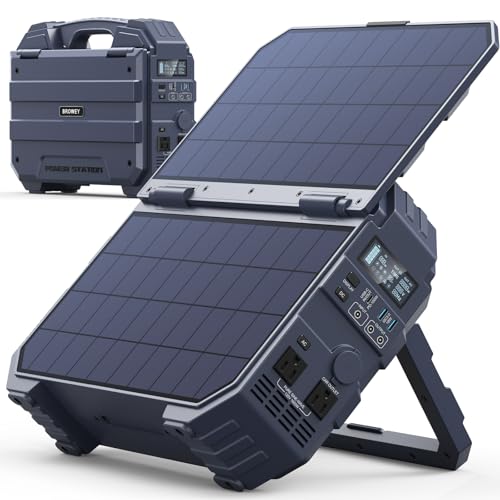
- 1,024Wh capacity and 1,600W pure sine wave output
- Built-in 40W solar panel with expandable charging
- LiFePO4 battery rated for 3,000+ cycles
Best For: Emergency backup, RV trips, and higher-draw devices
Best Indoor Backup Value

- 640Wh capacity with 600W continuous output
- 10ms UPS for outage-sensitive electronics
- Fast 1.5-hour AC charging and five-year warranty
Best For: Home backup for routers, CPAP machines, and small electronics
Best Lightweight Budget Pick
ALLWEI 300W Portable Power Station

- Compact 6.4-pound design with 256Wh capacity
- 300W pure sine wave output and six ports
- AC, car, solar, and dual charging support
Best For: Camping, road trips, and charging personal electronics
Best Compact Pick
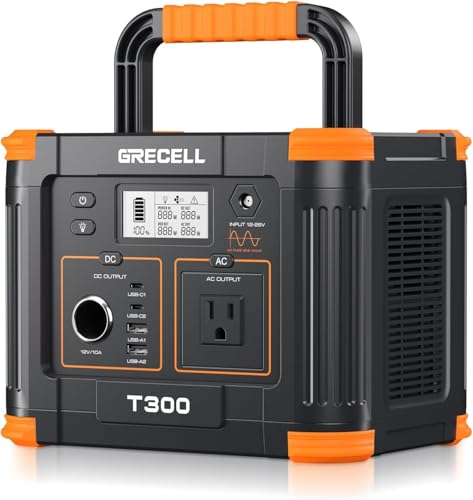
- 330W output with 230.88Wh capacity
- 60W USB-C PD and six-device charging
- AC, car, or solar recharging
Best For: Camping, travel, and small-device backup
Best Starter Bundle
ZeroKor 300W Solar Generator Kit

- 280Wh battery with included solar panel
- Two 300W pure sine wave AC outlets
- Flashlight and multiple USB/DC ports
Best For: Camping and light home or RV backup
Best Panel Value

- Includes a 60W monocrystalline panel
- 300W output with two AC outlets
- Solar, AC, and car charging options
Best For: Off-grid camping and small-device charging
Best Budget Home Backup – 1000W 1024Wh LiFePO4 Power Station
If you want budget solar generators for camping or emergency backup, this 1,024Wh power station offers a practical balance of capacity, output, and portability. Its 1,000W continuous output can run essentials such as lights, routers, and mini fridges, while solar input supports off-grid recharging.
Best For: Home outages, RV use, camping, and powering several everyday devices.
Pros:
- 1,000W output and 1,024Wh LiFePO4 capacity
- Supports up to 300W solar input and optional 200W panels
- Six-layer battery protection and 3,000+ cycle rating
- 60W USB-C PD and multiple AC and USB ports
Cons:
- At 27.7 pounds, it is heavier than compact camping models
- Solar panel is optional rather than included
This is a strong value-oriented choice when capacity matters more than minimum weight. It is especially useful for longer outages or trips where several devices need dependable power.
Best Fast-Charging Pick – Jackery Solar Generator 1000 v2
Among budget solar generators, the Jackery Solar Generator 1000 v2 stands out for its high output and unusually fast charging options. It combines a 1,070Wh battery with 1,500W AC output and includes a 200W solar panel for camping, road trips, and emergency use.
Best For: Buyers who want fast recharging, strong appliance support, and a complete solar setup.
Pros:
- 1,500W output with a 3,000W surge peak
- Includes a 200W solar panel
- Can reach full charge in one hour with emergency charging enabled in the app
- Lightweight 23.8-pound design with app control
Cons:
- One-hour charging requires activating the emergency mode in the Jackery app
- Solar charging reaches 80% in about six hours with the included panel
This is a polished option for users who value speed and convenience. Its app-based controls, long-life LFP battery, and included panel make it a versatile all-around package.
Best Lightweight Option – Jackery Explorer 300
For shoppers seeking budget solar generators that are easy to carry, the Jackery Explorer 300 keeps the setup compact at roughly 7.5 pounds. Its 292Wh capacity and 300W output suit phones, laptops, cameras, and other smaller electronics during camping or short power interruptions.
Best For: Hiking, camping, travel, camera gear, laptops, and CPAP use with appropriate power requirements.
Pros:
- Compact, lightweight design with 292Wh capacity
- 300W rated output and 600W peak surge
- Six device-output options, including USB-C and a car port
- LiFePO4 battery rated for over 4,000 cycles
Cons:
- Lower capacity and output than larger backup stations
- Solar panel is optional and not included
The Explorer 300 is a sensible pick when portability is the priority. It will not replace a large home-backup battery, but it offers convenient power for personal electronics and lighter outdoor loads.
Best Entry-Level Kit – MARBERO 155Wh Solar Generator
The MARBERO kit is an approachable choice among budget solar generators because it includes the power station, converter, and a 30W solar panel. With 155Wh of capacity, multiple USB and DC outputs, and a built-in flashlight, it is designed for small devices, lighting, and basic emergency needs.
Best For: First-time buyers, roadside emergencies, phone charging, camping lights, and short outages.
Pros:
- Complete kit includes a 30W solar panel and power converter
- Very portable 3.7-pound design
- Multiple AC, USB, DC, and car-port outputs
- Panel is IP65-rated and reaches a full charge in about six to seven hours
Cons:
- 155Wh capacity is limited for larger appliances
- 100W running output is intended for lighter loads
This kit makes sense for buyers who want an inexpensive, ready-to-use solar setup rather than high-capacity backup. Its low weight and integrated flashlight add useful versatility for emergencies and outdoor trips.
Best High-Output Pick – BROWEY 1600W Solar Power Station
For shoppers comparing budget solar generators, the BROWEY stands out when you need substantial output in a portable design. Its 1,024Wh LiFePO4 battery, built-in 40W solar panel, and 1,600W pure sine wave inverter make it suitable for emergency backup, camping, and RV use.
Best For: Running higher-draw essentials such as refrigerators, CPAP machines, and tools during outages or off-grid trips.
Pros:
- Provides 1,600W continuous output with a 3,200W peak.
- Built-in solar panel can collect energy while devices are charging.
- LiFePO4 battery is rated for 3,000+ cycles to 80% capacity.
- Includes multiple charging methods, nine ports, and a three-year warranty.
Cons:
- At 12 kg, it is heavier than compact power stations.
- The built-in solar panel is rated at only 40W, so faster solar replenishment may require additional panels.
The BROWEY is a strong value for buyers who prioritize capacity and appliance compatibility over minimum weight. Its built-in panel adds convenience, while the expandable solar input and long-life battery improve its usefulness as a backup system.
Best Indoor Backup Value – LIBRIDS 640Wh Power Station
The LIBRIDS is a practical option among budget solar generators for home outage protection and lighter outdoor use. It combines a 640Wh battery with 600W output, a 10ms UPS, four AC outlets, and fast 1.5-hour AC recharging.
Best For: Keeping a router, CPAP machine, laptop, or other essential electronics running during short power interruptions.
Pros:
- 10ms UPS switching helps maintain power to connected essentials.
- Four AC outlets and eight total ports support multiple devices.
- LiFePO4 battery is rated for 4,000+ cycles.
- Metal enclosure, pure sine wave output, and a five-year warranty add practical value.
Cons:
- Its 600W running output is less suited to high-wattage appliances.
- The unit is labeled for indoor use only and must be protected from rain and moisture.
Choose the LIBRIDS if dependable indoor backup matters more than maximum output or rugged outdoor flexibility. The UPS feature and long warranty make it particularly appealing for essential electronics, provided it is used in dry conditions.
Best Lightweight Budget Pick – ALLWEI 300W Portable Power Station
For shoppers seeking compact budget solar generators, the ALLWEI delivers basic backup power without much bulk. Its 256Wh LiFePO4 battery, 300W pure sine wave output, and 6.4-pound weight make it convenient for camping, road trips, and small electronics.
Best For: Charging phones, laptops, cameras, drones, and other low-to-moderate power devices while traveling or camping.
Pros:
- Lightweight 6.4-pound design fits easily in a car or backpack.
- Six output ports can charge multiple devices simultaneously.
- Supports AC, car, solar, and AC-plus-solar recharging.
- LiFePO4 cells, a five-year warranty, and an SOS light support emergency use.
Cons:
- Its 300W continuous output cannot handle larger appliances.
- The solar panel is sold separately.
- Capacity is more limited than larger stations, at 256Wh.
The ALLWEI is a sensible entry-level choice when portability and price matter most. It is well suited to personal electronics and short trips, but buyers needing refrigerator or tool support should move up to a higher-capacity model.
Best Compact Pick – GRECELL 330W Solar Generator
For shoppers comparing budget solar generators, the GRECELL EB300 is a compact option with a 230.88Wh battery, 330W pure sine wave output, and a 600W surge rating. Its light 7.3-pound design suits camping, car trips, and basic backup needs.
Best For: Camping, travel, and charging phones, tablets, laptops, lights, fans, cameras, and other devices rated below 330W.
Pros:
- 330W pure sine wave output with 600W surge capacity
- USB-C PD 60W, USB-A QC 18W, and six-device charging
- AC, car, or solar recharging with built-in MPPT
- Built-in protection features and a two-year warranty
Cons:
- 230.88Wh capacity is better suited to smaller electronics than extended high-power use
- Devices rated above 330W are not supported
The GRECELL stands out when portability and modern charging ports matter more than maximum battery capacity. It is a practical budget choice for short outings and light emergency charging.
Best Starter Bundle – ZeroKor 300W Solar Generator Kit
This ZeroKor kit is a budget solar generator bundle that pairs a 300W power station with a foldable solar panel and a 280Wh lithium-ion battery. It provides a straightforward setup for camping, RV use, indoor backup, and charging everyday electronics.
Best For: Campers and households wanting a bundled power station and solar panel for phones, tablets, laptops, headphones, cameras, and similar smaller devices.
Pros:
- Includes a 300W power station and foldable solar panel
- Two pure sine wave AC outlets plus DC and USB charging ports
- SOS and reading-mode flashlight for outdoor use
- Built-in short-circuit, over-current, over-voltage, and overload protection
Cons:
- Appliances above 300W may damage the generator
- Not recommended for devices with heating elements or built-in air compressors
With its included panel and multiple outputs, this ZeroKor package reduces the need to buy accessories separately. Its 280Wh capacity is suitable for light-duty charging rather than demanding appliances.
Best Panel Value – ZeroKor 300W with 60W Panel
Among budget solar generators, this ZeroKor model is a useful choice for shoppers who want a larger 60W solar panel included. The 300W power station supports common small electronics, while its built-in MPPT controller accepts solar, AC, or car charging.
Best For: Off-grid camping and outdoor charging of smartphones, tablets, laptops, headphones, cameras, and other devices under 300W.
Pros:
- Includes a 60W monocrystalline solar panel rated at up to 20.5% conversion efficiency
- Two 300W AC outlets, DC output, and multiple USB ports
- Solar, AC, and 12V car recharging options
- Built-in MPPT, battery protection, and temperature-controlled cooling fan
Cons:
- Devices over 300W are not supported
- The solar panel junction box should be kept dry because it is not waterproof
- The supplied notes do not specify the power station’s battery capacity
The included 60W panel makes this package appealing for users prioritizing solar input and portability. It is best matched with small electronics and outdoor use, not high-wattage appliances.
How We Picked the Best Budget Solar Generators
We focused on value, usable capacity, inverter output, battery chemistry, charging flexibility, and portability. The lineup includes compact models for phones and lights, mid-size stations for laptops and small appliances, and higher-capacity units for emergency backup or extended outdoor use. We also considered whether a solar panel is included, since a complete kit can offer better convenience and overall value than a power station sold alone.
Ratings such as watt-hours (Wh) describe stored energy, while watts (W) describe how much power a station can deliver at once. A strong value depends on both figures—not just the largest number on the product listing.
Quick Comparison
| Best For | Typical Capacity | What to Look For |
|---|---|---|
| Phones, lights, and small electronics | 150–300Wh | Low weight, USB-C, included panel |
| Camping and laptop use | 300–700Wh | 300W or higher output, multiple ports |
| Emergency backup | 700–1,100Wh | LiFePO4 battery, fast charging, pure sine wave AC |
| Higher-demand appliances | 1,000Wh or more | High continuous wattage and surge capacity |
Key Buying Factors for Budget Solar Generators
Battery Capacity and Chemistry
Choose capacity based on runtime. A 200Wh station may recharge several phones and run lights, but it will not power a refrigerator or heater for long. LiFePO4 batteries generally provide longer cycle life and improved durability than older lithium-ion designs, although they can cost more and weigh more.
Output and Surge Ratings
Check continuous AC output against the device’s rated wattage. Motors in refrigerators, pumps, and power tools may need extra startup power, so surge capacity matters. Avoid assuming that a high peak rating means the station can sustain that load.
Solar Charging and Included Accessories
Solar input determines how quickly the battery can be replenished away from an outlet. Confirm the maximum solar wattage, panel compatibility, connector type, and whether the panel is included. A bundled panel is convenient, but its charging speed may be limited in cloudy or shaded conditions.
Ports, Safety, and Portability
Count the AC outlets, USB ports, and DC outputs you actually need. A clear display, built-in lighting, temperature protection, overload protection, and a sturdy handle can make a noticeable difference during real use.
Who Should Buy Which Budget Solar Generators?
Choose a compact 155Wh–300Wh model for emergency phone charging, lighting, travel, and lightweight camping. A 300Wh–700Wh station is a better all-around choice for laptops, cameras, CPAP machines with suitable runtime calculations, and small outdoor appliances. For home backup or longer off-grid stays, look toward 1,000Wh-class models with LiFePO4 batteries and stronger AC output.
Before buying, list the devices you need to run, add their wattages, and estimate how many hours of operation you need. That simple calculation will help you choose among these Budget Solar Generators with fewer compromises.
