
The best lightweight solar generators make portable power easier to carry without giving up the outlets, battery capacity, or solar charging flexibility you need. This roundup compares compact options ranging from small emergency chargers to higher-capacity power stations for camping, travel, and home backup.
Capacity and portability vary widely across these models, so the right choice depends on what you plan to run, how long you need it powered, and whether you will recharge from solar panels, a wall outlet, or a vehicle.
Best 10 Lightweight Solar Generators Picks for 2026
Best Lightweight Pick

- 9.92-pound compact design
- 600W output and 100W USB-C
- LiFePO4 battery rated for 3,000 cycles
Best For: Camping, travel, and laptop charging
Best All-in-One Kit
Jackery Solar Generator 1000 v2

- 1,070Wh capacity with 1,500W output
- Includes a 200W solar panel
- App-controlled fast and quiet charging
Best For: Camping and emergency backup
Best High-Capacity Option
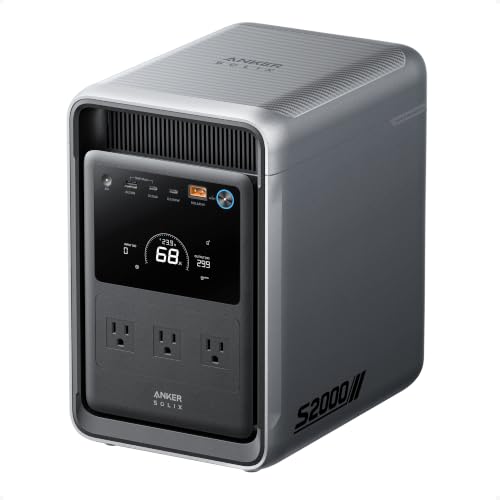
- 2,010Wh capacity for extended runtime
- 1,500W output with 3,000W peak
- Supports up to 400W solar input
Best For: Home backup and refrigerator power
Best Ultralight Kit

- 292Wh capacity and 300W output
- Includes a 40W solar panel
- Multiple ports including 100W USB-C
Best For: Hiking, camping, and camera gear
Best High-Output Pick

- 2,000W output and 1,024Wh LiFePO4 capacity
- 49-minute AC recharge with HyperFlash
- 600W solar input and 10 ms UPS backup
Best For: Emergency backup, RV use, and higher-wattage devices
Best Lightweight Starter Kit

- Only 3.7 pounds with a 30W solar panel included
- 155Wh capacity and 100W output for small devices
- Built-in flashlight with steady, SOS, and strobe modes
Best For: Camping, travel, phones, lights, and emergency essentials
Best Midrange Capacity Value

- 1,000W output with 1,024Wh LiFePO4 capacity
- Supports up to 300W solar input
- 27.7-pound design with 3,000-plus cycle rating
Best For: Camping, RV travel, and basic home backup
Best Ultralight Pick
MARBERO 88Wh Solar Generator Kit

- 2.3-pound portable power station
- 21W foldable solar panel included
- AC, DC, and USB charging
Best For: Lightweight camping and emergency charging for small devices
Best Versatile Mid-Size Kit

- 300W power station with 60W panel
- Multiple AC, DC, and USB outputs
- Solar, AC, and car charging options
Best For: Group camping and charging multiple small electronics
Best Capacity Upgrade
MARBERO 237Wh 300W Solar Generator

- 237Wh battery with 300W pure sine wave output
- 60W foldable solar panel included
- AC, USB, USB-C, and DC ports
Best For: Overnight camping and longer off-grid charging sessions
Best Lightweight Pick – VTOMAN Jump 600X
For shoppers comparing lightweight solar generators, the VTOMAN Jump 600X stands out for its 9.92-pound design, compact footprint, and useful 600W output. It is easy to carry between home, a vehicle, and a campsite, while its 100W USB-C port supports compatible laptops.
Best For: Camping, road trips, remote work, and portable emergency power.
Pros:
- Weighs just 9.92 pounds and is about 27% smaller than the previous model.
- Supports fast AC and DC charging, reaching 80% in about 50 minutes.
- LiFePO4 battery is rated for 3,000 cycles while retaining 80% capacity.
- Provides 600W continuous output with 1,200W peak power.
Cons:
- Solar panel is sold separately.
- Its 600W output is less suited to high-demand appliances than larger power stations.
The Jump 600X is a practical choice when portability matters more than maximum capacity. Its compact build, laptop-friendly USB-C charging, and flexible recharge options make it one of the more convenient lightweight solar generators for everyday mobile power.
Best All-in-One Kit – Jackery Solar Generator 1000 v2
The Jackery Solar Generator 1000 v2 combines a 1,070Wh power station with a 200W solar panel, making it a convenient option among lightweight solar generators for camping and emergency use. At 23.8 pounds, it offers substantially more capacity and output than compact travel models while remaining manageable to carry.
Best For: Camping, road trips, emergency backup, and powering several household devices.
Pros:
- Delivers 1,500W continuous output and up to 3,000W of surge power.
- Includes a 200W solar panel and reaches 80% charge in about six hours with it.
- LFP battery is designed for over 4,000 cycles and more than 10 years of use.
- App supports emergency one-hour charging, quiet overnight charging, and energy-efficiency modes.
Cons:
- Heavier than the smallest portable power stations at 23.8 pounds.
- One-hour full charging requires enabling emergency charging in the app.
With its included solar panel, strong AC output, and app-based controls, the Explorer 1000 v2 is a well-rounded pick for buyers who want portable power without assembling a separate solar setup.
Best High-Capacity Option – Anker SOLIX S2000
The Anker SOLIX S2000 offers 2,010Wh of capacity and 1,500W continuous output in a package described as 25% lighter than the industry average. It is not a lightweight solar generator in the same class as compact hiking models, but its 35.7-pound weight is notable for a system designed for extended home backup.
Best For: Home backup, refrigerator coverage, outages, and longer off-grid use.
Pros:
- 2,010Wh capacity can power a refrigerator for a stated 35 hours, depending on conditions.
- 1,500W continuous output and 3,000W peak output handle many essential appliances.
- Supports up to 400W solar input and multiple charging sources.
- LFP battery is rated for up to 10,000 charge cycles and a 15-year lifespan.
Cons:
- At 35.7 pounds, it is heavier than the other products in this roundup.
- It does not include a 12V DC port.
The S2000 prioritizes capacity, efficiency, and long service life over minimal weight. Choose it when extended backup runtime matters more than carrying convenience.
Best Ultralight Kit – Jackery Solar Generator 300
For truly portable lightweight solar generators, the Jackery Solar Generator 300 pairs a 292Wh power station with a 40W solar panel. Its listed product bullet describes a 7.5-pound unit with an integrated handle, making it a convenient option for camping, hiking, cameras, drones, and laptops.
Best For: Hiking, camping, photography gear, and lightweight travel power.
Pros:
- Compact Explorer 300 design provides 300W rated output with 600W peak power.
- Includes a 40W solar panel for off-grid charging.
- Offers two AC outlets, 100W USB-C, two USB-A ports, and a 120W car port.
- LiFePO4 battery is rated for more than 4,000 cycles before reaching 70% capacity.
Cons:
- The 292Wh capacity is limited for large appliances or extended backup.
- The included 40W panel reaches 80% in approximately 7.5 hours under stated conditions.
The Explorer 300 is best when low carry weight and device charging matter more than running high-wattage appliances. Its included panel and broad port selection make it a capable small-scale travel kit.
Best High-Output Pick – Anker SOLIX C1000 Gen 2
The Anker SOLIX C1000 Gen 2 is a strong choice among lightweight solar generators when you need substantial output without moving up to a much larger unit. Its 1,024Wh LiFePO4 battery, 2,000W output, fast AC charging, and 600W solar input suit outages, camping, RV use, and remote work.
Best For: Emergency backup, RV and van life, remote work, and users who need to run higher-wattage equipment.
Pros:
- 2,000W continuous output with 3,000W peak capacity across up to 10 ports.
- HyperFlash technology can fully recharge the unit in 49 minutes at 1,600W.
- Supports 600W solar input and can recharge fully in about 1.8 hours under suitable conditions.
- 10 ms UPS switching helps keep laptops and CPAP machines powered.
Cons:
- At 11.3 kg, it is heavier than compact, low-capacity options.
- Its higher output and capacity may be more than casual phone-charging needs require.
Choose this model if portability still matters but you also want serious backup capability. The long-cycle LiFePO4 battery, five-year warranty, and app-based controls add useful value for frequent or extended use.
Best Lightweight Starter Kit – MARBERO 155Wh Solar Generator
The MARBERO 155Wh kit is one of the more approachable lightweight solar generators for basic camping, travel, and emergency use. It includes a 30W foldable solar panel, power converter, and compact 3.7-pound power station, so you can begin charging without assembling a separate system.
Best For: Phones, lights, small electronics, roadside emergencies, and beginner-friendly solar charging.
Pros:
- Complete kit includes the 155Wh power station, 30W solar panel, converter, and charging accessories.
- Lightweight 3.7-pound design is easy to carry while camping or traveling.
- Offers AC, USB-A, USB-C, DC, and car-port connections for several device types.
- Built-in flashlight includes steady, SOS, and strobe modes.
Cons:
- 155Wh capacity and 100W output are intended for smaller electronics rather than demanding appliances.
- Solar charging takes about 6–7 hours in suitable sunlight.
This is a practical entry point if low weight and included solar hardware matter more than long runtimes or high output. Its flashlight and broad selection of ports make it particularly useful as an emergency and camping companion.
Best Midrange Capacity Value – 1000W Portable Power Station
This 1,024Wh power station balances useful home-backup capacity with a portable design, making it a practical option among lightweight solar generators for camping and outages. It delivers 1,000W continuously, supports up to 300W of solar input, and uses a LiFePO4 battery rated for more than 3,000 cycles.
Best For: Camping, RV and van travel, routers, lights, mini fridges, and basic residential backup.
Pros:
- 1,000W output and 1,024Wh capacity can support lights, routers, and mini fridges during outages.
- Supports up to 300W solar input and optional 200W panels can recharge it in about 6–8 hours.
- Automotive-grade LiFePO4 battery includes six-layer protection and retains 80% capacity after 3,000-plus cycles.
- 60W USB-C PD, two AC outlets, and USB-A ports can charge five devices at once.
Cons:
- At 27.7 pounds, it is portable but substantially heavier than compact starter models.
- The supplied package does not list a solar panel as included.
- Its 1,000W output is below the capability of larger high-output power stations.
This model makes sense for shoppers who want meaningful battery capacity without choosing a top-tier 2,000W unit. Confirm your solar-panel needs before buying, since the panel is optional rather than included in the listed components.
Best Ultralight Pick – MARBERO 88Wh Solar Generator Kit
For shoppers seeking lightweight solar generators for day trips, tent camping, or emergency charging, this MARBERO kit keeps the setup compact. The 88Wh power station weighs just 2.3 pounds and includes a 21W foldable solar panel, AC outlet, DC, and USB ports.
Best For: Lightweight camping, road trips, overnight outdoor stays, and basic home backup for phones, lights, laptops, or mini-fridges.
Pros:
- Very portable 2.3-pound design.
- Includes a 21W foldable solar panel.
- Offers AC, DC, and USB charging options with protection features.
- Includes a 12-month warranty and 24/7 customer service.
Cons:
- The 88Wh capacity is more suited to smaller devices and short-duration backup than high-demand appliances.
- The 21W panel will generally recharge more slowly than larger included panels.
This is the most travel-friendly choice in the group when low weight matters most. Choose it for personal electronics and compact camping needs rather than extended, high-output power use.
Best Versatile Mid-Size Kit – ZeroKor 300W Solar Generator
This ZeroKor model is a practical option among lightweight solar generators when you want more output and charging flexibility without moving to a larger system. Its 300W power station comes with a 60W monocrystalline solar panel, multiple ports, and an SOS-capable flashlight.
Best For: Camping groups and outdoor users charging phones, tablets, laptops, headphones, cameras, and other small electronics.
Pros:
- Includes a 60W solar panel with stated 20.5% conversion efficiency.
- Provides two AC outlets, DC output, USB-A ports, and a quick-charge USB port.
- Can recharge from solar, AC power, or a 12V car outlet.
- Built-in battery management and cooling protections support safer operation.
Cons:
- Devices over 300W may damage or disable the unit.
- The solar panel junction box is not waterproof and must be kept dry.
- Heating appliances and devices with built-in air compressors are specifically discouraged.
The ZeroKor balances useful output with a broad selection of charging methods. It is a strong camping companion for electronics, but the 300W limit means it should not be treated as a replacement for a high-power generator.
Best Capacity Upgrade – MARBERO 237Wh 300W Solar Generator
For shoppers comparing lightweight solar generators with more stored energy, this MARBERO M823 offers 237Wh capacity, a 300W pure sine wave inverter, and a 60W foldable solar panel. Its output mix is designed for phones, tablets, laptops, and other modest outdoor or emergency loads.
Best For: Overnight camping, hiking, fishing, extended off-grid stays, and emergency charging where higher capacity and pure sine wave AC output are useful.
Pros:
- 237Wh battery provides more capacity than the smaller MARBERO option.
- 300W rated pure sine wave AC output with 375W peak capability.
- Includes a 60W foldable panel with stated 21.5–23.5% conversion efficiency.
- Offers AC, USB-A, USB-C, and DC outputs plus a three-mode LED flashlight.
Cons:
- Devices exceeding 300W may damage the generator, especially heating appliances.
- The supplied 60W panel still requires direct sunlight for solar charging.
- Its stated runtime is listed as 1 hour, so actual use varies considerably by device load.
This model is the better fit when capacity and output versatility take priority over the absolute smallest setup. It remains oriented toward small electronics and camping equipment rather than high-wattage household appliances.
How We Picked These Lightweight Solar Generators
We focused on portable power stations that combine a rechargeable battery with solar-charging compatibility and practical AC, USB, or DC outputs. The selection covers several size classes, including compact units under 300Wh and larger models around 1,000Wh or more. We also considered rated output, battery chemistry where specified, included panels, portability, charging flexibility, and the kinds of devices each station can realistically support.
Product specifications can vary by configuration, particularly when a solar panel is included as part of a bundle. Check the exact listing for panel wattage, port layout, charging times, warranty coverage, and regional electrical specifications before buying.
Quick Comparison
| Size class | Typical capacity | Best for | Main trade-off |
|---|---|---|---|
| Compact | About 88–155Wh | Phones, lights, small electronics, emergency use | Limited runtime and lower AC output |
| Mid-size | About 237–600Wh | Camping, laptops, cameras, small appliances | May not run high-draw appliances for long |
| Large | About 1,000–2,010Wh | Extended camping and home backup | Heavier, bulkier, and usually more expensive |
Key Buying Factors for Lightweight Solar Generators
Battery Capacity and Usable Runtime
Watt-hours indicate how much energy a battery stores. A 100Wh-class station is suitable for phones, lights, and short laptop sessions, while a 1,000Wh model can support more devices for longer periods. Actual runtime is lower than the headline capacity because of conversion losses, standby consumption, and the power demands of connected devices.
Output and Port Selection
Check both continuous wattage and surge wattage. Continuous output determines what the station can run normally; surge capacity helps devices with brief startup demands. Pure sine wave AC output is preferable for sensitive electronics. Count the USB-A, USB-C, AC, and 12V ports you expect to use at the same time.
Weight, Battery Type, and Durability
Portability is a central advantage of Lightweight Solar Generators, but lighter models generally offer less stored energy. LiFePO4 batteries typically provide a long cycle life and strong thermal stability, although battery chemistry, enclosure design, and operating temperature still affect longevity. Look for a handle, clear display, cooling system, and suitable protection features.
Solar Charging and Included Accessories
A bundled panel simplifies setup, but panel wattage affects how quickly the battery can recharge. Real-world solar input depends on sunlight, angle, temperature, and shading. Confirm the generator’s maximum solar input and connector compatibility before adding a larger panel.
Who Should Buy Which Lightweight Solar Generators?
Choose a Compact Model for Essentials
Small 88Wh to 155Wh units are best for emergency lighting, phones, tablets, cameras, and short trips where minimal weight matters most.
Choose a Mid-Size Station for General Camping
Models in the roughly 237Wh to 600Wh range offer a useful balance for laptops, lights, small fans, cameras, and weekend camping. They are often the most practical choice for everyday portability.
Choose a Large Station for Longer Backup Needs
Units around 1,000Wh or more make more sense for extended off-grid use, multiple people, medical-device planning, or keeping several household electronics running during an outage. Expect greater weight and a higher purchase price.
