
The best solar generators make dependable off-grid power easier to manage, whether you need a quiet camping companion, emergency backup, or a practical alternative to a gas generator.
We compared 10 current models across battery capacity, inverter output, solar input, portability, charging options, and everyday usability to help you choose the right fit.
Best 10 Solar Generators Picks for 2026
Best High-Output Solar Generator Kit

- 2,073.6Wh capacity with 2,600W continuous output
- Includes two 200W solar panels
- 6,000+ battery cycles and fast charging
Best For: High-demand appliances, outages, RVs, and off-grid use
Best Compact 2kWh Solar Generator
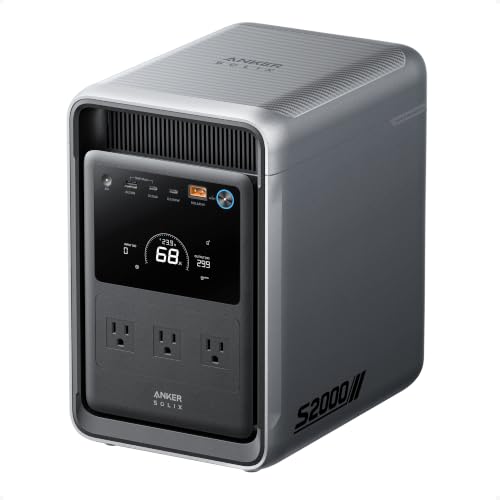
- 2,010Wh capacity and 1,500W output
- Compact 35.7-pound design
- 10,000-cycle LiFePO4 battery
Best For: Compact home backup and refrigerator support
Best Quiet Mid-Size Solar Generator

- 1,024Wh capacity with 1,800W output
- Includes a 200W solar panel
- 30dB silent mode and 10ms UPS
Best For: Camping, home office backup, and everyday essentials
Best Large-Capacity Home Solar Generator

- 3,072Wh capacity with 3,600W output
- Includes two 200W solar panels
- TT-30 RV port and 7,200W surge capacity
Best For: Extended home backup, refrigerators, and RVs
Best for Fast Home Backup
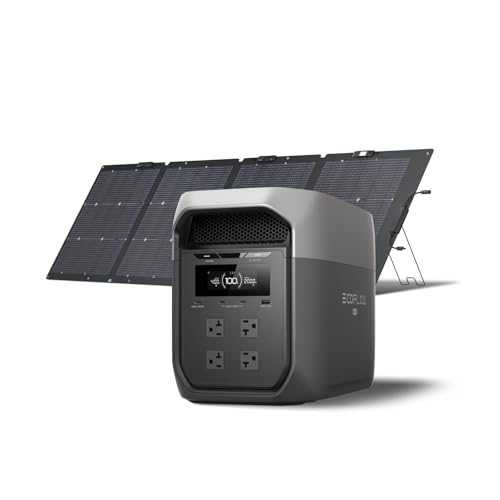
- 2,048Wh LiFePO4 battery with 2,400W output
- 3,400W X-Boost mode for demanding appliances
- Includes a 220W solar panel and fast charging
Best For: Home backup, RV use, and high-demand camping power
Best Portable Midrange Pick
Jackery Solar Generator 1000 v2

- 1,070Wh battery with 1,500W AC output
- Lightweight 23.8-pound design with foldable handle
- Includes a 200W solar panel and versatile ports
Best For: Camping, road trips, and moderate emergency power needs
Best for Maximum Capacity

- 3,840Wh capacity expandable to 11,520Wh
- 3,600W output with 4,500W peak power
- 2,000W solar input and 15 output ports
Best For: Extended outages, RVs, and high-demand backup use
Best Lightweight Pick

- Lightweight portable design
- 300W output with multiple ports
- Includes 40W solar panel
Best For: Camping, hiking, and charging personal electronics
Best High-Capacity Backup

- 2,048Wh capacity and 2,400W output
- Expandable to 6,144Wh
- 15ms EPS emergency switchover
Best For: Home backup, RVs, and extended off-grid power
Best Budget Camping Bundle

- Includes a 60W foldable solar panel
- Multiple AC, USB, and DC outputs
- Built-in reading and SOS flashlight
Best For: Light camping loads and small personal electronics
Best High-Output Solar Generator Kit – BLUETTI Elite 200 V2
For shoppers who need serious backup capacity, the BLUETTI Elite 200 V2 is one of the most capable solar generators in this roundup. Its 2,073.6Wh battery, included dual 200W panels, and 2,600W continuous output make it suitable for outages, RV use, camping, and off-grid living.
Best For: Running high-demand appliances and supporting multiple devices during home outages or off-grid trips.
Pros:
- Includes two 200W solar panels and supports up to nine devices simultaneously.
- Delivers 2,600W continuous output and up to 3,900W in power-lifting mode.
- LiFePO4 battery is rated for more than 6,000 cycles and a stated 17-year lifespan.
- Supports fast charging, including 0–80% in 50 minutes with dual AC and DC charging.
Cons:
- At 53.4 pounds, it is relatively heavy for frequent carrying.
- The included solar panels ship separately.
The Elite 200 V2 stands out when output, longevity, and included solar capacity matter more than portability. It is a strong choice for demanding appliances, though its larger size may be excessive for basic electronics.
Best Compact 2kWh Solar Generator – Anker SOLIX S2000
The Anker SOLIX S2000 is a compact solar generator for buyers who want substantial capacity without the bulk of many 2kWh systems. It combines a 2,010Wh LiFePO4 battery with 1,500W continuous output and supports up to 400W of solar input.
Best For: Home backup, refrigerator support, and portable power users who prioritize a lighter, smaller design.
Pros:
- 2,010Wh capacity with a claimed 35-hour refrigerator runtime under stated conditions.
- Compact 35.7-pound design is smaller and lighter than the industry average cited by Anker.
- LiFePO4 battery is rated for 10,000 cycles and a 15-year lifespan.
- Offers 1,500W continuous output, 3,000W peak output, and under-10ms UPS switchover.
Cons:
- It has no 12V DC port.
- Solar input is limited to 400W.
- Solar panels are not listed among the included components.
The S2000 is a practical middle ground for emergency power: more compact than many high-capacity options while still offering meaningful appliance support. Its missing 12V port may matter to RV and DC-focused users.
Best Quiet Mid-Size Solar Generator – BLUETTI Elite 100 V2
The BLUETTI Elite 100 V2 is a balanced solar generator kit with a 1,024Wh battery, an included 200W solar panel, and enough output for many everyday appliances. Its quiet operation, fast charging options, and UPS functionality make it well suited to indoor backup and travel.
Best For: Camping, home office backup, road trips, and everyday essentials such as laptops, mini fridges, and coffee makers.
Pros:
- Includes a 200W solar panel and supports up to 1,000W solar input.
- Provides 1,800W AC output with 2,700W power-lifting capability.
- Runs at approximately 30dB in silent mode and offers 10ms UPS switchover.
- App control, Wi-Fi, Bluetooth, and a LiFePO4 battery rated for more than 4,000 cycles add convenience.
Cons:
- Its 1,024Wh capacity is lower than the larger generators in this roundup.
- The included solar panel ships separately.
With a 25-pound body and quiet mode, the Elite 100 V2 is easier to use around a campsite, bedroom, or workspace than larger systems. It is best for essential loads rather than extended whole-home backup.
Best Large-Capacity Home Solar Generator – Jackery HomePower 3000
The Jackery HomePower 3000 is designed for buyers who want extended home backup from a portable solar generator. Its 3,072Wh capacity, 3,600W output, and included pair of 200W solar panels can support refrigerators, routers, lights, fans, and other essential loads during outages.
Best For: Extended home backup, refrigerator support, RV use, and powering several household essentials at once.
Pros:
- Large 3,072Wh capacity with 3,600W continuous output and 7,200W surge capacity.
- Includes two 200W SolarSaga panels and supports AC, DC, car, and generator charging.
- Built-in TT-30 RV port plus AC, USB-C, USB-A, and DC connections improve versatility.
- LiFePO4 batteries are rated for 4,000 cycles while retaining 70% capacity.
Cons:
- At 59.5 pounds, it is the heaviest option listed here.
- Solar charging with the included panels can take up to nine hours to reach 80%.
- Its UPS switchover is rated at up to 20ms, slower than some competing models.
The HomePower 3000 is the capacity-first choice in this group, offering substantial runtime and strong appliance support. Its weight and slower included-panel charging make it better for home or RV placement than frequent hand-carrying.
Best for Fast Home Backup – EcoFlow DELTA 3 Max
The EcoFlow DELTA 3 Max is one of the more capable solar generators for home backup, camping, and RV use. Its 2,048Wh LiFePO4 battery, 2,400W output, and 3,400W X-Boost mode are suited to demanding appliances, while fast charging helps reduce downtime.
Best For: Home backup users, RV owners, and campers who need high output, rapid recharging, and app-based energy management.
Pros:
- Recharges from 0–80% in about 1.13 hours using X-Stream charging.
- 3,400W X-Boost mode can power many high-demand appliances.
- Includes a 220W solar panel and uses a durable LiFePO4 battery.
- Offers less-than-10ms transfer time and quiet operation for backup use.
Cons:
- The larger capacity and output make it less compact than smaller power stations.
- Its included solar panel is only 220W, so solar charging can take time.
The DELTA 3 Max stands out when appliance compatibility and quick recovery matter more than minimal size. It is a strong all-around choice for users who want solar charging plus serious backup capability.
Best Portable Midrange Pick – Jackery Solar Generator 1000 v2
The Jackery Solar Generator 1000 v2 is a compact option for shoppers comparing solar generators for camping, road trips, and emergency use. It combines a 1,070Wh LiFePO4 battery with 1,500W AC output, multiple device ports, and a supplied 200W solar panel.
Best For: Campers, travelers, and emergency-preparedness users who want a relatively lightweight power station with versatile charging options.
Pros:
- Weighs 23.8 pounds and includes a foldable handle for easier transport.
- Provides 1,500W continuous output and a 3,000W surge peak.
- Supports 100W USB-C charging and includes three pure sine wave AC ports.
- LiFePO4 battery is rated for more than 4,000 cycles and over 10 years of use.
Cons:
- The 1,070Wh capacity is lower than larger home-backup models.
- Solar charging reaches 80% in about six hours with the included 200W panel.
- One-hour full charging requires enabling emergency charging in the Jackery app.
This Jackery balances portability, useful output, and battery longevity. It is better suited to personal electronics and moderate appliances than extended whole-home backup.
Best for Maximum Capacity – ABOK Ark3600
ABOK Ark3600 Portable Power Station 3600W, 3840Wh LiFePO4 Battery (Ark3600+ 200W Solar Pannel)
Check Price On AmazonThe ABOK Ark3600 is designed for shoppers who need high-capacity solar generators for extended outages, RV trips, or demanding outdoor work. It delivers 3,600W of rated output, stores 3,840Wh, and can expand to 11,520Wh with additional battery capacity.
Best For: Long-duration home backup, RV use, and outdoor users running multiple appliances or tools at once.
Pros:
- Large 3,840Wh capacity expands up to 11,520Wh.
- Offers 3,600W rated output and 4,500W peak power.
- Supports up to 2,000W solar input and AC-plus-PV charging in about 1.29 hours.
- Includes 15 output ports, wheels, a telescoping handle, and Bluetooth app control.
Cons:
- At 92 pounds, it is substantially heavier than compact portable models.
- Its larger footprint may be less convenient for lightweight travel.
The Ark3600 is the capacity-focused choice in this group. Its expandable battery, strong solar input, and extensive port selection make it attractive for sustained backup, provided you can accommodate the weight.
Best Lightweight Pick – Jackery Explorer 300
If you want solar generators that are easy to carry for camping, hiking, or travel, the Jackery Explorer 300 is a compact option with a 292Wh battery and 300W rated output. It includes a 40W solar panel and offers several ports for charging everyday electronics.
Best For: Campers, hikers, and travelers who prioritize low weight and flexible charging for smaller devices.
Pros:
- Lightweight design with an integrated carry handle.
- Six-device charging capability through AC, USB, and car ports.
- LiFePO4 battery rated for more than 4,000 charge cycles before reaching 70% capacity.
- Includes a 40W solar panel and supports faster charging with a 100W panel.
Cons:
- The 300W output is intended for smaller electronics rather than high-demand appliances.
- The included 40W panel charges more slowly than a 100W panel.
The Explorer 300 stands out among compact solar generators for its portability, durable battery chemistry, and broad device compatibility. It is best suited to personal electronics and light off-grid use.
Best High-Capacity Backup – Growatt INFINITY 2000 Pro
For shoppers comparing solar generators for home backup, RV use, or demanding off-grid setups, the Growatt INFINITY 2000 Pro combines a 2,048Wh capacity with 2,400W output. Its expandable design, EPS function, and LFP battery make it the most substantial option in this roundup.
Best For: RV owners, overlanders, campers, and households needing higher-capacity emergency power.
Pros:
- Large 2,048Wh capacity with expansion up to 6,144Wh using two additional batteries.
- 2,400W output supports up to 99% of standard electrical appliances, according to the supplied specifications.
- 15ms EPS switchover helps keep computers, security systems, and other devices powered during outages.
- LFP cells provide more than 4,000 cycles, while Cold Start technology supports operation as low as -22°F.
Cons:
- Its larger battery and higher output make it less compact than smaller portable power stations.
- Expansion batteries are an additional consideration for buyers who need maximum capacity.
The INFINITY 2000 Pro is the strongest choice here when capacity, appliance support, and emergency functionality matter more than minimal size. Its RV outlets and expandable architecture add flexibility for extended use.
Best Budget Camping Bundle – ZeroKor 300W Solar Generator
This ZeroKor package is a practical entry point for solar generators, pairing a 300W portable power station with a 60W monocrystalline solar panel. Multiple AC, USB, and DC outputs make it useful for phones, tablets, laptops, cameras, and other small camping equipment.
Best For: Budget-minded campers who want a solar panel, flashlight, and multiple charging options in one package.
Pros:
- Includes a foldable 60W solar panel with stated 20.5% conversion efficiency.
- Offers AC, DC, standard USB, and quick-charge USB ports for flexible device charging.
- Built-in flashlight includes reading and SOS modes.
- Multiple protection features and an automatic cooling fan help manage operating conditions.
Cons:
- Devices drawing more than 300W may damage or disable the unit, particularly heat-producing appliances and pumps.
- The solar panel junction box is not waterproof and must be kept dry.
- The 60W panel is intended for smaller devices and portable recharging rather than rapid high-capacity charging.
The ZeroKor offers useful accessories and charging versatility at a smaller scale. It is a sensible fit for light outdoor electronics, but buyers should stay within the 300W limit and protect the panel connection from moisture.
How We Picked the Best Solar Generators
We focused on the specifications that most affect real-world use: usable battery capacity, continuous and peak AC output, solar charging capability, recharge times, port selection, weight, and expandability. We also considered whether each unit is better suited to short outdoor trips, home backup, or demanding appliances.
Capacity and wattage are not interchangeable. Watt-hours indicate how long a generator can potentially run equipment, while watts determine which devices it can power at the same time. Published runtime will vary with conversion losses, temperature, battery age, and the connected load.
Quick Comparison
| Best For | Look For | Why It Matters |
|---|---|---|
| Camping and travel | Compact size and moderate capacity | Easier transport and faster setup |
| Home essentials | 1,500W or more and around 2,000Wh | Supports refrigerators, lights, routers, and small appliances |
| Extended outages | 3,000Wh-plus capacity or expansion support | Provides more reserve between recharges |
| Fast solar recovery | High solar-input rating and efficient MPPT charging | Shortens recharge time in suitable sunlight |
Key Buying Factors for Solar Generators
Battery Capacity and Chemistry
A higher Wh rating generally means longer runtime. LiFePO4 batteries typically offer strong cycle life and improved long-term value, while lighter designs may prioritize portability. Check the manufacturer’s rated cycle life and warranty rather than comparing capacity alone.
Inverter Output
Add the running wattage of the devices you plan to use, then leave headroom for startup surges from motors and compressors. Pure sine-wave output is preferred for sensitive electronics and many modern appliances.
Solar Input and Charging Options
Solar charging depends on panel wattage, weather, panel placement, and the generator’s maximum input. A unit with a high input limit can recharge faster, but only if your panels and conditions can supply it. AC, vehicle, and USB-C charging add flexibility when sunlight is limited.
Ports, Safety, and Usability
Look for the outlets and USB ports you actually need, plus clear displays, app controls if useful, low-noise operation, overload protection, and a reliable warranty. A built-in light or UPS function can also be valuable during outages.
Who Should Buy Which Solar Generators?
Choose a compact model around 300Wh for phones, cameras, lights, and short trips. A 1,000Wh-class unit is a balanced choice for weekend camping and essential electronics. For refrigerator backup, workstations, or several devices at once, consider roughly 2,000Wh with at least 1,500W of continuous output. Larger 3,000Wh-class systems are better for longer outages and heavier household loads, provided you can move and store them comfortably.
Before buying, list your essential devices, their running and startup wattages, and the hours of backup you want. That simple calculation will usually identify the right size more accurately than choosing the biggest battery available.
