
A dependable power station can keep phones, lights, routers, medical devices, and selected appliances running when the grid fails. The right model depends on your wattage needs, runtime expectations, portability requirements, and charging options.
We compared 10 portable home backup power stations across battery capacity, inverter output, recharge speed, portability, expandability, and overall value so you can choose with confidence.
Best 10 Portable Home Backup Power Stations Picks for 2026
Fast-Charging Home Backup

- 1,152Wh LiFePO4 battery with 1,800W output
- Full AC recharge in about one hour
- 500W solar input and 20 ms UPS switching
Best For: Versatile home backup, camping, and outage protection
Large-Capacity Household Backup
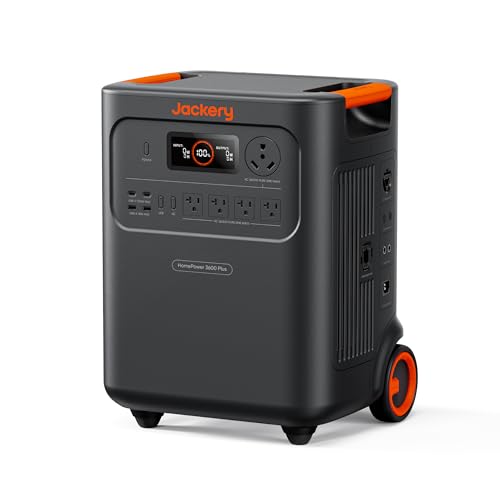
- 3,584Wh capacity with 3,600W output
- Expandable storage for longer outages
- Supports 120V and 240V parallel operation
Best For: Extended household backup and demanding appliances
Smart UPS Power Station
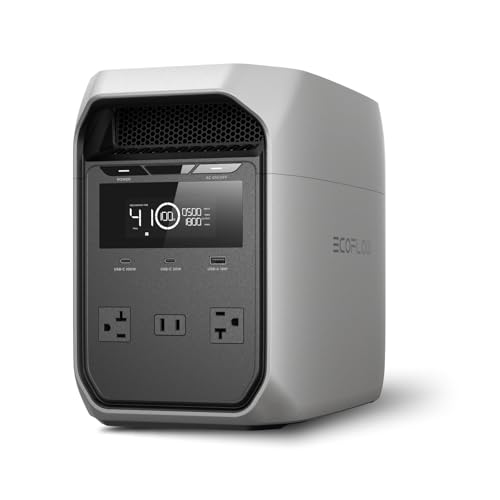
- 1,024Wh capacity with 1,800W output
- Under-10ms UPS switching for sensitive electronics
- 0–80% AC charging in about 45 minutes
Best For: Electronics protection and everyday emergency backup
Lightweight Emergency Backup

- 1,070Wh battery and 1,500W AC output
- 23.8-pound design with foldable handle
- App-enabled one-hour emergency charging
Best For: Portable home essentials, camping, and road trips
Best Overall

- 1,024Wh battery with 2,000W output
- About 49-minute full recharge
- Under-10ms UPS and solar support
Best For: Home backup, RVs, remote work, and off-grid use
Best Budget Pick

- 519Wh capacity with 500W output
- Up to 10 simultaneous device connections
- Wall, car, and solar charging options
Best For: Small electronics, camping, and basic emergency backup
Best Mid-Range Capacity

- 1,024Wh LiFePO4 battery
- 1,000W output with 2,000W peak
- Up to 300W solar input
Best For: Essential outage backup, camping, RVs, and remote work
Best High-Capacity Pick
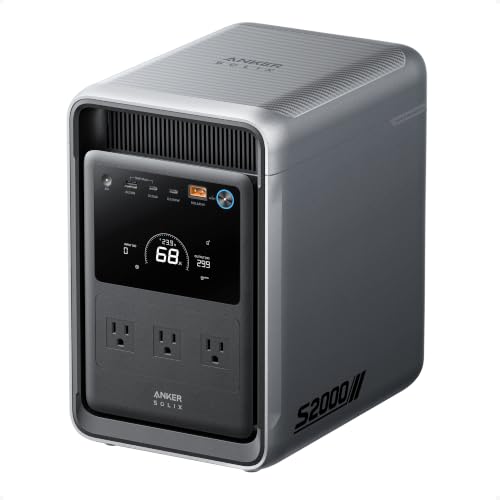
- 2,010Wh capacity with 1,500W output
- LiFePO4 battery rated for 10,000 cycles
- Supports up to 400W solar input
Best For: Extended home backup and refrigerator power
Best UPS Value

- 10ms UPS switching for outage protection
- Eight output ports, including four AC outlets
- Full AC charge in about 1.5 hours
Best For: Routers, CPAP machines, and short outages
Best Lightweight Option

- About 7.1–7.5 pounds with an integrated handle
- Six-device connectivity with AC, USB, and car outputs
- LiFePO4 battery rated for 4,000+ cycles
Best For: Camping, travel, and personal electronics
Fast-Charging Home Backup – BLUETTI AC180
The BLUETTI AC180 is a strong all-around option for portable home backup power stations, combining a 1,152Wh LiFePO4 battery with 1,800W output. It is especially practical when you want quick wall charging, solar compatibility, and UPS protection for essential devices during an outage.
Best For: Home emergency backup, camping, off-grid use, and powering several everyday appliances.
Pros:
- Fully charges in about one hour with 1,440W AC input.
- Provides 1,800W output, with a 2,700W boost mode for higher-demand loads.
- Supports up to 500W solar input and switches to backup power in 20 ms.
- Includes a five-year warranty and multiple charging cables.
Cons:
- At 37.4 pounds, it is less convenient to carry than smaller power stations.
- The 1,152Wh capacity may be limited for extended whole-home backup.
The AC180 balances useful capacity, fast recharging, and dependable UPS functionality. It is a sensible middle-ground choice for buyers who need more capability than a compact camping unit without moving to a much larger home battery system.
Large-Capacity Household Backup – Jackery HomePower 3600 Plus
The Jackery HomePower 3600 Plus is designed for shoppers seeking high-capacity portable home backup power stations that can handle demanding household equipment. Its 3,584Wh battery, 3,600W output, and expandable storage make it better suited to extended outages than compact models.
Best For: Extended home outage coverage, large appliances, and households that want expandable battery capacity.
Pros:
- Delivers 3,600W output and up to 7,200W in parallel.
- Supports dual-voltage 120V and 240V operation when used in parallel.
- Offers capacity expansion up to 21kWh per unit or 43kWh with multiple units.
- Recharges through AC, hybrid AC+DC, solar, or a gas generator.
Cons:
- At 77.2 pounds, it is primarily a wheeled backup unit rather than a carry-anywhere station.
- Its two-outlet specification may be less convenient for users needing many direct connections.
With its substantial capacity and high output, the HomePower 3600 Plus is aimed at serious household backup rather than casual camping. The luggage-style wheels and telescoping handle help with repositioning, but its size and weight still favor a semi-permanent home setup.
Smart UPS Power Station – EcoFlow DELTA 3 Classic
The EcoFlow DELTA 3 Classic is a practical choice among portable home backup power stations when fast charging and electronics protection matter. It combines 1,024Wh of storage with 1,800W output, sub-10ms UPS switching, app controls, and optional solar recharging.
Best For: Computers, servers, medical devices, refrigerators, and everyday emergency power needs.
Pros:
- Supplies 1,800W continuously with 3,600W surge capability.
- Reaches 80% charge in about 45 minutes using X-Stream AC charging.
- Switches to battery in under 10 ms to help prevent interruptions.
- Supports 500W solar charging and monitoring through the EcoFlow app.
Cons:
- The 1,024Wh capacity is modest for extended high-wattage appliance use.
- It is not compatible with DELTA 2 Smart Extra Battery or DELTA 3 Series Smart Extra Battery.
- Solar panels are optional rather than included.
The DELTA 3 Classic stands out for responsive UPS performance and convenient control features. It is a particularly good fit for sensitive electronics and short-to-moderate outages, though buyers needing longer runtimes should consider a larger-capacity model.
Lightweight Emergency Backup – Jackery Explorer 1000 v2
The Jackery Explorer 1000 v2 is a compact option for portable home backup power stations, offering 1,070Wh of capacity and 1,500W AC output in a 23.8-pound package. Its foldable handle, app control, and multiple USB and AC ports make it easy to move between home, vehicles, and campsites.
Best For: Portable emergency power, camping, road trips, and lighter home backup loads.
Pros:
- Provides 1,500W output with a 3,000W surge peak.
- Can fully charge in one hour when emergency charging is enabled in the app.
- Uses an LFP battery rated for more than 4,000 cycles and over 10 years of life.
- Includes USB-C, USB-A, DC car, and three pure sine wave AC outputs.
Cons:
- One-hour charging requires activating emergency charging in the Jackery app.
- Solar charging is limited to Jackery solar panels.
- Its 1,070Wh capacity is not intended for extended whole-home backup.
The Explorer 1000 v2 is a good match for buyers who prioritize portability and straightforward device charging. It can handle several common appliances and electronics, but its smaller battery makes it more appropriate for essentials and shorter backup periods.
Best Overall – Anker SOLIX C1000 Gen 2
For shoppers comparing portable home backup power stations, the Anker SOLIX C1000 Gen 2 stands out for its fast charging, high output, and UPS capability. Its 1,024Wh LiFePO4 battery delivers up to 2,000W of continuous power, with a 3,000W peak output.
Best For: Home emergency backup, RV use, remote work, camping, and off-grid power.
Pros:
- HyperFlash technology can fully recharge the unit in about 49 minutes at 1,600W.
- Offers 2,000W output across up to 10 devices, with a 3,000W peak.
- Under-10ms UPS switching helps keep laptops and CPAP machines running during interruptions.
- Supports up to 600W solar input and can recharge in about 1.8 hours under suitable conditions.
Cons:
- Its 11.3kg weight may be more than some casual campers want to carry.
- Solar panels are not listed among the included accessories.
The C1000 Gen 2 is a strong all-around choice when quick wall charging, reliable backup switching, and substantial appliance support matter more than having the lightest possible design.
Best Budget Pick – 500W Portable Power Station
This 519Wh model is a practical entry point for portable home backup power stations when your needs center on phones, laptops, networking equipment, lights, and other devices below 500W. It uses a pure sine wave inverter and provides several charging options for home, car, or solar use.
Best For: Essential electronics, camping, small appliances, and budget-conscious emergency preparedness.
Pros:
- Pure sine wave AC output is designed for sensitive electronics.
- Can power up to 10 devices through AC, USB, DC, car, and wireless charging outputs.
- USB-C PD delivers up to 60W, while USB-A QC3.0 ports provide up to 18W each.
- Supports wall, car, and compatible solar-panel charging.
Cons:
- The 500W output limit rules out larger appliances and higher-demand equipment.
- Full charging takes about 6–9 hours with a 100W solar panel.
- Solar panels are not included.
Choose this station if you want broad port selection and quiet, fuel-free backup for smaller loads. It is less suitable for whole-room or high-wattage appliance support.
Best Mid-Range Capacity – 1000W Portable Power Station
Among portable home backup power stations, this 1,024Wh LiFePO4 model offers a useful middle ground between compact electronics-focused units and larger premium systems. Its 1,000W continuous output is intended for essentials such as lights, routers, and mini fridges during outages or outdoor trips.
Best For: Multi-day essential backup, camping, RV travel, remote work, and Starlink setups.
Pros:
- 1,024Wh capacity and 1,000W continuous output can support essential devices during outages.
- LiFePO4 battery is rated for more than 3,000 cycles while retaining 80% capacity.
- Includes 60W USB-C PD, USB-A, and two 110V AC outputs.
- Supports up to 300W solar input and is described as Starlink compatible.
Cons:
- At 27.7 pounds, it is considerably heavier than smaller portable stations.
- Only two AC outlets are listed.
- The supplied details describe a 2,000W peak, so sustained high-demand loads remain limited to 1,000W.
This model makes sense for buyers who want substantial battery capacity and LiFePO4 longevity without moving to a higher-output 2,000W-class station. Its weight and limited AC outlet count are the main trade-offs.
Best High-Capacity Pick – Anker SOLIX S2000
The Anker SOLIX S2000 is a strong choice among portable home backup power stations when you need substantial capacity for refrigerators, essential appliances, and longer outages. Its 2,010Wh LiFePO4 battery, 1,500W continuous output, and 3,000W peak output provide broad home-backup coverage in a relatively compact 35.7-pound design.
Best For: Home power outages, refrigerator backup, and users who want long battery life with solar-charging flexibility.
Pros:
- 2,010Wh capacity with 1,500W continuous and 3,000W peak output.
- Low 6W idle draw and claimed runtime of up to 35 hours for a refrigerator, depending on usage and conditions.
- LiFePO4 battery rated for up to 10,000 charge cycles and a 15-year lifespan.
- Supports up to 400W solar input and multiple charging methods.
Cons:
- At 35.7 pounds, it is less convenient to carry than smaller power stations.
- It does not include a 12V DC port.
- Solar panels and other optional charging equipment are not listed as included.
The S2000 stands out for capacity, efficiency, and durability rather than ultralight portability. It is particularly well suited to keeping major essentials running during an outage, though shoppers who need a car-style 12V connection should consider that limitation.
Best UPS Value – LIBRIDS 640Wh Power Station
The LIBRIDS 640Wh power station is a practical option among portable home backup power stations for smaller essentials and short interruptions. Its 10ms UPS switching, pure sine wave output, and 600W running capacity make it especially useful for WiFi equipment, CPAP machines, laptops, and other sensitive electronics.
Best For: Short power outages, CPAP and router backup, indoor emergency use, and camping in dry conditions.
Pros:
- Built-in 10ms UPS automatically switches to battery power during outages.
- Four AC outlets plus USB ports can power up to eight devices at once.
- Fast AC charging reaches a full charge in about 1.5 hours.
- LiFePO4 battery is rated for more than 4,000 cycles and uses a metal enclosure.
Cons:
- Its 600Wh capacity and 600W running output are better suited to essentials than large appliances.
- The unit carries an indoor-use-only warning and must be kept dry outdoors.
- Solar charging details are not specified in the supplied notes.
The LIBRIDS is compelling when seamless switching and device protection matter more than maximum capacity. Its compact metal design and fast recharge are useful for emergency readiness, but the indoor-use warning requires careful placement away from moisture.
Best Lightweight Option – Jackery Explorer 300
The Jackery Explorer 300 is a compact entry point for portable home backup power stations and outdoor power needs. With a 292Wh capacity, 300W rated output, six-device connectivity, and a weight of about 7.1 to 7.5 pounds, it is easy to pack for travel while still handling laptops, cameras, drones, and other smaller electronics.
Best For: Camping, travel, hiking, hunting, and lightweight backup for personal electronics.
Pros:
- Lightweight design with an integrated handle for easier transport.
- Two AC outlets, USB-C, USB-A ports, and a 120W car port support up to six devices.
- 300W rated output and 600W peak surge can handle many small electronics.
- LiFePO4 battery is rated for more than 4,000 cycles before reaching 70% capacity.
Cons:
- 292Wh capacity is limited for refrigerators, heaters, and other high-draw appliances.
- Included AC charging takes about four hours.
- The two-year warranty is shorter than the five-year coverage listed for the other options.
The Explorer 300 prioritizes portability over long runtimes and high output. It is a sensible fit for keeping personal electronics charged away from outlets, while larger household loads call for a higher-capacity power station.
How We Picked the Best Portable Home Backup Power Stations
We focused on the specifications that matter during an outage: usable battery capacity, continuous and surge wattage, battery chemistry, charging speed, output variety, and portability. We also considered whether each model is better suited to emergency home use, short trips, everyday backup, or running higher-demand appliances.
LiFePO4 batteries generally offer a longer service life than older lithium-ion designs, while larger capacities provide more runtime but add weight and cost. Because advertised capacity and output do not equal real-world runtime, allow for inverter losses and startup surges when sizing a station.
Quick Comparison
The selected models range from compact 292Wh units to a 3,584Wh home-backup system. Smaller stations are practical for phones, lights, Wi-Fi equipment, and laptops. Midrange options around 1,000Wh typically provide a useful balance for refrigerators, electronics, and short outages. High-capacity models are better for extended disruptions and multiple devices, provided their output matches the appliances you need to run.
Key Buying Factors for Portable Home Backup Power Stations
Capacity and Runtime
Watt-hours indicate how much energy a battery stores. Estimate runtime by dividing watt-hours by the device’s wattage, then reduce the result by roughly 10% to 20% for conversion losses. A refrigerator, CPAP machine, or modem may use less power intermittently than its listed maximum, but heating appliances can drain a station quickly.
Inverter Output and Surge Rating
Check continuous output for normal operation and peak or surge output for startup demands. Refrigerators, pumps, compressors, and power tools may briefly require more wattage than their running rating. Do not connect devices whose combined demand exceeds the station’s continuous output.
Charging and Solar Input
Fast AC charging reduces downtime before an outage. Solar input is useful for extended emergencies, but recharge speed depends on panel wattage, sunlight, temperature, and whether the station supports simultaneous charging and output. Confirm connector compatibility and the supported solar-input limit.
Safety, Ports, and Usability
Look for clear displays, low-battery warnings, overload protection, temperature monitoring, USB-C outputs, and enough AC outlets for your setup. A built-in light can help during outages, while app connectivity is useful for monitoring but should not be essential for basic operation.
Who Should Buy Which Portable Home Backup Power Stations?
Choose a compact model such as the Jackery Explorer 300 for communication devices, lighting, and short-duration personal backup. A 500Wh-to-1,000Wh station is a strong general-purpose choice for laptops, networking equipment, small appliances, and brief outages. Models around 1,000Wh to 2,000Wh suit households that want more refrigerator runtime or several devices operating together.
For longer outages or higher-demand home backup, prioritize the 2,000Wh-plus options, especially when paired with solar panels. Before buying, list the appliances you consider essential, record their running and startup wattage, and select a station with capacity and output headroom rather than relying on the advertised maximum alone.
