
Portable off-grid solar kits make it easier to produce useful power away from the grid, whether you are camping, traveling in an RV, preparing for outages, or building a remote backup system.
This roundup covers compact folding panels, RV-ready kits, and larger complete systems. The right choice depends on your power demands, battery storage, portability requirements, and installation plans.
Best 10 Portable Off-Grid Solar Kits Picks for 2026
Best Portable Starter Kit
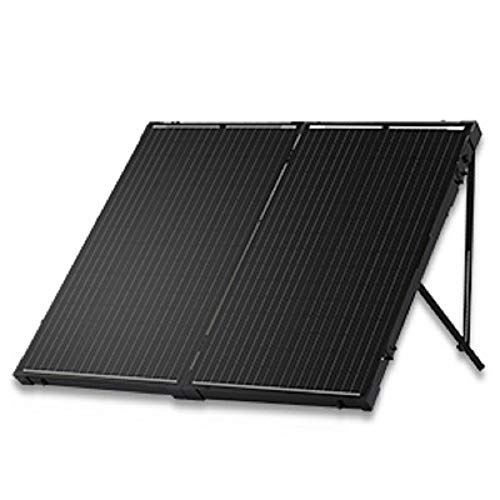
- 25% efficient N-Type cells
- Includes 20A PWM charge controller
- Foldable design with adjustable kickstand
Best For: Camping, RV trips, and compatible 12V battery systems
Best Complete 48V System

- 6500W 120/240V inverter
- Six 370W mono panels included
- 51.2V 100Ah LiFePO4 battery
Best For: Cabins, RVs, vans, and larger off-grid backup systems
Best Portable High-Output Panel

- 400W output with 23% efficiency
- Folds with carry case and kickstand
- IP67 waterproof and ETFE coated
Best For: Power stations, RV travel, overlanding, and blackout backup
Best Home-Scale Expansion Kit

- 2340W array with 12 bifacial panels
- 10KW 120/240V inverter
- Two 48V 100Ah lithium batteries
Best For: Cabins, farms, sheds, and professionally installed backup systems
Lightweight Flexible Pick
GRECELL UB200 200W Portable Solar Panel

- 200W monocrystalline output with up to 23.5% efficiency
- Folds compactly and weighs about 10.1 pounds
- Multiple connectors support compatible power stations
Best For: Portable charging for RVs, vans, boats, and outdoor battery setups
Whole-Home Powerhouse
ECO-WORTHY 10kW Off-Grid Solar System

- 10kW split-phase inverter supports 120V/240V output
- Includes 2,950W of panels and about 16.1kWh storage
- Battery offers monitoring, wheels, handles, and protection features
Best For: High-capacity home backup and off-grid electrical systems
RV-Friendly Folding Kit
Go Power GP-PSK-130 130W Solar Panel

- Folding 130W panel with adjustable positioning legs
- Includes multiple plugs, terminals, and battery clamps
- Weather-resistant panels come with a nylon carrying case
Best For: RV, camping, and marine battery charging
Complete RV Powerhouse

- Four 195W bifacial panels with 25.2% cells
- Two 280Ah lithium batteries and 7.168 kWh storage
- 3,000W UPS inverter charger included
Best For: RV owners wanting a complete, battery-backed off-grid system
Packable Solar Blanket
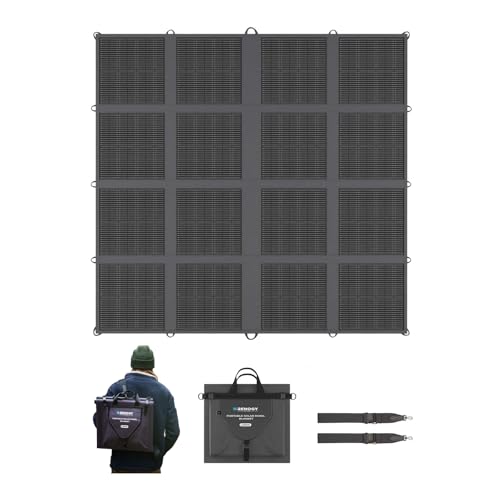
- 16-fold design weighs 16.09 pounds
- 25% efficient N-type solar cells
- MC4 output for compatible power stations
Best For: Mobile campers and power-station users needing compact storage
Simple RV Starter Kit
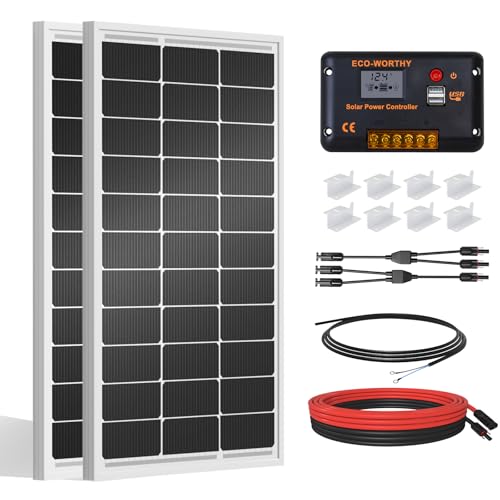
- Two 100W monocrystalline solar panels
- 30A PWM controller and mounting hardware
- Can wire for 12V or 24V systems
Best For: Small RV, cabin, shed, and vehicle setups needing a basic solar foundation
Best Portable Starter Kit – 200W Foldable Solar Suitcase
For shoppers comparing portable off-grid solar kits, the Renogy 200W suitcase is a compact plug-and-play option for charging compatible power stations or 12V battery systems. Its N-Type cells, adjustable kickstand, included 20A PWM controller, and foldable design make setup straightforward for camping, RV use, and remote getaways.
Best For: Campers, RV owners, and users who want a manageable 200W panel with a charge controller included.
Pros:
- 25% conversion efficiency with N-Type cells.
- Folds into a suitcase-style form and includes an adjustable aluminum kickstand.
- Includes a pre-installed Voyager 20A PWM charge controller and battery cable with fuse.
- Works with compatible power stations and 12V battery systems.
Cons:
- At about 28.5 pounds, it is portable but not especially lightweight.
- MC4 output cables are included, while the Renogy 4-in-1 adapter is sold separately.
- The included controller is PWM rather than MPPT.
This kit balances portability and useful output without requiring a bulky permanent installation. Confirm your power station’s voltage, current, and connector requirements before buying.
Best Complete 48V System – 6500W Off-Grid Solar Kit
The SUNGOLDPOWER system is a substantial choice among portable off-grid solar kits, though its panel-and-battery configuration is better suited to a cabin, RV, van, or fixed small-property installation than casual carrying. It combines six 370W monocrystalline panels, a 6500W 48V inverter, and a 51.2V 100Ah LiFePO4 battery.
Best For: Users building a high-capacity off-grid setup for a cabin, RV, van, or backup system who need 120/240V AC output.
Pros:
- 6500W inverter supports 120/240V AC output and up to 140A battery charging.
- Includes six 370W panels, a 100Ah 51.2V LiFePO4 battery, breakers, cables, and mounting brackets.
- Battery uses automotive-grade cells rated for more than 7,000 deep cycles.
- Dual MPPT design and parallel support can allow system expansion.
Cons:
- This is a large system rather than a grab-and-go portable kit.
- Installation requires planning for panel mounting, wiring, breakers, and a 48V battery system.
- The stated daily production depends on approximately four hours of full sunlight.
With its integrated inverter, storage battery, and substantial panel array, this kit is aimed at serious off-grid power needs. Its included components reduce some compatibility work, but installation space and electrical expertise remain important considerations.
Best Portable High-Output Panel – 400W Foldable Solar Panel
For portable off-grid solar kits built around a power station, the Renogy 400W panel offers higher charging potential than smaller suitcase panels while remaining foldable. Its carry case, kickstand, fiberglass reinforcement, ETFE coating, and IP67 waterproofing suit RV travel, overlanding, camping, and blackout backup.
Best For: Power-station owners who want a foldable 400W panel for higher-capacity charging during travel or outages.
Pros:
- 400W maximum output with 23% efficiency.
- Folds to approximately 27.9 by 33.7 by 3.2 inches and weighs about 30.2 pounds.
- Uses ETFE coating, fiberglass reinforcement, and IP67 waterproofing for outdoor use.
- Parallel wiring helps reduce the effect of individual shadows.
Cons:
- A compatible solar charge controller is not included for 12V or 24V battery systems.
- MC4 output cables are provided, but the listed Renogy 4-in-1 adapter is sold separately.
- Actual output varies with shade, sun angle, temperature, cable length, and the receiving device’s input limit.
This panel is a practical middle ground for users who need more output than a 200W folding model but still want transportability. Check your power station’s maximum solar input before pairing it with the panel.
Best Home-Scale Expansion Kit – 10KW Off-Grid Solar System
The ECO-WORTHY system is a home-scale option in the portable off-grid solar kits category, intended for a cabin, shed, farm, or backup installation rather than frequent transport. It combines 12 bifacial 195W panels, a 10KW 120/240V inverter, and two 48V 100Ah lithium batteries for substantial storage and split-phase appliance support.
Best For: Property owners planning a professionally installed off-grid or backup system for cabins, farms, sheds, and high-power appliances.
Pros:
- Includes 2340W of N-Type bifacial solar panels and two 48V 100Ah lithium batteries.
- 10KW inverter provides 120/240V output and can be paralleled for expanded capacity.
- Battery monitoring supports CAN/RS485 communication plus Bluetooth and Wi-Fi app access.
- Panels feature 25% conversion efficiency, IP68 protection, and tempered glass construction.
Cons:
- This is not a portable, carryable setup; it requires significant installation space.
- Professional installation is recommended, increasing setup complexity and cost.
- Reported daily output depends on approximately four hours of full sunshine and site conditions.
Among these portable off-grid solar kits, this is the most ambitious choice for whole-property-style energy needs. Its certifications, monitoring features, and expansion support are useful, but buyers should plan for professional electrical installation and permanent mounting.
Lightweight Flexible Pick – GRECELL UB200 200W Portable Solar Panel
For portable off-grid solar kits that prioritize usable output without excessive weight, the GRECELL UB200 is a practical choice. Its 200W monocrystalline panel reaches up to 23.5% conversion efficiency, folds to a compact size, and includes several connector options for compatible power stations and batteries.
Best For: Van campers, RVs, boats, and outdoor users who need a relatively lightweight 200W panel for compatible power stations or 12V battery systems.
Pros:
- 200W output with up to 23.5% conversion efficiency.
- Folds to 21.46 by 22.95 inches and weighs about 10.1 pounds.
- Includes DC7909/8, XT60, Anderson, and aviation connectors.
- Flexible ETFE construction, four kickstands, and IP65 water resistance.
Cons:
- Charge controller and alligator clips are not included.
- IP65 protection is for water splashing, not rain exposure or immersion.
- Connector compatibility should be checked before purchase.
The UB200 stands out when portability and connection flexibility matter more than a fully integrated kit. It is a panel rather than a complete battery-and-controller system, so confirm that your power station or charging setup supports its connectors and output.
Whole-Home Powerhouse – ECO-WORTHY 10kW Off-Grid Solar System
Among portable off-grid solar kits, this ECO-WORTHY package is aimed at users who need substantially more capacity than a camping setup. It combines five 590W panels, a 10kW split-phase inverter, and a 48V 314Ah LiFePO4 battery with about 16.1kWh of storage for large-scale home backup and off-grid power support.
Best For: Homeowners seeking a high-capacity 120V/240V system for substantial household loads, provided they can accommodate pallet delivery and professional installation.
Pros:
- 10,000W continuous inverter output with 20,000W peak output.
- Includes 2,950W of solar panels and approximately 16.1kWh of battery storage.
- Supports 120V/240V split-phase output and up to six parallel inverters.
- Battery includes wheels, handles, monitoring connectivity, and multiple safety protections.
Cons:
- Large, heavy shipment requires pallet delivery by truck.
- Professional installation is recommended and novice installation is not advised.
- Its scale is excessive for simple camping or lightweight portable use.
This is a complete, expandable energy system rather than a grab-and-go solar kit. Its high output and storage capacity may suit whole-home applications, but buyers should plan for delivery logistics, installation, system placement, and electrical permitting as appropriate.
RV-Friendly Folding Kit – Go Power GP-PSK-130 130W Solar Panel
The Go Power GP-PSK-130 is a straightforward option for portable off-grid solar kits designed around RV, camping, and marine use. Its folding 130W panel has adjustable legs, a protective nylon case, and multiple connection options for integrating with compatible AGM or lithium battery setups.
Best For: RV and boat owners, campers, and outdoor users who want a folding panel kit with positioning legs and convenient battery connection accessories.
Pros:
- Folding 130W design supports compact storage and transport.
- Adjustable legs help position the panel toward available sunlight.
- Includes Anderson-style, SAE, XLR, ring-terminal, and battery-clamp connections.
- Weather-resistant construction includes a heavy-duty nylon case.
Cons:
- At 28.7 pounds, it is heavier than some portable panels.
- Its 130W capacity is lower than larger 200W and whole-home systems.
- Buyers should confirm connector and battery compatibility before use.
Choose the GP-PSK-130 for a self-contained, easy-to-position charging solution rather than maximum wattage. The included accessories and folding case make it convenient for mobile use, while its 130W rating is better suited to modest battery-charging needs.
Complete RV Powerhouse – 780W Off-Grid Solar System
For shoppers comparing portable off-grid solar kits for RV living, this ECO-WORTHY system is a substantial, battery-backed setup rather than a simple panel package. It combines four 195W bifacial panels, two 12.8V 280Ah lithium batteries, a 3,000W inverter charger, and a 60A MPPT controller for a ready-to-configure 12V system.
Best For: RV owners seeking a complete off-grid power system with substantial storage and UPS functionality.
Pros:
- Includes panels, lithium batteries, inverter charger, MPPT controller, Bluetooth module, and required cables.
- Two batteries provide up to 7.168 kWh of stated storage capacity.
- 3,000W inverter charger supports common RV appliances and can also charge from mains electricity.
- Designed around a four-step installation process with technical support.
Cons:
- Its larger component set is less compact than a portable blanket-style kit.
- The supplied panels and batteries still require connection and installation.
- Actual solar production depends on available sunlight and conditions.
This is the strongest choice here for buyers who want an integrated RV electrical system with meaningful battery storage. Its size and installation requirements make it better suited to a dedicated RV setup than quick, lightweight campsite charging.
Packable Solar Blanket – 400W Foldable Solar Panel
This Renogy blanket is a practical option for shoppers seeking portable off-grid solar kits that pack down small. The 400W foldable panel uses a 16-fold design, weighs 16.09 pounds, and can be placed on the ground, across a windshield, or hung from a suitable support.
Best For: Campers, SUV and van travelers, and power-station users who prioritize compact storage and flexible placement.
Pros:
- Folds to approximately 16.54 x 15.83 x 4.13 inches for easier transport and storage.
- 25% efficiency and 16BB N-type cells are designed to maximize output from available sunlight.
- Works with compatible power stations from Jackery, EcoFlow, Anker, and other brands meeting the requirements.
- UL 61730 certified, with additional listed CE, RoHS, FCC, CA65, PSE, and ISO 9001 claims.
Cons:
- It provides an MC4 output only; the 4-in-1 adapter is sold separately.
- It weighs more than some smaller portable panels at 16.09 pounds.
- Output varies with shade, sun angle, temperature, cable length, and the receiving device’s limits.
The foldable format makes this one of the more travel-friendly choices for mobile charging, especially when paired with a compatible power station. Confirm connector and input requirements before buying, since the needed adapter may not be included.
Simple RV Starter Kit – 200W 12V/24V Solar Kit
For buyers comparing portable off-grid solar kits on a smaller budget or footprint, this ECO-WORTHY package covers the basic components needed to start charging a 12V or 24V battery system. It includes two 100W monocrystalline panels, a 30A PWM controller, mounting brackets, solar cables, connectors, and a tray cable.
Best For: RVs, campers, cabins, sheds, boats, and other small off-grid applications needing a straightforward panel-and-controller setup.
Pros:
- Supports series wiring for 24V or parallel wiring for 12V applications.
- Includes two panels, Z brackets, controller, cables, connectors, and tray cable.
- Monocrystalline panels offer stated efficiency up to 21.5% in sufficient light.
- Aluminum frames are corrosion-resistant and rated for specified wind and snow loads.
Cons:
- The 30A PWM controller is less advanced than an MPPT controller.
- This kit does not include a battery or inverter.
- Stated daily output assumes about four hours of full sunshine, so real-world production will vary.
This is a sensible entry point when you already have, or plan to add, a compatible battery and inverter. Its included wiring and mounting hardware simplify setup, while the 12V/24V flexibility suits several common vehicle and small-property applications.
How We Picked These Portable Off-Grid Solar Kits
We focused on kits that represent the main ways shoppers use solar power off-grid: portable charging, RV and campsite electricity, emergency backup, and larger residential or remote installations. We compared advertised panel wattage, inverter capacity, battery compatibility, charge-controller design, portability, included components, and intended voltage.
Because product configurations can vary by seller, verify the current package contents, certifications, connector types, warranty, and battery requirements before ordering. A panel kit alone may not include a battery, inverter, mounting hardware, or every cable needed for your setup.
Quick Comparison
| Use Case | What to Prioritize | Typical Kit Type |
|---|---|---|
| Phones, lights, and small electronics | Low weight, folding design, compatible power station | 130W–200W portable panel |
| RV and campsite appliances | Higher panel output, charge controller, battery compatibility | 200W–800W RV system |
| Home backup | Large inverter, battery capacity, split-phase output, certification | Complete 120V/240V system |
| Remote property or heavy loads | Expandable batteries, substantial solar input, professional installation | Multi-panel off-grid package |
Key Buying Factors for Portable Off-Grid Solar Kits
Power Output and Daily Energy
Panel wattage indicates potential generation under ideal conditions, not guaranteed daily output. Sun angle, shading, temperature, and cable losses reduce production. Estimate the watt-hours your devices use each day, then allow extra capacity for poor weather and seasonal changes.
Battery and Inverter Compatibility
Solar panels generate power but do not automatically provide usable AC electricity after sunset. Confirm whether the kit includes a battery and inverter, and match their voltage and continuous or surge ratings to your appliances. Motors, refrigerators, pumps, and power tools often need substantial startup power.
Portability and Setup
Folding suitcases and blankets are convenient for temporary use, while rigid panels and larger systems are better for semi-permanent installations. Check folded dimensions, carrying weight, kickstand stability, weather resistance, cable length, and connector compatibility.
Controller, Safety, and Expansion
MPPT controllers generally extract more energy than basic PWM controllers, especially in changing conditions, but either can be suitable when correctly matched. Look for overcharge, overcurrent, short-circuit, and temperature protection. For larger systems, confirm UL certification, grounding requirements, transfer-switch needs, and local electrical-code compliance.
Who Should Buy Which Portable Off-Grid Solar Kits?
Choose a lightweight 130W–200W folding or flexible panel for phones, lights, cameras, and small power stations. RV owners should consider a 200W–800W system with a suitable charge controller and enough battery storage for overnight use. Buyers planning to run major appliances or support a home should look at complete high-output systems with 120V/240V inverters and sizeable battery banks, preferably with professional installation. If your needs may grow, prioritize modular components, spare capacity, and clearly documented expansion limits.
