
Choosing a generator becomes easier when you can balance output, fuel flexibility, portability, and safety in one comparison. These budget multi-fuel generators offer practical options for outages, camping, RV trips, and backup power without jumping straight to premium pricing.
We selected models ranging from compact inverter generators to high-output home-backup units, with attention to usable wattage, dual- or tri-fuel capability, outlet options, starting systems, noise, and safety features.
Best 10 Budget Multi-Fuel Generators Picks for 2026
Best Value RV Pick
Westinghouse 4650W Dual-Fuel Generator
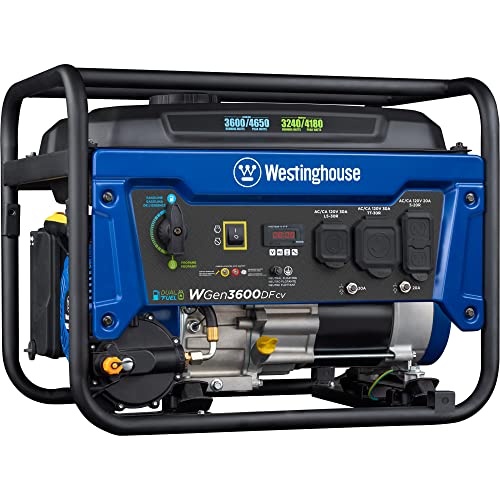
- 4,650 peak watts on gasoline
- RV-ready 30A outlet
- Up to 14 hours per tank
Best For: RV owners and practical home backup
Best Portable Inverter Value
BILT HARD 5500W Dual-Fuel Generator
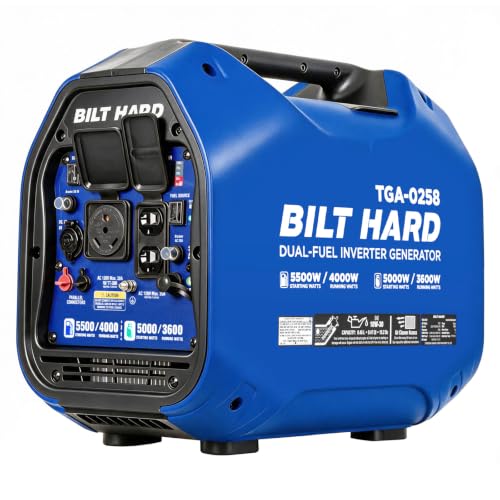
- 4,000 running watts on gasoline
- Only 61.7 pounds
- Eco mode and parallel-ready
Best For: Portable camping, RV, and light backup power
Best High-Output Backup Pick
Westinghouse 14,500W Tri-Fuel Generator

- 11,500 running watts on gasoline
- Uses gas, propane, or natural gas
- Remote electric start and 19-hour runtime
Best For: Large-home backup power
Best Compact Electronics Pick
PowerSmart 4400W Dual-Fuel Generator

- Clean power under 3% THD
- Up to 3,600 running watts
- 24-hour propane runtime at 25% load
Best For: Portable power for electronics and essential appliances
Best for Easy Setup
Westinghouse 6500W Dual Fuel Generator

- Up to 5,300 running watts on gasoline
- Transfer-switch-ready 30A outlet
- Up to 14.5 hours of runtime
Best For: Higher-output home emergency backup
Best Value Electric Start

- Electric start with gasoline or propane
- 3,800 running watts on gasoline
- 120/240V output with 30A twist-lock outlet
Best For: Moderate backup power with easy starting
Best Quiet Portable Option
PowerSmart 3800W Dual Fuel Inverter
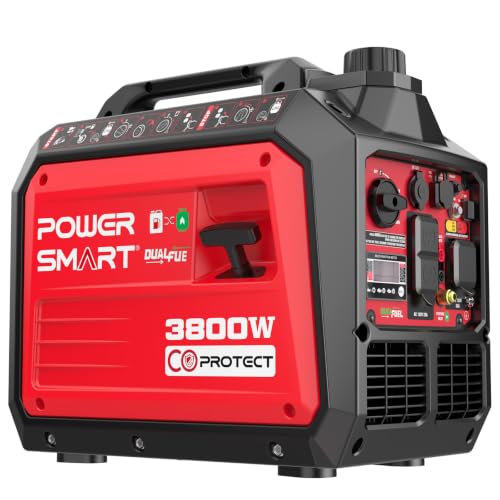
- Lightweight 50.7-pound inverter design
- 59 dBA in Eco Mode
- Up to 24 hours on a 20-pound propane tank
Best For: Quiet, portable power for lighter loads
Quiet Budget Pick
WEN DF360iX Dual-Fuel Inverter Generator

- 3,600 starting watts on gasoline
- Quiet inverter power for sensitive electronics
- RV-ready with CO shutdown protection
Best For: Camping, RV use, and light residential backup
Best Heavy-Duty Pick
Westinghouse WGen9500DF Dual-Fuel Generator

- Up to 12,500 peak gasoline watts
- Remote, electric, and recoil starting
- 120/240V RV and transfer-switch-ready outlets
Best For: Residential emergency backup with higher power demands
Quiet Midrange Pick
WEN DF480iX Dual-Fuel Inverter Generator

- 4,800 starting watts and 4,000 rated watts
- Quiet clean power for electronics
- Electric start, wheels, and RV-ready outlet
Best For: Moderate RV and residential power needs
Best Value RV Pick – Westinghouse 4650W Dual-Fuel Generator
For shoppers comparing budget multi-fuel generators, this Westinghouse offers practical gasoline and propane flexibility with enough output for common home, RV, and outdoor needs. Its 4-gallon tank, fuel gauge, covered outlets, and included startup accessories make it a straightforward option for backup power.
Best For: RV owners and households wanting an affordable dual-fuel generator with extended gasoline runtime.
Pros:
- Provides up to 4,650 peak watts and 3,600 rated watts on gasoline.
- Includes an RV-ready TT-30R outlet plus 30A locking outlet.
- Runs up to 14 hours per tank and includes a fuel gauge.
- CO sensing, low-oil shutdown, and a three-year limited warranty add reassurance.
Cons:
- At 108 pounds, it is less convenient to move than compact inverter models.
- It uses an open-frame design rather than a quieter enclosed inverter design.
This is a sensible budget multi-fuel generator when RV compatibility and long gasoline runtime matter more than minimum size or weight.
Best Portable Inverter Value – BILT HARD 5500W Dual-Fuel Generator
This BILT HARD is one of the more portable budget multi-fuel generators, weighing 61.7 pounds while offering up to 4,000 running watts on gasoline. Its inverter design, economy mode, display, and parallel-ready connections make it appealing for camping, RV use, and lighter backup-power tasks.
Best For: Buyers who prioritize lower weight, inverter-style operation, and flexible monitoring features.
Pros:
- Delivers 4,000 running watts on gasoline or 3,600 on LPG.
- Weighs 61.7 pounds, making it notably portable.
- Economy mode can reduce engine speed, noise, and fuel use under lighter loads.
- Includes an RV outlet, USB adapter, DC output, and parallel connectors.
Cons:
- The 1.14-gallon tank is smaller than those on many conventional generators.
- The listed warranty is only 90 days.
- It uses recoil start rather than electric start.
Choose this model when portability and feature variety are higher priorities than long tank runtime or extensive warranty coverage.
Best High-Output Backup Pick – Westinghouse 14,500W Tri-Fuel Generator
For shoppers who need substantially more capacity than typical budget multi-fuel generators, this Westinghouse supports gasoline, propane, and natural gas. It provides up to 11,500 running watts on gasoline, includes 50A and 30A connections, and is designed to work with compatible transfer equipment for home backup.
Best For: Homeowners seeking high-output, tri-fuel backup power for larger household loads.
Pros:
- Offers 11,500 running and 14,500 peak watts on gasoline.
- Supports gasoline, propane, and natural gas.
- Remote electric start and up to 19 hours of runtime at 25% load improve convenience.
- Less than 5% THD, CO shutdown, and pressure lubrication support safer, cleaner operation.
Cons:
- At 230 pounds, it is difficult to move without substantial assistance.
- Transfer switch and related installation equipment are sold separately.
- Its high capacity makes it more generator than many basic users need.
This is the strongest choice here for serious home backup, but its size, weight, and accessory requirements make it less suitable for casual camping or simple RV use.
Best Compact Electronics Pick – PowerSmart 4400W Dual-Fuel Generator
The PowerSmart combines dual-fuel flexibility with inverter technology in a relatively compact 68-pound package. Among budget multi-fuel generators, it stands out for clean power under 3% THD, a digital display, and claimed long propane runtime at a 25% load.
Best For: Campers and households wanting portable dual-fuel power for electronics and essential appliances.
Pros:
- Supplies up to 3,600 running watts on gasoline and 3,300 on LPG.
- Inverter technology provides power rated below 3% THD for sensitive electronics.
- Runs up to eight hours on gasoline or 24 hours on a 20-pound propane tank at 25% load.
- Includes eco mode, digital display, CO protection, and parallel capability.
Cons:
- It has only 120V output, with no stated 240V capability.
- Gasoline capacity is limited to 1.6 gallons.
- The listed two-year warranty is shorter than some competing options.
This model offers a balanced mix of portability, clean inverter power, and fuel flexibility for users who do not need 240V service or heavy whole-home capacity.
Best for Easy Setup – Westinghouse 6500W Dual Fuel Generator
For shoppers comparing budget multi-fuel generators, this Westinghouse model offers substantial home-backup capacity with gasoline or propane operation. It provides up to 5,300 running watts on gasoline, a transfer-switch-ready 30A outlet, and useful safety features including CO and low-oil shutdown.
Best For: Homeowners who need higher-output emergency backup and flexible fuel options.
Pros:
- Produces 5,300 running watts on gasoline and 4,800 on propane.
- Includes 120/240V selection, an RV-ready outlet, and a transfer-switch-ready L14-30R outlet.
- Runs up to 14.5 hours and includes a fuel gauge.
- Includes a wheel kit, propane hose, oil, funnel, and three-year limited coverage.
Cons:
- At 135.6 pounds, it is heavier than the other listed options.
- Its open-frame design may be less convenient where quieter operation is important.
This is the strongest choice here for serious residential backup loads. Its higher output and transfer-switch compatibility add versatility, while the larger tank supports extended operation; however, buyers should plan for its substantial weight.
Best Value Electric Start – WEN 4750W Dual Fuel Generator
WEN 4,750-Watt 120V/240V Dual Fuel Portable Generator with Wheel Kit and Electric Start (DF475T)
Check Price On AmazonThis WEN generator is a practical pick among budget multi-fuel generators for buyers who want dual-fuel flexibility without giving up easy starting. Its electric-start 224cc engine, 120/240V selection, and 30A twist-lock outlet make it suitable for backup and jobsite use.
Best For: Value-focused buyers who want electric start and moderate backup capacity.
Pros:
- Switches between gasoline and propane with a simple selection dial.
- Electric start simplifies operation.
- Offers 3,800 running watts on gasoline and 3,500 on propane.
- Includes 120/240V capability, a 30A twist-lock outlet, wheel kit, and LPG hose.
Cons:
- Its 11-hour half-load runtime is shorter than the Westinghouse model’s stated runtime.
- It has a two-year warranty, shorter than the three-year coverage listed for the Westinghouse.
- It weighs 105.8 pounds, so portability still requires some effort.
The DF475T balances useful features and output at a relatively manageable size. Electric start is its main convenience advantage, while the 120/240V and 30A connections support backup applications; verify your load requirements before choosing it for whole-home use.
Best Quiet Portable Option – PowerSmart 3800W Dual Fuel Inverter
For buyers seeking budget multi-fuel generators in a lighter, quieter format, the PowerSmart inverter generator is a compelling option. It delivers up to 3,300 running watts, operates at a stated 59 dBA in Eco Mode, and can run on gasoline or a standard 20-pound propane tank.
Best For: Home users who prioritize quiet operation, lower weight, and portable power.
Pros:
- Compact 50.7-pound design is easier to move than the open-frame models.
- Runs at just 59 dBA in Eco Mode according to the supplied specifications.
- Offers up to 24 hours of runtime with a standard 20-pound propane tank.
- Includes CO, overload, short-circuit, and low-oil protection plus a digital display.
Cons:
- Its 3,300 running watts are lower than those of the other two generators.
- It provides 120V output rather than the 120/240V capability listed for the other models.
- Gasoline runtime is stated at eight hours at 25% load.
The PowerSmart stands out for portability and quiet operation rather than maximum output. Its inverter format, propane runtime, safety monitoring, and digital display suit lighter residential loads, but buyers needing 240V or higher-wattage backup should consider one of the larger open-frame options.
Quiet Budget Pick – WEN DF360iX Dual-Fuel Inverter Generator
For shoppers comparing budget multi-fuel generators, the WEN DF360iX offers a compact dual-fuel setup with inverter power for camping, RV use, and basic residential backup. It produces up to 3,600 surge watts on gasoline and includes RV-ready connectivity.
Best For: Campers and RV owners who want quiet, portable power with gasoline or propane flexibility.
Pros:
- Inverter technology provides clean power for phones, tablets, and laptops.
- Quiet operation is designed to be comparable to a normal conversation.
- CO Watchdog shutdown, fuel shut-off, and a three-year warranty add useful ownership features.
- Includes a TT-30R RV outlet, USB ports, and a 12V DC receptacle.
Cons:
- Its 2,900 rated gasoline watts and 2,600 rated propane watts limit the larger appliances it can support.
- The listed runtime is up to five hours.
- At 49 pounds, it is portable but not especially lightweight for extended carrying.
The DF360iX is a sensible choice when quiet operation, electronics-friendly output, and RV compatibility matter more than maximum capacity. Its smaller fuel tank and modest runtime make it better suited to targeted backup or recreational use than whole-home power.
Best Heavy-Duty Pick – Westinghouse WGen9500DF Dual-Fuel Generator
Among budget multi-fuel generators, the Westinghouse WGen9500DF stands out for high-output home backup. Its dual-fuel engine delivers up to 12,500 peak gasoline watts, supports remote electric starting, and includes outlets for household, transfer-switch-ready, and RV connections.
Best For: Homeowners who need substantial backup capacity for multiple appliances and prefer remote or electric starting.
Pros:
- Provides 9,500 running watts on gasoline and 8,500 on propane.
- Remote, electric, and recoil start options improve convenience.
- Up to 12 hours of runtime is listed from the 6.6-gallon tank.
- Includes a 120/240V 50A RV-ready outlet and a transfer-switch-ready 30A outlet.
Cons:
- Its large open-frame design is less suited to quiet camping environments.
- The substantial size and steel construction make it less convenient to move than compact inverter models.
- It is primarily positioned for residential backup rather than lightweight recreational use.
The WGen9500DF is the strongest fit here when capacity and home-backup connections take priority. Its large engine, long listed runtime, and multiple starting methods offer practical emergency capability, but buyers should plan for a heavier, more substantial generator.
Quiet Midrange Pick – WEN DF480iX Dual-Fuel Inverter Generator
The WEN DF480iX is a practical middle ground in the budget multi-fuel generators category. Its inverter design supplies up to 4,800 surge watts, while dual-fuel operation, electric starting, and RV-ready outlets make it useful for camping or selected home-backup tasks.
Best For: RV users and homeowners who want more capacity than a compact generator while retaining quiet, clean inverter power.
Pros:
- Runs on gasoline or propane and provides 4,000 rated watts with either fuel according to the supplied specifications.
- Clean inverter output is suitable for sensitive electronics.
- Electric start, onboard wheels, and a telescoping handle improve portability.
- Includes CO Watchdog protection, fuel shut-off, a TT-30R outlet, and USB ports.
Cons:
- At 78.5 pounds, it is considerably heavier than the smaller WEN model.
- The listed runtime is seven hours, which may require refueling during longer outages.
- Its 120V-focused outlet configuration may not meet needs for 240V appliances.
The DF480iX balances useful output with the cleaner and quieter operation expected from an inverter generator. It is a stronger option than a compact model for moderate loads, though its weight and 120V configuration should be considered before purchase.
How We Picked the Best Budget Multi-Fuel Generators
We compared the listed generators across the factors that matter most in real use: running and peak wattage, fuel options, inverter technology, outlet configuration, startup method, portability, RV compatibility, transfer-switch readiness, and carbon-monoxide safety features. We also considered whether each model fits a clear use case rather than treating maximum wattage as the only measure of value.
Specifications can vary by fuel and operating conditions, so check the manufacturer’s current manual for exact output, runtime, grounding, ventilation, and maintenance requirements before purchase.
Quick Comparison
- Best for basic backup and RV use: A midrange 4,000- to 5,000-watt dual-fuel model offers a useful balance of capacity and cost.
- Best for sensitive electronics: Choose an inverter generator when cleaner power, quieter operation, and fuel efficiency are priorities.
- Best for whole-home backup: High-output 12,500- to 14,500-watt units provide greater capacity, but require more space, fuel, and planning.
- Best for portability: Compact inverter models are easier to move and store, though their lower output may limit appliance combinations.
Key Buying Factors for Budget Multi-Fuel Generators
Wattage and Load Planning
List the appliances you expect to run simultaneously, then account for startup surges from refrigerators, sump pumps, air conditioners, and power tools. Running watts determine sustained capacity; peak watts cover short startup demands. Avoid sizing a generator only by its advertised peak figure.
Fuel Flexibility
Dual-fuel generators commonly run on gasoline and propane, while tri-fuel models add natural gas. Gasoline usually offers strong output and easy availability, whereas propane stores longer and can be useful during extended outages. Natural-gas models may simplify fixed home backup but can require an appropriate connection and installation.
Inverter Output, Noise, and Runtime
Inverter technology is particularly useful for electronics, camping, and neighborhoods where noise matters. Compare rated output, economy-mode behavior, fuel capacity, estimated runtime, and whether the unit includes a fuel shutoff that helps reduce stale fuel in the carburetor.
Safety and Connection Options
Look for carbon-monoxide monitoring, low-oil shutdown, circuit breakers, covered outlets, and clear operating instructions. RV-ready 30-amp outlets help with compatible trailers, while transfer-switch readiness can support a safer home connection by a qualified electrician. Never operate a portable generator indoors, in a garage, or near doors and windows.
Who Should Buy Which Budget Multi-Fuel Generators?
Choose a compact inverter model for camping, tailgating, light tools, or occasional electronics charging. Choose a midrange dual-fuel generator for essential outage loads such as a refrigerator, lights, internet equipment, and selected appliances. Choose a larger home-backup model if you need to support multiple high-demand appliances, have adequate outdoor storage, and are prepared for professional connection planning. A tri-fuel option is worth considering when natural gas is available and long-term fuel convenience matters more than compact size.
