
Compact multi-fuel generators offer a flexible way to power essential appliances, camping equipment, and RV systems without committing to a single fuel source. Gasoline delivers convenience, while propane can provide cleaner, longer-term storage and useful fuel flexibility.
We compared 10 portable inverter models across output, runtime features, noise control, RV compatibility, safety systems, and overall practicality to help you choose the right generator for your needs.
Best 10 Compact Multi-Fuel Generators Picks for 2026
Quiet RV Pick
WEN DF360iX Dual-Fuel Inverter Generator

- Gasoline and propane operation
- Clean inverter power with CO shutdown
- RV-ready outlets and three-year warranty
Best For: Quiet RV camping and residential backup
High-Output Travel Choice
A-iPower 4300W Dual-Fuel Inverter

- Up to 4,300 gasoline starting watts
- 3% THD inverter output
- Wheels and telescoping handle for transport
Best For: Camping and portable higher-output power
Longest Runtime Pick
PowerSmart 3800W Dual-Fuel Generator
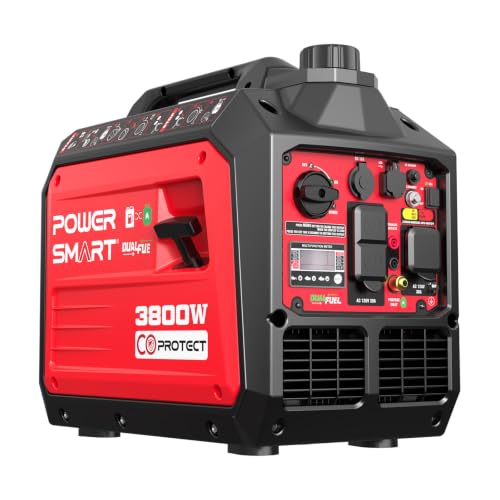
- Up to 24 hours on a 20-pound propane tank
- 59 dBA in Eco Mode at 25% load
- CO and low-oil protection with parallel readiness
Best For: Quiet camping and extended backup runtime
Fuel-Tank Value Pick
Power Equipment 4400W Generator

- 4,400 peak watts and 3,400 running watts
- Up to 14 hours at 25% load
- Two-gallon tank with fuel gauge and RV port
Best For: Gasoline-powered RV and home backup
High-Capacity Dual-Fuel Pick
BILT HARD 5500W Dual Fuel Inverter Generator
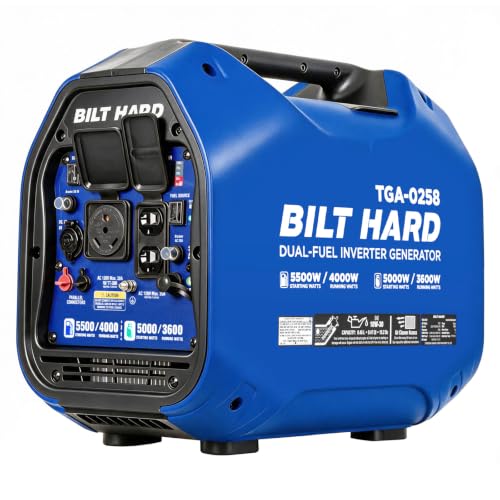
- Up to 4,000 running watts on gasoline
- Economy mode and parallel-ready design
- RV outlet plus CO auto-shutoff
Best For: RV owners and higher-demand home backup
Lightweight Quiet Pick
2800-Watt Portable Inverter Generator

- 40-pound portable design
- Under 58 dBA at 23 feet
- 2,000 running watts with USB and Type-C
Best For: Camping and lighter emergency power needs
RV-Ready Dual-Fuel Pick
Champion 4000-Watt Dual Fuel Inverter Generator

- 3,000 running watts on gasoline
- Up to 25 hours on propane
- TT-30R outlet and CO Shield
Best For: RV travel and extended propane-powered backup
Best Balanced Choice
PowerSmart 4400W Dual-Fuel Inverter Generator

- 3,600 running watts on gasoline
- Up to 24 hours on a propane tank at 25% load
- Inverter output with CO protection and Eco mode
Best For: Home emergency backup with flexible fuel options
Best Portable Design
ERAYAK 4500W Dual-Fuel Inverter Generator

- 54-pound compact design
- Automatic switch from propane to gasoline
- 58 dBA operation at 23 feet and quarter load
Best For: Camping, RV travel, and easy-to-store backup power
Best High-Output Option
WEN 6800W Dual-Fuel RV-Ready Generator

- 5,100 rated gasoline watts and 4,500 propane watts
- Electric start with wheels and telescoping handle
- 120V/240V output plus RV and USB connections
Best For: Higher-demand RV and home backup power
Quiet RV Pick – WEN DF360iX Dual-Fuel Inverter Generator
For shoppers comparing compact multi-fuel generators, the WEN DF360iX stands out as a quiet, RV-ready inverter model with gasoline and propane flexibility. It provides clean power for sensitive electronics and includes carbon-monoxide protection.
Best For: RV camping, residential backup, and buyers prioritizing quiet operation and dual-fuel flexibility.
Pros:
- Runs on gasoline or propane, with up to 3,600 starting watts on gasoline.
- Inverter technology produces clean power for phones, laptops, and other sensitive electronics.
- Includes an RV TT-30R outlet, USB ports, fuel shut-off, and CO Watchdog sensor.
- Three-year limited warranty and a 49-pound portable design.
Cons:
- Gasoline runtime is listed at about five hours.
- Its 1.5-gallon tank limits fuel capacity compared with larger open-frame models.
The DF360iX is a practical compact choice when quiet performance, RV connectivity, and fuel versatility matter more than maximum long-duration capacity.
High-Output Travel Choice – A-iPower 4300W Dual-Fuel Inverter
The A-iPower 4300W is a strong contender among compact multi-fuel generators for users who want higher output without moving to a bulkier conventional unit. Its gasoline and propane ratings, telescoping handle, and flat-free wheels support portable use.
Best For: Camping, RV use, and portable backup where higher output and easy transport are priorities.
Pros:
- Delivers up to 4,300 starting watts and 3,450 running watts on gasoline.
- Propane operation provides 3,900 starting watts and 3,100 running watts.
- Inverter output is rated at 3% THD for sensitive electronics.
- Includes low-idle technology, a data display, CO indicator, telescoping handle, and flat-free wheels.
Cons:
- The supplied notes do not list an RV-specific TT-30R outlet.
- Its 1.6-gallon tank provides 7.5 hours only at a 25% load on gasoline.
Choose this A-iPower model if output and mobility are more important than the smallest possible footprint, while still retaining dual-fuel convenience and inverter power.
Longest Runtime Pick – PowerSmart 3800W Dual-Fuel Generator
The PowerSmart 3800W combines compact dimensions with dual-fuel operation and extended runtime claims, making it a useful option among compact multi-fuel generators for camping or emergency home use. Eco Mode helps reduce noise and stretch fuel.
Best For: Buyers seeking quiet operation, long runtime, and multiple charging and connection options.
Pros:
- Produces 3,800 starting watts and 3,300 running watts on gasoline.
- Runs at a listed 59 dBA at 25% load in Eco Mode.
- Offers up to eight hours on gasoline or up to 24 hours on a standard 20-pound propane tank at the stated conditions.
- Includes CO, overload, short-circuit, and low-oil shutdown protection, plus parallel capability.
Cons:
- At 50.7 pounds, it is not the lightest generator in this group.
- The two-year warranty is shorter than the WEN model’s listed warranty.
This PowerSmart is appealing when quiet nighttime operation and reduced refueling are key considerations, especially for camping and moderate home backup loads.
Fuel-Tank Value Pick – Power Equipment 4400W Generator
For shoppers who value fuel capacity and straightforward emergency power, this Power Equipment model offers 4,400 peak watts, a two-gallon tank, and ECO Mode. It is a gasoline-only option rather than a dual-fuel generator, but its long stated runtime can suit RV and home backup use.
Best For: RV camping and home backup where extended gasoline runtime and higher peak output are useful.
Pros:
- Provides 4,400 peak watts and 3,400 running watts.
- Runs for up to 14 hours at 25% load with ECO Mode.
- Includes a fuel gauge, two 120V AC ports, a 12V DC port, and an RV port.
- At 56 pounds, it remains portable for its output class.
Cons:
- It runs on gasoline only, so it lacks the fuel flexibility of dual-fuel models.
- Its listed noise level is under 72 dBA from 23 feet away.
- The supplied warranty is one year.
This model makes sense for buyers who can rely on gasoline and want a larger tank, RV connectivity, and extended low-load runtime in a portable open-frame package.
High-Capacity Dual-Fuel Pick – BILT HARD 5500W Dual Fuel Inverter Generator
For shoppers comparing compact multi-fuel generators, the BILT HARD 5500W is a strong option when you need substantial portable output without giving up gasoline or LPG flexibility. Its inverter design, economy mode, RV outlet, and parallel capability make it adaptable for home backup, camping, and RV use.
Best For: RV owners and households needing higher-capacity dual-fuel backup power.
Pros:
- Provides up to 4,000 running watts on gasoline and 3,600 on LPG.
- Offers economy mode, a digital display, and parallel-ready operation.
- Includes a 120V 30A RV outlet, USB-A/USB-C adapter, and CO auto-shutoff.
Cons:
- At 61.7 pounds, it is heavier than the smaller generator options here.
- The listed warranty is only 90 days.
- It uses recoil starting rather than electric start.
This model stands out for its useful output range and broad connectivity. Choose it when dual-fuel flexibility and RV-ready power matter more than minimizing weight.
Lightweight Quiet Pick – 2800-Watt Portable Inverter Generator
If portability and low operating noise are priorities, this compact inverter generator is an approachable choice for camping and emergency use. It runs on gasoline, delivers 2,000 running watts, and weighs about 40 pounds while offering up to nine hours of runtime at 25% load.
Best For: Campers and users who want a lightweight, quiet generator for electronics and modest backup loads.
Pros:
- Lightweight 40-pound design with a built-in handle.
- Runs at under 58 dBA from 23 feet away.
- Provides less than 3% THD, ECO mode, fuel indication, and USB/Type-C ports.
Cons:
- Gasoline-only operation does not provide multi-fuel flexibility.
- Its 2,000 running watts are lower than the dual-fuel models listed.
- A high-altitude kit is recommended above approximately 4,000 feet and is not included.
This is the most carry-friendly option in the group and a practical fit for sensitive electronics, outdoor activities, and lighter emergency loads. It is less suitable when you need propane operation or higher continuous output.
RV-Ready Dual-Fuel Pick – Champion 4000-Watt Dual Fuel Inverter Generator
The Champion 4000-Watt is one of the more versatile compact multi-fuel generators for RV use and home backup. It supports gasoline and propane, includes a TT-30R RV outlet, and combines inverter-style clean power with a CO Shield auto-shutoff system.
Best For: RV users who want dual-fuel convenience, quiet operation, and a longer propane runtime.
Pros:
- Produces 3,000 running watts on gasoline and 2,700 on propane.
- Runs up to 10 hours on gasoline or up to 25 hours on propane.
- Includes RV-ready TT-30R output, less than 3% THD, CO Shield, and a three-year warranty.
Cons:
- Its 64 dBA rating is not as quiet as the smaller gasoline model.
- The parallel kit is sold separately.
- Recoil start may be less convenient than electric start.
With its RV outlet, dual-fuel operation, and notably long propane runtime, this Champion model is a balanced choice for travel and outage preparedness. Its warranty and support also add reassurance for regular use.
Best Balanced Choice – PowerSmart 4400W Dual-Fuel Inverter Generator
For shoppers comparing compact multi-fuel generators, the PowerSmart MB5040DC offers a practical balance of household output, portability, and fuel flexibility. It produces up to 3,600 running watts on gasoline or 3,300 running watts on propane, with inverter technology rated below 3% THD for phones, tablets, cameras, and other sensitive electronics.
Best For: Home emergency backup and users who want a relatively compact generator with gasoline and propane options.
Pros:
- Dual-fuel operation with up to 24 hours of runtime on a 20-pound propane tank at 25% load.
- Clean inverter power and a 120V 30A twist-lock outlet for versatile connections.
- Includes CO protection, low-oil shutdown, overload protection, Eco mode, and a digital display.
Cons:
- Its 1.6-gallon gasoline tank provides up to 8 hours at 25% load, less than the stated propane runtime.
- At 68 pounds, it is portable but not among the lightest options in this group.
The PowerSmart is a well-rounded pick when you need dependable residential backup power without moving up to a much larger unit. Its 3600-watt gasoline rating, inverter output, and dual-fuel capability make it especially adaptable for outages and occasional outdoor use.
Best Portable Design – ERAYAK 4500W Dual-Fuel Inverter Generator
The ERAYAK 4500PD stands out among compact multi-fuel generators for its 54-pound weight and space-saving design. It supplies up to 3,500 running watts on gasoline and 3,150 running watts on propane, while pure sine wave inverter output and a 58 dBA quarter-load rating suit camping, RV use, and home backup.
Best For: Campers, RV users, and shoppers who prioritize lighter weight, quiet operation, and easy storage.
Pros:
- Lightweight 54-pound design with a compact footprint for transport and storage.
- Automatic fuel-switching system can change to gasoline when propane runs out.
- Includes a 30A RV outlet, USB-A and USB-C ports, CO sensor, and circuit-breaker protection.
- Electronic Speed Control helps support up to 16 hours of gasoline runtime at 25% load.
Cons:
- Rated output is lower on propane than on gasoline.
- The supplied notes emphasize 120V output, so it is not the choice for higher-voltage loads.
Choose the ERAYAK when portability and convenience matter as much as raw capacity. Its fuel-switching feature, quiet operation, and RV-ready connections make it a particularly flexible option for outdoor trips or backup situations where easy handling is important.
Best High-Output Option – WEN 6800W Dual-Fuel RV-Ready Generator
For buyers who need more capacity than most compact multi-fuel generators provide, the WEN DF680iX delivers 5,100 rated watts on gasoline and 4,500 rated watts on propane. Its electric start, RV-ready outlets, 120V/240V receptacle, and bonded-neutral configuration also make it suitable for larger backup loads and low-power Level 2 charging for battery or hybrid electric vehicles.
Best For: RV owners and households that need higher-output dual-fuel power with electric starting and 240V capability.
Pros:
- Higher rated output than the other listed models, with 6,800 gasoline surge watts.
- Electric start, onboard wheels, and a telescoping handle improve usability despite its larger size.
- Offers 120V/240V output, an RV receptacle, USB ports, and a 12V DC receptacle.
- Fuel shutoff uses remaining carburetor fuel before shutdown and helps limit maintenance.
Cons:
- At 99.2 pounds, it is substantially heavier than the other options.
- The stated runtime is 6 hours, so extended operation may require more frequent refueling.
- Its larger output and feature set may be excessive for light camping loads.
The WEN is the strongest fit when output and connection flexibility take priority over compactness. It is less convenient to lift and store, but wheels, electric start, dual-fuel operation, and 240V capability give it a broader role in RV and home backup applications.
How We Picked the Best Compact Multi-Fuel Generators
We focused on generators that balance portable size with useful real-world output. The lineup includes dual-fuel and multi-fuel models suited to camping, RV use, emergency backup, and occasional household power. We considered rated and peak wattage, inverter technology, fuel flexibility, noise-related features, portability, outlet selection, and safety equipment such as carbon monoxide monitoring and automatic shutdown.
Because advertised wattage does not tell the whole story, buyers should pay attention to continuous running output rather than relying only on the highest surge number. We also looked for practical features including electric starting, fuel shutoff, ECO modes, 30-amp RV-ready outlets, and accessible controls.
Quick Comparison
| Best For | What to Prioritize | Recommended Output Range |
|---|---|---|
| Camping and tailgating | Low noise, light weight, efficient inverter power | 2,800–4,000 watts |
| RV air conditioning | 30-amp RV outlet and adequate startup capacity | 3,600–4,500 watts |
| Emergency essentials | Dual-fuel operation, CO protection, reliable runtime | 4,000–5,500 watts |
| Higher-demand backup | Electric start, larger fuel capacity, greater continuous output | 5,000–6,800 watts |
Key Buying Factors for Compact Multi-Fuel Generators
Wattage and Startup Demand
Add the running wattage of the devices you expect to use, then account for startup surges from refrigerators, pumps, air conditioners, and power tools. Choose a generator with reserve capacity instead of operating continuously at its limit.
Fuel Choice and Runtime
Gasoline is widely available and often produces the strongest output. Propane stores well and can be useful during extended outages, but it may deliver slightly less power. Check runtime at a stated load, since manufacturer estimates can vary substantially.
Noise, Portability, and Inverter Power
Inverter generators generally provide cleaner electricity for sensitive electronics and may run more quietly, especially with an ECO mode. Compare listed weight, wheel kits, handles, and the generator’s physical footprint if you will move or store it frequently.
Safety and Convenience
CO monitoring, low-oil shutdown, overload protection, fuel shutoff, and clear operating controls are important for routine use. Never operate a portable generator indoors, in a garage, or near open windows. Use only outdoors with adequate clearance and follow the manual’s grounding and extension-cord guidance.
Who Should Buy Which Compact Multi-Fuel Generators?
Choose a smaller 2,800- to 3,600-watt model for quieter camping, tailgating, and basic emergency loads. A 3,800- to 4,500-watt dual-fuel generator is a practical middle ground for RV owners and households running several essentials. If you need more capacity for larger appliances or want greater startup headroom, consider a 5,500- to 6,800-watt option with electric start and a larger fuel system.
For occasional use, prioritize manageable weight, simple controls, and storage convenience. For serious outage preparedness, prioritize continuous wattage, dual-fuel runtime, safety monitoring, outlet compatibility, and a documented maintenance schedule.
