
When outages last longer than a few hours, a dependable power station can keep essential appliances, medical equipment, networking gear, and workstations running without the noise or maintenance of a conventional generator.
We compared 10 professional home backup power stations across battery capacity, inverter output, recharge options, portability, and practical emergency-use features to help you choose the right level of backup power.
Best 10 Professional Home Backup Power Stations Picks for 2026
Fast-Charging Essential Backup

- 1,152Wh LiFePO4 battery with 1,800W output
- Full AC recharge in about one hour
- 20ms UPS and up to 500W solar input
Best For: Short outages, essential appliances, camping, and off-grid power
Whole-Home Power Leader

- 6,144Wh capacity with 7,200W output
- 120/240V support for heavy household loads
- Expandable from one battery to 90kWh
Best For: Whole-home residential backup and high-demand appliances
Compact Long-Run Backup
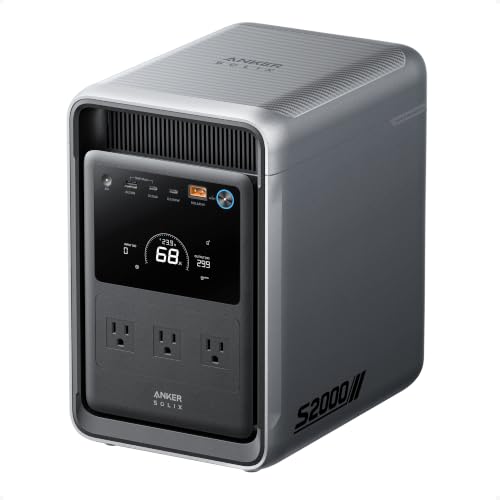
- 2,010Wh battery with 1,500W continuous output
- 35.7-pound compact design
- Under-10ms switchover and 400W solar input
Best For: Refrigerator backup, essential devices, and portable emergency power
Rolling High-Capacity Home Backup
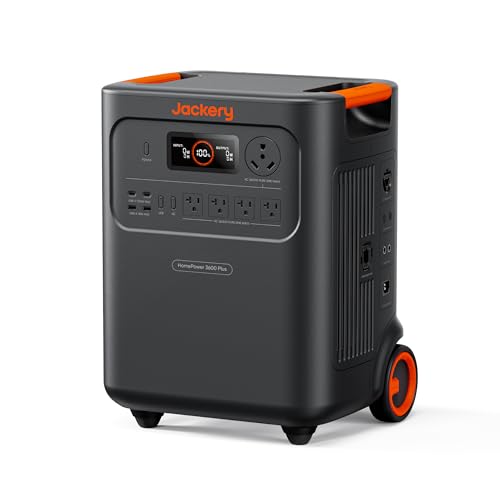
- 3,584Wh capacity and 3,600W AC output
- Expandable storage up to 21kWh per unit
- Wheels, handle, and two-hour hybrid recharge
Best For: Extended home outages and high-demand appliances
Compact Capacity Pick
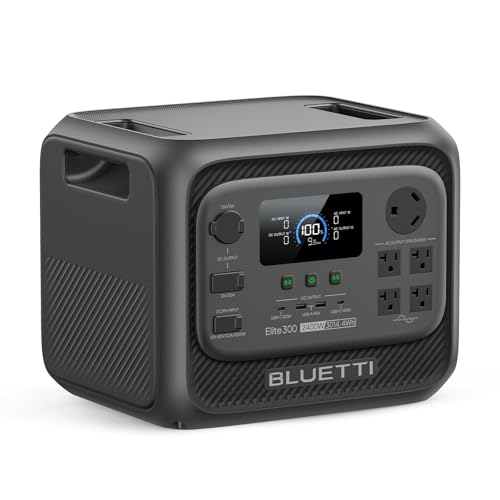
- 3,014.4Wh battery with 2,400W output
- TT-30 RV port and 10ms UPS
- Compact 3kWh design with fast charging
Best For: Compact home backup and RV power
High-Output Expansion Pick

- 3,072Wh capacity and 3,600W output
- Expandable storage up to 24kWh
- Generator-ready with solar charging support
Best For: Extended outages and expandable home backup
Maximum Capacity Pick

- 3,840Wh battery with 4,200W AC output
- 14 ports, including TT-30 RV connectivity
- Expandable up to 53.76kWh
Best For: High-demand home, RV, and off-grid backup
Best Compact High-Output Backup

- 3,600W output with 7,200W surge capacity
- 3,072Wh LiFePO4 battery and ≤20ms UPS
- Compact design with AC, solar, car, and generator charging
Best For: Space-conscious homeowners needing reliable essential-load backup
Best Rolling Large-Capacity Backup
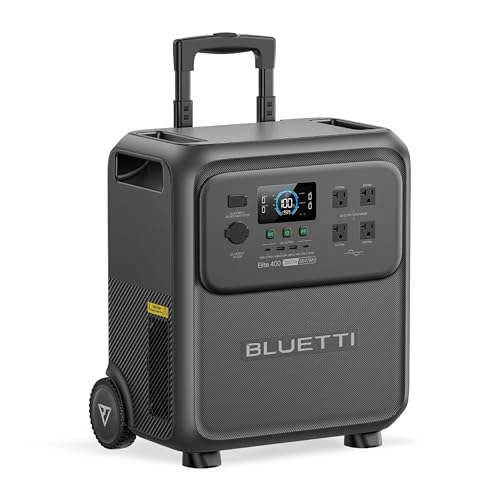
- 3,840Wh battery with 2,600W output
- 80% charge in 70 minutes with AC and solar
- Trolley design and ≤15ms UPS backup
Best For: High-capacity home backup that is easier to move
Best Expandable Appliance Backup

- 3,600W output with 4,500W peak power
- Expandable 3,840Wh to 11,520Wh capacity
- 15 ports plus Bluetooth app monitoring
Best For: Large households needing scalable, high-output backup
Fast-Charging Essential Backup – BLUETTI AC180
For shoppers comparing professional home backup power stations, the BLUETTI AC180 is a practical mid-capacity option with a 1,152Wh LiFePO4 battery, 1,800W output, and rapid charging. It can fully charge from AC input in about one hour, accept up to 500W of solar input, and provide UPS backup with a 20ms transfer time.
Best For: Home essentials, emergency backup, camping, and off-grid use where quick recharging and portability matter.
Pros:
- 1,800W continuous output with a 2,700W boost mode for higher-demand devices.
- Fast AC charging and up to 500W solar input.
- LiFePO4 battery and a five-year warranty.
- 20ms UPS transfer time for essential electronics.
Cons:
- The 1,152Wh capacity is smaller than larger whole-home systems.
- At 37.4 pounds, it is portable but not especially lightweight.
The AC180 stands out for buyers who want strong everyday output without moving to a full-size expandable home energy system. Its fast charging, solar compatibility, and UPS function make it well suited to short outages and mobile power needs.
Whole-Home Power Leader – EcoFlow DELTA Pro Ultra
The EcoFlow DELTA Pro Ultra is designed for shoppers seeking professional home backup power stations with whole-home ambitions. Its included battery and inverter provide 6,144Wh of storage, 120/240V output, and 7,200W of continuous power, while the system can scale to as much as 90kWh with additional batteries.
Best For: Residential backup users who need high output, dual-voltage support, expandable capacity, and circuit-level power management.
Pros:
- 7,200W output supports demanding household appliances, including a 3-ton central air conditioner.
- 120/240V capability and expansion up to 90kWh.
- 6,144Wh battery can fully recharge in about two hours.
- 20ms online UPS and UL1973 and UL9540 certifications.
Cons:
- The 70.9-pound system is substantially heavier than compact power stations.
- Its inverter and battery arrive in separate packages.
- The larger residential setup may be more than occasional campers need.
For serious outage preparation, the DELTA Pro Ultra offers the strongest capacity and output in this group. Its expandable architecture and app-based circuit prioritization make it especially compelling for homeowners planning a more comprehensive backup strategy.
Compact Long-Run Backup – Anker SOLIX S2000
The Anker SOLIX S2000 combines a 2,010Wh LiFePO4 battery with a compact 35.7-pound design, making it an appealing choice among professional home backup power stations for buyers who value runtime and easier handling. It delivers 1,500W continuously, peaks at 3,000W, and is rated to run a refrigerator for up to 35 hours, depending on conditions and usage.
Best For: Refrigerators, essential home devices, emergency use, and portable backup where a compact footprint is important.
Pros:
- 2,010Wh capacity with claimed 35-hour refrigerator runtime.
- LiFePO4 cells rated for up to 10,000 charge cycles and a 15-year lifespan.
- Compact 35.7-pound design with eight outlets.
- Supports up to 400W solar input and under-10ms switchover.
Cons:
- 1,500W continuous output is lower than larger home backup systems.
- There is no 12V DC port.
- Actual runtime varies by appliance, usage, and ambient temperature.
The S2000 is a strong middle ground for users who want more stored energy than a small portable station but do not need whole-home output. Its efficient design, long claimed battery life, and fast switchover suit refrigerator and essential-load backup.
Rolling High-Capacity Home Backup – Jackery HomePower 3600 Plus
The Jackery HomePower 3600 Plus is a high-capacity option for shoppers comparing professional home backup power stations. It provides 3,584Wh of storage, 3,600W AC output, and dual-voltage capability when used in parallel. Its wheeled luggage-style design and four charging options make a substantial backup unit easier to position and replenish.
Best For: Homeowners needing higher-output backup for pumps, heaters, dryers, and extended outages.
Pros:
- 3,600W output with 7,200W available in parallel.
- 3,584Wh capacity expandable to 21kWh per unit or 43kWh with multiple units.
- Hybrid AC+DC recharge from 0–100% in about two hours.
- Wheels and telescoping handle improve mobility for a 77.2-pound unit.
Cons:
- At 77.2 pounds, it is heavy to lift despite the rolling design.
- The listed configuration has two outlets.
- Dual-voltage operation requires parallel use.
The HomePower 3600 Plus is best suited to users who need more power and storage than compact stations provide but still want a plug-and-play format. Its expandable capacity, fast hybrid charging, and built-in mobility make it a practical larger-scale home backup choice.
Compact Capacity Pick – BLUETTI Elite 300
For shoppers comparing professional home backup power stations, the BLUETTI Elite 300 stands out by pairing a 3,014.4Wh LiFePO4 battery with a compact form factor. Its 2,400W output, 4,800W surge capacity, 10ms UPS, and RV-ready connections make it suitable for outages, travel, and off-grid use.
Best For: Homeowners and RV users who want substantial capacity in a relatively compact, easy-to-store power station.
Pros:
- 3,014.4Wh capacity with 2,400W output and 4,800W surge power.
- Includes a TT-30 RV outlet and 12V/30A DC output for compatible RV appliances.
- 10ms UPS switching helps support computers, routers, and other critical electronics.
- Supports AC, solar, and car charging, with charging to 80% in as fast as 78 minutes.
Cons:
- At 58 pounds, it is portable but not lightweight for frequent carrying.
- The listed runtime is approximately 1 hour and 18 minutes, varying with the connected load.
The Elite 300 is a practical middle ground for buyers who need serious backup capacity without the larger footprint of many 3kWh-class units. Its RV port and fast UPS response add useful flexibility beyond basic emergency charging.
High-Output Expansion Pick – Anker SOLIX F3000
The Anker SOLIX F3000 is built for demanding backup scenarios, combining a 3,072Wh battery with 3,600W output and expansion potential up to 24kWh. For professional home backup power stations, its generator readiness, solar inputs, and optional 240V setup make it especially adaptable during extended outages.
Best For: Households that want expandable energy storage, high output, and multiple recharge options for longer emergencies.
Pros:
- 3,072Wh capacity with 3,600W output and 11 total power outlets.
- Expandable to 24kWh for longer outage coverage.
- Can pair two units for 240V operation with demanding appliances.
- Supports solar charging and generator input, with reported low idle consumption.
Cons:
- At 91.5 pounds, it is considerably less convenient to move than smaller units.
- Some advanced capabilities, including 240V operation and smart energy storage, require additional equipment or a second station.
Choose the F3000 when scalability matters more than minimal size. Its expansion system and generator-compatible design make it a strong fit for serious outage planning, while its weight favors a mostly stationary setup.
Maximum Capacity Pick – PECRON E3800
The PECRON E3800 targets buyers who need high output, broad connectivity, and substantial expansion potential. Among professional home backup power stations, it offers a 3,840Wh LiFePO4 battery, 4,200W AC output, 14 output ports, and a stated expansion capacity of up to 53.76kWh.
Best For: Large households, RV owners, and off-grid users who need many ports and the option to build a much larger battery system.
Pros:
- 3,840Wh capacity and 4,200W pure sine wave AC output.
- Four AC outlets plus a TT-30 RV outlet and multiple DC, USB-A, and USB-C ports.
- Expandable to 53.76kWh for extensive backup requirements.
- Supports up to 3,200W AC charging and 3,000W solar input, with pass-through charging.
Cons:
- Its 87.3-pound weight makes frequent transport difficult.
- UPS switching is specified at 8–20ms, so it may not suit every highly timing-sensitive device.
- Maximum charging and output capabilities depend on the selected cable and setup.
The E3800 is compelling when capacity, output, and connection variety take priority. It is best treated as a substantial backup hub rather than a lightweight portable battery, particularly if you plan to add expansion batteries over time.
Best Compact High-Output Backup – Jackery HomePower 3000
For shoppers comparing professional home backup power stations, the Jackery HomePower 3000 combines a 3,072Wh LiFePO4 battery with 3,600W of continuous output. It is designed to keep essentials such as refrigerators, lights, fans, Wi-Fi routers, and security equipment running during outages without taking up as much space as many similarly sized units.
Best For: Homeowners who want compact, high-output emergency backup with UPS protection and multiple charging options.
Pros:
- 3,600W output and 7,200W surge capacity handle many household essentials.
- UL-certified UPS switches within 20ms for devices such as routers, cameras, and medical refrigerators.
- LiFePO4 battery supports up to 4,000 cycles while retaining 70% capacity.
- Can recharge through AC, hybrid AC/DC, solar, a 12V car charger, or a gas generator.
Cons:
- Solar panels are optional rather than included.
- At 59.5 pounds, it is portable but not lightweight for frequent carrying.
The HomePower 3000 is a strong fit when space efficiency, fast recharging, and dependable essential-load backup matter more than having the largest possible battery. Its 5-year warranty and integrated design further support long-term home use.
Best Rolling Large-Capacity Backup – BLUETTI Elite 400
The BLUETTI Elite 400 is a practical choice among professional home backup power stations when battery capacity and easy movement are priorities. Its 3,840Wh LiFePO4 battery, 2,600W output, and built-in trolley system are suited to outages, RV use, and emergency power needs.
Best For: Users who need a high-capacity backup station that can be rolled between storage areas, living spaces, or vehicles.
Pros:
- 3,840Wh capacity provides substantial energy storage for outages and off-grid use.
- 2,600W output with 3,900W surge capability can run appliances and power tools.
- Reaches 80% charge in as little as 70 minutes with combined AC and solar input.
- Rapid ≤15ms UPS switchover helps keep Wi-Fi, cameras, and pet feeders operating.
Cons:
- At 86 pounds, it is heavy to lift even though the trolley improves mobility.
- Its 2,600W output is lower than some similarly sized high-output stations.
The Elite 400 emphasizes capacity and transportability rather than minimal weight. Its rolling design, quiet operation, multiple charging methods, and 60-month warranty make it a compelling option for stationary home backup that may occasionally need to move.
Best Expandable Appliance Backup – ABOK Ark3600
The ABOK Ark3600 stands out among professional home backup power stations for its 3,600W rated output, 3,840Wh starting capacity, and optional expansion to 11,520Wh. With 15 output ports, app control, wheels, and a telescoping handle, it is built for both outage preparation and demanding outdoor use.
Best For: Households wanting expandable storage, many simultaneous connections, and enough output for most appliances and power tools.
Pros:
- 3,600W rated and 4,500W peak output supports a broad range of household appliances.
- Capacity can expand from 3,840Wh to 11,520Wh for longer backup periods.
- Fifteen ports include 30A and 20A AC outlets, USB-C, USB-A, and 12V outputs.
- AC and solar charging can fully recharge the unit in about 1.29 hours when combined.
Cons:
- At 92 pounds, it is among the heaviest options in this group.
- The expansion capability may require additional equipment and investment.
- Its listed runtime is only one hour, so actual duration depends heavily on load.
The Ark3600 is most appealing when scalability and connection flexibility outweigh portability. Its LiFePO4 battery is rated for more than 4,000 cycles, while Bluetooth monitoring makes it easier to track usage and adjust settings remotely.
How We Picked the Best Professional Home Backup Power Stations
We focused on the specifications that matter during real outages: usable battery capacity, continuous and peak AC output, charging speed, battery chemistry, expansion options, solar-input capability, outlet selection, and transportability. The lineup spans compact units for essential loads through high-capacity systems designed for larger appliances and longer interruptions.
Ratings and advertised capacities can vary by operating conditions, so treat runtime estimates as planning guides rather than guarantees. Actual performance depends on the appliance load, inverter efficiency, temperature, and whether the station is being charged while in use.
Quick Comparison
| What to Compare | Why It Matters |
|---|---|
| Battery capacity | Determines how long devices and appliances can run before recharging. |
| Continuous AC output | Shows which appliances can operate simultaneously. |
| Surge or peak output | Helps start motors in refrigerators, pumps, and tools. |
| Recharge options | Solar, wall, vehicle, and generator charging improve resilience. |
| Portability | Weight and handles affect whether you can move the unit safely. |
Key Buying Factors for Professional Home Backup Power Stations
Match Output to Your Essential Loads
List the devices you expect to run together, then add their running wattages. Leave extra headroom for startup surges from compressor-driven appliances. Higher-output models are better suited to refrigerators, freezers, sump pumps, induction appliances, and demanding tools, while smaller units work well for routers, lights, laptops, and charging stations.
Choose Capacity for the Outage Duration
Watt-hours indicate stored energy, but runtime is lower after inverter losses. A 3,000Wh-class station offers substantially more reserve than a 1,000Wh model, yet it will also be heavier and typically more expensive. Prioritize capacity based on your critical loads and the number of hours you need them running.
Consider Charging and Battery Longevity
LiFePO4 batteries are widely favored for backup use because they generally offer long cycle life and strong thermal stability. Fast wall charging restores readiness quickly, while solar input can extend an outage when the grid is down. Check solar-input limits, connector requirements, and whether charging can occur while powering loads.
Check Installation and Safety Requirements
Portable power stations are not automatically whole-home systems. To power household circuits through a transfer switch or inlet, use equipment and installation methods approved for that purpose and hire a qualified electrician. Keep ventilation clear, avoid wet locations unless the unit is rated for them, and follow the manufacturer’s charging and storage guidance.
Who Should Buy Which Professional Home Backup Power Stations?
For basic emergency essentials: Choose a lighter, lower-capacity model if your priority is keeping communications, lighting, laptops, and small medical devices operating.
For refrigerators and mixed household loads: Look for roughly 2,000Wh or more and enough continuous output to handle compressor startup and several smaller devices at once.
For extended outages and larger appliances: The 3,000Wh-and-up systems are better suited to longer runtime, higher loads, and possible solar replenishment. Prioritize the strongest inverter and expansion ecosystem that fits your budget.
For maximum home resilience: Consider a high-output, expandable system with 120/240V capability only if your intended circuits, installation plan, and electrical service support it. Otherwise, a simpler portable station may deliver better value and easier day-to-day use.
