
When the power goes out, the right backup station can keep refrigerators, medical devices, lights, communications gear, and essential electronics running without fuel, fumes, or complicated installation.
We compared 10 leading all-weather home backup power stations across battery capacity, output, charging speed, solar compatibility, portability, and practical outage-readiness to help you choose with confidence.
Best 10 All-Weather Home Backup Power Stations Picks for 2026
Best Rapid-Charging Pick

- 1,152Wh LiFePO4 battery
- 1,800W output with 2,700W boost
- Full AC recharge in about 1 hour
Best For: Fast-charging emergency and off-grid backup
Best Complete Home Backup Bundle

- 3,072Wh capacity and 3,600W output
- Includes two 200W solar panels
- 20ms UL-certified UPS
Best For: Extended household and RV backup with solar charging
Best Quiet High-Output Option

- 2,048Wh LFP battery
- 2,400W output with 3,400W X-Boost
- 0–80% recharge in about 1.13 hours
Best For: Quiet, fast-charging home and RV backup
Best Expandable Long-Duration Backup
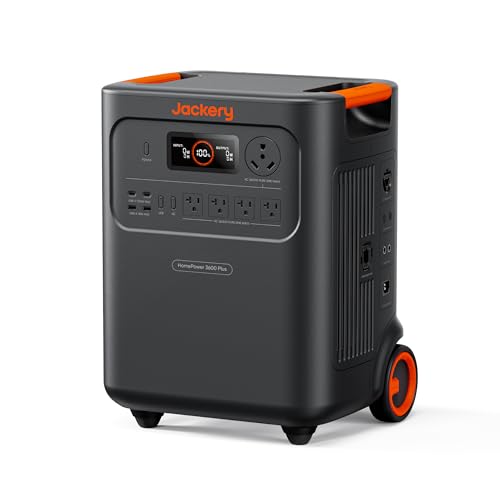
- 3,584Wh capacity and 3,600W output
- Expandable storage up to 21kWh per unit
- Wheels and telescoping handle
Best For: Extended outages and expandable household backup
Compact Long-Run Backup
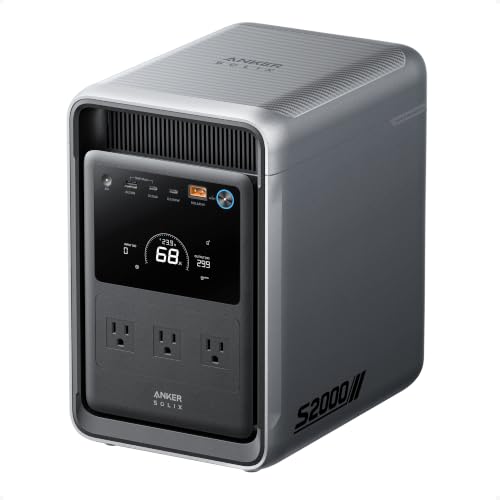
- 2,010Wh LiFePO4 capacity
- 1,500W output, 3,000W peak
- Compact 35.7-pound design
Best For: Portable emergency power for essential home appliances
Expandable Outage Coverage
Jackery HomePower 2000 Plus v2

- 2,048Wh expandable to 12kWh
- 2,400W AC output
- Priority routing for essential circuits
Best For: Scalable residential backup during extended outages
High-Capacity Solar Backup

- 3,840Wh expandable to 11,520Wh
- 3,600W output, 4,500W peak
- 400W solar panel included
Best For: High-demand home, RV, and extended emergency backup
Maximum-Capacity Choice
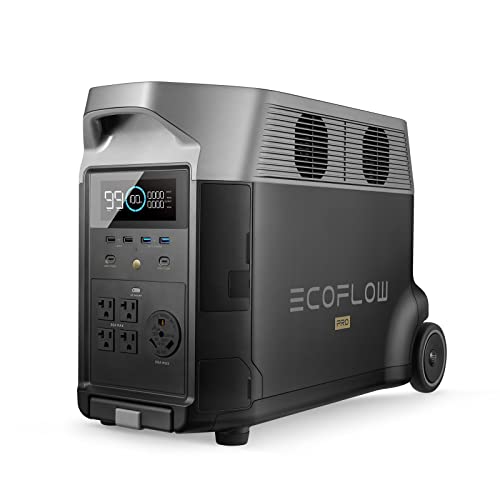
- 3,600Wh LFP capacity expandable to 25kWh
- 3,600W output with X-Boost flexibility
- 15 outputs and five charging methods
Best For: Extended outages, demanding appliances, RVs, and serious backup use
Quiet Fast-Charging Pick

- 2,048Wh LFP battery with 3,000W output
- Reaches 80% charge in 55 minutes
- Runs as quietly as 30 dB
Best For: Quiet emergency backup, RVs, camping, and outdoor tools
Compact UPS Choice
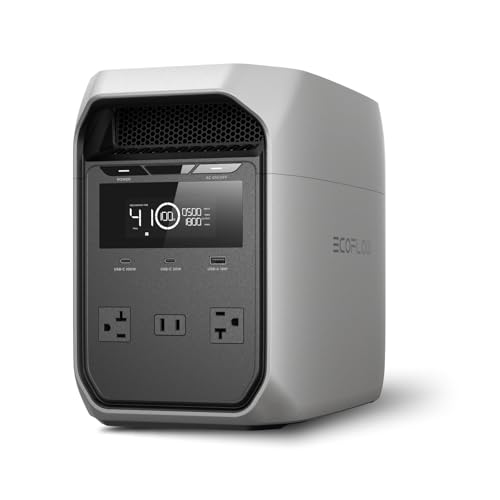
- 1,800W output with 3,600W surge capacity
- Under-10ms UPS switching for sensitive electronics
- 80% recharge in 45 minutes
Best For: Home offices, essential electronics, refrigerators, and shorter outages
Best Rapid-Charging Pick – BLUETTI AC180
For shoppers comparing all-weather home backup power stations, the BLUETTI AC180 stands out when quick recharging and dependable emergency switchover matter. Its 1,152Wh LiFePO4 battery, 1,800W output, and solar-charging capability make it a practical choice for outages, camping, and off-grid use.
Best For: Buyers who want a compact backup station with fast AC charging, solar input, and UPS protection for essential electronics.
Pros:
- Recharges fully in about 1 hour through 1,440W AC input.
- Supplies 1,800W continuously, with a 2,700W boost mode for higher-demand devices.
- Supports up to 500W solar input and a 20ms emergency UPS response.
- Includes a 5-year warranty and multiple charging cables.
Cons:
- The 1,152Wh capacity is smaller than the larger home-focused options in this roundup.
- At 37.4 pounds, it is portable but not especially lightweight.
The AC180 is a balanced option for powering essential appliances and electronics without the size or capacity of a whole-home battery system. Its fast recharge rate and 20ms UPS response are especially useful when outages are unpredictable.
Best Complete Home Backup Bundle – Jackery HomePower 3000
The Jackery HomePower 3000 is a strong contender among all-weather home backup power stations for households that need substantial capacity and included solar panels. Its 3,072Wh battery and 3,600W AC output can support refrigerators, routers, lights, fans, and other essentials during an outage.
Best For: Homes seeking a high-capacity backup system with included 400W of solar panels, UPS functionality, and broad port compatibility.
Pros:
- Provides 3,072Wh of capacity with 3,600W output and 7,200W surge capability.
- Includes two 200W SolarSaga panels for solar recharging.
- UL-certified UPS switches within 20ms for appliances and sensitive electronics.
- Offers AC, USB-C, USB-A, DC, and TT-30 RV connections.
Cons:
- At 59.5 pounds, it is less convenient to move than smaller power stations.
- Solar charging with the included panels can take up to 9 hours to reach 80%.
With its large battery, high output, and included solar hardware, the HomePower 3000 is well suited to extended essential-load backup. It also remains versatile for RV use and outdoor power needs, though its weight favors semi-stationary placement.
Best Quiet High-Output Option – EcoFlow DELTA 3 Max
For buyers evaluating all-weather home backup power stations, the EcoFlow DELTA 3 Max combines rapid charging with a high-output X-Boost mode. Its 2,048Wh LFP battery, 10ms transfer time, and quiet operation make it useful for both emergency backup and RV or campsite power.
Best For: Users who need fast replenishment, quiet overnight operation, and enough output for appliances such as refrigerators, microwaves, and power tools.
Pros:
- Recharges from 0% to 80% in about 1.13 hours with X-Stream charging.
- Provides 2,400W rated output and up to 3,400W through X-Boost mode.
- Uses a rapid 10ms transfer time for home backup.
- Offers app-based energy monitoring and charging schedule controls.
Cons:
- Solar panels are optional rather than included.
- Its 2,048Wh capacity is below the two Jackery home backup models listed here.
The DELTA 3 Max is a practical middle ground for users who value speed and quiet performance over maximum capacity. Its app controls add useful visibility, while the LFP battery is designed for up to 10 years of daily use.
Best Expandable Long-Duration Backup – Jackery HomePower 3600 Plus
The Jackery HomePower 3600 Plus is designed for shoppers who need more than short-term emergency charging from all-weather home backup power stations. It combines 3,584Wh of capacity, 3,600W output, expandable storage, and support for 120V and 240V operation when units are connected in parallel.
Best For: Households preparing for extended outages and buyers who want expandable storage, high output, and easy wheeled transport.
Pros:
- Delivers 3,600W output and up to 7,200W in parallel.
- Capacity can expand to 21kWh per unit or 43kWh with multiple units.
- Supports hybrid AC and DC, AC, solar, and gas-generator charging.
- Wheeled luggage-style design and telescoping handle improve mobility.
Cons:
- At 77.2 pounds, it is the heaviest product in this selection.
- The listed configuration has two outlets, fewer than some smaller portable stations.
- 240V operation requires parallel connection and is not provided by the single unit alone.
The HomePower 3600 Plus is the strongest fit for serious outage planning, especially when paired with expansion batteries or additional units. Its long rated lifespan and rolling design help offset its substantial weight.
Compact Long-Run Backup – Anker SOLIX S2000
The Anker SOLIX S2000 is a practical choice among all-weather home backup power stations when you want substantial capacity without a bulky footprint. Its 2,010Wh LiFePO4 battery, 1,500W continuous output, and 3,000W peak output suit refrigerators, lights, electronics, and other essential appliances during outages.
Best For: Homeowners who want a compact emergency power station with long runtime, multiple charging options, and a five-year warranty.
Pros:
- 2,010Wh capacity with a claimed 35-hour refrigerator runtime, though actual results vary by appliance and conditions.
- LiFePO4 battery rated for up to 10,000 charge cycles and a 15-year lifespan.
- Supports up to 400W solar input and AC, generator, alternator, or car charging.
- Relatively compact 35.7-pound design with eight outlets and less than 10 ms switchover.
Cons:
- No 12V DC port.
- Its 1,500W running output may not suit higher-draw appliances.
The S2000 stands out for efficient, portable backup power and a durable battery platform. It is a strong fit for essential loads, but check each appliance’s starting and running wattage before relying on it for whole-home needs.
Expandable Outage Coverage – Jackery HomePower 2000 Plus v2
The Jackery HomePower 2000 Plus v2 is designed for homeowners who want scalable backup from an all-weather home backup power station. It combines a 2,048Wh LFP battery with 2,400W AC output and supports expansion up to 12kWh for longer outages.
Best For: Residential backup users who prioritize expandable capacity, essential-circuit management, and high-output USB-C charging.
Pros:
- 2,048Wh capacity with expansion potential up to 12kWh.
- 2,400W output can support a broad range of household essentials.
- Smart Energy Management and Priority Routing help direct available power to essential circuits.
- LFP battery rated for more than 6,000 cycles and a claimed 16-year service life.
Cons:
- Expansion batteries and solar panels are optional rather than included.
- At 40.6 pounds, it is heavier than the Anker S2000.
- The supplied warranty information lists one year.
The HomePower 2000 Plus v2 is especially compelling when a single 2kWh battery may not be enough. Its expandable design and priority-based energy management offer a practical path from portable backup to more substantial residential outage coverage.
High-Capacity Solar Backup – ABOK Ark3600
ABOK Ark3600 Portable Power Station 3600W, 3840Wh LiFePO4 Battery (Ark3600+ 200W Solar Pannel)
Check Price On AmazonThe ABOK Ark3600 is a high-capacity option among all-weather home backup power stations, combining a 3,840Wh battery with 3,600W rated output and 4,500W peak power. It includes a 400W solar panel and supports up to 2,000W solar input, making it suitable for demanding home, RV, and emergency loads.
Best For: Users who need high output, long-lasting capacity, many connection options, and included solar charging for extended outages or off-grid use.
Pros:
- Large 3,840Wh capacity expandable to 11,520Wh.
- 3,600W rated and 4,500W peak output supports most household appliances according to the supplied product notes.
- Fast charging options include 1,500W AC, 2,000W PV, and combined AC-plus-PV charging in about 1.29 hours.
- Includes a 400W solar panel, 15 output ports, wheels, a telescoping handle, and Bluetooth app control.
Cons:
- At 92 pounds, it is substantially heavier than the other listed options.
- Its 21.6-by-12.6-by-18.5-inch footprint requires considerable storage space.
- Battery longevity is rated at over 4,000 cycles and up to 10 years, lower than the longer cycle claims of the other two models.
The Ark3600 is the most capable choice here for high-demand and extended-duration backup, especially because the solar panel is included. Its weight and size make it better for wheeled transport and stationary use than frequent carrying.
Maximum-Capacity Choice – EcoFlow DELTA Pro 3600
For shoppers comparing all-weather home backup power stations, the EcoFlow DELTA Pro stands out for its substantial 3,600Wh LFP battery, 3,600W output, and multiple charging options. It is designed to handle demanding home, RV, camping, and emergency-power needs, with expansion available for longer outages.
Best For: Whole-home essentials, extended outages, RVs, and high-demand outdoor equipment.
Pros:
- Large 3,600Wh capacity can expand up to 25kWh with compatible batteries and generators.
- 3,600W output, expandable to 4,500W with X-Boost, supports demanding appliances and tools.
- Offers 15 output methods and can recharge from wall outlets, solar, an EV station, a car, or a compatible generator.
- Five-year warranty and app-based monitoring and control add convenience for backup use.
Cons:
- At 99 pounds, it is considerably less convenient to move than smaller power stations.
- Its larger size and expansion accessories may be more than occasional campers need.
- Fastest charging figures depend on higher-power outlets or multiple solar panels.
The DELTA Pro is the strongest fit when capacity, output, and expandability matter more than portability. Its broad charging and connectivity options make it a capable foundation for serious home backup, though its weight favors a mostly stationary setup.
Quiet Fast-Charging Pick – DJI Power 2000
The DJI Power 2000 is a practical option among all-weather home backup power stations for users who want strong output in a relatively compact package. Its 2,048Wh LFP battery, 3,000W output, rapid 80% recharge, and quiet operation suit emergency backup, RV use, and outdoor work.
Best For: Quiet home backup, camping, RV trips, and powering demanding tools or appliances.
Pros:
- 3,000W stable output can run 99% of listed appliances, including kettles, cookers, saws, and drills.
- Recharges to 80% in 55 minutes for quick turnaround during travel or outages.
- Quiet operation can reach 30 dB, making it more comfortable for nighttime or enclosed RV use.
- Seamless UPS switching, app control, and expansion up to 22.5kWh support backup applications.
Cons:
- Solar and car charging require separate compatible adapters because those modules are not built in.
- The supplied details list a one-year manufacturer warranty, shorter than some competing models.
- Expansion batteries are sold separately, increasing the cost of multi-day backup.
Choose the Power 2000 if fast recharging, quiet operation, and high continuous output are priorities. It offers a useful balance of capacity and portability, but buyers planning solar charging should budget for the required adapter.
Compact UPS Choice – EcoFlow DELTA 3 Classic
The EcoFlow DELTA 3 Classic is a compact choice among all-weather home backup power stations, pairing a 1,024Wh battery with 1,800W output and fast charging. Its under-10ms UPS response makes it especially useful for protecting computers, networking equipment, and other sensitive electronics during brief interruptions.
Best For: Home-office backup, refrigerators, essential electronics, camping, and shorter outages.
Pros:
- 1,800W output and 3,600W surge capacity can support refrigerators, microwaves, laptops, and more.
- Reaches 80% charge in 45 minutes with X-Stream AC charging.
- Under-10ms UPS switching helps prevent interruptions, data loss, and downtime.
- LiFePO4 cells are rated for more than 10 years of daily use, with app controls and a five-year warranty.
Cons:
- The 1,024Wh capacity is smaller than the other stations in this roundup.
- Solar charging requires an optional 500W panel.
- It is not compatible with the DELTA 2 Smart Extra Battery or DELTA 3 Series Smart Extra Battery.
The DELTA 3 Classic is the sensible pick for everyday electronics and shorter backup events, especially where UPS performance matters. Its smaller battery keeps the unit more manageable, but it is less suited to multi-day outages without a compatible expansion path.
How We Picked the Best All-Weather Home Backup Power Stations
We focused on the specifications that matter during real outages: usable battery capacity, continuous and peak AC output, battery chemistry, recharge options, solar input, portability, and expansion potential. LiFePO4 batteries generally offer strong cycle life and improved long-term value. We also considered whether each model is better suited to short interruptions, extended outages, outdoor use, or whole-home backup planning.
Because “all-weather” can mean different things, check each product’s operating, storage, water-resistance, and temperature ratings before leaving a station outdoors. Most portable power stations should be protected from rain, standing water, excessive heat, and freezing conditions unless the manufacturer explicitly says otherwise.
Quick Comparison
| Capacity range | Best suited for | What to expect |
|---|---|---|
| About 1,000–1,200Wh | Short outages and essentials | More portable; suitable for phones, networking equipment, lights, and selected small appliances |
| About 2,000–2,100Wh | Balanced home backup | Good middle ground for refrigerators, electronics, cooking devices, and longer runtime |
| About 3,000–3,600Wh | Extended outages and heavier loads | More runtime and higher-output capability, usually with greater weight and cost |
Key Buying Factors for All-Weather Home Backup Power Stations
Capacity and Runtime
Watt-hours indicate how much energy the battery stores, but actual runtime is lower after inverter and conversion losses. Estimate your essential load in watts, then divide battery watt-hours by that load for a rough maximum runtime. Refrigerators, pumps, heaters, and power tools can have high startup surges, so leave headroom.
Output and Surge Performance
Match continuous wattage to the devices you plan to run simultaneously. Peak or surge output matters for motor-driven appliances such as refrigerators and sump pumps. Pure sine-wave AC output is preferred for sensitive electronics and many modern appliances.
Charging and Solar Input
Fast wall charging reduces downtime, while solar input can extend an outage when the grid is unavailable. Compare the maximum solar wattage, supported voltage range, panel compatibility, and whether panels are included. Solar performance depends heavily on weather, orientation, shading, and daylight hours.
Safety, Portability, and Expansion
Look for battery-management protections, clear displays or app controls, reliable warranty coverage, and manageable weight. Expansion batteries or transfer-switch compatibility may be valuable if you expect longer outages or want to support more circuits over time.
Who Should Buy Which All-Weather Home Backup Power Stations?
Choose a compact 1,000Wh-class model if you prioritize portability and need to cover communications, lighting, laptops, and small appliances. A 2,000Wh-class station is the strongest all-purpose choice for many households, offering a useful balance of runtime, output, and handling. Select a 3,000Wh-or-larger model if you regularly face extended outages, need to run several essential loads, or want more reserve for refrigeration and cooking.
For frequent storms, pair a suitable station with correctly rated solar panels, weather-protected storage, and a written list of essential loads. If you need automatic whole-home operation, consult an electrician about transfer equipment rather than relying on extension cords alone.
