
The best professional bike GPS computers do more than record speed and distance. They combine dependable positioning, clear navigation, training metrics, connectivity, and battery life for demanding road, gravel, mountain, and endurance rides.
This roundup compares 10 leading options, from compact training computers to premium navigation-focused models, so you can match features and price with the way you ride.
Best 10 Professional Bike GPS Computers Picks for 2026
Long-Distance Navigator

- Up to 35 hours of demanding-use battery life
- Multi-band GNSS for enhanced positioning accuracy
- Includes speed, cadence, and heart-rate sensors
Best For: Long rides and sensor-based training
Connected Route Companion

- Turn-by-turn prompts for multiple route file types
- Automatic route downloads and workout uploads
- ANT+ radar integration with vehicle alerts
Best For: Connected navigation with button controls
Premium Smart Training Hub

- Vivid 3.5-inch touchscreen with on-device course creation
- Built-in speaker, bike bell, and audio prompts
- Group-ride tools, hazard alerts, and Garmin Pay
Best For: Feature-rich training and group rides
Multi-Band Trail Explorer
Hammerhead Karoo Bike Computer

- Multi-band GNSS for city and trail tracking
- 3.2-inch touchscreen with button controls
- Connects with SRAM AXS, e-bikes, and ANT+ lights
Best For: Mixed-terrain riding and component connectivity
Best All-Around Trainer
- Touchscreen and button controls
- Multi-band GNSS navigation
- Up to 26 hours of battery life
Best For: Serious riders wanting detailed training and navigation in a compact computer
Best Large-Screen Value
iGPSPORT BSC500 GPS Bike Computer

- 3.3-inch touchscreen display
- Voice prompts and automatic rerouting
- Dual-band, five-system satellite support
Best For: Riders who prioritize readable maps and accessible navigation features
Best Feature-Rich Display
- Vivid touchscreen with button controls
- Road, gravel, and Trailforks mapping
- Built-in speaker and smart ride alerts
Best For: Connected riders seeking advanced road, gravel, and trail features
Best for Turn-by-Turn Exploration

- Dual-band GPS for challenging signal environments
- Turn-by-turn route imports and on-demand generation
- Up to 25-hour battery with IPX7 water resistance
Best For: Explorers who value flexible navigation and long ride time
Best for Training Analytics

- Adaptive workouts and training prompts
- Multi-band GNSS with ClimbPro ascent data
- Up to 42 hours in battery-saver mode
Best For: Structured-training riders using compatible sensors
Best for Color Mapping Value

- 2.8-inch color touchscreen with offline maps
- Automatic rerouting through the designated app
- ANT+, Bluetooth, Wi-Fi, and smart-trainer support
Best For: Riders wanting touchscreen navigation and indoor training features
Long-Distance Navigator – Garmin Edge 1040
For riders seeking professional bike GPS computers with extensive navigation and training tools, the Garmin Edge 1040 combines multi-band GNSS accuracy, cycling metrics, smart connectivity, and a long-lasting battery. Its 3.5-inch color touchscreen and included speed, cadence, and heart-rate sensors make it a well-equipped option for road and off-road riding.
Best For: Long rides, mixed-surface navigation, and cyclists who want detailed training insights with included sensors.
Pros:
- Up to 35 hours of battery life in demanding use and up to 70 hours in battery-saver mode.
- Multi-band GNSS supports enhanced positioning accuracy in challenging environments.
- Includes speed, cadence, and premium heart-rate sensors.
- Supports power guide, stamina insights, ride-specific maps, and popular cycling apps.
Cons:
- Some advanced training features require compatible sensors.
- IP54 protection is less robust than the IPX7 rating listed for some competing models.
The Edge 1040 is a strong choice when battery endurance and broad training functionality matter most. It is especially practical for riders who want a complete sensor bundle and dependable navigation across varied routes.
Connected Route Companion – Wahoo ELEMNT BOLT V3
The Wahoo ELEMNT BOLT V3 is a compact option among professional bike GPS computers, emphasizing straightforward button control, turn-by-turn navigation, and connected ride features. It automatically downloads routes from supported services, uploads completed rides, and integrates with compatible ANT+ rearview radar.
Best For: Riders who prefer physical buttons, connected route services, and a compact handlebar computer.
Pros:
- Generates turn-by-turn prompts for GPX, TCX, and supported third-party routes.
- Automatic route downloads and workout uploads work with compatible accounts.
- ANT+ radar integration displays approaching vehicles and provides LED indications.
- IPX7-rated design and up to 20 hours of battery life suit regular riding.
Cons:
- The 2.3-inch LCD is smaller than the displays on the Garmin models listed here.
- Live tracking and smart notifications require a smartphone connection.
Choose the BOLT V3 if quick route access, tactile controls, and connected safety features are higher priorities than a large touchscreen. Its app integrations also make it convenient for riders already using supported training and route platforms.
Premium Smart Training Hub – Garmin Edge 1050
The Garmin Edge 1050 is a premium choice among professional bike GPS computers, pairing a vivid 3.5-inch touchscreen with advanced navigation, training, and group-riding features. Its built-in speaker, road-hazard alerts, Garmin Pay, and customizable course tools add functionality beyond basic ride tracking.
Best For: Riders wanting a feature-rich touchscreen computer for training, group rides, and route planning.
Pros:
- Responsive color touchscreen supports on-device course creation and map planning.
- Built-in speaker provides workout and navigation prompts and functions as a bike bell.
- Offers group-ride messaging, live locations, incident alerts, and climb planning with a compatible smartphone.
- Provides up to 20 hours in demanding use or up to 60 hours in battery-saver mode.
Cons:
- Demanding-use battery life is shorter than the Edge 1040’s listed 35 hours.
- Several connected and advanced training features require a compatible smartphone or sensors.
The Edge 1050 stands out for riders who value an interactive display and a broad set of connected features. It is a particularly capable fit for organized rides, training-focused cyclists, and users who want audio alerts and on-device planning.
Multi-Band Trail Explorer – Hammerhead Karoo Bike Computer
The Hammerhead Karoo is a focused option for riders comparing professional bike GPS computers with touchscreen controls and broad device connectivity. Its multi-band GNSS is designed for precise tracking across urban streets and rugged trails, while ANT+/BLE support connects it with SRAM AXS products, e-bikes, and ANT+ lights.
Best For: Cyclists exploring varied terrain who want touchscreen map management and broad component connectivity.
Pros:
- Multi-band GNSS supports accurate tracking in varied environments.
- 3.2-inch touchscreen combines with buttons for flexible ride control.
- Connects with SRAM AXS products, e-bikes, and ANT+ lights.
- Designed for faster map rendering with extended battery life and ample memory storage.
Cons:
- Listed battery life is up to 15 hours, lower than the Garmin alternatives.
- The supplied details list USB connectivity but do not specify Bluetooth or Wi-Fi.
The Karoo is appealing for riders who prioritize map interaction, multi-band tracking, and integration with modern bike components. Its shorter listed runtime makes it better suited to typical day rides than the longest endurance outings.
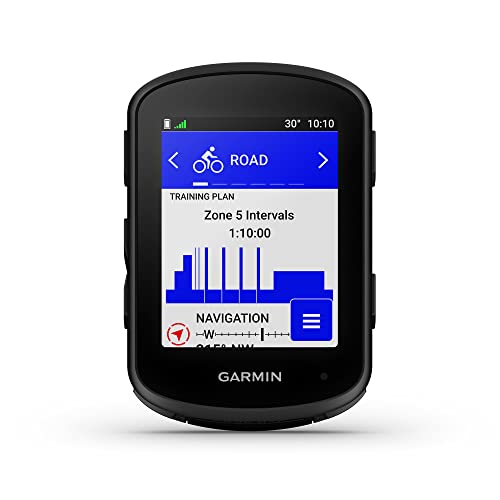
Best All-Around Trainer – Garmin Edge 840
The Garmin Edge 840 is a strong choice for riders seeking a professional bike GPS computer with flexible controls, detailed navigation, and advanced training tools. Its touchscreen and buttons, multi-band GNSS, and long battery life make it well suited to structured training and varied routes.
Best For: Cyclists who want advanced training guidance, accurate navigation, and a compact computer for long rides.
Pros:
- Touchscreen and button controls provide flexible operation.
- Multi-band GNSS is designed to improve positioning accuracy in challenging environments.
- Offers ClimbPro, suggested workouts, stamina insights, and power guidance with compatible sensors.
- Battery life reaches up to 26 hours in demanding use or 32 hours in battery-saver mode.
Cons:
- Many advanced training features require compatible power and heart-rate sensors.
- The 2.6-inch display is compact compared with larger bike computers.
- Some navigation and connectivity features depend on a compatible smartphone or services.
The Edge 840 is a versatile pick for serious riders who value training depth without moving to a larger unit. It balances compact size, strong navigation, and extensive performance analysis.
Best Large-Screen Value – iGPSPORT BSC500 GPS Bike Computer
The iGPSPORT BSC500 is a practical professional bike GPS computer for riders who prioritize a large display and straightforward route guidance. Its 3.3-inch touchscreen, button controls, voice navigation, and automatic rerouting are useful for everyday navigation and training.
Best For: Riders who want an easy-to-read screen, imported routes, voice prompts, and broad satellite support.
Pros:
- Large 3.3-inch touchscreen can display up to 12 cycling data fields per page.
- Dual-band positioning supports GPS, BeiDou, GLONASS, Galileo, and QZSS.
- Provides voice navigation, automatic rerouting, and speed-based turn warnings.
- Supports route imports from the iGPSPORT app and services such as Strava and Komoot.
Cons:
- The supplied notes do not specify battery runtime.
- Some route and training functions rely on the companion app or connected services.
- At 107 g, it is heavier than the listed Garmin Edge models.
With its bigger screen and audible guidance, the BSC500 emphasizes usability on the road. It is especially appealing if clear mapping and simple rerouting matter more than highly specialized training metrics.
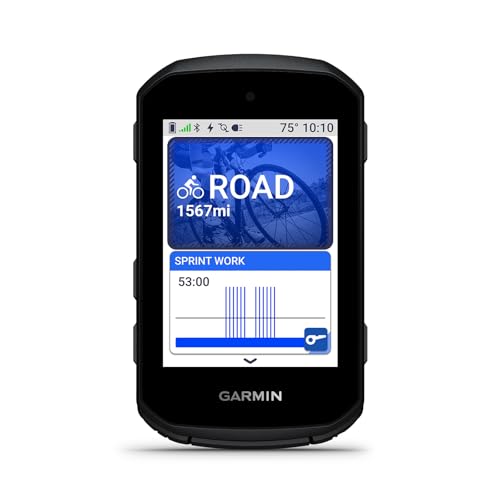
Best Feature-Rich Display – Garmin Edge 850
The Garmin Edge 850 is a premium professional bike GPS computer built around a vivid color display, advanced navigation, and connected ride features. It adds smart fueling prompts, weather overlays, a built-in speaker, and trail-focused mapping for riders who want extensive on-bike information.
Best For: Performance-focused road, gravel, and trail cyclists who want connected features and detailed ride feedback.
Pros:
- Vivid touchscreen display works alongside physical button controls.
- Preloaded road, gravel, and trail maps include Trailforks features and surface information.
- Smart fueling alerts, weather overlays, hazard alerts, and group-ride tools expand ride awareness.
- Built-in speaker supports workout prompts, navigation cues, and a bike bell.
Cons:
- Battery life is up to 12 hours in demanding use, lower than the Edge 840’s stated runtime.
- Several connected features require a compatible smartphone and Garmin Connect.
- Fueling and power-related guidance may require compatible sensors or specific ride modes.
The Edge 850 is the most feature-packed option here for riders who want a vivid display and broad connected functionality. Its shorter demanding-use battery life is the main trade-off for the richer feature set.
Best for Turn-by-Turn Exploration – Wahoo ELEMNT ROAM V3
The Wahoo ELEMNT ROAM V3 is a practical choice among professional bike GPS computers for riders who prioritize dependable navigation and long battery life. Dual-band GPS, route importing, and on-demand route generation support both planned adventures and spontaneous detours.
Best For: Explorers who want accurate positioning, flexible route creation, and extended ride time.
Pros:
- Dual-band GPS supports positioning in forests and dense urban areas.
- Provides turn-by-turn prompts for GPX, TCX, Strava, Ride with GPS, Komoot, and other routes.
- Offers up to 25 hours of battery life and IPX7 water resistance.
- Supports both buttons and touchscreen controls on a 2.8-inch display.
Cons:
- The listed warranty is limited to one year.
- Its 109-gram weight is higher than the listed Garmin Edge 540.
The ROAM V3 stands out for route flexibility and broad connectivity, making it especially appealing when navigation confidence matters more than the lightest possible setup.
Best for Training Analytics – Garmin Edge 540
The Garmin Edge 540 is one of the more training-focused professional bike GPS computers, combining button controls with navigation, adaptive coaching, and performance tools. It is particularly useful for cyclists already using compatible heart-rate and power equipment.
Best For: Structured-training riders who want coaching, climbing data, and performance guidance.
Pros:
- Provides daily suggested workouts and training prompts that adapt to training load and recovery when paired with compatible sensors.
- Multi-band GNSS improves positioning accuracy in challenging environments.
- ClimbPro shows ascent and grade, even when riding without a course.
- Battery life reaches up to 26 hours in demanding use or 42 hours in battery-saver mode.
Cons:
- Uses button controls rather than a touchscreen.
- Several coaching and performance features require compatible power and heart-rate sensors.
- The supplied map coverage is listed as North America.
The Edge 540 is a strong fit for riders who want their GPS computer to support a training plan, not just record routes, provided they have the sensors needed for its deeper analytics.
Best for Color Mapping Value – GEOID CC700 Pro
The GEOID CC700 Pro is a feature-rich option among professional bike GPS computers, pairing a 2.8-inch color touchscreen with offline maps, rerouting, and Wi-Fi syncing. Its ANT+ and Bluetooth support also makes it suitable for riders who want connectivity across cycling and indoor-training equipment.
Best For: Riders seeking touchscreen maps, automatic rerouting, and indoor-training support.
Pros:
- Color-coded offline maps include turn prompts, street names, zoom, and dual-perspective views.
- Recalculates routes after going off course when connected to the designated app.
- Supports GPS, BeiDou, GLONASS, QZSS, and Galileo, with AGNSS-assisted positioning.
- Works with smart trainers and syncs ride data with Strava and TrainingPeaks.
Cons:
- Rerouting requires the bike computer to remain connected to the designated app.
- The listed weight is 0.22 kg, making it heavier than the Garmin Edge 540.
- DJI camera controls are limited to DJI Action 4 and Action 5 Pro.
The CC700 Pro offers an appealing combination of visual navigation and training connectivity, particularly for riders who prefer a touchscreen and want one device for outdoor routes and indoor workouts.
How We Picked the Best Professional Bike GPS Computers
We focused on the features that matter most during serious training and long-distance riding: GPS and GNSS accuracy, route guidance, screen readability, battery endurance, sensor compatibility, workout support, mapping, and wireless connectivity. We also considered differences in form factor, touchscreen versus button controls, ecosystem integration, and suitability for road, gravel, touring, and off-road use.
The selected models represent several buying priorities rather than one universal winner. Premium Garmin, Wahoo, and Hammerhead computers emphasize advanced training, navigation, and connected features, while models from iGPSPORT and GEOID offer useful mapping and ride data at potentially lower prices.
Quick Comparison
| Best For | Recommended Options | What to Look For |
|---|---|---|
| Advanced training | Garmin Edge 1050, Edge 850, Edge 840 | Structured workouts, performance metrics, sensor support |
| Long rides and touring | Garmin Edge 1040, Wahoo ELEMNT ROAM V3 | Long battery life, dependable mapping, large display |
| Simple performance tracking | Wahoo ELEMNT BOLT V3, Garmin Edge 540 | Compact design, clear data fields, button controls |
| Navigation value | iGPSPORT BSC500, GEOID CC700 Pro | Color mapping, rerouting, route synchronization |
| Interactive navigation | Hammerhead Karoo | Touchscreen mapping, route planning, responsive interface |
Key Buying Factors for Professional Bike GPS Computers
Navigation and Positioning
Look for reliable GPS, multi-band or multi-system GNSS support, readable maps, turn-by-turn directions, and automatic rerouting if you regularly ride unfamiliar roads. Off-road riders should also check trail-map coverage and how easily routes can be imported.
Battery Life and Charging
Battery needs vary widely. Racers and daily trainers may prefer a compact computer that is easy to recharge, while bikepackers and endurance riders should prioritize longer runtimes and optional extended-battery support. Navigation, screen brightness, sensors, and cellular-connected features can reduce actual battery life.
Display and Controls
Touchscreens are convenient for browsing maps and changing settings, but physical buttons can be easier to operate with gloves, rain, or rough terrain. A larger display improves map visibility, while a compact unit may fit better on smaller handlebars or crowded cockpits.
Training and Connectivity
Serious athletes should confirm support for power meters, heart-rate monitors, cadence sensors, smart trainers, structured workouts, recovery data, and compatibility with their preferred training platform. ANT+ and Bluetooth support improve flexibility, while Wi-Fi and smartphone synchronization simplify uploads and updates.
Who Should Buy Which Professional Bike GPS Computers?
Choose a premium Garmin Edge model if you want deep training analytics, broad sensor compatibility, and a mature cycling ecosystem. The Edge 1040 is especially suitable for long-distance and mixed-surface riders, while the 840, 850, and 540 fit riders who prioritize a more compact setup.
Choose the Wahoo ELEMNT BOLT V3 for a streamlined training computer or the ROAM V3 for larger-screen navigation and touring. The Hammerhead Karoo is a strong match for riders who value an intuitive touchscreen map experience. If price matters most but you still want color navigation and connected features, compare the iGPSPORT BSC500 and GEOID CC700 Pro closely against your route, sensor, and software requirements.
