
The best budget bike GPS computers make it easier to track speed, distance, routes, elevation, and training data without the cost or complexity of a premium cycling computer.
This roundup compares 10 affordable options across display size, navigation features, battery runtime, wireless compatibility, and weather resistance so you can choose the right computer for your riding style.
Best 10 Budget Bike GPS Computers Picks for 2026
Best All-Rounder

- 40-hour rechargeable battery
- 40+ ride metrics
- ANT+/Bluetooth 5.0 support
Best For: Riders wanting broad data tracking and versatile sensor connectivity
Best for Climbing Data
GPS Bike Computer with Altitude

- Tracks altitude and gradient
- Built-in GPS needs no wheel sensor
- 28-hour IPX7 waterproof design
Best For: Cyclists focused on elevation and climbing metrics
Best Value for Sensor Users
COOSPO BC107 GPS Bike Computer
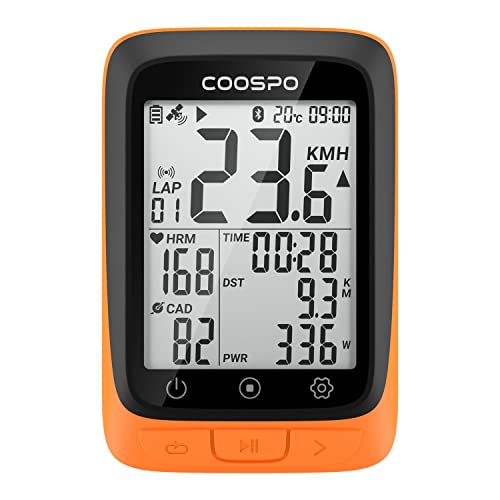
- GPS and BeiDou positioning
- ANT+ sensor compatibility
- CoospoRide and Strava syncing
Best For: Riders with ANT+ accessories who want app-based analysis
Best Battery Life

- More than 50-hour runtime
- Lightweight 70-gram design
- Automatic backlit FSTN display
Best For: Long-distance riders prioritizing battery life and low weight
Lightweight Data Tracker

- 50g GPS computer with detailed ride metrics
- Five-system satellite positioning and Strava sync
- IPX7 protection with up to 28-hour runtime
Best For: Everyday riders who prioritize light weight and app-connected tracking
Sensor-Ready GPS Computer

- ANT+ support for heart rate, cadence, speed, and power sensors
- Up to 80 hours of battery life and ride-data storage
- 2.4-inch auto-backlit display with IP67 protection
Best For: Cyclists who plan to connect ANT+ sensors
All-in-One Commuter Choice

- Combines GPS tracking, front light, and electronic horn
- Up to 90 hours of standard GPS operation
- High-contrast display with speed, elevation, and incline data
Best For: Commuters and bikepackers wanting integrated safety features
Best Navigation Pick

- Color GPX navigation with rerouting
- Highly customizable data screens
- Bluetooth, ANT+, and indoor training support
Best For: Navigation-focused cyclists and smart-trainer users
Best Battery Value

- Rated for more than 70 hours
- 2.5-inch LCD with 12 data metrics
- ANT+, Bluetooth, and Strava syncing
Best For: Long rides and battery-conscious cyclists
Best Simple Pick

- Route planning and imported navigation
- 100-plus data fields and custom pages
- IPX7 rating with 25-hour battery
Best For: Everyday riders wanting navigation and broad connectivity
Best All-Rounder – iGPSPORT BSC100S
For riders comparing budget bike GPS computers, the iGPSPORT BSC100S offers a strong balance of display size, data coverage, battery life, and sensor compatibility. It tracks more than 40 ride metrics, supports five satellite systems, and connects with ANT+ and Bluetooth devices.
Best For: Riders who want broad ride-data tracking, long battery life, and flexible sensor connectivity.
Pros:
- Up to 40 hours of battery life with USB-C charging.
- Tracks more than 40 metrics, including cadence, grade, calories, and temperature.
- Supports GPS, BeiDou, GLONASS, Galileo, and QZSS positioning.
- IPX7 waterproofing and ANT+/Bluetooth 5.0 connectivity.
Cons:
- A USB-C cable is not included.
- Navigation mapping is not listed among the supplied features.
The BSC100S is a practical pick when you want a more complete training-data setup without moving beyond a budget-oriented computer. Its long runtime and dual-protocol support make it especially versatile for regular riders.
Best for Climbing Data – GPS Bike Computer with Altitude
Among budget bike GPS computers, this 2.4-inch model stands out for elevation-focused ride data. It records altitude, gradient, and accumulated ascent alongside speed and distance, while its simple GPS setup avoids the need for a wheel sensor or spoke magnet.
Best For: Road and mountain cyclists who want straightforward elevation and climbing information.
Pros:
- Displays altitude, gradient, and accumulated ascent.
- Built-in GPS works without a wheel sensor or spoke magnet.
- Automatic backlight improves visibility in changing light.
- IPX7 waterproofing and up to 28 hours of runtime.
Cons:
- 28-hour battery life is shorter than some alternatives in this roundup.
- The supplied feature list does not mention ANT+ or Bluetooth sensor connectivity.
This computer is a good fit for riders who value climbing metrics more than extensive connectivity. Auto start and stop, sleep mode, and the included extended mount also keep the setup simple.
Best Value for Sensor Users – COOSPO BC107 GPS Bike Computer
The COOSPO BC107 is a compact option for shoppers seeking budget bike GPS computers with app support and ANT+ compatibility. It provides GPS and BeiDou positioning, records essential ride data, and can sync activities to Strava through the CoospoRide app.
Best For: Budget-conscious riders who already use ANT+ heart-rate, speed, cadence, or power sensors.
Pros:
- Supports GPS and BeiDou positioning, with GPS switch-off available for indoor rides.
- Works with ANT+ heart-rate, speed, cadence, and power sensors.
- CoospoRide app supports setup, activity analysis, firmware updates, and Strava syncing.
- Compact 2.4-inch design with automatic backlight.
Cons:
- The computer supports ANT+ sensors, not Bluetooth sensor connections.
- The extension long front mount must be purchased separately if needed.
- Battery runtime is not specified in the supplied notes.
The BC107 makes the most sense when app-based ride analysis and existing ANT+ accessories are priorities. Its lightweight, uncomplicated design keeps the core GPS setup affordable, though sensor protocol limitations are worth checking first.
Best Battery Life – CYCPLUS G1 GPS Bike Computer
For riders comparing budget bike GPS computers, the CYCPLUS G1 is notable for its claimed 50-plus-hour runtime in a lightweight 70-gram body. Its GPS tracks core ride information, while the glare-free backlit screen is designed for visibility in bright conditions and at night.
Best For: Long-distance riders who prioritize extended battery life and a lightweight computer.
Pros:
- More than 50 hours of stated working time from a 1200mAh battery.
- Lightweight 70-gram design with a compact 2-inch screen.
- Automatic backlight and FSTN display support readability in sunlight and at night.
- Two-year warranty and automatic sleep mode.
Cons:
- IPX6 waterproofing is below the IPX7 rating offered by some alternatives.
- The supplied notes list wireless connectivity but do not specify ANT+ or Bluetooth sensor support.
- The display is smaller than the 2.4- and 2.6-inch options in this roundup.
The G1 is a sensible choice when charging less often matters more than advanced sensor connectivity or a large screen. It covers essential GPS ride data in a small package and adds useful automatic backlighting.
Lightweight Data Tracker – BIKEVEE BKV500A
For riders seeking budget bike GPS computers, the BIKEVEE BKV500A offers a lightweight way to track essential ride metrics. Its 2.4-inch display, five-system satellite support, Bluetooth app connection, and up to 28 hours of runtime suit everyday cycling without adding much handlebar weight.
Best For: Commuters and recreational riders who want detailed GPS ride data, app support, and a compact computer.
Pros:
- Tracks speed, distance, altitude, temperature, gradient, and accumulated ascent.
- Supports GPS, BDS, GLONASS, Galileo, and QZSS positioning systems.
- Syncs saved rides and FIT files with the BIKEVEE app and Strava.
- Weighs only 50g and offers IPX7 protection with up to 28 hours of battery life.
Cons:
- Does not list ANT+ sensor connectivity.
- The 2.4-inch display may feel small for riders wanting extensive on-screen data.
The BKV500A is a practical budget bike GPS computer for riders who value low weight, broad satellite compatibility, and straightforward ride-record management. Its feature set is focused on tracking rather than advanced sensor integration.
Sensor-Ready GPS Computer – CooSpo BC107
The CooSpo BC107 is a strong option among budget bike GPS computers for cyclists who may add sensors later. It combines GPS tracking with ANT+ support for heart-rate, speed, cadence, and power accessories, plus app setup, Strava syncing, and up to 80 hours of recorded riding data.
Best For: Cyclists building a sensor-equipped setup who want long battery life and ANT+ compatibility.
Pros:
- Supports ANT+ heart-rate, speed, cadence, and power sensors.
- Offers Bluetooth setup, activity analysis, firmware updates, and Strava syncing through the CooSpoRide app.
- Provides up to 80 hours of battery life and stores 80 hours of riding data.
- Uses a sunlight-readable 2.4-inch screen with automatic backlight and IP67 protection.
Cons:
- First-time GPS positioning can take 3–5 minutes and requires an outdoor location.
- Some sensor configurations and the out-front mount may require additional purchases.
- At 100g, it is heavier than some compact alternatives.
Choose the BC107 if expandable sensor support matters more than minimal weight. Its long runtime and ANT+ connectivity give it room to grow, although buyers should confirm whether the desired sensor or mount is included with their selected option.
All-in-One Commuter Choice – VLOXO BK-5201 GPS Computer
Among budget bike GPS computers, the VLOXO BK-5201 stands out by combining GPS ride tracking with a front light and audible horn. Its 90-hour battery, high-contrast 2.4-inch screen, and included mounting hardware make it appealing for commuters, weekend riders, and bikepacking trips.
Best For: Commuters and touring riders who want GPS data, visibility, and an audible alert in one handlebar-mounted unit.
Pros:
- Combines a wireless GPS computer, front light, and electronic horn.
- Offers up to 90 hours of continuous operation in standard GPS mode.
- Displays speed, distance, time, elevation gain, and incline percentage.
- Includes a high-contrast 2.4-inch screen, manual backlight control, and mounting accessories.
Cons:
- First-time positioning can take about five minutes outdoors.
- The notes identify GPS as the sensor type but do not specify app or Strava connectivity.
- Its integrated features may be unnecessary for riders who already own a bike light and alert device.
The BK-5201 is best viewed as a convenience-focused GPS computer rather than a sensor-heavy training device. Its unusually long runtime and integrated safety features can simplify a commuter or bikepacking setup, while the limited connectivity information may matter to data-focused cyclists.
Best Navigation Pick – GEOID CC600
For riders comparing budget bike GPS computers, the GEOID CC600 stands out when route guidance and customizable data screens matter most. Its 2.4-inch color display supports GPX routes, turn reminders, zooming, and automatic rerouting, while Wi-Fi and Bluetooth simplify syncing and updates.
Best For: Cyclists who want colorful navigation, extensive data customization, and indoor smart-trainer support.
Pros:
- Color route navigation with turn alerts and automatic rerouting
- Supports GPS, BeiDou, GLONASS, QZSS, and Galileo with 5-second positioning when AGNSS is synced
- Offers up to 108 data items, 10 pages, and 29 display layouts
- Works with Bluetooth and ANT+ sensors, including smart trainers and power meters
Cons:
- Its 24-hour battery life is shorter than some competing options
- Route uploading and AGNSS features require app or Wi-Fi syncing
The CC600 is a feature-rich choice for riders who want more than basic speed and distance tracking. It is particularly compelling for structured training and navigation-focused rides, though riders prioritizing maximum battery life may prefer another model.
Best Battery Value – CYCPLUS M2
The CYCPLUS M2 is a practical option among budget bike GPS computers for riders who want long runtime and straightforward ride data. Its 2.5-inch LCD shows up to 12 metrics across three screens, and the 1,000mAh battery is rated for more than 70 hours of use.
Best For: Long-distance riders who value extended battery life, ANT+ compatibility, and essential training metrics.
Pros:
- Up to 70 hours of use on a full charge
- IPX6 water resistance for riding in rainy conditions
- Displays speed, cadence, heart rate, power, altitude, gradient, and other ride data
- Bluetooth syncing supports the CYCPLUS FIT app and Strava
Cons:
- Navigation and rerouting features are not listed in the supplied specifications
- The LCD display is less feature-rich than the color screens on some alternatives
The M2 focuses on endurance and core cycling metrics rather than advanced mapping. Its long battery life and ANT+/Bluetooth support make it a sensible pick for riders who mainly need dependable tracking over extended rides.
Best Simple Pick – iGPSPORT BSC200S
The iGPSPORT BSC200S is a well-rounded choice for shoppers comparing budget bike GPS computers with route guidance and connected features. It supports routes from the iGPSPORT app and platforms such as Strava, Ride with GPS, and Komoot, while its color screen and IPX7 rating suit everyday outdoor riding.
Best For: Riders seeking accessible route navigation, broad sensor support, and a large selection of cycling data.
Pros:
- Supports imported and app-created routes, turn reminders, and back-to-start navigation
- Offers more than 100 riding data fields with customizable page layouts
- IPX7 waterproofing and up to 25 hours of battery life
- Can connect to iGPSPORT front and radar lights
Cons:
- Type-C charging cable is not included
- Some smart notifications and navigation functions depend on app connectivity
The BSC200S balances navigation, training data, and connected accessories in a compact 2.4-inch unit. It is a strong everyday option for riders who want more route functionality than a basic cycling computer without moving beyond a budget-oriented feature set.
How We Picked the Best Budget Bike GPS Computers
We focused on the features that matter most during real rides: reliable GPS positioning, readable displays, useful battery life, water resistance, wireless sensor support, and straightforward setup. The selected computers cover simple speed-and-distance tracking as well as route navigation, elevation data, color screens, and app connectivity.
We also considered practical differences between models, including screen size, listed operating time, charging capacity, ANT+ and Bluetooth compatibility, automatic backlighting, and whether a unit is better suited to commuting, training, touring, or unfamiliar routes.
Quick Comparison
- Best for basic tracking: Choose a compact computer with GPS speed, distance, ride time, and a long-lasting battery.
- Best for structured training: Look for Bluetooth and ANT+ support so you can pair heart-rate monitors, cadence sensors, and power meters.
- Best for navigation: Prioritize route guidance, rerouting, Wi-Fi or app syncing, and a display large enough to read while riding.
- Best for visibility: Consider a larger LCD or color display, plus automatic backlighting for changing light conditions.
Key Buying Factors for Budget Bike GPS Computers
GPS and Navigation
Basic GPS computers record your route and display speed, distance, and position. If you regularly explore new roads, select a model with route navigation or rerouting rather than relying only on breadcrumb tracking. Faster positioning can also reduce waiting time before a ride.
Battery Life and Charging
Battery claims vary by GPS use, screen brightness, sensors, and navigation. Around 20 to 30 hours is generally enough for frequent day rides, while higher-capacity models are better for touring or multi-day trips. Check the charging connection and whether battery-saving modes are available.
Display and Durability
A 2.4- to 2.6-inch screen offers a useful balance between readability and handlebar size. LCD displays are common at this price, while color screens may make maps and data easier to distinguish. IPX6, IPX7, and IP67 ratings indicate strong protection against rain, but always follow the manufacturer’s limits and keep charging ports covered.
Connectivity and Sensors
Bluetooth and ANT+ compatibility expands what the computer can measure. Confirm that your existing cadence, speed, heart-rate, or power sensors use a supported standard. App syncing is also important if you want to review rides, update routes, or export activity data.
Who Should Buy Which Budget Bike GPS Computers?
Commuters and casual riders should favor simple, durable models with dependable GPS, clear speed data, and long battery life. Fitness-focused cyclists will benefit from ANT+ or Bluetooth sensor support and more detailed ride metrics. Tourers and explorers should prioritize navigation, rerouting, strong weather resistance, and generous battery capacity. Riders who dislike complicated setup should choose a straightforward unit with an uncomplicated companion app and minimal configuration.
Before buying, verify the included mount, sensor compatibility, navigation format, app requirements, and charging accessories. Those details can make a bigger difference than a small variation in screen size or headline battery claims.
