
The best premium bike navigation computers do more than record speed and distance. They provide dependable turn-by-turn directions, readable maps, training data, and sensor connectivity without forcing you to rely on your phone.
We compare 10 leading options from Garmin, Wahoo, iGPSPORT, and Magene to help you choose the right balance of navigation detail, screen usability, battery life, and riding features.
Best 10 Premium Bike Navigation Computers Picks for 2026
Top-Tier Choice

- 3.5-inch vivid touchscreen with on-device course creation
- Up to 60 hours in battery-saver mode
- Advanced climbing, power, hazard, and group-ride features
Best For: Performance-focused cyclists seeking comprehensive navigation and training tools
Lightweight Navigation Pick

- Offline and online navigation with smart rerouting
- 77-gram IPX7 waterproof design
- Climb previews plus ANT+ and Bluetooth compatibility
Best For: Racers and climbers wanting lightweight, responsive route guidance
Aero-Training Specialist

- Large 3.8-inch, 480×800 display
- Live AirBoost and AirDrag aerodynamic metrics
- Touch, button, ANT+, Bluetooth, USB, and Wi-Fi control
Best For: Performance riders combining navigation with aerodynamic analysis
Easy-Use Touring Choice

- Simple 3-inch touchscreen with preloaded activity profiles
- Ride-type maps with trails, POIs, traffic, and eBike routing
- LiveTrack, incident detection, and Varia compatibility
Best For: Touring, recreational, and eBike riders seeking simple guidance
Practical Route Pick

- 25-hour battery with IPX7 waterproofing
- Imports routes from Strava, Komoot, and more
- ANT+/Bluetooth sensor and light support
Best For: Long-distance riders wanting compact, app-connected navigation
Training-Focused Premium Pick
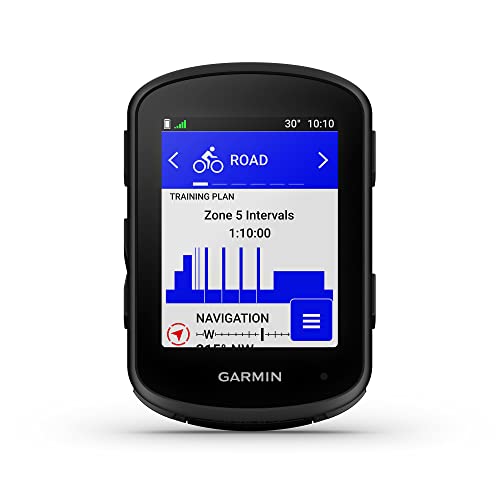
- Multi-band GNSS and detailed cycling maps
- Touchscreen plus physical button controls
- Up to 32 hours in battery-saver mode
Best For: Structured training and advanced performance tracking
Large-Screen Navigation Pick

- 3.5-inch touchscreen with map navigation
- Automatic rerouting when off course
- Up to 35 hours of battery life
Best For: Riders wanting a large display and long-lasting navigation
Training Navigator

- Multi-band GNSS for enhanced positioning
- Up to 26 hours of demanding-use battery life
- Advanced climbing and adaptive training features
Best For: Performance-focused cyclists who want button controls and deep training data
Exploration Specialist

- Dual-band GPS for difficult signal environments
- Turn-by-turn route generation and sharing
- 2.8-inch display with touchscreen and buttons
Best For: Adventure riders and tourists who regularly explore unfamiliar routes
Connected Value Pick

- Color touchscreen with global maps and turn-by-turn navigation
- ANT+, Bluetooth, and Wi-Fi connectivity
- Indoor training and smart-accessory support
Best For: Connected riders who want outdoor navigation and indoor-training features
Top-Tier Choice – Garmin Edge 1050
The Garmin Edge 1050 is a premium bike navigation computer for riders who want a vivid 3.5-inch touchscreen, advanced route planning, and extensive training tools in one device. Its road-hazard alerts, ClimbPro guidance, power planning, and smart connectivity make it suited to demanding road rides and structured training.
Best For: Performance-focused cyclists who want premium navigation, training metrics, and connected riding features.
Pros:
- Large, vivid touchscreen supports on-device course creation and road-surface mapping.
- Offers up to 20 hours of demanding-use battery life or up to 60 hours in battery-saver mode.
- Includes ClimbPro, adaptive coaching, power guidance, road-hazard alerts, and Garmin Pay.
- Built-in speaker provides navigation prompts and a bike-bell function.
Cons:
- Many advanced features require a compatible smartphone, power meter, or heart-rate monitor.
- Its extensive feature set may be more than casual riders need.
The Edge 1050 is one of the most feature-rich options in this premium bike navigation computers roundup. Choose it if detailed navigation and training analysis matter more than keeping the setup simple.
Lightweight Navigation Pick – iGPSPORT BiNavi Air
The iGPSPORT BiNavi Air combines a 3-inch touchscreen with physical controls, offline and online navigation, and smart rerouting. For riders comparing premium bike navigation computers, it stands out with a lightweight 77-gram design, detailed climb information, and broad sensor compatibility.
Best For: Racers, climbers, and riders who prioritize lightweight navigation with strong climbing and rerouting features.
Pros:
- Supports turn-by-turn navigation, offline maps, and Off-Course Replanning 2.0.
- Displays climb gradient, distance, and elevation with iClimb 3.0.
- 77-gram IPX7 waterproof design helps minimize cockpit weight.
- Works with ANT+ and Bluetooth sensors, smart trainers, electronic shifting, and radar taillights.
Cons:
- Its listed 30-hour battery life is lower than some extended-use modes on competing devices.
- Some connected functions depend on the iGPSPORT app or compatible accessories.
BiNavi Air is a compelling choice when low weight and route recovery are priorities. Its climb-focused mapping and indoor-training support also give it versatility beyond basic navigation.
Aero-Training Specialist – Wahoo ELEMNT ACE
The Wahoo ELEMNT ACE is a premium bike navigation computer built around a large 3.8-inch display, touchscreen and button controls, and an integrated pressure sensor. Alongside detailed maps and ride metrics, it measures air resistance in real time to help performance-minded cyclists evaluate aerodynamics.
Best For: Experienced riders who want large-screen navigation plus real-time aerodynamic feedback.
Pros:
- Large 480×800 display supports detailed maps and metrics.
- Touch, swipe, pinch, and button controls provide flexible interaction.
- Pressure-sensor data delivers live AirBoost and AirDrag aerodynamic metrics.
- Offers ANT+, Bluetooth, USB, and Wi-Fi connectivity with IPX7 protection.
Cons:
- At 208 grams, it is substantially heavier than the iGPSPORT BiNavi Air.
- The listed battery life is 30 hours, with no extended battery-saver figure provided.
- Aerodynamic insights may be unnecessary for riders focused only on basic route guidance.
The ELEMNT ACE makes the most sense for cyclists who will use its aerodynamic data as well as its navigation. Its large display and varied controls are practical for riders who want a ride-command-center approach.
Easy-Use Touring Choice – Garmin Edge Explore 2
The Garmin Edge Explore 2 is an approachable GPS cycling navigator with a 3-inch touchscreen, preloaded activity profiles, and ride-type-specific maps. It is a practical option among premium bike navigation computers for cyclists who want clear route guidance, eBike-aware navigation, and connected safety features without a highly complex setup.
Best For: Recreational, touring, and eBike riders who want straightforward navigation and safety connectivity.
Pros:
- Glove- and rain-friendly touchscreen remains visible in direct sunlight.
- Preloaded road, off-road, and indoor profiles simplify setup.
- Maps include popular roads, trails, searchable points of interest, traffic information, and eBike routing.
- Supports LiveTrack, GroupTrack, incident detection, Varia devices, and eBike battery-aware guidance.
Cons:
- Its listed 16-hour battery life is shorter than the other Garmin option here.
- Heart-rate, speed, cadence, and Varia accessories are sold separately.
- It offers fewer advanced performance-planning features than the Edge 1050.
Edge Explore 2 prioritizes ease of use over deep performance analytics. It is a strong fit for navigation-led riding, touring, and eBike trips where clear maps and practical safety functions are the main priorities.
Practical Route Pick – iGPSPORT BSC200S
For riders seeking premium bike navigation computers without an overly complex interface, the iGPSPORT BSC200S combines route guidance, broad sensor compatibility, and a clear 2.4-inch color display. Its 25-hour battery and IPX7 waterproof rating make it a practical choice for long rides and changing conditions.
Best For: Riders who want dependable route navigation, long battery life, and wireless ANT+/Bluetooth connectivity in a compact computer.
Pros:
- Supports routes from the iGPSPORT app and platforms including Strava, Ride with GPS, and Komoot.
- Offers turn, yaw, incoming-call, SMS, and selected app notifications.
- Provides up to 25 hours of battery life and stores up to 400 hours of ride data.
- Works with compatible iGPSPORT front lights and radar lights.
Cons:
- The 2.4-inch screen is smaller than the displays on larger navigation computers.
- Route creation and customization rely on the companion app.
- A USB-C charging cable is not included.
The BSC200S is a balanced option for cyclists who prioritize straightforward navigation and endurance over a large touchscreen. Its extensive ride metrics and accessory support add versatility without making the unit bulky.
Training-Focused Premium Pick – Garmin Edge 840
The Garmin Edge 840 is a strong choice among premium bike navigation computers for cyclists who want navigation integrated with structured training and performance analysis. Its touchscreen and button controls, multi-band GNSS, and detailed cycling features suit demanding rides and training plans.
Best For: Performance-oriented cyclists who want advanced navigation, adaptive training guidance, and climbing analysis.
Pros:
- Combines touchscreen and button control for flexible operation while riding.
- Multi-band GNSS is designed to improve positioning accuracy in challenging environments.
- Offers ClimbPro, daily suggested workouts, adaptive coaching, stamina insights, and power guidance with compatible sensors.
- Provides up to 26 hours of battery life in demanding use or 32 hours in battery-saver mode.
Cons:
- Several training and performance features require compatible power and heart-rate sensors.
- The listed map coverage is North America.
- Its broad feature set may be more than casual riders need.
The Edge 840 stands out when training intelligence matters as much as route guidance. It is best suited to cyclists prepared to use compatible sensors and engage with Garmin’s broader training ecosystem.
Large-Screen Navigation Pick – iGPSPORT BiNavi Bike Computer
The iGPSPORT BiNavi brings a large 3.5-inch touchscreen and rerouting capability to the premium bike navigation computers category. With dual-band GPS, climb planning, music control, and a claimed 35-hour battery life, it is designed for riders who want navigation and ride convenience features in one unit.
Best For: Cyclists who prefer a larger touchscreen, automatic off-course rerouting, and extended battery life.
Pros:
- Large 3.5-inch color touchscreen supports map navigation and saved-point routing.
- Automatically plans a new route when you go off course.
- Dual-band GPS supports GPS, BeiDou, GLONASS, Galileo, and QZSS positioning systems.
- Offers up to 35 hours of battery life plus climb planning and music control.
Cons:
- Touchscreen operation may be less convenient than physical controls in some riding conditions.
- Music control requires pairing with a phone.
- Its larger screen and feature set may be unnecessary for riders seeking a minimal computer.
BiNavi is the most display-oriented option in this group, with useful features for route changes, climbs, and longer outings. Choose it if screen size and battery endurance are higher priorities than compactness.
Training Navigator – Garmin Edge 540
The Garmin Edge 540 is a strong choice among premium bike navigation computers for riders who want compact button controls, detailed navigation, and serious training tools. Its multi-band GNSS, ClimbPro features, and adaptive coaching make it especially useful for structured rides and challenging routes.
Best For: Performance-focused cyclists who want advanced training guidance and reliable navigation without a touchscreen.
Pros:
- Multi-band GNSS helps improve positioning accuracy in challenging environments.
- Up to 26 hours of battery life in demanding use, or up to 42 hours in battery-saver mode.
- Includes ClimbPro, daily suggested workouts, adaptive coaching, stamina insights, and power guidance when paired with compatible sensors.
- Button-based operation is practical for riding in varied conditions.
Cons:
- Several advanced training features require compatible power and heart-rate sensors.
- The 2.6-inch LCD is compact compared with larger cycling computers.
- Button controls may be less intuitive for riders who prefer touchscreens.
The Edge 540 is best viewed as a training-centered navigation computer rather than a basic route display. Its compact design and long battery options suit demanding cyclists who value data, climbing analysis, and adaptive preparation.
Exploration Specialist – Wahoo ELEMNT ROAM V3
The Wahoo ELEMNT ROAM V3 is a practical pick among premium bike navigation computers for riders who prioritize route discovery and turn-by-turn guidance. Dual-band GPS, route importing, and on-device destination selection make it well suited to exploring unfamiliar roads.
Best For: Touring and adventure riders who want flexible route sharing, route generation, and a larger color display.
Pros:
- Dual-band GPS supports enhanced accuracy in dense urban areas and thick forests.
- Generates turn-by-turn routes from destinations, addresses, points of interest, or saved locations.
- Imports routes and files from Strava, Ride With GPS, Komoot, and other sources.
- Offers a 2.8-inch 480×800 display, touchscreen and button controls, and IPX7 protection.
Cons:
- Battery life is listed at 25 hours, slightly below some extended-use competitors.
- The unit weighs 109 grams, making it less lightweight than compact alternatives.
- Its warranty is listed as one year.
The ROAM V3 emphasizes confidence while navigating rather than extensive training analytics. Its route-generation tools and broad file compatibility make it a compelling option for cyclists who frequently explore new areas.
Connected Value Pick – Magene C506 GPS Bike Computer
The Magene C506 brings a broad feature set to the premium bike navigation computers category, including a color touchscreen, global map downloads, indoor-training support, and ANT+ and Bluetooth connectivity. Its compact 76-gram design and app-based route management suit riders who want versatility across outdoor and indoor sessions.
Best For: Connected cyclists seeking navigation, sensor compatibility, indoor training, and smart-bike integrations in one compact computer.
Pros:
- 2.4-inch color touchscreen supports turn-by-turn navigation and custom routes.
- Supports ANT+, Bluetooth, and Wi-Fi connections for a wide range of sensors and devices.
- Offers up to 24 hours of battery life in endurance mode and positioning in as fast as five seconds.
- Supports indoor training features, smart-light control, notifications, and detailed data layouts.
Cons:
- The feature-rich experience depends on the OnelapFit app for setup, syncing, and analysis.
- The listed battery life is shorter than the longest-lasting navigation computers.
- Its 2.4-inch screen is smaller than the Wahoo model in this comparison.
The C506 stands out for connectivity and flexibility. It is a particularly appealing choice for riders who want one computer to handle mapped rides, structured indoor workouts, multiple sensors, and smart accessories.
How We Picked the Best Premium Bike Navigation Computers
We focused on computers that offer reliable GPS navigation rather than basic ride tracking alone. Our comparison considers map quality, route planning, screen readability, interface design, battery expectations, waterproofing, wireless connectivity, and compatibility with common cycling sensors.
We also considered the type of rider each device suits. A touring cyclist may prioritize large maps and simple rerouting, while a performance rider may value structured workouts, climb data, and broad ANT+ or Bluetooth support. Product claims and specifications can vary by region or firmware version, so confirm current details before buying.
Quick Comparison
| What to Compare | Why It Matters |
|---|---|
| Navigation | Check whether maps are included, turn-by-turn guidance is available, and rerouting works when you leave the planned route. |
| Display | Larger color touchscreens improve map viewing, while physical buttons can be easier to use in rain or with gloves. |
| Battery | Match stated runtime to your typical ride length, navigation use, sensor connections, and display brightness. |
| Connectivity | ANT+, Bluetooth, Wi-Fi, smartphone pairing, and electronic-shifting support determine how easily the computer fits your setup. |
| Durability | Look for water resistance, a secure mount, and a design suited to road, gravel, touring, or mixed-weather riding. |
Key Buying Factors for Premium Bike Navigation Computers
Maps and Route Guidance
Prioritize clear map detail, dependable GPS reception, audible or visual turn alerts, and straightforward route transfers. If you regularly explore unfamiliar roads, automatic rerouting and readable elevation information can be more valuable than advanced training metrics.
Screen and Controls
Touchscreens are convenient for zooming and menu navigation, but buttons remain useful when roads are wet or you are wearing gloves. Consider screen size, glare resistance, contrast, and whether the display is easy to read at your normal riding position.
Training and Sensor Support
Riders using power meters, heart-rate monitors, cadence sensors, radar, smart trainers, or electronic shifting should verify protocol compatibility before purchase. More advanced computers may also add structured workouts, climb analysis, recovery data, and customizable data pages.
Battery, Mounting, and Ecosystem
Compare real-world endurance rather than relying only on a maximum figure. GPS accuracy, navigation, brightness, and connected sensors can reduce runtime. Also check the included mount, charging connection, companion app, route-platform support, and whether the device integrates with your existing cycling ecosystem.
Who Should Buy Which Premium Bike Navigation Computers?
Choose a premium, feature-rich model if you want detailed training data, extensive sensor support, advanced navigation, and long-term upgrade flexibility. A compact performance computer is better for riders who want substantial analytics without a large screen. A touchscreen navigator makes more sense for touring, commuting, or exploratory riding where map interaction is frequent.
For a simpler experience, look for easy route syncing, intuitive menus, and clear directions rather than the longest feature list. Budget-conscious buyers can still find capable navigation in smaller-screen models, especially if they already use a smartphone for route planning. Before ordering, confirm map coverage, battery expectations, mount compatibility, and support for the sensors you already own.
