
Folding bikes make multimodal travel and compact storage easier, but their smaller frames and frequently changing routes can make navigation hardware harder to choose. The right computer should deliver dependable GPS guidance without adding unnecessary bulk or setup complexity.
We compare 10 folding bike navigation computers across screen usability, route guidance, connectivity, weather resistance, battery practicality, and compatibility with common cycling sensors.
Best 10 Folding Bike Navigation Computers Picks for 2026
Best Overall
iGPSPORT BSC500 Touchscreen GPS Computer

- 3.3-inch touch-and-button display
- Dual-band positioning with route re-planning
- Voice navigation and turn reminders
Best For: Feature-focused touring and commuting
Best for Touring
Garmin Edge Explore Touchscreen GPS

- Rain- and glove-friendly 3-inch screen
- Preloaded maps with turn-by-turn routing
- Varia and smartphone-connected safety features
Best For: North American touring and exploration
Best Lightweight Option
Magene C506 SE Color GPS Computer

- 74-gram body with 2.4-inch color screen
- Route tips, off-course alerts, and re-planning
- ANT+, Bluetooth, and Wi-Fi connectivity
Best For: Weight-conscious riders using multiple sensors
Best Offline Mapping
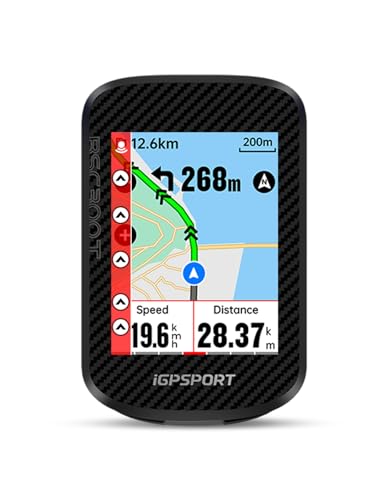
- Worldwide offline map downloads
- Touchscreen plus six physical buttons
- 20-hour battery rating and 130+ data points
Best For: Long rides away from reliable phone service
Best Compact Pick

- Lightweight 70 g design
- 50+ hours of stated battery life
- IPX6 water resistance and automatic backlight
Best For: Folding-bike riders wanting simple GPS tracking in a compact unit
Best Mapping Features

- 2.8-inch color touchscreen
- Offline maps with turn prompts and street names
- Reroute planning when connected to the app
Best For: Riders wanting detailed navigation and route management
Best Balanced Navigator
iGPSPORT BSC200S GPS Bike Computer

- Imports routes from major cycling platforms
- One-touch and back-to-start navigation
- 67 g body with IPX7 waterproofing
Best For: Riders wanting practical navigation and extensive ride data
Best Smart-Training Pick

- Color touchscreen with downloadable maps and turn-by-turn navigation
- Lightweight 76g design with ANT+, Bluetooth, and Wi-Fi
- Supports indoor training, smart lights, and up to 24 hours of battery
Best For: Riders seeking lightweight navigation plus connected training features
Best Long-Battery Option
COOSPO CS600 GPS Bike Computer

- Up to 36 hours of battery life for extended rides
- Color touchscreen with route and breadcrumb navigation
- IPX7 waterproofing plus ANT+ and Bluetooth connectivity
Best For: Multi-day riders prioritizing endurance and weather protection
Best Rerouting Features

- Color route navigation with automatic off-route rerouting
- Five-second positioning with AGNSS and multiple satellite systems
- Highly customizable display with up to 108 supported data items
Best For: Explorers who want dependable route guidance and rerouting
Best Overall – iGPSPORT BSC500 Touchscreen GPS Computer
For riders comparing folding bike navigation computers, the iGPSPORT BSC500 stands out with a large touchscreen, dual-band positioning, route imports, and voice guidance. Its combination of touch and button controls is practical for changing navigation or viewing up to 12 cycling metrics per page.
Best For: Riders who want feature-rich navigation with voice alerts, route recalculation, and detailed training tools.
Pros:
- 3.3-inch touchscreen with button backup and clear multi-data displays
- Dual-band, five-satellite positioning improves navigation accuracy and interference resistance
- Supports routes from iGPSPORT, Strava, Komoot, and route files
- Voice navigation, turn reminders, and automatic yaw re-planning reduce screen glances
Cons:
- At 107 g, it is heavier than the compact alternatives in this roundup
- Its extensive training and navigation features may be more than casual riders need
The BSC500 is a strong all-around pick for folding-bike commuters and touring riders who prioritize readable mapping, reliable positioning, and hands-free navigation cues.
Best for Touring – Garmin Edge Explore Touchscreen GPS
The renewed Garmin Edge Explore is a straightforward option among folding bike navigation computers, pairing a glove- and rain-friendly 3-inch touchscreen with preloaded North America cycling maps. Turn-by-turn directions and popularity routing make it especially useful for riders exploring unfamiliar roads.
Best For: Touring riders who prefer simple touchscreen navigation and connected safety features.
Pros:
- 3-inch touchscreen is designed for use with gloves and in rain
- Preloaded cycling maps provide turn-by-turn directions and popularity routing
- Works with Varia smart lights and rearview radar
- Smartphone pairing adds LiveTrack, GroupTrack, messaging, notifications, and incident detection
Cons:
- This renewed unit has a listed 90-day limited warranty
- Listed battery life is up to 12 hours, shorter than several newer options
- Map coverage is listed as North America rather than worldwide
Choose the Edge Explore when ease of use and established touring features matter more than advanced positioning or extensive performance metrics.
Best Lightweight Option – Magene C506 SE Color GPS Computer
The 74-gram Magene C506 SE is a compact choice for folding bike navigation computers, with a 2.4-inch color display, route guidance, off-course alerts, and route re-planning through the OnelapFit app. Wi-Fi and Bluetooth connectivity also help speed up navigation-file and ride-data transfers.
Best For: Riders who want a lightweight computer with colorful route guidance and broad sensor compatibility.
Pros:
- Light 74-gram design with a readable 2.4-inch color screen
- Provides turn tips, road names, off-course alerts, and route re-planning
- Wi-Fi supports faster data transfer, while positioning can lock in about 5 seconds
- Connects with nine device types through ANT+ and Bluetooth
Cons:
- Navigation features require connection to the OnelapFit app
- Three-button control has no touchscreen input
- Some setup and analysis features depend on the companion app
The C506 SE is a sensible fit for compact folding bikes where low weight matters, especially for riders who also use sensors, smart trainers, or performance data tools.
Best Offline Mapping – iGPSPORT BSC300T GPS Computer
The iGPSPORT BSC300T is a practical pick for folding bike navigation computers when offline mapping is important. Its 2.4-inch touchscreen, worldwide map downloads, route storage, off-course warnings, and 20-hour battery rating support longer rides without relying on a continuous phone connection.
Best For: Riders who want offline maps, broad ride-data coverage, and support for both touch and physical controls.
Pros:
- Downloads worldwide offline maps and stores multiple routes
- 2.4-inch touchscreen plus six buttons allows flexible operation
- Supports more than 130 riding data points and five satellite systems
- Offers e-bike mode, real-time tracking, ANT+/Bluetooth connectivity, and a 20-hour battery rating
Cons:
- Type-C cable is not included
- Navigation and data-sharing features require connection with the iGPSPORT app for some functions
- The 2.4-inch display is smaller than the BSC500’s 3.3-inch screen
For folding-bike riders traveling beyond familiar routes, the BSC300T balances offline navigation, long battery life, and broad compatibility in a relatively light 67-gram package.
Best Compact Pick – CYCPLUS G1 GPS Bike Computer
For riders seeking folding bike navigation computers without adding much handlebar weight, the CYCPLUS G1 is a compact GPS option weighing just 70 g. It tracks route, time, distance, altitude, and related ride data, with an automatic backlight for visibility in different conditions.
Best For: Folding-bike riders who prioritize low weight, long battery life, and straightforward GPS ride tracking.
Pros:
- Compact 70 g design with a 2-inch display.
- GPS tracking provides route, distance, time, and altitude data.
- IPX6 water resistance and more than 50 hours of stated battery life.
- Automatic backlight and sleep mode support convenient everyday use.
Cons:
- Does not list color maps, turn-by-turn navigation, or rerouting.
- Uses button controls rather than a touchscreen.
The G1 is best viewed as a lightweight GPS data computer rather than a full mapping navigator. Its small footprint and extended battery make it practical for compact folding-bike setups where simplicity matters.
Best Mapping Features – GEOID CC700 Pro GPS Computer
The GEOID CC700 Pro is a feature-rich choice among folding bike navigation computers, pairing a 2.8-inch color touchscreen with offline maps, turn prompts, street names, and reroute planning. Its Wi-Fi, Bluetooth, and ANT+ connectivity also support route syncing and compatible training accessories.
Best For: Folding-bike riders who want detailed map guidance, offline route storage, and a larger touchscreen.
Pros:
- 2.8-inch color touchscreen with three additional buttons.
- Offline maps support turn prompts, street names, zoom, and dual-perspective views.
- Reroute planning recalculates the path when connected to the designated app.
- IPX7 waterproofing, Wi-Fi syncing, and support for ANT+ and Bluetooth devices.
Cons:
- Reroute planning requires connection to the designated app.
- At 0.22 kg, it is heavier than the compact alternatives here.
- Its larger feature set may be more than riders seeking basic ride metrics need.
The CC700 Pro is the strongest navigation-focused option in this group. It makes the most sense when map detail and route flexibility matter more than minimizing device size and weight.
Best Balanced Navigator – iGPSPORT BSC200S GPS Bike Computer
The iGPSPORT BSC200S balances navigation and ride data in a relatively light 67 g package. For folding bike navigation computers, it offers app-created or imported routes, one-touch navigation, back-to-start guidance, turn reminders, and a sunlight-readable 2.4-inch color display.
Best For: Folding-bike riders who want practical route guidance, broad sensor support, and a manageable size.
Pros:
- Supports routes from iGPSPORT, Strava, Ride with GPS, and Komoot.
- Offers one-touch navigation, back-to-start guidance, and turn reminders.
- 67 g design with a semi-reflective 2.4-inch color display.
- IPX7 waterproofing, ANT+/Bluetooth connectivity, and up to 25 hours of battery life.
Cons:
- Route creation and importing use the iGPSPORT app or supported third-party platforms.
- Type-C charging cable is not included.
- Uses button controls rather than touchscreen input.
The BSC200S is a versatile middle ground for riders who need more than basic GPS logging but do not need the larger screen of the CC700 Pro. Its app-based route workflow and broad data support suit regular touring and commuting.
Best Smart-Training Pick – Magene C506 GPS Bike Computer
The Magene C506 is a practical choice for folding bike navigation computers when you want a compact, touchscreen device that also supports indoor training. Its 2.4-inch color display, downloadable maps, turn-by-turn directions, and GPX route support make it useful for everyday route planning and longer rides.
Best For: Riders who want navigation, broad sensor compatibility, and indoor-training features in a lightweight computer.
Pros:
- Provides turn-by-turn navigation, downloadable global maps, custom routes, and GPX support.
- Lightweight 76g design with a 2.4-inch capacitive touchscreen and three physical buttons.
- Supports ANT+ and Bluetooth connections for sensors, trainers, radar lights, and electronic shifting systems.
- Offers Wi-Fi syncing, AGNSS-assisted positioning, smart-light control, and up to 24 hours of battery life.
Cons:
- Its 24-hour endurance rating is shorter than some competing models.
- Advanced training and data-analysis features rely on the OnelapFit app.
The C506 stands out as a well-rounded folding-bike computer for riders who want navigation without giving up training connectivity. It is especially appealing if low weight and smart accessory control matter as much as route guidance.
Best Long-Battery Option – COOSPO CS600 GPS Bike Computer
The COOSPO CS600 is a strong option among folding bike navigation computers for riders who prioritize long battery life and weather protection. Its 2.4-inch color touchscreen provides route guidance, breadcrumb navigation, and customizable ride data, while the IPX7 rating suits wet-weather use.
Best For: Multi-day riders who want extended battery life, touchscreen navigation, and an IPX7 waterproof design.
Pros:
- Offers up to 36 hours of battery life with a two-hour Type-C charging time.
- Includes built-in route navigation, breadcrumb trails, and route uploads.
- Combines GPS and GLONASS tracking with a high-resolution color touchscreen and auto-backlight.
- Connects with ANT+ and Bluetooth accessories, including radar lights, trainers, e-bike systems, and electronic shifters.
Cons:
- Cadence, heart-rate, and power sensors are sold separately.
- At 120g, it is heavier than the Magene C506.
The CS600 is a sensible pick when battery endurance and rain protection outweigh the need for the lightest possible setup. Its navigation is route-focused, and its customizable dashboard gives riders plenty of space for performance data.
Best Rerouting Features – GEOID CC600 GPS Bike Computer
The GEOID CC600 is a capable choice for folding bike navigation computers when staying on course is the main priority. It supports GPX route uploads, colorful turn prompts, zooming, and automatic rerouting if you leave the planned track, while Wi-Fi and AGNSS help speed up syncing and positioning.
Best For: Riders who frequently explore unfamiliar routes and want automatic rerouting with detailed navigation prompts.
Pros:
- Provides colorful route navigation with turn reminders, zooming, and automatic off-route rerouting.
- Supports GPS, BeiDou, GLONASS, QZSS, and Galileo satellite systems with five-second positioning when AGNSS is synced.
- Offers extensive display customization with up to 10 pages, 29 layouts, and 108 data items.
- Includes Wi-Fi, Bluetooth, ANT+ connectivity, indoor smart-trainer support, and up to 24 hours of battery life.
Cons:
- Its 24-hour battery rating is less suitable for very long trips than the CS600’s 36 hours.
- Fast positioning depends on keeping AGNSS data synchronized.
The CC600 is particularly compelling for navigation-heavy rides because rerouting can reduce the frustration of missing a turn. Its extensive data-field customization also makes it flexible for riders who want one computer for navigation, outdoor riding, and indoor training.
How We Picked the Best Folding Bike Navigation Computers
We evaluated these computers according to the features that matter most on a folding bike: readable mapping, dependable positioning, straightforward route loading, compact dimensions, and secure mounting. We also considered touchscreen usability, rerouting or off-course alerts, wireless connectivity, waterproofing, battery capacity, and compatibility with ANT+ or Bluetooth sensors.
Because folding bikes are often used for commuting, train connections, errands, and touring, we favored versatile devices that can work independently while also connecting to phones, heart-rate monitors, cadence sensors, ebikes, or indoor-training equipment where supported. Renewed products can offer strong value, but buyers should confirm warranty coverage and included accessories.
Quick Comparison
| What to Compare | Why It Matters |
|---|---|
| Screen size and type | Determines map legibility and ease of use on a compact cockpit. |
| Navigation features | Look for turn guidance, offline maps, rerouting, and off-course warnings. |
| Connectivity | Bluetooth, ANT+, and Wi-Fi simplify sensor pairing and route transfers. |
| Weather resistance | IP ratings help protect the computer during commuting and touring. |
| Battery and GPS performance | Longer runtime and faster positioning reduce interruptions on extended rides. |
Key Buying Factors for Folding Bike Navigation Computers
Navigation and Mapping
Decide whether you need basic breadcrumb guidance or full on-device maps with turn-by-turn directions. Offline mapping is useful when cellular coverage is unreliable, while rerouting and off-course alerts are valuable in busy cities or unfamiliar areas.
Fit, Controls, and Readability
A folding bike may have limited handlebar space, so check mounting options and computer dimensions before buying. Color screens and touch controls can make maps easier to interpret, but physical buttons may be more dependable with gloves, rain, or road vibration. Check brightness and contrast if you regularly ride in direct sunlight.
Connectivity and Sensors
Bluetooth and ANT+ support can connect speed, cadence, heart-rate, power, and ebike sensors. Wi-Fi is convenient for syncing routes and uploading rides without repeatedly using a phone. If you already own sensors, verify protocol compatibility before ordering.
Durability and Battery Life
For year-round use, prioritize a suitable water-resistance rating and a battery that matches your longest typical ride. Faster GPS acquisition is convenient, but real-world runtime, charging access, and stable satellite tracking matter more than headline specifications alone.
Who Should Buy Which Folding Bike Navigation Computers?
Choose a larger touchscreen model if map visibility and simple route interaction are your top priorities. A compact, lightweight computer is better for riders who fold and carry their bike frequently or have very limited bar space. Riders wanting lower-cost navigation should focus on reliable GPS, route support, and basic wireless connectivity rather than advanced training metrics.
For touring, prioritize offline maps, rerouting, strong battery life, and weather protection. Commuters may prefer quick positioning, bright guidance, Wi-Fi syncing, and dependable off-course alerts. Sensor-focused riders should select a model with the ANT+ and Bluetooth support required by their existing equipment. Finally, confirm that the mount, screen placement, and folding mechanism will not interfere with your bike’s folded profile.
