
A folding bike is easy to store and transport, but its compact format still benefits from dependable ride data and turn-by-turn guidance. The right GPS computer can make commuting, touring, and unfamiliar routes more predictable without relying entirely on a phone.
We compared 10 wireless cycling computers across screen size, navigation, battery life, weather resistance, sensor support, and everyday usability to help you choose a practical match for your folding bike.
Best 10 Folding Bike GPS Computers Picks for 2026
Best Navigation Pick
iGPSPORT BSC500 GPS Bike Computer

- 3.3-inch touchscreen with button controls
- Dual-band, five-satellite positioning
- Voice navigation and automatic rerouting
Best For: Riders who prioritize route guidance and training features
Best Long-Battery Option
iGPSPORT BSC100S GPS Bike Computer

- 40-hour rechargeable battery
- More than 40 riding metrics
- ANT+ and Bluetooth connectivity
Best For: Long rides, commuting, and everyday ride tracking
Best Lightweight Choice
CYCPLUS G1 Wireless GPS Bike Computer

- Lightweight 70-gram body
- More than 50 hours of stated battery life
- Automatic backlit 2-inch display
Best For: Portable folding bikes and essential GPS tracking
Best Connected Color Display
COOSPO CS600 GPS Bike Computer

- 2.4-inch color touchscreen
- Route navigation and customizable dashboards
- 150-plus data insights with ANT+/Bluetooth
Best For: Training-focused riders building a connected bike setup
Best Large-Screen Pick
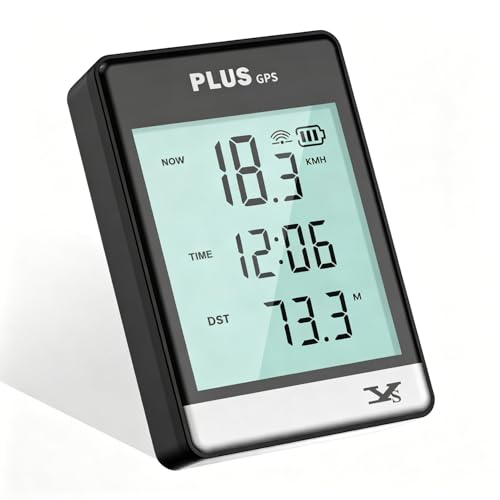
- 3.26-inch anti-glare display
- GPS+BDS positioning without calibration
- 16-hour battery and IPX6 water resistance
Best For: Riders wanting clear, uncomplicated ride tracking
Best for Everyday Use
GEOID CC700 Color GPS Computer

- Color navigation with automatic re-routing
- WiFi, Bluetooth, and ANT+ connectivity
- Customizable pages with 108 data items
Best For: Riders who want navigation and connected training features
Best Battery-Life Pick
GPS Bike Computer with Altitude

- Up to 28-hour rechargeable battery
- Tracks altitude, gradient, and ascent
- IPX7 waterproof 2.4-inch display
Best For: Long-distance riders monitoring elevation and battery use
Best with Extra Features
GEOID CC600 Color GPS Computer

- Color GPX navigation with rerouting
- ANT+ and Bluetooth sensor support
- Customizable screens plus indoor training
Best For: Route-focused riders and structured training
Best Long-Battery Value

- Up to 80 hours of battery life
- 2.4-inch display with auto backlight
- ANT+ connectivity and Strava syncing
Best For: Long rides and low-maintenance tracking
Best Connected Display

- Color navigation with route imports
- Over 100 data options and 400-hour storage
- Lightweight body with 25-hour battery
Best For: App-connected navigation and everyday rides
Best Navigation Pick – iGPSPORT BSC500 GPS Bike Computer
For riders comparing folding bike GPS computers, the iGPSPORT BSC500 stands out with a large 3.3-inch touchscreen, button controls, and built-in map and voice navigation. Dual-band, five-satellite positioning is designed to improve accuracy, while route importing and automatic rerouting make it useful for exploring unfamiliar roads.
Best For: Folding-bike riders who want detailed navigation, voice prompts, and training features in a larger display.
Pros:
- 3.3-inch touchscreen supports up to 12 cycling data fields per page.
- Dual-band positioning supports GPS, BeiDou, GLONASS, Galileo, and QZSS.
- Offers route importing, turn reminders, voice navigation, and automatic yaw replanning.
- IPX7 water resistance and a two-year warranty add practical protection.
Cons:
- At 107 g, it is heavier than the compact CYCPLUS option.
- Its advanced navigation features may be more than casual riders need.
The BSC500 is the strongest choice here when navigation is the priority. Its larger screen and voice guidance can reduce the need to glance down, while compatibility with Strava, Komoot, Bluetooth, and ANT+ supports a broader riding setup.
Best Long-Battery Option – iGPSPORT BSC100S GPS Bike Computer
The iGPSPORT BSC100S is a straightforward option for folding bike GPS computers, pairing a 2.6-inch anti-glare LCD with more than 40 riding metrics. Its 40-hour battery, IPX7 waterproofing, and ANT+/Bluetooth connectivity make it well suited to regular commuting and longer rides.
Best For: Riders who want long battery life, broad sensor compatibility, and clear core ride data without a touchscreen.
Pros:
- Up to 40 hours of battery life with USB-C charging.
- Displays more than 40 metrics, including speed, distance, grade, cadence, and calories.
- Supports GPS, BeiDou, GLONASS, Galileo, and QZSS positioning.
- IPX7 waterproofing and ANT+/Bluetooth connectivity support varied conditions and accessories.
Cons:
- Uses button controls rather than a touchscreen.
- The included package does not include a USB-C cable.
- It focuses on data tracking rather than built-in map navigation.
Choose the BSC100S if dependable ride recording matters more than on-device maps. Its long runtime and wide metric selection are practical for folding-bike trips, while app syncing lets you analyze and share rides afterward.
Best Lightweight Choice – CYCPLUS G1 Wireless GPS Bike Computer
Among folding bike GPS computers, the CYCPLUS G1 is a compact, 70-gram model for riders who want essential GPS ride information without a bulky handlebar setup. Its 2-inch glare-free backlit display, automatic sleep mode, and stated battery life of more than 50 hours keep the design simple and travel-friendly.
Best For: Folding-bike owners who value low weight, compact size, and basic GPS ride recording.
Pros:
- Lightweight 70-gram design suits portable and compact bicycles.
- Automatic backlight improves visibility in bright or low-light conditions.
- 1200mAh battery provides more than 50 hours of stated working time.
- Wireless design, IPX6 water resistance, and a two-year warranty add convenience.
Cons:
- The 2-inch screen is smaller than the displays on the other listed models.
- It provides core GPS ride data rather than route navigation.
- IPX6 protection is below the IPX7 rating offered by several alternatives.
The G1 makes the most sense when minimal weight and straightforward operation are more important than advanced connectivity. It can display key ride statistics clearly while keeping a folding bike’s cockpit uncluttered.
Best Connected Color Display – COOSPO CS600 GPS Bike Computer
The COOSPO CS600 brings a color touchscreen and route navigation to the folding bike GPS computers category. It combines a 2.4-inch high-resolution display with automatic backlighting, 150-plus data insights, and wireless support for accessories such as radar lights, e-bikes, and indoor trainers.
Best For: Data-focused riders who want a color touchscreen, route guidance, and a connected accessory ecosystem.
Pros:
- Responsive 2.4-inch color touchscreen with automatic backlight.
- Supports uploaded routes and breadcrumb navigation.
- Offers more than 150 data insights and customizable dashboard layouts.
- IPX7 waterproofing, ANT+/Bluetooth, and 36-hour battery life support varied rides.
Cons:
- Additional cadence, heart-rate, or power sensors are sold separately.
- The 36-hour battery is shorter than the stated runtimes of the BSC100S and G1.
- Its one-year warranty is shorter than the two-year warranties listed for the iGPSPORT and CYCPLUS models.
The CS600 is a strong match for riders who want more than basic speed and distance tracking. Its customizable data views and broad accessory compatibility make it appealing for structured training, though the full feature set may require purchasing compatible sensors separately.
Best Large-Screen Pick – GPS Bike Computer 3.26-Inch
For riders comparing folding bike GPS computers, this model emphasizes easy-to-read basics. Its 3.26-inch anti-glare LCD, GPS+BDS positioning, auto backlight, and simple handlebar installation make it a practical choice for commuting, touring, and everyday rides.
Best For: Riders who want a large, straightforward display for speed, distance, and ride time.
Pros:
- Large 3.26-inch screen with anti-glare LCD and auto backlight.
- GPS+BDS positioning works without a wheel sensor or calibration.
- IPX6 water resistance and up to 16 hours of battery life.
- Fits 15–48 mm handlebars and installs without tools.
Cons:
- Provides less advanced navigation and training functionality than the GEOID CC700.
- The listed warranty details are inconsistent: the bullets mention two years, while the product details state one year.
This is a sensible folding-bike option when visibility and simple GPS tracking matter more than route guidance or extensive sensor connectivity.
Best for Everyday Use – GEOID CC700 Color GPS Computer
The GEOID CC700 is a feature-rich choice among folding bike GPS computers, combining color route navigation with re-routing, WiFi synchronization, and ANT+/Bluetooth support. Its 2.8-inch color screen and customizable data pages suit riders who want more than basic speed and distance tracking.
Best For: Cyclists who need route guidance, connected sensors, and detailed training data.
Pros:
- Color navigation supports GPX uploads, turn reminders, and automatic re-routing.
- Supports GPS, BEIDOU, GLONASS, QZSS, and GALILEO with claimed five-second positioning after AGNSS sync.
- WiFi, Bluetooth, and ANT+ support connect compatible devices and sync ride data.
- Offers extensive customization with up to 10 pages and 108 supported data items.
Cons:
- Its broader feature set may require more setup than a basic GPS speedometer.
- The notes do not specify battery runtime.
- Route and data-sync features depend on the app, accounts, and compatible devices.
Choose the CC700 if navigation and training connectivity are priorities; it is more elaborate than necessary for riders seeking only essential ride metrics.
Best Battery-Life Pick – GPS Bike Computer with Altitude
For folding bike GPS computers suited to longer outings, this compact unit focuses on endurance and elevation data. It records speed, distance, temperature, altitude, gradient, and ascent, while its 28-hour battery and IPX7 rating support extended outdoor rides.
Best For: Tourers and riders who value long runtime and climbing information.
Pros:
- Up to 28 hours of battery life from a 650mAh rechargeable battery.
- Tracks altitude, gradient, and accumulated ascent alongside core ride metrics.
- IPX7 waterproof protection supports riding in changing weather.
- Auto start/stop, sleep mode, and GPS operation reduce manual setup.
Cons:
- The 2.4-inch monochrome LCD is smaller and less feature-rich than the CC700’s color display.
- It does not list route navigation, WiFi, ANT+, or Bluetooth connectivity.
- Buttons and automatic sleep mode may be less convenient for riders wanting highly interactive controls.
This model is a strong fit for distance-focused riders who want elevation details and fewer charging interruptions, rather than mapped navigation or extensive device integration.
Best with Extra Features – GEOID CC600 Color GPS Computer
For riders comparing folding bike GPS computers, the GEOID CC600 stands out when route guidance and customizable data screens matter. Its 2.4-inch color display supports GPX routes, turn reminders, zooming, and automatic rerouting, while Wi-Fi and Bluetooth simplify syncing and updates.
Best For: Riders who want colorful route navigation, extensive data customization, and indoor smart-trainer support.
Pros:
- Color navigation includes turn reminders and automatic rerouting.
- Supports GPS, BeiDou, GLONASS, QZSS, and Galileo with advertised five-second positioning after AGNSS sync.
- Offers up to 108 supported data items, 10 pages, and 10 data fields per page.
- Connects with Bluetooth and ANT+ sensors, including heart-rate, power, cadence, radar, and smart-trainer devices.
Cons:
- Its feature-rich setup may be more involved than a basic speedometer.
- Battery life is listed at up to 24 hours.
The CC600 is the most navigation-focused option here, with a color interface and rerouting that can be especially useful when a folding bike is used for unfamiliar routes. Its broad sensor compatibility also leaves room to expand a training setup.
Best Long-Battery Value – COOSPO BC107 GPS Computer
The COOSPO BC107 is a practical choice among folding bike GPS computers for riders who prioritize long recording time and straightforward ride tracking. It combines GPS positioning, an auto-backlit 2.4-inch display, ANT+ sensor support, and up to 80 hours of battery life.
Best For: Commuters and touring riders who want extended battery life, basic GPS tracking, and Strava syncing.
Pros:
- Advertised battery life reaches up to 80 hours.
- Auto backlight helps adjust the display for changing light conditions.
- ANT+ supports compatible heart-rate, speed, cadence, and power sensors.
- IP67 protection is designed for riding in rainy conditions, and activity files can sync to Strava through the app.
Cons:
- First-time GPS positioning may take three to five minutes outdoors.
- An out-front mount is not included and may require an additional purchase.
- Route loading and settings rely on the CoospoRide phone app.
The BC107 favors endurance and simplicity over a color navigation experience. It is a sensible fit for folding-bike users who mainly need reliable ride records and sensor data without frequent charging.
Best Connected Display – iGPSPORT BSC200S GPS Computer
The iGPSPORT BSC200S offers a balanced feature set for folding bike GPS computers, pairing route navigation with a clear 2.4-inch color screen and broad ride-data support. Routes can be created in the iGPSPORT app or imported from services such as Strava, Ride with GPS, and Komoot.
Best For: Riders seeking app-connected navigation, readable color data screens, and a lightweight computer with modern alerts.
Pros:
- Supports turn, yaw, and direction guidance, plus Back to Start navigation.
- Provides over 100 riding data options and stores up to 400 hours of ride data.
- Its semi-reflective color screen is designed for clearer viewing in sunlight.
- Can connect to compatible iGPSPORT front and radar lights and provides selected phone notifications.
Cons:
- Battery life is listed at up to 25 hours, less than the COOSPO BC107.
- The supplied-components note says a Type-C cable is not included.
- Navigation setup and route transfers depend on the iGPSPORT app.
With a 67-gram design, 25-hour battery, and flexible route-import options, the BSC200S is a strong middle ground. It adds useful connected features without the more extensive training emphasis of the GEOID model.
How We Picked the Best Folding Bike GPS Computers
We focused on features that matter during real folding-bike rides: readable displays, dependable GPS positioning, route navigation, wireless sensor compatibility, weather protection, battery capacity, and controls that remain convenient when riding in traffic. We also considered mounting practicality, because a computer should stay secure without interfering with folding hinges, cables, or compact handlebars.
The selection includes basic GPS speedometers for simple ride tracking as well as color-screen models with route planning, rerouting, Wi-Fi synchronization, and Bluetooth or ANT+ connectivity. Advertised specifications can vary by configuration and riding conditions, so treat battery figures as estimates rather than guarantees.
Quick Comparison
| Best For | Look For | Why It Matters |
|---|---|---|
| Everyday commuting | Fast GPS lock, clear screen, water resistance | Minimizes setup and remains useful in changing weather |
| Longer rides | 28–40-hour battery claims | Reduces charging frequency on touring and weekend routes |
| Navigation | Color mapping, rerouting, route sync | Makes unfamiliar roads easier to follow |
| Training | ANT+/Bluetooth sensor support | Connects heart-rate, cadence, and speed sensors |
Key Buying Factors for Folding Bike GPS Computers
Size, Readability, and Mounting
A larger 3-inch-class display is easier to read for maps and data fields, while a 2-inch to 2.6-inch unit may suit compact handlebars better. Check the mount position in both riding and folded configurations. Touchscreens can be convenient, but physical buttons are often easier to operate with gloves or wet hands.
Navigation and GPS Performance
Basic computers may show speed, distance, altitude, and a breadcrumb route. More advanced models add onboard maps, voice prompts, rerouting, or automatic route synchronization. If you routinely ride in unfamiliar areas, prioritize navigation tools over a large collection of training metrics.
Battery, Durability, and Connectivity
Choose a battery rating that exceeds your typical ride length, especially if you use navigation and a bright backlight. IPX6, IPX7, or IP67 protection provides useful defense against rain, but confirm that charging ports are closed before riding. Bluetooth and ANT+ support are valuable if you already use external sensors.
Who Should Buy Which Folding Bike GPS Computers?
Choose a compact basic GPS computer if you mainly need speed, distance, and ride recording for commuting. Pick a larger color-screen model if route visibility is your priority. Riders planning long tours should favor higher advertised battery capacity and automatic route syncing. Training-focused cyclists should select a unit with both Bluetooth and ANT+ support. For any folding bike, verify handlebar clearance and mount security before committing to a final setup.
