
The best lightweight home backup power stations keep essential devices running without the bulk, noise, or installation demands of a full home battery system. This roundup compares compact models ranging from small phone-and-router backups to higher-capacity units suitable for longer outages.
Focus on usable watt-hours, continuous output, recharge options, battery durability, and the devices you actually need to power. A well-matched station can provide dependable emergency electricity while remaining easy to store, carry, and recharge.
Best 10 Lightweight Home Backup Power Stations Picks for 2026
Best Budget Capacity

- 519Wh capacity and 500W pure sine wave output
- Powers up to 10 devices simultaneously
- Wall, car, or solar recharging
Best For: Essential electronics and small appliances under 500W
Best Fast-Charging Upgrade

- 1,070Wh capacity with 1,500W output
- 23.8-pound design with foldable handle
- Optional one-hour app-enabled charging
Best For: Home emergencies and larger essential appliances
Best Extended Runtime
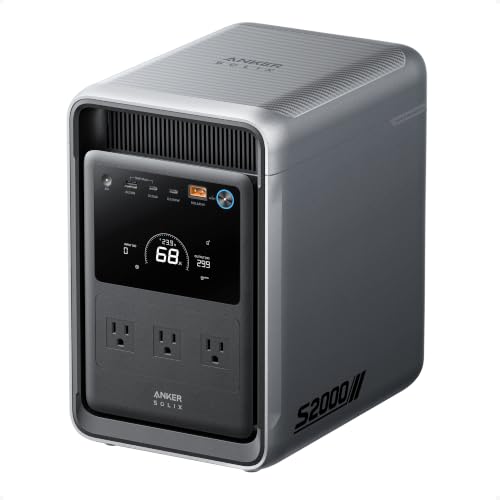
- 2,010Wh capacity with 1,500W output
- Up to 400W solar input and under-10ms switchover
- LFP battery rated for 10,000 cycles
Best For: Extended refrigerator and home outage backup
Best Ultra-Light Option

- About 7.5 pounds with a built-in handle
- 300W output and 292Wh capacity
- Charges six devices through varied ports
Best For: Portable electronics, camping, and brief outages
Best Lightweight Value
ALLWEI 300W Portable Power Station

- 6.4-pound LiFePO4 power station
- 300W output and 256Wh capacity
- AC, car, and solar charging
Best For: Basic home emergencies, camping, and car-based backup
Best for Fast Backup
BLUETTI Elite 30 V2 600W Power Station

- 600W output with 1,500W lifting mode
- 0–80% wall charge in about 45 minutes
- 10ms UPS and eight charging modes
Best For: Fast-recharging emergency backup and sensitive electronics
Best Port Selection
VTOMAN FlashSpeed 300 Power Station

- Seven outlets for simultaneous charging
- 100W USB-C fast input and output
- 7.4-pound LiFePO4 design
Best For: Multi-device camping setups and short home backup sessions
Best Overall
GRECELL 330W Portable Power Station
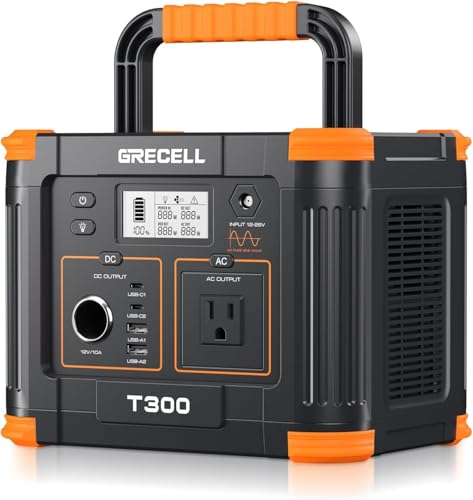
- 330W pure sine wave output with 600W surge
- 230.88Wh capacity and six charging ports
- AC, car, or solar recharging with MPPT
Best For: Versatile backup for electronics, CPAP devices, and small appliances
Best for Long-Term Durability
GO10Y 192Wh LiFePO4 Power Station

- 3.9-pound design with 192Wh capacity
- LiFePO4 battery rated for over 3,000 cycles
- UPS function and built-in SOS LED light
Best For: Essential electronics, outages, camping, and frequent use
Best Budget-Friendly Option
Flashfish 200W Portable Power Station
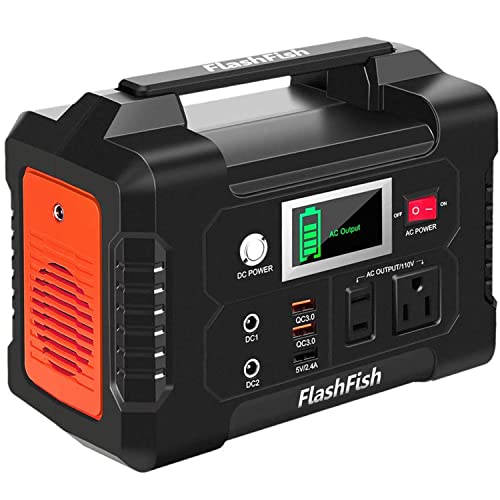
- 200W AC output in a 4.07-pound package
- 151Wh battery with six total output ports
- AC, car, or optional 60W solar recharging
Best For: Portable charging for phones, cameras, lights, and small devices
Best Budget Capacity – 500W Solar Generator
For shoppers seeking lightweight home backup power stations without moving into a larger, heavier system, this 519Wh model offers a practical balance of capacity and portability. Its pure sine wave inverter supports devices rated under 500W, while multiple charging options make it useful during outages, camping trips, and everyday emergencies.
Best For: Essential electronics, CPAP machines, routers, lights, fans, and small appliances under 500W.
Pros:
- 519.48Wh capacity with 500W pure sine wave AC output.
- Supports up to 10 devices, including USB-C PD, USB-A, AC, DC, car, and wireless charging.
- Can recharge from a wall outlet, car charger, or compatible solar panel.
- Built-in protections include temperature, overvoltage, overcurrent, and short-circuit safeguards.
Cons:
- At 18 pounds, it is less portable than the smallest power stations.
- Solar panels are not included, and solar charging can take 6–9 hours with a 100W panel.
- It should not power devices rated above 500W.
This is a versatile mid-size option for keeping essential low- to moderate-power devices running. It is a strong value for home backup and outdoor use when you do not need to operate high-wattage appliances.
Best Fast-Charging Upgrade – Jackery Explorer 1000 v2
The Jackery Explorer 1000 v2 is a strong choice among lightweight home backup power stations for shoppers who want substantial capacity without a bulky enclosure. Its 1,070Wh LFP battery, 1,500W output, and foldable handle support home emergencies, camping, and road trips.
Best For: Refrigerators, AC units, electric pots, laptops, and other essential appliances requiring up to 1,500W.
Pros:
- 1,070Wh capacity with 1,500W continuous output and 3,000W surge capacity.
- Weighs 23.8 pounds and includes a foldable handle.
- LFP battery is rated for more than 4,000 charge cycles while retaining over 70% capacity.
- App-enabled charging modes include emergency one-hour charging and quiet 30dB overnight charging.
Cons:
- One-hour charging requires enabling emergency charging in the Jackery app.
- Solar charging is compatible only with Jackery solar panels.
- Solar panels are optional rather than included.
With more output and capacity than compact models, the Explorer 1000 v2 is better suited to serious outage preparation. Its LFP battery and app controls add useful convenience for frequent or extended use.
Best Extended Runtime – Anker SOLIX S2000
The Anker SOLIX S2000 stands out among lightweight home backup power stations for extended runtime. Although its 35.7-pound weight makes it heavier than compact alternatives, its 2,010Wh LFP battery, 1,500W output, and low idle draw are designed for longer home-backup sessions.
Best For: Extended refrigerator backup, power outages, home use, and essential appliances requiring up to 1,500W.
Pros:
- Large 2,010Wh capacity with 1,500W continuous and 3,000W peak output.
- Low 6W idle draw and claimed 35-hour refrigerator runtime, depending on conditions and usage.
- 314Ah LFP battery rated for up to 10,000 charge cycles and a 15-year lifespan.
- Supports up to 400W solar input and offers under-10ms switchover.
Cons:
- At 35.7 pounds, it is not as easy to carry as smaller models.
- It does not include a 12V DC port.
- Solar panels and other charging accessories are not listed as included.
The S2000 is the capacity-focused pick in this group. Its compact-for-its-class design and long-life LFP battery help offset its extra weight, making it suitable when runtime matters more than minimal carry weight.
Best Ultra-Light Option – Jackery Explorer 300
For portability-first shoppers, the Jackery Explorer 300 is one of the most convenient lightweight home backup power stations in this roundup. Its 292Wh capacity and 300W output are suited to personal electronics, small accessories, and short-duration backup while the integrated handle keeps transport simple.
Best For: Laptops, cameras, drones, CPAP use while camping, phones, and other low-power electronics.
Pros:
- Weighs about 7.5 pounds and includes an integrated handle.
- 300W rated output with 600W peak surge capacity.
- Six-device charging through AC, USB-C PD, USB-A, and a 120W car port.
- LiFePO4 battery is rated for more than 4,000 charge cycles before reaching 70% capacity.
Cons:
- 292Wh capacity is limited for running appliances or extended outages.
- It is not intended for high-wattage devices above its 300W rating.
- Solar panels are optional, and solar charging requires Jackery-compatible panels.
The Explorer 300 is best viewed as a grab-and-go electronics backup rather than a whole-home solution. Its low weight makes it especially practical for camping, travel, and keeping communication devices charged during brief outages.
Best Lightweight Value – ALLWEI 300W Portable Power Station
For shoppers comparing lightweight home backup power stations, the ALLWEI 300W offers a compact 256Wh setup with enough output for common essentials such as laptops, CPAP machines, small appliances, and phones. Its 6.4-pound design is particularly convenient for moving between a home emergency kit, car, or campsite.
Best For: Buyers who prioritize low weight, long battery life, and flexible charging for basic emergency backup and outdoor use.
Pros:
- LiFePO4 battery is rated for 3,000 charge-discharge cycles.
- 300W continuous output with 600W peak pure sine wave power.
- Supports AC, car, solar, and AC-plus-solar recharging.
- Includes six output ports and a three-level LED light with SOS mode.
Cons:
- 256Wh capacity is better suited to essentials than extended whole-home backup.
- Solar panel is sold separately.
The ALLWEI is a strong lightweight choice when portability and battery longevity matter more than maximum capacity. Its five-year warranty and multiple charging options add practical value for occasional outages and travel.
Best for Fast Backup – BLUETTI Elite 30 V2 600W Power Station
The BLUETTI Elite 30 V2 stands out among lightweight home backup power stations for its higher 600W continuous output and fast recharge performance. At about 9.4 pounds, it remains portable while adding a 10ms UPS mode for devices such as routers, laptops, and CPAP machines during sudden outages.
Best For: Users who need faster recharging, stronger output, and UPS-style support in a compact emergency power station.
Pros:
- 600W continuous output with 1,500W Power Lifting Mode.
- Recharges from 0% to 80% in about 45 minutes and to 100% in about 70 minutes with wall charging.
- 10ms UPS switching helps keep compatible critical devices running during interruptions.
- Offers eight charging modes and nine total outlets.
Cons:
- Heavier than the smaller 300W alternatives in this roundup.
- Its 288Wh capacity still limits runtime for high-draw appliances.
Choose the Elite 30 V2 if quick turnaround and higher output are more important than minimizing weight. Its UPS capability makes it especially practical for short blackouts affecting networking equipment or medical devices.
Best Port Selection – VTOMAN FlashSpeed 300 Power Station
The VTOMAN FlashSpeed 300 is a practical pick among lightweight home backup power stations when simultaneous device charging is a priority. Its 7.4-pound body combines 300W output, a 230Wh LiFePO4 battery, and seven outlets, while the 100W USB-C input can restore the unit to 80% in roughly two hours.
Best For: Campers and households that need several USB and AC connections in a relatively light, easy-to-carry unit.
Pros:
- Provides seven outlets, including two AC outputs, three USB-A ports, and a 100W USB-C port.
- LiFePO4 battery is designed for more than 3,000 cycles.
- 100W USB-C PD input supports rapid recharging to 80% in about two hours.
- Works with wall, solar, car, and USB-C PD charging.
Cons:
- 230Wh capacity is the smallest among these three options.
- Supplied notes do not specify a warranty duration.
The FlashSpeed 300 makes sense for buyers who value port variety and modern USB-C charging. It is well suited to phones, laptops, lights, cameras, and other modest loads, but its smaller battery favors shorter backup sessions.
Best Overall – GRECELL 330W Portable Power Station
For shoppers comparing lightweight home backup power stations, the GRECELL EB300 offers a useful balance of capacity, output, and portability. Its 230.88Wh battery and 330W pure sine wave inverter can support common essentials such as phones, laptops, lights, fans, CPAP devices, and select small appliances rated below 330W.
Best For: Households and campers needing versatile backup power for electronics and small essentials.
Pros:
- 330W output with 600W surge capacity and pure sine wave power
- Six-device charging, including 60W USB-C PD and QC USB-A ports
- AC, car, and solar recharging with built-in MPPT controller
- Overload, overcharge, short-circuit, and temperature protection
Cons:
- Devices rated above 330W are not supported
- At 7.3 pounds, it is heavier than the smaller options in this roundup
The GRECELL stands out when you need more output and connection flexibility than an ultra-compact power bank provides. Its moderate capacity is better suited to short outages, essential electronics, and portable use than extended whole-home backup.
Best for Long-Term Durability – GO10Y 192Wh LiFePO4 Power Station
The GO10Y is a compact choice among lightweight home backup power stations, weighing just 3.9 pounds and using a LiFePO4 battery designed for more than 3,000 charging cycles. Its 100W rated output is appropriate for essential electronics, while the UPS function can help maintain power during outages.
Best For: Buyers prioritizing a lightweight, durable station for essential devices and outage support.
Pros:
- LiFePO4 battery rated for over 3,000 charging cycles
- Compact 3.9-pound design with ergonomic dual-groove carrying case
- UPS feature supports uninterrupted power during outages
- Built-in LED light includes two brightness settings and SOS mode
Cons:
- 100W rated output limits compatibility with higher-powered appliances
- Only one AC outlet is included
- Warranty coverage is listed as one year
This station favors portability and battery longevity over high output. It is a practical fit for phones, cameras, laptops, lights, and other modest loads, but shoppers should check device wattage before relying on it for larger appliances.
Best Budget-Friendly Option – Flashfish 200W Portable Power Station
The Flashfish E200 is a straightforward option for shoppers seeking lightweight home backup power stations at a modest size and weight. Its 151Wh battery, 200W AC output, multiple USB and DC ports, and 4.07-pound body make it suitable for charging personal electronics and selected small devices.
Best For: Travelers and campers who want an affordable, easy-to-carry station for everyday electronics.
Pros:
- 200W AC output with two DC ports and three USB ports
- Lightweight 4.07-pound design with soft carrying handle
- LCD displays remaining power and charge or discharge status
- Rechargeable through AC, car, or a compatible 60W solar panel
Cons:
- 151Wh capacity is the lowest among these three options
- Solar panel is sold separately
- Not intended for loads above its 200W output rating
The Flashfish keeps the essentials simple: portable power, clear status monitoring, and several recharge methods. Its smaller battery is best for short-term charging and light loads rather than prolonged home backup or demanding appliances.
How We Picked These Lightweight Home Backup Power Stations
We selected models across several practical capacity and output ranges so shoppers can match a power station to their household needs. Our comparison emphasizes battery capacity, inverter output, LiFePO4 battery availability, recharge flexibility, portability, outlet selection, and suitability for short outages, travel, RV use, and emergency preparedness.
Capacity figures are listed in watt-hours (Wh), while output is measured in watts (W). Watt-hours estimate how much energy a station stores; watts determine which devices it can run at the same time. Real-world runtime is lower than the advertised capacity because of inverter and conversion losses.
Quick Comparison
| Capacity range | Best suited for | Typical devices |
|---|---|---|
| 190–300Wh | Short, lightweight backup | Phones, lights, routers, laptops, small electronics |
| 400–600Wh | Extended portable backup | Multiple electronics, small appliances, CPAP devices |
| 1,000Wh or more | Longer outages and heavier loads | Several devices, selected higher-draw appliances, longer runtime |
| 2,000Wh class | High-capacity emergency reserve | More devices and longer operating periods, within output limits |
Key Buying Factors for Lightweight Home Backup Power Stations
Capacity and Usable Runtime
Choose capacity based on the devices you need to support and how long you expect an outage to last. A router, lamp, phone, or laptop may work well with a sub-300Wh unit, while several devices or repeated overnight use call for 500Wh or more. For refrigerators, heaters, kettles, or medical equipment, check both startup and continuous power requirements carefully.
Continuous and Surge Output
Continuous wattage must exceed the combined draw of your devices. Surge capacity matters for appliances with motors or compressors, such as refrigerators and some pumps. Do not assume a high watt-hour rating automatically means the station can run high-wattage equipment.
Battery Chemistry and Lifespan
LiFePO4 batteries generally offer strong cycle life and improved longevity compared with older lithium-ion chemistries, though they can add weight or cost. Check the manufacturer’s cycle rating, operating temperature range, and warranty before buying.
Charging and Portability
Look for the charging methods you will actually use: wall charging, vehicle charging, and solar input. Fast AC charging can shorten downtime, while solar charging is useful during extended outages but depends on panel compatibility, sunlight, and input limits. Compare weight, handles, dimensions, display quality, and fan noise if you plan to move or store the unit frequently.
Who Should Buy Which Lightweight Home Backup Power Stations?
Choose a compact 190–300Wh model for phones, lights, networking equipment, laptops, and short emergency interruptions. Step up to a 500Wh-class station if you want more runtime or need to power several small devices. A 1,000Wh model is a better fit for longer outages, larger electronics, and households that want a broader reserve without moving to a permanently installed battery. The 2,000Wh class suits shoppers prioritizing maximum portable capacity and longer backup periods.
Before purchasing, list each essential device, record its wattage, estimate required hours, and add a safety margin. That simple calculation is the most reliable way to choose among these Lightweight Home Backup Power Stations.
