
When the power goes out, the right backup station can keep essential devices, appliances, and communications running without the noise or fuel demands of a gas generator.
We compared 10 high-capacity home backup power stations across battery size, output, recharge options, portability, and practical emergency-use features to help you find the right fit.
Best 10 High-Capacity Home Backup Power Stations Picks for 2026
Best High-Output Pick

- 3,072Wh LiFePO4 capacity
- 3,600W pure sine-wave output
- 13 ports and expandable storage
Best For: High-demand home backup and extended emergencies
Best Complete Home Kit
Jackery HomePower 3600 Plus Solar Bundle
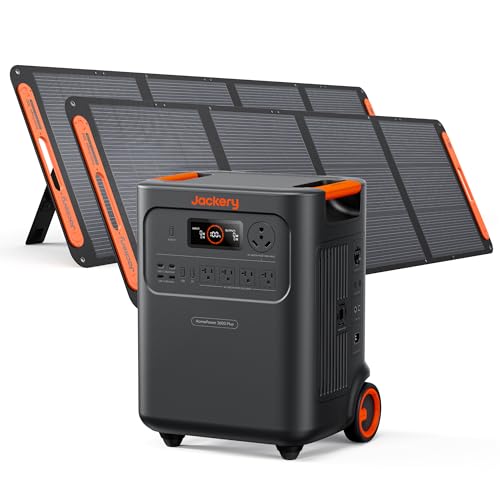
- 3,584Wh capacity and 3,600W output
- Includes two 200W solar panels
- Expandable to 21kWh per unit
Best For: Household backup with included solar charging
Best Compact Mid-Capacity Option

- 2,010Wh LiFePO4 battery
- 1,500W continuous output
- 35.7-pound compact design
Best For: Portable essential-load and refrigerator backup
Best Expandable Home Backup
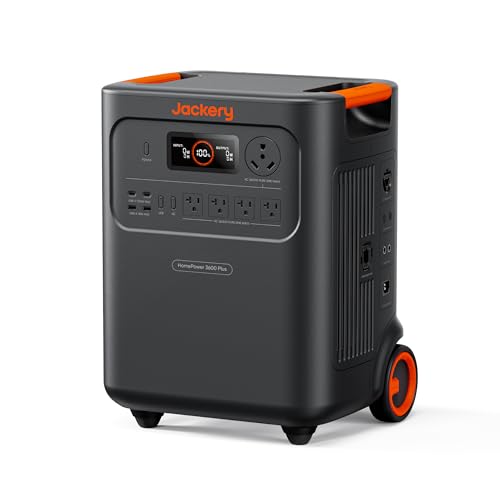
- 3,584Wh capacity and 3,600W output
- Expandable to 21kWh per unit
- Dual-voltage parallel operation
Best For: Scalable, high-output household backup
Fast-Charging Home Backup

- 1,152Wh LiFePO4 battery with 1,800W output
- Full AC recharge in about one hour
- 500W solar input and 20 ms UPS response
Best For: Home outage backup, camping, and off-grid power
Lightweight Long-Life Pick

- 1,070Wh capacity and 1,500W AC output
- Portable 23.8-pound design with foldable handle
- LFP battery rated for over 4,000 cycles
Best For: Portable home backup, camping, and road trips
High-Output Compact Backup

- 1,024Wh battery with 2,000W output
- 49-minute HyperFlash AC recharge
- 10 ms UPS and 600W solar input
Best For: Emergency backup, remote work, RVs, and off-grid use
Long-Run Home Backup
1000W 1024Wh LiFePO4 Power Station

- 1024Wh capacity with 1000W continuous output
- 3,000+ cycle LiFePO4 battery with smart protection
- Up to 300W solar input and five-device charging
Best For: Multi-day outages, RVs, camping, and essential home loads
UPS Home Backup
LIBRIDS 640Wh 600W Power Station

- 10ms UPS for routers, CPAP machines, and essentials
- 4,000+ cycle LiFePO4 battery with pure sine wave output
- Eight ports and fast 1.5-hour AC charging
Best For: Indoor outages, CPAP backup, routers, and fast recharge
Compact Emergency Backup

- 9.5-pound design with 288Wh capacity
- 600W output and 1500W Power Lifting mode
- 10ms UPS and 0-80% charging in 45 minutes
Best For: Portable emergency power, CPAPs, laptops, and short outages
Best High-Output Pick – PECRON F3000LFP
For shoppers comparing high-capacity home backup power stations, the PECRON F3000LFP stands out with 3,072Wh of LiFePO4 storage and 3,600W of pure sine-wave output. It is designed for extended emergency use and can support demanding appliances such as refrigerators, air conditioners, and power tools.
Best For: Homeowners who need high output, many ports, and expandable backup capacity.
Pros:
- 3,600W output and 3,072Wh capacity can handle demanding appliances.
- Fast 1,800W AC charging can refill the station in about two hours.
- Thirteen ports, UPS switching, app control, and expansion up to 10,752Wh.
Cons:
- At 63.3 pounds, it is substantial to move.
- The optional EP3800-48V expansion battery requires a separately sold XT120-M cascade cable.
The F3000LFP is a strong fit when appliance support and connectivity matter more than minimal weight. Its UPS function and large port selection also make it practical for outage readiness, while the expansion option supports longer backup periods.
Best Complete Home Kit – Jackery HomePower 3600 Plus Solar Bundle
The Jackery HomePower 3600 Plus bundle pairs a 3,584Wh power station with two 200W solar panels, making it a convenient option among high-capacity home backup power stations. Its 3,600W output, expandable storage, and dual-voltage capability are suited to substantial household loads.
Best For: Households wanting a ready-to-use backup package with solar panels and rolling portability.
Pros:
- 3,600W output supports pumps, heaters, and dryers; parallel operation can reach 7,200W.
- Capacity expands to 21kWh per unit or 43kWh with multiple units.
- Hybrid AC+DC charging can reach full charge in about two hours.
Cons:
- The 77.2-pound unit is heavy, despite its wheels and telescoping handle.
- Home transfer-switch use may require the separately referenced MTS setup.
With included solar panels, multiple charging methods, and a wheeled design, this bundle emphasizes convenience. It is especially compelling for buyers who want substantial capacity without assembling a separate solar-charging package.
Best Compact Mid-Capacity Option – Anker SOLIX S2000
The Anker SOLIX S2000 offers 2,010Wh of LiFePO4 storage in a relatively compact 35.7-pound enclosure. While its 1,500W continuous output is below larger high-capacity home backup power stations, its low idle draw, long claimed cycle life, and sub-10ms switchover make it useful for essential loads.
Best For: Buyers who want a lighter station for refrigerators, essential appliances, camping, and outage backup.
Pros:
- 2,010Wh battery and 1,500W continuous output cover many everyday essentials.
- Low 6W idle draw and claimed 35-hour refrigerator runtime improve efficiency.
- Compact 35.7-pound design, UPS switchover under 10ms, and 10,000-cycle claimed lifespan.
Cons:
- It has no 12V DC port.
- Solar input is limited to 400W.
- Its 1,500W output is less suitable for high-wattage appliances than 3,600W models.
The S2000 is a practical compromise for shoppers who prioritize portability and efficient essential-load backup. Its capacity is substantial, but buyers needing to run heaters, pumps, or other heavy loads should consider a higher-output model.
Best Expandable Home Backup – Jackery HomePower 3600 Plus
The Jackery HomePower 3600 Plus combines 3,584Wh of storage with 3,600W AC output for demanding household backup. Among high-capacity home backup power stations, it is notable for dual-voltage parallel operation, major capacity expansion, and a wheeled form factor designed for moving around the home.
Best For: Homeowners who want expandable energy storage and straightforward, high-output emergency power.
Pros:
- 3,600W output can run pumps, heaters, and dryers; parallel units can provide 7,200W.
- Expandable to 21kWh per unit or 43kWh with multiple units.
- Supports AC, hybrid AC+DC, solar, and generator charging, with a five-year warranty.
Cons:
- Its 77.2-pound weight makes the wheels and telescoping handle important for transport.
- The listed configuration includes only the power station rather than solar panels.
This model is a strong choice for buyers focused on scalable home resilience. It delivers the same substantial output as the bundle version, but the station-only format lets shoppers choose their own charging accessories.
Fast-Charging Home Backup – BLUETTI AC180
The BLUETTI AC180 is a strong choice among high-capacity home backup power stations when you need substantial output, rapid charging, and dependable emergency power. Its 1,152Wh LiFePO4 battery, 1,800W output, and 20 ms UPS response suit outages, camping, and off-grid use.
Best For: Homeowners who want fast AC or solar recharging and enough output for multiple essential appliances.
Pros:
- Recharges fully in about one hour with 1,440W AC input.
- Provides 1,800W output, with a 2,700W power-lifting mode for compatible higher-demand loads.
- Supports up to 500W solar input and includes a 20 ms UPS function.
- Includes a five-year warranty and charging cables for AC, car, and solar input.
Cons:
- At 37.4 pounds, it is less convenient to carry than lighter 1,000Wh-class options.
- Its larger output capability may be more than needed for basic device charging.
The AC180 stands out for combining a relatively large battery with high output and fast recharge times. It is particularly practical as a home outage backup that can also transition to camping or off-grid use.
Lightweight Long-Life Pick – Jackery Explorer 1000 v2
The Jackery Explorer 1000 v2 offers a useful balance of capacity, portability, and output for shoppers comparing high-capacity home backup power stations. Its 1,070Wh LFP battery and 1,500W AC output can support essentials while its 23.8-pound design is easier to move.
Best For: Users who want a portable emergency power station for appliances, electronics, camping, or road trips.
Pros:
- Weighs 23.8 pounds and includes a foldable handle for easier transport.
- Delivers 1,500W AC output with a 3,000W surge peak.
- LFP battery is rated to retain more than 70% capacity after 4,000 cycles.
- Offers app-controlled charging modes, including one-hour emergency charging and a 30 dB quiet mode.
Cons:
- One-hour charging must be enabled through the Jackery app; the default charge mode is 1.7 hours.
- Solar charging is compatible only with Jackery solar panels.
- Its output and capacity are lower than the BLUETTI AC180 and Anker C1000 Gen 2.
The Explorer 1000 v2 is a practical choice when carrying weight matters almost as much as capacity. Its app controls and long cycle-life rating add flexibility, though the proprietary solar-panel compatibility limits charging options.
High-Output Compact Backup – Anker SOLIX C1000 Gen 2
The Anker SOLIX C1000 Gen 2 is designed for shoppers who prioritize high output and exceptionally quick recharging in a compact format. With a 1,024Wh LiFePO4 battery, 2,000W output, and 10 ms UPS switchover, it is well suited to emergency backup and mobile work setups.
Best For: Remote workers, RV users, and households needing high output, fast charging, and UPS protection.
Pros:
- Delivers 2,000W output with a 3,000W peak across up to 10 ports.
- HyperFlash technology can fully recharge the unit in 49 minutes at 1,600W when enabled in the app.
- Supports 600W solar input and a stated 1.8-hour solar recharge time.
- Provides under-10 ms UPS backup and a five-year warranty.
Cons:
- At 11.3 kg, it is still substantial for frequent hand carrying.
- The fastest 49-minute recharge requires enabling HyperFlash in the Anker app.
- The supplied notes identify camping as the primary recommended use, so home integration may require additional planning.
The C1000 Gen 2 is compelling when output and recharge speed are top priorities. Its UPS response, app-based controls, and solar input make it versatile for outages, remote work, RV use, and off-grid setups.
Long-Run Home Backup – 1000W 1024Wh LiFePO4 Power Station
For shoppers comparing high-capacity home backup power stations, this 1024Wh model pairs a 1000W continuous output with a durable LiFePO4 battery. It can run essentials such as lights, routers, and mini fridges, while solar compatibility adds an off-grid recharging option.
Best For: Multi-day outage backup, RV use, camping, and households needing several charging ports.
Pros:
- Large 1024Wh capacity and 1000W continuous output for essential appliances.
- LiFePO4 battery rated for 3,000+ cycles with six-layer BMS protection.
- Five-device charging, including AC outlets, USB-A, and 60W USB-C PD.
- Supports up to 300W solar input and weighs about 27.7 pounds.
Cons:
- Heavier and less compact than lower-capacity power stations.
- Optional solar panel is needed for solar charging.
- The 1000W output may not support high-wattage appliances.
This is the strongest capacity-focused choice in the group for keeping everyday essentials running longer. Its size and weight are trade-offs for the larger battery and multi-day backup potential.
UPS Home Backup – LIBRIDS 640Wh 600W Power Station
Among high-capacity home backup power stations, this LIBRIDS model emphasizes uninterrupted protection for routers, CPAP machines, and other essentials. Its 10ms UPS, pure sine wave output, and fast 1.5-hour AC recharge make it practical for short outages and emergency readiness.
Best For: Indoor outage backup, networking equipment, CPAP users, and buyers who value fast recharge and UPS switching.
Pros:
- Built-in 10ms UPS helps keep connected devices running during an outage.
- LiFePO4 battery is rated for 4,000+ cycles and uses a metal enclosure.
- Four AC outlets and additional USB ports can power up to eight devices.
- 600W continuous output, 1200W surge capacity, and 1.5-hour AC charging.
Cons:
- 640Wh capacity is lower than the 1024Wh option in this roundup.
- Marked for indoor use only and must be kept away from rain and moisture.
- 600W continuous output limits compatibility with larger appliances.
Choose this unit when seamless switching and clean power matter more than maximum battery capacity. The indoor-use restriction makes it particularly suited to dry home environments rather than exposed outdoor operation.
Compact Emergency Backup – BLUETTI Elite 30 V2 288Wh
For buyers who want portable high-capacity home backup power stations without a bulky chassis, the BLUETTI Elite 30 V2 offers 288Wh, 600W continuous output, and a 1500W Power Lifting mode. Its lightweight design and 10ms UPS make it useful for both emergency essentials and travel.
Best For: Portable blackout backup, CPAP machines, laptops, routers, camping, and road trips.
Pros:
- Lightweight 9.5-pound design is easy to carry during storms or travel.
- 600W continuous output with 1500W Power Lifting mode for selected loads.
- 10ms UPS supports laptops, routers, CPAP machines, and other critical devices.
- Fast charging reaches 80% in 45 minutes and full charge in about 70 minutes.
Cons:
- 288Wh capacity provides less runtime than the larger stations here.
- Power Lifting mode does not change the station’s 600W continuous rating.
- Best suited to smaller essentials rather than extended whole-home backup.
This is the most portable option of the three, with especially convenient fast charging and UPS functionality. Its smaller battery makes it better for targeted emergency devices than prolonged, multi-day home power.
How We Picked These High-Capacity Home Backup Power Stations
We focused on the specifications that matter most during outages and extended off-grid use: usable battery capacity, continuous and peak AC output, battery chemistry, recharge speed, solar compatibility, port selection, expandability, and overall portability. The lineup spans compact units for communications and small electronics through larger systems designed to support refrigerators, medical equipment, tools, and other essential household loads.
Capacity alone does not determine performance. A station with more watt-hours can run devices longer, while higher wattage determines which appliances it can start and operate. We also gave practical consideration to LiFePO4 batteries, which generally offer strong cycle life and improved long-term value.
Quick Comparison
| What to Compare | Best For | Why It Matters |
|---|---|---|
| 1,000Wh or less | Short outages and portable use | Lighter and easier to transport, but offers less runtime |
| 1,000–2,000Wh | Essential home devices | A practical balance of runtime, output, and portability |
| 3,000Wh or more | Extended outages and larger loads | Better endurance for refrigerators, freezers, and multiple devices |
| 1,500W–2,000W output | Most household electronics | Handles chargers, networking equipment, lights, and many small appliances |
| 3,000W or more | High-demand appliances and tools | Provides more headroom for startup surges and heavier loads |
Key Buying Factors for High-Capacity Home Backup Power Stations
Battery Capacity and Runtime
Look at watt-hours, then estimate actual runtime using the device’s wattage. Allow for conversion losses, and remember that a refrigerator or pump may cycle rather than draw its rated power continuously.
Continuous Output and Surge Capacity
Continuous wattage determines what the station can run after startup. Surge capacity is important for compressors, pumps, power tools, and other appliances with brief starting demands.
Charging Speed and Solar Input
Fast AC charging is useful before an outage, while solar input can extend runtime when grid power remains unavailable. Check the maximum solar wattage, supported voltage range, and whether panels are included.
Ports, Safety, and Expansion
Count the AC outlets, USB-C ports, USB-A ports, and 12V outputs you actually need. Also check temperature protection, overload safeguards, pass-through charging behavior, app controls, and the option to add batteries where available.
Who Should Buy Which High-Capacity Home Backup Power Stations?
Choose a 3,000Wh-class station if your priority is extended outage coverage or running larger essential appliances. These models are heavier, but their additional reserve can reduce charging frequency.
Choose a 1,000–2,000Wh model for the best all-around balance. This range suits refrigerators, internet equipment, lighting, laptops, and selected small appliances while remaining reasonably portable.
Choose a compact 288–640Wh station for phones, routers, lights, cameras, and short-duration backup. These units are easier to move and typically cost less, but they are not intended to replace a whole-home generator.
Before buying, list the devices you must keep running, add their running wattage, identify any startup surges, and estimate the required hours of backup. That calculation will narrow the field more reliably than battery capacity or headline output alone.
