
Heavy-duty portable power stations provide a flexible alternative to gas generators when you need substantial battery capacity, high inverter output, and dependable backup power without routine fuel storage.
We compared 10 capable models across battery size, output, charging speed, portability, expandability, and practical home and outdoor use cases to help you choose the right fit.
Best 10 Heavy-Duty Portable Power Stations Picks for 2026
Best Overall

- 4,096Wh LFP capacity with expansion to 48kWh
- 4,000W output with 120V/240V support
- Quiet 30dB operation and 10ms transfer time
Best For: Whole-home backup and extended outages
Best High-Input Option

- 3,072Wh battery expandable to 24kWh
- 3,600W output with paired 240V capability
- Up to 6,000W combined generator and solar input
Best For: Emergency backup, RVs, and solar charging
Best Portable Design

- 3,584Wh capacity with 3,600W output
- Wheels and telescoping handle for easier movement
- Full recharge in two hours with hybrid AC and DC
Best For: Home backup with easier room-to-room portability
Best Expandable Value

- 2,764.8Wh capacity with 3,840W output
- Simultaneous 120V/240V output and 0ms UPS
- Expandable batteries and RV/off-grid accessories
Best For: Modular home backup, RVs, and off-grid use
Maximum-Capacity Pick

- 3,600Wh LFP battery with expansion up to 25kWh
- 3,600W output, expandable to 4,500W with X-Boost
- 15 ports and five charging methods
Best For: Extended home backup, RV use, and heavy-duty equipment
Easy-Mobility Pick
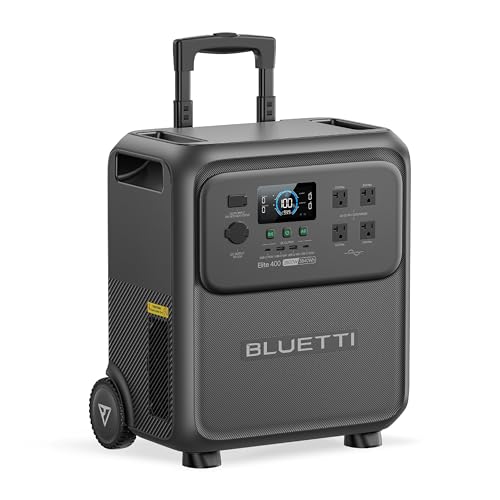
- 3,840Wh LiFePO4 battery and 2,600W output
- Built-in trolley system for easier transport
- 80% charge in 70 minutes with AC and solar
Best For: Mobile home backup and emergency power
Lightweight 2kWh Pick

- 2,042Wh capacity with 2,200W AC output
- Weighs just 39.5 pounds
- 66-minute 80% charge and sub-30dB silent mode
Best For: Portable camping, home backup, and small-business power
High-Capacity Home Backup
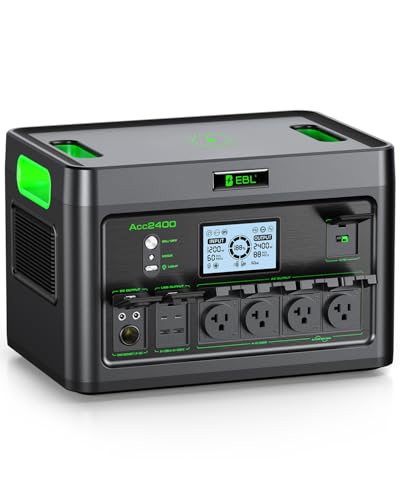
- 1,843.2Wh capacity and 2,400W output
- 12 charging outlets for group use
- LiFePO4 battery rated for 3,500+ cycles
Best For: Home backup, camping, and high-wattage equipment
Quiet Gas-Free Alternative

- 2,000W continuous and 3,000W peak output
- Includes two 56V 7.5Ah batteries
- Quiet operation with three AC and four USB ports
Best For: Indoor, outdoor, and workshop power without gasoline
Fast-Charging RV Power
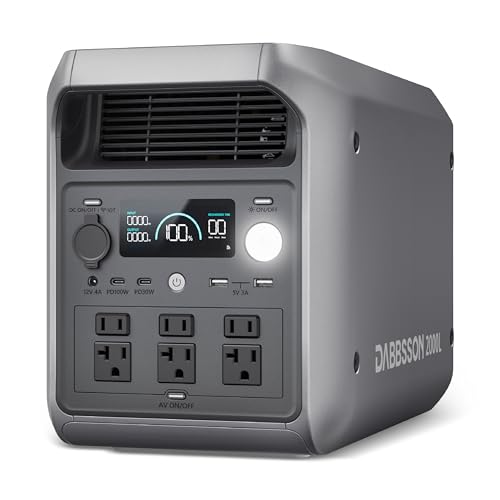
- 2,048Wh battery with 2,200W continuous output
- 3,300W Power Boost and six AC outlets
- One-hour AC charging with optional solar input
Best For: RV trips, camping, home backup, and jobsite use
Best Overall – EcoFlow DELTA Pro 3
The EF ECOFLOW DELTA Pro 3 is a strong choice for heavy-duty portable power stations when you need substantial home backup capacity and high-output appliance support. Its 4,096Wh LFP battery, 4,000W output, 120V/240V capability, and expandable architecture make it suitable for extended outages, RV use, and demanding residential loads.
Best For: Whole-home backup, large appliances, extended outages, and users who want expansion up to 48kWh.
Pros:
- Supports 4,000W output, 6,000W starting wattage, and 120V/240V operation.
- Large 4,096Wh LFP battery expands to 48kWh with compatible add-ons.
- Quiet operation can reach 30dB, with a 10ms transfer time for backup devices.
- Includes solar, generator, EV charging, and app-monitoring options.
Cons:
- At 115 pounds, it is heavy to move frequently.
- Its broad expansion and home-backup features may be more than casual campers need.
The DELTA Pro 3 stands out when maximum flexibility matters more than low weight. It combines high output, long runtime potential, quiet operation, and a five-year warranty in a system designed to grow with your backup needs.
Best High-Input Option – Anker SOLIX F3000
The Anker SOLIX F3000 is a practical heavy-duty portable power station for outage preparation, RV use, and fast solar replenishment. Its 3,072Wh LiFePO4 battery, 3,600W output, generator readiness, and support for high combined charging input give it a versatile role in emergency power systems.
Best For: Emergency backup, solar-focused users, RVs, and households that want expandable capacity up to 24kWh.
Pros:
- Runs 120V essentials at full power and can reach 240V when two units are paired.
- Expandable from 3,072Wh to 24kWh with additional batteries.
- Low idle consumption provides up to 125 hours of AC standby time.
- Supports portable or rigid solar panels and combined charging up to 6,000W.
Cons:
- Its 91.5-pound weight limits easy manual carrying.
- 240V operation requires pairing two power stations.
The F3000 is compelling for buyers who value long standby performance and multiple charging paths. It offers a useful balance of large capacity, expandable storage, generator compatibility, and solar flexibility.
Best Portable Design – Jackery HomePower 3600 Plus
The Jackery HomePower 3600 Plus brings heavy-duty portable power station performance to a comparatively lighter, rolling format. With 3,584Wh of capacity, 3,600W output, expandable storage, and dual-voltage support when paired, it is designed for home backup without making relocation unnecessarily difficult.
Best For: Homeowners who need high-output backup with easier movement between a garage, kitchen, or work area.
Pros:
- Provides 3,600W output and up to 7,200W in parallel.
- Capacity expands to 21kWh per unit or 43kWh with multiple units.
- Hybrid AC and DC charging can reach a full charge in two hours.
- Wheels and a telescoping handle improve portability for a 3.6kWh unit.
Cons:
- Only two outlets are listed in the supplied specifications.
- 240V operation requires parallel units.
The HomePower 3600 Plus is a good fit when portability is a deciding factor. Its rolling luggage-style design, fast hybrid charging, and expandable LFP system make it easier to position than many similarly sized backup stations.
Best Expandable Value – BLUETTI Apex 300
The BLUETTI Apex 300 is a flexible heavy-duty portable power station for buyers who want to start with a manageable system and expand later. It combines 2,764.8Wh of LFP capacity, 3,840W AC output, app-controlled 120V/240V operation, and support for home, RV, and off-grid accessories.
Best For: RV owners, off-grid users, and households that want modular expansion without buying maximum capacity immediately.
Pros:
- Delivers 3,840W AC output with 7,680W lifting power.
- Supports simultaneous 120V/240V output through onboard controls or the app.
- Expandable with B300K or B500K batteries as power needs increase.
- Offers 0ms UPS performance, 22dB silent operation, and 6,000-plus cycles.
Cons:
- Several advanced functions require compatible add-on accessories.
- Its starting capacity is lower than the largest stations in this roundup.
The Apex 300 is particularly appealing as a buildable power system rather than a one-size-fits-all generator. Its relatively light 66.1-pound weight, strong output, quiet UPS operation, and expansion options give it broad long-term flexibility.
Maximum-Capacity Pick – EcoFlow DELTA Pro 3600
For demanding home backup, worksite, or RV needs, the EcoFlow DELTA Pro is one of the most capable heavy-duty portable power stations in this lineup. Its 3,600Wh LFP battery, 3,600W AC output, expandable capacity, and broad selection of ports make it suited to running multiple high-draw devices.
Best For: Home emergencies, extended camping, RV use, and powering heavy-duty equipment.
Pros:
- Large 3,600Wh capacity can expand up to 25kWh with compatible batteries or generators.
- Powerful 3,600W output can reach 4,500W with X-Boost and 7,200W when pairing two units.
- Offers 15 output methods and supports wall, solar, car, EV-station, and generator charging.
- App control, five-year warranty, and fast charging add practical convenience.
Cons:
- At 99 pounds, it is considerably heavier than the other options here.
- Its larger capacity and expansion features may be more than casual users need.
The DELTA Pro is the strongest choice when maximum capacity, output flexibility, and expandability matter more than portability. It is particularly well suited to serious backup-power planning.
Easy-Mobility Pick – BLUETTI Elite 400
The BLUETTI Elite 400 combines a substantial battery with a built-in trolley system, making it a practical option among heavy-duty portable power stations for users who need to move backup power around the home or campsite. It delivers 2,600W continuously and can provide up to 3,900W of lifting power.
Best For: Home backup, RV travel, emergencies, and users who prioritize easier movement.
Pros:
- Large 3,840Wh LiFePO4 battery supports extended use.
- Easy-roll trolley design helps move the 86-pound unit.
- Reaches 80% charge in 70 minutes with combined AC and solar input.
- 15ms UPS switchover helps keep essential devices powered during outages.
Cons:
- Its 2,600W output is lower than the EcoFlow DELTA Pro’s rating.
- It provides nine ports, fewer than the DELTA Pro.
The Elite 400 is a balanced choice for users who want high capacity without giving up mobility. Its trolley and fast UPS response are especially useful for household emergency preparedness.
Lightweight 2kWh Pick – Jackery Explorer 2000 v2
The Jackery Explorer 2000 v2 is a more compact alternative for shoppers who want heavy-duty portable power stations without the bulk of larger models. It provides 2,042Wh of capacity and 2,200W of AC output while weighing just 39.5 pounds.
Best For: Camping, home backup, small-business use, and portable power on the go.
Pros:
- Lightweight 39.5-pound design is easier to carry than larger 2kWh-class units.
- 2,200W output and 2,042Wh capacity support a range of household and outdoor equipment.
- Charges to 80% in 66 minutes and supports solar charging in as few as six hours.
- Silent charging operates below 30dB, and 20ms UPS switching supports essential devices.
Cons:
- Its three AC ports and 2,200W output offer less flexibility than the larger stations.
- Its capacity is substantially lower than the EcoFlow and BLUETTI models.
The Explorer 2000 v2 stands out when portability and quiet operation are priorities. It is a practical middle ground for users who need serious power but regularly transport their station themselves.
High-Capacity Home Backup – EBL Acc2400
The EBL Acc2400 is a practical choice among heavy-duty portable power stations when you need substantial capacity and high output for home backup, camping, or jobsite use. Its 1,843.2Wh battery and 2,400W output can support everything from laptops and phones to kettles, coffee makers, hair dryers, and power tools.
Best For: Home emergency backup, group camping, road trips, and users who need many ports for simultaneous device charging.
Pros:
- 2,400W output with 4 AC outlets and support for high-wattage appliances and tools.
- 12 total device-charging options, including USB-C, USB-A, DC, car, and wireless charging.
- LiFePO4 battery rated for over 3,500 cycles and a 10+ year service life.
- 0.1-second emergency backup mode, built-in safety protections, and a four-mode LED light.
Cons:
- At about 54–55 pounds, it is less convenient to carry than smaller stations.
- Solar charging capability is not specified in the supplied details.
The Acc2400 stands out for combining a large battery, broad port selection, and dependable high-wattage output. Its weight is the main tradeoff, but the dual handles and durable construction make it a capable option for stationary backup and planned outdoor use.
Quiet Gas-Free Alternative – EGO POWER+ PST3042
The EGO POWER+ PST3042 is one of the more jobsite-oriented heavy-duty portable power stations, delivering 2,000W of continuous power and 3,000W peak output without fuel or engine noise. It includes two 56V 7.5Ah batteries and is designed for indoor and outdoor use.
Best For: Users seeking a quiet, battery-powered alternative to gas generators for home, workshop, and outdoor applications.
Pros:
- 2,000W continuous output and 3,000W peak output for demanding equipment.
- Three 120V AC outlets and four USB ports support multiple devices.
- Includes two 56V 7.5Ah batteries and a four-port battery charger.
- Quiet, clean operation with weather-resistant construction and a bright runtime display.
Cons:
- Battery capacity is not provided in watt-hours, making runtime comparisons harder.
- The 45-pound steel unit has a long, bulky form factor.
- Continuous output is lower than its 3,000W peak rating.
The PST3042 is a strong fit when clean, quiet power and tool-system compatibility matter more than maximum battery capacity. Its included batteries and charger add convenience, while the steel construction and weather resistance suit practical indoor and outdoor use.
Fast-Charging RV Power – DABBSSON 2000L
The DABBSSON 2000L combines a 2,048Wh semi-solid LiFePO4 battery with 2,200W continuous output, making it a versatile pick among heavy-duty portable power stations for RVs, camping, home backup, and jobsites. Its 3,300W Power Boost mode helps handle demanding appliances and tools.
Best For: RV travelers, campers, and homeowners who want fast recharging, multiple AC outlets, and flexible AC, solar, or car charging.
Pros:
- 2,048Wh capacity, 2,200W continuous output, and up to 3,300W Power Boost.
- Six AC outlets and a full port selection support multiple devices at once.
- Recharges in about one hour through AC input and supports up to 800W solar input.
- 41-pound design, under-15ms EPS switching, app control, and a five-year total warranty.
Cons:
- Solar panels are optional rather than included.
- Power Boost output is temporary; continuous output is rated at 2,200W.
With a relatively light 41-pound body, rapid charging, and flexible input options, the DABBSSON 2000L offers a well-rounded balance of portability and performance. Its app control and fast EPS switching add useful convenience for both travel and emergency backup.
How We Picked the Best Heavy-Duty Portable Power Stations
We focused on models with roughly 2,000Wh or more of storage and enough inverter capacity for demanding appliances, tools, electronics, and emergency loads. We considered continuous AC output, surge or boost capability, battery chemistry, recharge options, expansion support, usable portability, and included accessories. Because specifications vary by configuration, verify the manufacturer’s exact ratings before purchase—especially solar input, transfer-switch compatibility, and peak output.
We also looked beyond headline wattage. A power station is more useful when its ports match your equipment, its battery management system supports safe long-term operation, and its weight is realistic for the way you plan to move it.
Quick Comparison
| What to Compare | Why It Matters |
|---|---|
| Battery capacity | Determines how long devices can run between charges. |
| Continuous output | Shows which appliances and tools can run reliably. |
| Surge or boost output | Helps start motors, compressors, pumps, and other demanding loads. |
| Charging options | Solar, wall, vehicle, and dual charging affect recovery time. |
| Port selection | Ensures compatibility with AC devices, USB gear, and 12V equipment. |
| Weight and wheels | Determines whether the unit is portable in practice. |
Key Buying Factors for Heavy-Duty Portable Power Stations
Capacity and Runtime
Capacity is measured in watt-hours, but real-world runtime is lower than the advertised figure because of inverter and conversion losses. Estimate your load in watts, then divide battery capacity by that load and allow for a practical efficiency margin. A larger battery is worthwhile for refrigerators, medical devices, networking equipment, or overnight backup.
Output and Motor Starting
Match continuous output to the appliances you will run at the same time. Refrigerators, sump pumps, power tools, and compressors may need substantially more power during startup. Look for a clearly specified surge rating or power-boost mode, but do not assume boost modes can operate every load continuously.
Battery, Charging, and Safety
LiFePO4 batteries generally offer long cycle life and stable operation, while newer semi-solid designs may emphasize energy density. Check cycle-life claims, warranty length, thermal protections, charge limits, and whether the app provides useful monitoring. Fast wall charging is convenient; solar input matters more for extended outages or off-grid trips.
Portability and Home Integration
Heavy-duty units can weigh well over 50 pounds, so wheels, handles, and a manageable shape are important. For home backup, confirm whether the model supports a transfer switch or dedicated home-panel connection. Never connect a power station to household wiring through an improvised backfeed cable.
Who Should Buy Which Heavy-Duty Portable Power Stations?
For maximum home backup: Choose a high-capacity model with strong continuous output, expansion support, and home-integration options.
For RVs and off-grid living: Prioritize capacity, solar charging, multiple AC and DC ports, and a size you can load or roll easily.
For job sites and demanding tools: Focus on continuous wattage, motor-starting capability, rugged handling, and rapid recharge.
For emergency essentials: A mid-size 2,000Wh-class unit may offer the best balance of runtime, cost, and portability for refrigeration, communications, lighting, and small medical equipment.
For occasional camping: Choose the lightest model that can handle your actual load rather than paying for capacity you will rarely use.
