
The best lightweight portable power stations make it easier to keep phones, laptops, lights, cameras, and other essentials running away from wall power. The models in this roundup range from compact 88Wh units to higher-capacity 1,024Wh options.
We compare battery chemistry, usable capacity, output, charging speed, portability, and practical features so you can choose a power station that fits your trips, emergency kit, or backup-power needs.
Best 10 Lightweight Portable Power Stations Picks for 2026
Pocket Power Pick
Daran 89.6Wh LiFePO4 Power Station

- Weighs just 2.54 pounds
- Seven ports with 100W output
- Silent operation and 3,500+ cycles
Best For: Backpacking and small-device emergency backup
Balanced Camping Choice

- 292Wh capacity at about 7.5 pounds
- 300W output with 600W peak
- Supports six devices and optional solar charging
Best For: Camping, travel, and moderate off-grid power
Family Adventure Pick
Daran 288Wh 350W Power Station
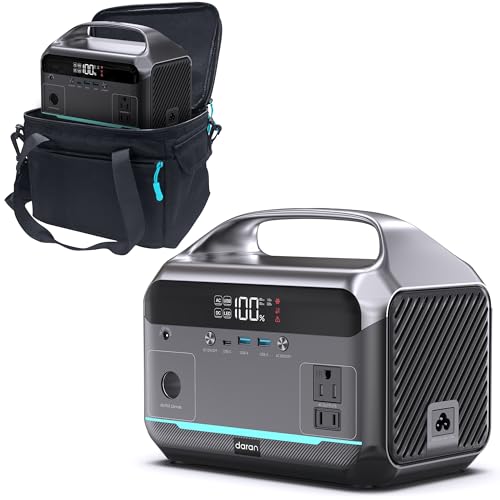
- 288Wh capacity with 350W rated output
- Seven-port simultaneous charging
- 8.2-pound design with emergency lighting
Best For: Family camping, RV travel, and blackout backup
High-Capacity Powerhouse

- 1024Wh LFP battery and 2600W output
- 80% recharge in about 37 minutes
- Quiet operation with 10ms UPS switching
Best For: Home backup, RVs, appliances, and power tools
Best Travel Pick

- 4-pound, backpack-friendly design
- 128Wh capacity with 200W AC output
- 10ms UPS and AC, solar, or car charging
Best For: Travel, camping, and compact emergency backup
Best Higher-Output Option

- 600W continuous and 1,500W lifting output
- 288Wh capacity in a 9.5-pound unit
- Fast 45-minute 0–80% wall charging
Best For: CPAP backup, road trips, camping, and emergencies
Best Ultra-Portable Pick

- 2.3-pound compact design
- Eight AC, USB, and DC outputs
- AC, car, and solar charging options
Best For: Camping and emergency charging for small electronics
Best Higher-Capacity Choice

- 183Wh capacity with 200W running output
- Nine outlets, including 100W USB-C
- Quiet indoor and outdoor operation
Best For: Travel, camping, and small-device emergency backup
Pocket Power Pick – Daran 89.6Wh LiFePO4 Power Station
For shoppers comparing lightweight portable power stations, this Daran model stands out for its smartphone-sized design and 2.54-pound weight. Its 100W output, multiple USB ports, silent fanless operation, and LiFePO4 battery make it well suited to small electronics, camping, and quiet emergency use.
Best For: Backpacking, bedside backup, phones, laptops, cameras, and other devices drawing 100W or less.
Pros:
- Very compact 2.54-pound design with a soft carrying handle.
- Seven ports, including AC outlets, USB-C, USB-A, and DC output.
- LiFePO4 battery rated for more than 3,500 cycles.
- Fanless operation, LED display, and flashlight with SOS mode.
Cons:
- 100W maximum output limits compatibility with higher-powered appliances.
- Solar panel and charging cable are not included.
This is the easiest option to carry when portability and quiet operation matter more than runtime. Its small capacity is best matched with personal electronics rather than large appliances.
Balanced Camping Choice – Jackery Explorer 300
The Jackery Explorer 300 is a practical middle ground among lightweight portable power stations, combining a 292Wh capacity with a 7.5-pound carry weight. Its 300W output, six-device charging capability, and optional solar charging provide useful flexibility for camping, travel, and basic backup power.
Best For: Campers, hikers, travelers, and users who need more runtime than a pocket-sized power bank provides.
Pros:
- 292Wh capacity in a relatively lightweight 7.5-pound package.
- 300W rated output with 600W peak surge capacity.
- Includes AC outlets, USB-C PD, USB-A ports, and a car port.
- LiFePO4 battery supports more than 4,000 cycles before reaching 70% capacity.
Cons:
- Solar panel is optional rather than included.
- Its output is not intended for high-powered appliances above the 300W rating.
Choose the Explorer 300 if you want a recognizable, versatile station that remains manageable to carry while offering substantially more capacity than ultra-compact models. It is especially appealing for everyday camping electronics and moderate off-grid use.
Family Adventure Pick – Daran 288Wh 350W Power Station
This Daran station is a strong contender for buyers seeking lightweight portable power stations with more capacity and output for group trips. The 288Wh LiFePO4 battery, 350W rated output, seven-port design, and 600W surge rating can handle phones, tablets, projectors, mini fridges, and other devices within its limits.
Best For: Family camping, RV trips, blackouts, and powering several personal devices at once.
Pros:
- 350W rated output with 600W surge capacity.
- 288Wh battery supports multiple devices simultaneously.
- LiFePO4 battery includes protection against overcharge, overheating, short circuits, and more.
- LCD status display and rear LED with steady, strobe, and SOS modes.
Cons:
- At 8.2 pounds, it is heavier than the smallest portable models.
- Solar panels and car-charging cables are sold separately.
- Designed for devices rated at 350W or less.
Compared with pocket-sized options, this model gives up some portability in exchange for useful extra capacity and higher output. It makes sense for users who need to charge several gadgets or run modest camping equipment without moving into a much larger station.
High-Capacity Powerhouse – DJI Power 1000 V2
For shoppers who can handle a larger unit, the DJI Power 1000 V2 expands the lightweight portable power stations category into high-capacity backup power. Its 1024Wh LFP battery, 2600W output, rapid 80% recharge, quiet operation, and UPS functionality are designed for demanding home, RV, camping, and workshop use.
Best For: High-demand appliances, home backup, RVs, DIY tools, content creation, and extended outdoor use.
Pros:
- 1024Wh LFP battery with a stated 10-year lifespan.
- 2600W output can support many appliances, tools, and cooking equipment.
- Reaches 80% charge in approximately 37 minutes.
- Quiet operation as low as 26 dB and 10ms UPS switching.
Cons:
- Much larger and heavier than the other listed portable stations.
- Solar and car charging require separate compatible adapters.
- Included package lists the AC cable but not a solar panel.
The DJI is the choice for buyers who prioritize capacity, speed, and appliance support over minimal carry weight. It is portable for a high-output station, but it is not the most convenient pick for hiking or lightweight day trips.
Best Travel Pick – BLUETTI Elite 10 Mini
The BLUETTI Elite 10 Mini is a practical choice for shoppers seeking lightweight portable power stations for flights, camping, travel, and everyday backup. At about 4 pounds, it combines a 128Wh battery with a 200W AC outlet, 100W USB-C charging, and multiple DC ports for small electronics.
Best For: Travelers, campers, and anyone needing compact backup power for laptops, routers, cameras, or other small devices.
Pros:
- Weighs about 4 pounds and is designed to fit easily in a backpack.
- 128Wh capacity and airline-friendly size, with prior airline approval required.
- 10ms UPS backup can help keep laptops, routers, and security cameras connected during outages.
- Supports AC, solar, and car charging, including a stated 70-minute full AC recharge.
Cons:
- Its 200W output and 128Wh capacity are intended for small electronics rather than larger appliances.
- Air travel requires prior approval and is subject to airline limits.
The Elite 10 stands out when portability matters most. Its limited output is a trade-off for its small, travel-oriented design, but the UPS function, flexible recharging, and built-in lighting add useful everyday versatility.
Best Value Capacity – DYNESS 300W Portable Power Station
For shoppers comparing lightweight portable power stations with more battery capacity, the DYNESS PPS300-4 offers 256Wh and 300W of continuous output. Its LiFePO4 battery, six output ports, and AC, solar, car, or dual-input charging make it suitable for camping and basic home backup.
Best For: Campers, RV users, and households that need to power several small devices or a few essential electronics during short outages.
Pros:
- 256Wh LiFePO4 battery provides more capacity than many compact models.
- 300W continuous output can run laptops, routers, cameras, mini fridges, and similar small loads.
- Six output ports include AC, USB-C, USB-A, two DC outputs, and a car outlet.
- Recharge through a wall outlet, compatible solar panel, car charger, or dual input.
Cons:
- The solar panel is optional rather than included.
- Its listed dimensions are larger than an ultra-compact, airline-oriented power station.
- The product notes do not specify an item weight.
The DYNESS balances useful capacity and portability without moving into larger power-station territory. It is a sensible middle ground for outdoor use and basic emergency power, especially if multiple ports are more important than the smallest possible footprint.
Best Higher-Output Option – BLUETTI Elite 30 V2
The BLUETTI Elite 30 V2 is a strong option for buyers who want lightweight portable power stations with more output headroom. It weighs about 9.5 pounds, stores 288Wh, and delivers 600W continuously, with a Power Lifting Mode rated up to 1,500W for selected higher-demand devices.
Best For: Road trips, camping, CPAP users, and home emergency backup where higher output and fast recharging are priorities.
Pros:
- 600W continuous output and up to 1,500W in Power Lifting Mode.
- 288Wh capacity can support devices such as laptops, CPAP machines, car fridges, and camping equipment.
- Fast wall charging reaches 80% in 45 minutes and full charge in 70 minutes, according to the product notes.
- 10ms UPS, 140W USB-C PD, nine outlets, and eight charging modes add flexibility.
Cons:
- At about 9.5 pounds, it is less travel-friendly than smaller 4-pound models.
- The 1,500W Power Lifting Mode is not the same as 1,500W continuous output.
- Its 288Wh capacity may still be limiting for extended operation of high-draw appliances.
The Elite 30 V2 prioritizes capability while remaining reasonably portable. It is a better fit than mini models for demanding backup tasks, but shoppers who value airline-friendly size or the lightest carry weight may prefer a smaller unit.
Best Ultra-Portable Pick – HOWEASY 88Wh Power Station
For shoppers comparing lightweight portable power stations, the HOWEASY H120 stands out for its compact 2.3-pound design and useful mix of AC, USB, and DC outputs. Its 120W output is suited to smaller electronics, lighting, and camping essentials rather than high-demand appliances.
Best For: Camping, emergency phone charging, lighting, and other small devices when portability matters most.
Pros:
- Very light and compact, with a hidden handle for easier carrying.
- Eight output ports include AC, USB-C, USB-A, and DC connections.
- Supports AC, car, and compatible solar-panel charging.
- Built-in steady, flashing, and SOS lighting is useful outdoors or during outages.
Cons:
- Its 120W running output limits it to smaller devices and equipment.
- The solar panel is not included.
- The listed USB-C output is 18W, which may be slower for some devices.
The HOWEASY is a practical choice when minimum weight and everyday emergency features are more important than extended runtime or high wattage. Its included AC adapter and car charger add convenience for travel.
Best Higher-Capacity Choice – Westinghouse iGen400s
The Westinghouse iGen400s is a strong option among lightweight portable power stations for buyers who want more capacity and broader device support without moving to a large generator. It provides 183Wh of storage, 200W running output, and a 400W peak rating in a five-pound package.
Best For: Travel, camping, indoor emergency backup, and powering several small electronics at once.
Pros:
- 183Wh capacity and 200W running output offer more headroom than smaller 88Wh models.
- Nine outlets include AC, USB-C, USB-A, and a 12V DC port.
- Can charge to 80% in about two hours from a 120V outlet when using a 100W adapter.
- Quiet, fume-free operation, weather-resistant construction, and built-in safety protections support indoor and outdoor use.
Cons:
- The 100W AC power adapter is not included.
- At five pounds, it is less lightweight than the smaller alternatives.
- The solar panel is not included.
Choose the iGen400s if you value additional capacity, multiple modern USB-C ports, and a higher output ceiling. The missing AC adapter is an important package detail to account for when comparing total value.
Best Lighting and Charging Value – MARBERO M82
The MARBERO M82 combines an 88Wh battery with a slim 3.2-pound case, making it a versatile choice for shoppers seeking lightweight portable power stations for road trips, camping, and outages. Its eight ports and bright multi-level flashlight make it especially practical when charging and illumination are needed together.
Best For: Road trips, tent power, car emergencies, and household outages involving phones, tablets, laptops, lights, and other small devices.
Pros:
- Slim, DSLR-sized design with an ergonomic carrying handle.
- Eight ports can power multiple devices, including AC, USB, USB-C PD, and car-output connections.
- Included adapter can charge the unit from zero to 80% in about two hours.
- Three brightness levels and SOS mode provide useful emergency lighting.
Cons:
- The supplied details identify 80W output, so it is intended for smaller loads.
- Solar charging requires a compatible MARBERO panel, which is not included.
- Its 3.2-pound weight is higher than the HOWEASY despite similar battery capacity.
The MARBERO is a well-rounded pick for buyers who want a compact power source with unusually capable lighting. Its included car-output cable and simultaneous charging support make it convenient for mobile and emergency use.
How We Picked the Best Lightweight Portable Power Stations
We evaluated these Lightweight Portable Power Stations by comparing the specifications that matter most in real use: battery capacity, continuous and peak output, LiFePO4 battery longevity, port selection, charging methods, size, weight, and safety features. We also considered whether each model suits short outdoor trips, travel, RV use, work-from-anywhere setups, or occasional home backup.
Capacity and wattage are not the only measures of quality. A compact power station may be more useful than a larger model if it is easier to carry and can handle your actual devices. Likewise, a fast-charging unit may be worth prioritizing when you have limited access to an outlet.
Quick Comparison
- Smallest and lightest options: The 88Wh to 128Wh models are best for phones, tablets, lights, cameras, and small electronics.
- Balanced camping capacity: The 183Wh to 300Wh class offers more runtime while remaining relatively portable.
- Higher-output choices: Models rated around 300W to 600W can support more demanding equipment, subject to their surge ratings.
- Extended backup: The 1,024Wh DJI model is better suited to longer outages, larger device loads, and more frequent recharging needs.
Key Buying Factors for Lightweight Portable Power Stations
Battery Capacity and Chemistry
Capacity is measured in watt-hours, or Wh. Estimate your device’s wattage and multiply it by the number of hours you need it to run, then allow for conversion losses. LiFePO4 batteries generally offer longer cycle life and improved thermal stability than older lithium-ion chemistries, although they can add weight or cost.
Output and Port Selection
Check continuous AC output rather than relying only on peak or surge wattage. A 100W station may handle chargers and lights but not heating appliances or high-powered tools. USB-C Power Delivery is especially useful for modern phones, tablets, and laptops, while multiple USB-A, DC, and AC ports help charge several devices at once.
Charging, Solar Input, and Portability
Fast wall charging reduces downtime, and solar compatibility can be valuable for camping or emergency preparedness. Compare the supported solar-input wattage, not merely the claim that a unit is “solar ready.” Also check the listed weight, handle design, dimensions, display readability, fan noise, and whether the unit is genuinely convenient to carry.
Safety and Convenience Features
Look for battery-management protection against overcharging, overheating, short circuits, and excessive discharge. A clear display, LED light, pass-through charging, regulated DC output, and a pure sine wave inverter can improve everyday usability and device compatibility.
Who Should Buy Which Lightweight Portable Power Stations?
Choose an ultra-compact model if you mainly need emergency phone charging, portable lighting, or camera power. Choose a 180Wh to 300Wh model for weekend camping, laptops, fans, and multiple small devices. Choose a 300W-plus unit if you need more AC headroom for travel equipment, small appliances, or an RV setup. Choose the 1,000Wh-class option for longer outages, extended off-grid use, or several days of moderate electronic loads.
Before buying, list the devices you expect to power, add their wattages, and decide how long they must run. That simple calculation will usually identify the right capacity and output class more accurately than choosing by battery size alone.
