
Reliable battery backup can make power outages, remote work, camping trips, and emergency preparedness far less stressful. The best portable power stations combine rugged construction with useful capacity, dependable outputs, and flexible charging.
We compared 10 durable portable power stations across battery chemistry, capacity, output, portability, charging options, and everyday practicality. Use the guide below to narrow the right fit for home backup, outdoor use, or lightweight travel.
Best 10 Durable Portable Power Stations Picks for 2026
Best Lightweight Long-Life Pick

- 1,070Wh capacity and 1,500W output
- LFP battery rated for 4,000 cycles
- Lightweight 23.8-pound design
Best For: Lightweight camping and emergency backup
Best Expandable Backup System

- 1,800W output with 1,024Wh capacity
- Full charge in 56 minutes
- Expandable up to 5kWh
Best For: Expandable home backup and camping power
Best Compact Fast-Charging Option

- 1,056Wh capacity and 1,800W output
- 80% charge in 43 minutes
- 15% smaller than comparable 1kWh units
Best For: Compact RV, camping, and outage power
Best High-Output Heavy-Duty Pick
EBL Acc2400 Portable Power Station
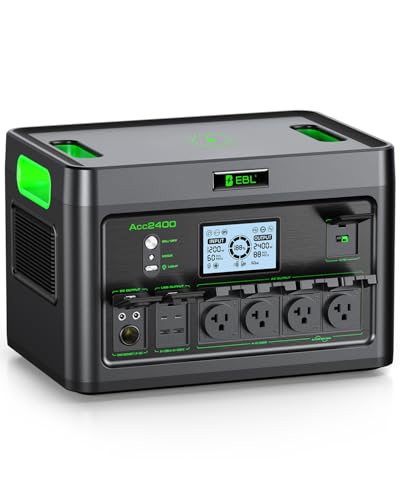
- 1,843.2Wh capacity and 2,400W output
- 12-device charging with 12 outlets
- LiFePO4 battery rated for 3,500+ cycles
Best For: Home backup, jobsites, and group camping
Best Long-Run Home Backup

- 2,010Wh LiFePO4 capacity
- 1,500W output, 3,000W peak
- Up to 10,000 charge cycles
Best For: Extended home backup and emergency power
Best Fast-Charging Mid-Size Option

- 1,024Wh capacity with 1,800W output
- 80% charge in about 45 minutes
- 25 pounds with 10ms UPS
Best For: Camping, road trips, and short outages
Best Lightweight Camping Pick

- 292Wh LiFePO4 battery
- 300W output, 600W peak
- About 7.1–7.5 pounds
Best For: Camping, travel, and portable electronics
Best Lightweight Pick

- 288Wh capacity with 600W continuous output
- 1500W Power Lifting Mode and 10ms UPS
- Fast 380W wall charging and multiple input options
Best For: Portable camping and emergency backup
Best Long-Life Budget Option
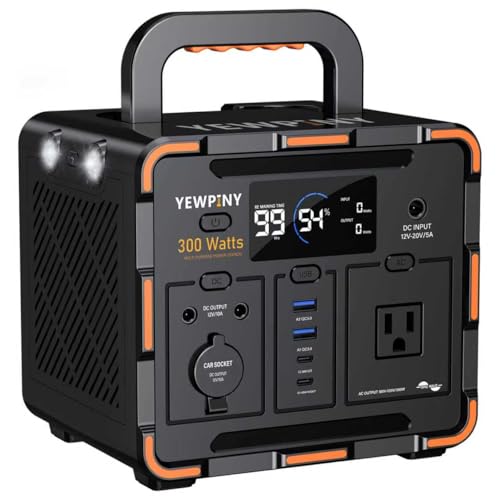
- LiFePO4 battery rated for 3,000-plus cycles
- 300W pure sine wave output with 65W USB-C PD
- Lightweight design with wall, car, and solar charging
Best For: Frequent camping and basic electronics backup
Best Solar-Panel Bundle

- Includes a foldable 60W monocrystalline solar panel
- Two AC outlets plus USB and DC charging ports
- Built-in MPPT, BMS protections, and SOS lighting
Best For: Budget camping with included solar recharging
Best Lightweight Long-Life Pick – Jackery Explorer 1000 v2
For shoppers comparing durable portable power stations, the Jackery Explorer 1000 v2 stands out for its combination of a 1,070Wh capacity, 1,500W output, and relatively light 23.8-pound design. Its LFP battery is rated for more than 4,000 charge cycles, while app-based charging controls add flexibility for camping, road trips, and emergency use.
Best For: Campers and emergency-preparedness shoppers who want a lightweight, long-lasting power station.
Pros:
- 1,500W output with a 3,000W surge peak for appliances such as fridges and electric pots
- LFP battery rated to retain over 70% capacity after 4,000 cycles
- 23.8-pound body with foldable handle and multiple AC, USB, and DC ports
- App supports one-hour emergency charging, quiet charging, and efficiency modes
Cons:
- One-hour charging requires enabling emergency charging in the Jackery app
- Solar charging is compatible only with Jackery solar panels
The Explorer 1000 v2 is a strong fit when portability and battery longevity matter more than maximum capacity. Its output is sufficient for many common appliances, but buyers should account for the app requirement for its fastest charging mode.
Best Expandable Backup System – EcoFlow DELTA 3
The EcoFlow DELTA 3 is a practical choice among durable portable power stations for users who may need more capacity later. It combines a 1,024Wh battery with 1,800W AC output, fast AC and solar charging, and expansion capability up to 5kWh through compatible EcoFlow batteries.
Best For: Home-backup users and campers who want fast charging and room to expand.
Pros:
- Reaches a full charge in 56 minutes using its upgraded charging setup
- Expandable from 1kWh to as much as 5kWh with compatible EcoFlow batteries
- LFP cells are rated for 4,000 cycles to 80% capacity and a 10-year lifespan
- IP65 battery pack helps protect against splashes, dust, and oil
Cons:
- At 12.5 kg, it is heavier than some similarly sized portable units
- Expansion requires purchasing compatible extra batteries
Choose the DELTA 3 if fast recharging and future capacity are priorities. Its expandable design makes it more adaptable for extended backup needs, while the IP65 battery pack adds useful protection for demanding environments.
Best Compact Fast-Charging Option – Anker SOLIX C1000
The Anker SOLIX C1000 offers a compact approach to durable portable power stations, packing 1,056Wh of capacity and 1,800W output into a unit that is 15% smaller than comparable 1kWh models. It also supports rapid AC charging, solar input up to 600W, and app-based monitoring for camping or outage preparation.
Best For: RV users and campers who want a compact 1kWh-class station with fast charging.
Pros:
- Reaches 80% capacity in 43 minutes and fully charges in under an hour under specified conditions
- LiFePO4 battery is rated for 3,000 cycles over a 10-year lifespan
- 1,800W output and 2,400W SurgePad capability support a broad range of appliances
- Up to 600W solar input can fully recharge the station in about 1.8 hours
Cons:
- UltraFast charging requires the Anker app and a smartphone
- Its 27.6-pound weight is higher than some lightweight 1kWh alternatives
The SOLIX C1000 is well suited to buyers who value charging speed without moving to a larger power station. Its smaller footprint and strong port selection are useful for travel, while the LFP battery supports long-term ownership.
Best High-Output Heavy-Duty Pick – EBL Acc2400 Portable Power Station
The EBL Acc2400 is designed for shoppers who need more output and capacity from durable portable power stations. Its 1,843.2Wh battery and 2,400W continuous output can support high-wattage equipment, while the LiFePO4 battery is rated for more than 3,500 cycles and a 10-plus-year service life.
Best For: Home backup, jobsites, and group camping where high output and many ports are important.
Pros:
- 2,400W output with a 4,800W starting-wattage rating
- Supports simultaneous charging of up to 12 devices
- LiFePO4 battery offers more than 3,500 charge-discharge cycles
- Includes UPS-style emergency power switching, protective features, and a four-mode LED light
Cons:
- At about 54 to 55 pounds, it is substantially heavier than the other options
- Its two-year manufacturer warranty is shorter than some competitors’ listed warranties
- Supplied notes identify battery power as the power source rather than solar input
The Acc2400 makes the most sense when capacity, high-wattage support, and abundant connections outweigh portability. Dual handles help with transport, but its substantial weight is better suited to stationary backup, worksites, or vehicle-based outdoor use.
Best Long-Run Home Backup – Anker SOLIX S2000
The Anker SOLIX S2000 is a strong choice among durable portable power stations when extended runtime and home backup matter most. Its 2,010Wh LiFePO4 battery, 1,500W continuous output, and 3,000W peak output can support refrigerators and other essential appliances during outages. Anker lists up to 35 hours of refrigerator runtime, though actual results vary by appliance and conditions.
Best For: Home backup, emergencies, and users who want high capacity with a long battery lifespan.
Pros:
- 2,010Wh capacity with 1,500W continuous and 3,000W peak output
- LiFePO4 cells rated for up to 10,000 cycles and a 15-year lifespan
- Supports up to 400W solar input and multiple charging methods
- Compact 35.7-pound design with a 10ms switchover
Cons:
- No 12V DC port
- Heavier and less convenient for frequent hiking or lightweight travel than smaller units
The S2000 prioritizes capacity, efficiency, and long-term durability over ultra-light portability. It is especially compelling for keeping essential household equipment operating through longer outages.
Best Fast-Charging Mid-Size Option – BLUETTI Elite 100 V2
The BLUETTI Elite 100 V2 balances portability, fast charging, and appliance support in a compact package. With a 1,024Wh LiFePO4 battery and 1,800W rated output, it is one of the more versatile durable portable power stations for camping, road trips, and short home outages. Its 1200W TurboBoost charging can reach 80% in about 45 minutes.
Best For: Campers and homeowners who value quick recharging, quiet operation, and app-based monitoring.
Pros:
- 1,800W rated output with 2,700W Power Lifting capability
- Reaches approximately 80% charge in 45 minutes with compatible AC charging
- 10ms UPS switchover and silent-mode operation at about 30dB
- 25-pound design with Wi-Fi and Bluetooth app control
Cons:
- Lower capacity than larger 2kWh-class power stations
- Some vehicle-charging features require the separate BLUETTI Charger 1
The Elite 100 V2 is a practical middle ground: substantially more capable than a small travel unit while remaining easy to carry. Its fast recharge and quiet mode make it particularly useful for overnight or time-sensitive use.
Best Lightweight Camping Pick – Jackery Explorer 300
The Jackery Explorer 300 is a compact, easy-to-carry option for personal electronics and smaller off-grid setups. Its 292Wh LiFePO4 battery, 300W rated output, and six-device charging support make it a useful entry in the durable portable power stations category for camping, travel, and hunting. It weighs about 7.1 to 7.5 pounds, depending on the listed specification.
Best For: Lightweight camping, charging laptops and cameras, and portable CPAP or travel power needs.
Pros:
- Lightweight design with an integrated handle
- 300W output with 600W peak surge capacity
- LiFePO4 battery rated for more than 4,000 cycles before reaching 70% capacity
- Includes AC, USB-A, USB-C, and 120W car-port connectivity
Cons:
- 292Wh capacity is not intended for large appliances or extended home backup
- Solar panels are optional
- Listed runtime and charging times vary by device and charging setup
The Explorer 300 is best viewed as a portable electronics battery rather than a whole-home backup system. Its low weight, useful port selection, and durable battery chemistry make it a convenient companion for outdoor trips.
Best Lightweight Pick – BLUETTI Elite 30 V2
For shoppers seeking durable portable power stations that are easy to carry, the BLUETTI Elite 30 V2 combines a 288Wh capacity with 600W continuous output in a roughly 9.5-pound design. Its LiFePO4-based system, fast charging, and UPS capability make it suited to both outdoor use and short home power interruptions.
Best For: Camping, road trips, CPAP or laptop backup, and lightweight emergency power.
Pros:
- 600W continuous output with 1500W Power Lifting Mode.
- Fast wall charging reaches 80% in about 45 minutes.
- 10ms UPS switching supports routers, laptops, and CPAP machines.
- Offers AC, solar, car, and other charging options.
Cons:
- The 288Wh capacity is better for essential devices than extended whole-home backup.
- Solar panel charging requires a compatible panel purchased separately.
The Elite 30 V2 is a strong fit when portability and fast response matter more than maximum capacity. Its five-year warranty and efficient standby performance add practical appeal for recurring emergency or outdoor use.
Best Long-Life Budget Option – EM300 300W Power Station
The EM300 is one of the more practical durable portable power stations for basic electronics, offering a 259Wh LiFePO4 battery, 300W pure sine wave output, and a compact 7.2-pound frame. Its battery is rated for more than 3,000 charge cycles, making it a useful choice for repeated camping or backup use.
Best For: Campers and travelers who need long-cycle battery life for laptops, drones, small devices, or CPAP equipment.
Pros:
- LiFePO4 battery rated for 3,000-plus charge cycles.
- Includes 65W USB-C PD and multiple USB, DC, and AC outputs.
- Supports wall, car, and solar charging, plus pass-through charging.
- Built-in protections and temperature-controlled cooling support safer operation.
Cons:
- 300W continuous output limits use with larger appliances.
- The solar panel is sold separately.
- Warranty coverage is listed as one year.
Choose the EM300 if long-term battery cycle life and low carry weight are priorities. It is less suitable for high-draw appliances, but its output selection is well matched to everyday portable electronics and modest emergency needs.
Best Solar-Panel Bundle – ZeroKor 300W Solar Generator
The ZeroKor 300W package stands out among durable portable power stations by including a 60W foldable solar panel. It provides several AC, USB, and DC outputs for small camping equipment and personal electronics, while its built-in battery management and cooling systems help support routine off-grid use.
Best For: Budget-conscious campers who want a ready-to-use solar charging bundle for phones, tablets, laptops, and small accessories.
Pros:
- Includes a 60W monocrystalline solar panel.
- Provides two 300W-max AC outlets plus USB and DC ports.
- Built-in MPPT solar charging and multiple recharge methods.
- SOS and reading modes add useful outdoor lighting.
Cons:
- Devices over 300W should not be used with the unit.
- The solar panel junction box is not waterproof.
- The supplied notes do not specify the battery capacity or cycle rating.
The ZeroKor is appealing when an included panel matters more than detailed battery-life specifications. Keep loads within the 300W limit and protect the panel connections from moisture for the best fit in camping and light emergency scenarios.
How We Picked These Durable Portable Power Stations
We focused on features that matter after the initial purchase: LiFePO4 battery durability, usable watt-hours, inverter capacity, charging flexibility, portability, and included accessories. We also considered whether each model suits realistic use cases, from powering phones and laptops to running refrigerators, tools, medical equipment, or small appliances during an outage.
Capacity and wattage are not the only measures of quality. A well-designed power station should offer clear controls, protective safeguards, reliable thermal management, and charging options that match how you plan to use it. Solar input, vehicle charging, pass-through charging, and expandable batteries can add meaningful value.
Quick Comparison
- Best for balanced everyday backup: Mid-sized 1,000Wh-class models offer a useful mix of runtime, output, and manageable weight.
- Best for demanding appliances: Look for units rated around 1,500W to 2,400W, with enough surge capacity for motor-driven equipment.
- Best for extended outages: A 2,000Wh-class station provides more runtime, though it is heavier and less convenient to transport.
- Best for travel and short trips: Compact 259Wh to 300Wh models are easier to carry for phones, cameras, lights, and laptops.
Key Buying Factors for Durable Portable Power Stations
Battery Chemistry and Lifespan
LiFePO4 batteries typically offer longer cycle life and strong thermal stability compared with older lithium-ion chemistries. Check the manufacturer’s stated cycle rating, warranty, and storage recommendations rather than assuming every model will perform identically.
Capacity and Running Time
Watt-hours indicate stored energy. Divide the station’s capacity by the device’s watt draw for a rough runtime, then allow for inverter losses. A 1,000Wh station will not deliver a full 1,000Wh to AC devices, so leave a practical margin.
Output, Surge, and Ports
Confirm continuous wattage before connecting heating appliances, refrigerators, pumps, or power tools. Surge output matters for devices with motors. Also count the AC outlets, USB-C power delivery, USB-A ports, 12V outputs, and any regulated DC connections you need.
Charging and Portability
Fast wall charging is convenient, while solar and vehicle charging improve resilience away from home. Compare solar input limits, recharge times, handle design, dimensions, and weight. The most capable unit is not useful if it is too heavy to move safely.
Who Should Buy Which Durable Portable Power Stations?
Choose a compact station for weekend camping, photography, mobile work, and personal electronics. A 1,000Wh-class model is the most versatile choice for many households, supporting communication devices, lights, laptops, and selected small appliances. Choose a higher-output or 2,000Wh-class station for longer outages, refrigerators, tools, and greater energy reserves.
Before buying, list the devices you expect to run, record their wattage, estimate how long they must operate, and add capacity for conversion losses and unexpected needs. That simple check will help you select among these Durable Portable Power Stations with confidence.
