
Rear-approaching vehicles can be difficult to spot or hear, especially on busy roads, windy routes, and group rides. Cycling radar systems add a useful layer of awareness by detecting traffic behind you and sending alerts through a compatible light, display, phone, bike computer, or watch.
This roundup compares 10 radar-equipped bike lights and rearview devices, including compact radar-only units, integrated tail lights, and camera-based systems. Use the guide below to match detection range, connectivity, battery life, weather resistance, and recording features to the way you ride.
Best 10 Cycling Radar Systems Picks for 2026
Best All-Around Choice

- Radar detection up to 140 meters
- Integrated light with up to 16-hour day-flash runtime
- Works with Garmin, smartphones, and select third-party apps
Best For: Road riders wanting radar and a tail light together
Best for Long Battery Life

- Detection range up to 160 meters
- Up to 25 hours in radar-only mode
- Compatible with iGPSPORT, Garmin, Wahoo, and Bryton devices
Best For: Long-distance riders and commuters
Best Radar-Only Option

- Vehicle detection up to 140 meters
- Compact design for road bicycles
- Works with smartphones, Garmin devices, and select apps
Best For: Riders who already own a separate tail light
Best for Wahoo Riders

- Detects vehicles up to 150 meters away
- Adaptive light includes brake-light response
- Integrates with Wahoo ELEMNT computers and app
Best For: Wahoo ELEMNT users wanting an integrated radar tail light
Camera-Equipped Choice
Garmin Varia RCT715 Radar Camera
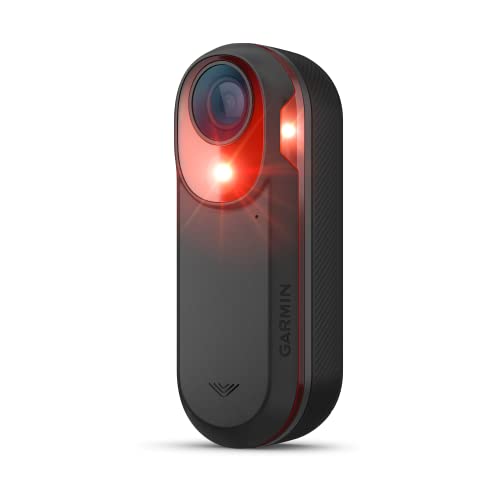
- Radar detects vehicles up to 140 meters away
- Records 1080p video with incident capture
- Works with the Varia app and select Garmin devices
Best For: Riders who want radar alerts and video documentation
Long-Range Visibility Pick
Bryton Gardia R300L Radar Tail Light

- Detects vehicles up to 190 meters away
- Provides 220° coverage and a 73-lumen light
- Runs up to 17 hours and mounts without tools
Best For: Commuters and endurance riders needing extended runtime
High-Runtime Value Pick
EYERAD-1 Smart Brake Radar Light
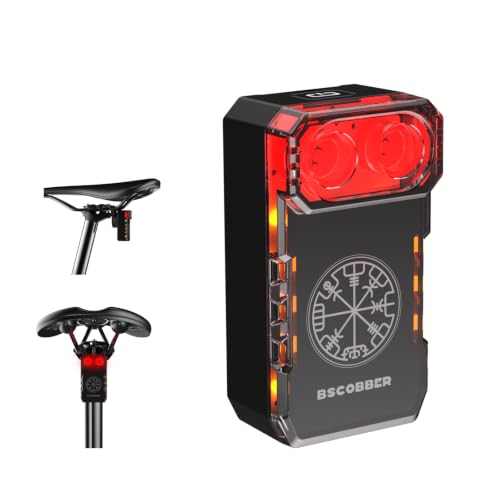
- Detects vehicles up to 140 meters away
- Offers automatic 120-lumen brake brightness
- Provides up to 25 hours of USB-C-powered runtime
Best For: Commuters and groups prioritizing runtime and brake alerts
Best All-in-One View

- 1080P rear camera with 4.3-inch live display
- Radar detection up to 190 meters
- 10+ hours of battery life with IP56 resistance
Best For: Riders wanting camera, display, radar, and tail light functions together
Best Alert-Focused Light
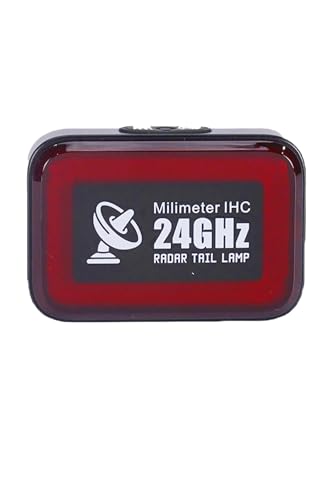
- 60-meter radar sensing with audible alerts
- Brake sensing and five light modes
- Seatpost and saddle-rail mounting
Best For: Commuters and road or MTB riders wanting compact active alerts
Best Long-Range Battery

- Vehicle alerts from up to 140 meters
- Up to 40 hours of runtime
- Works with Garmin and COOSPO displays or app
Best For: Frequent riders prioritizing battery life and connected radar data
Best All-Around Choice – Garmin Varia RTL515
The Garmin Varia RTL515 is a strong all-around option for cyclists comparing cycling radar systems with an integrated rear light. It detects vehicles up to 153 yards away, sends visual and audible alerts through compatible devices, and offers up to 16 hours of battery life in day-flash mode.
Best For: Road riders who want radar awareness and a highly visible tail light in one compact unit.
Pros:
- Detects approaching vehicles up to 140 meters away.
- Works with compatible Edge computers, smartphones, Garmin wearables, and select third-party apps.
- Daylight visibility reaches up to 1 mile.
- Offers up to 16 hours in day-flash mode.
Cons:
- Solid-light runtime is limited to up to 6 hours.
- Full compatibility depends on having a supported device or app.
The RTL515 is a well-rounded pick when you want a proven radar-and-light combination rather than a radar-only device. Its multiple connection options and long day-flash runtime make it especially practical for regular road riding.
Best for Long Battery Life – iGPSPORT SR mini
The iGPSPORT SR mini is a versatile choice among cycling radar systems, combining vehicle detection with a bright, wide-angle tail light. Its radar reaches up to 160 meters, tracks up to eight vehicles, and provides up to 20 hours in light mode or 25 hours in radar-only mode.
Best For: Commuters and frequent riders who prioritize extended runtime, broad device compatibility, and multiple lighting modes.
Pros:
- Detects vehicles up to 160 meters away and can track up to eight simultaneously.
- Offers 220-degree visibility and visibility up to 1 mile.
- Supports iGPSPORT, Garmin, Wahoo, and Bryton devices using compatible radar protocols.
- Includes USB-C charging, automatic sleep/wake, and up to 25 hours in radar-only mode.
Cons:
- Real-time alerts require pairing with a compatible bike computer or device.
- Its broad feature set may be more than casual riders need.
With its long battery estimates, automatic brightness response during braking, and wide compatibility, the SR mini is appealing for riders who spend long hours on the road. It is also backed by a listed two-year warranty.
Best Radar-Only Option – Garmin Varia RVR315
The Garmin Varia RVR315 focuses on vehicle awareness without adding a tail light, making it a straightforward entry in cycling radar systems. It detects approaching vehicles up to 153 yards away and sends visual or audible alerts through compatible smartphones, Garmin devices, or the radar display unit.
Best For: Riders who already have a separate rear light and want a compact radar dedicated to traffic alerts.
Pros:
- Provides awareness of vehicles approaching from up to 140 meters away.
- Pairs with compatible smartphones, Edge computers, select Garmin wearables, and the radar display unit.
- Integrates with the Varia app and supported third-party apps such as Ride with GPS.
- Compact vertical design mounts to most road-use bicycles.
Cons:
- Does not include an integrated tail light.
- Battery life is limited to up to 8 hours.
- Alerts depend on a compatible paired device or display.
The RVR315 is a sensible choice when visibility lighting is already covered. Its radar-only design keeps the focus on rear traffic awareness, though riders will need to account for a separate tail light and its shorter stated runtime.
Best for Wahoo Riders – Wahoo Fitness TRACKR Radar
The Wahoo Fitness TRACKR Radar is an integrated option for cyclists comparing cycling radar systems within the Wahoo ecosystem. It detects approaching cars up to 150 meters away, sends alerts to compatible devices, and combines adaptive lighting with a brake-light function.
Best For: Riders using Wahoo ELEMNT computers who want radar alerts, adaptive lighting, and hands-free light control.
Pros:
- Detects approaching vehicles up to 150 meters away.
- Increases light brightness when braking to improve visibility to traffic.
- Supports ELEMNT computers, compatible bike computers, fitness watches, and the Wahoo App.
- Battery Extender mode reduces luminosity when no vehicles are detected.
Cons:
- Some features depend on compatible devices and ANT+ connectivity.
- The supplied notes do not specify a battery-runtime estimate.
The TRACKR Radar stands out for riders already invested in Wahoo hardware. Its adaptive lighting, brake response, mode memory, and configurable settings make it a feature-rich radar tail light for supported setups.
Camera-Equipped Choice – Garmin Varia RCT715 Radar Camera
The Garmin Varia RCT715 combines rearview radar, a tail light, and a built-in camera for riders who want more than basic vehicle alerts. As cycling radar systems go, it stands out with incident recording, app control, and compatibility with select Garmin devices and smartphones.
Best For: Riders who want radar alerts plus video documentation and automatic incident capture.
Pros:
- Detects approaching vehicles from up to 153 yards (140 meters).
- Records 1080p video at 30 fps and can switch to 720p to extend battery life.
- Automatically saves footage before, during, and after detected incidents.
- Includes a 16 GB SD card and offers multiple operating modes.
Cons:
- Battery life is limited to up to 4–6 hours depending on light mode and recording settings.
- Camera use may be regulated or prohibited in some jurisdictions.
The RCT715 is the most feature-rich option here, particularly for riders who value a video record of their commute or training rides. Its shorter runtime and camera-related legal considerations are worth weighing before purchase.
Long-Range Visibility Pick – Bryton Gardia R300L Radar Tail Light
The Bryton Gardia R300L is a cycling radar system built around long-range vehicle detection and daytime visibility. It pairs with compatible bike computers or the Bryton app to provide visual, audio, and haptic alerts while also serving as a 73-lumen rear light.
Best For: Commuters and endurance riders who prioritize long battery life, broad coverage, and flexible mounting.
Pros:
- Detects approaching vehicles from up to 207 yards (190 meters).
- Provides a wide 220° coverage angle.
- Offers up to 17 hours of continuous use with six light modes.
- Tool-free mount fits standard, D-shaped, and Aero seat posts.
Cons:
- It does not include a built-in camera for recording rides or incidents.
- Its listed protection rating is IP65 rather than IPX7 as suggested in the product title.
With its long claimed detection range, broad viewing angle, and 17-hour runtime, the R300L is a practical option for riders who want radar and lighting without a camera. App and compatible-device pairing are central to receiving its alerts.
High-Runtime Value Pick – EYERAD-1 Smart Brake Radar Light
The EYERAD-1 pairs rear radar with a smart brake light, making it a practical choice among cycling radar systems for riders who want extended runtime and automatic visibility changes. Alerts can be sent to Garmin or Wahoo computers, the dedicated app, or an audible indicator.
Best For: Riders seeking long battery life, automatic brake-light brightness, and group-ride alert sharing.
Pros:
- Detects approaching vehicles up to 140 meters away.
- Automatically increases light brightness to 120 lumens during braking or steep descents.
- Provides 220° wide-angle visibility and up to 25 hours of runtime.
- Supports app-based GroupSync for up to eight riders.
Cons:
- At 60 g, it is heavier than the Bryton Gardia R300L.
- Its IPX6 rating is lower than the IPX7 rating stated for the Bryton model.
- The GroupSync feature depends on using the app with participating riders.
The EYERAD-1 is compelling for frequent commuters and group riders who would benefit from 25-hour battery life and automatic brake signaling. Its broader feature set is most useful when riders use the app or compatible Garmin and Wahoo computers.
Best All-in-One View – VeloScope Bike Radar Camera
For riders who want more than a conventional cycling radar system, the VeloScope combines rear radar detection with a 1080P camera, live 4.3-inch display, audible alerts, and a smart tail light. Its radar detects approaching vehicles from up to 190 meters, while the screen provides a low-latency rear view for daily rides, commuting, and longer road cycling trips.
Best For: Riders seeking a rear-view camera and cycling radar in one handlebar-display system.
Pros:
- Combines 1080P live rear video with radar-based vehicle detection.
- Provides visual and audible alerts when vehicles approach.
- Offers 10+ hours of battery life and IP56 weather resistance.
- Includes continuous ride recording and an integrated tail light.
Cons:
- Its 0.7 kg weight is substantial compared with a compact radar light.
- The system uses a dedicated 4.3-inch display, adding another device to the cockpit.
VeloScope is the most feature-rich option here for riders who value visual confirmation as much as radar alerts. It is a practical choice when a rear camera, display, recording, and visibility features are worth the extra size.
Best Alert-Focused Light – 24GHz Bike Radar Tail Light
This compact cycling radar system focuses on active rear-vehicle alerts and visibility rather than a separate screen. Its 24GHz radar detects vehicles up to 60 meters away, using dual-tone beeps and rapid flashes, while brake sensing, five lighting modes, and group-riding filtering add practical safety features for road, MTB, and commuter use.
Best For: Riders who want a compact radar tail light with audible alerts and brake sensing.
Pros:
- Uses 24GHz radar with a 54-degree detection angle and 60-meter sensing range.
- Provides distinct audio warnings and rapid light flashes as vehicles approach.
- Includes brake sensing, five lighting modes, and group-riding filtering.
- Offers seatpost and saddle-rail mounting with USB-C charging.
Cons:
- Advertised runtime is 3–6 hours, shorter than some competing options.
- IP64 protection is useful for rain and dust but less robust than an IPX7 rating.
- The supplied notes list a six-month warranty.
This model is a straightforward choice for riders who prefer a small, self-contained radar light with immediate sound and flash alerts. Its shorter runtime makes it better suited to regular rides where recharging between outings is convenient.
Best Long-Range Battery – COOSPO TR70 Radar Tail Light
The COOSPO TR70 is a cycling radar system designed for riders who want long battery life and cycling-computer integration. It alerts riders to vehicles from up to 140 meters, supports Garmin computers and selected COOSPO devices or the COOSPORIDE app, and combines radar data with brake highlighting and seven lighting modes.
Best For: Riders who want extended runtime and radar data displayed through a compatible cycling computer or app.
Pros:
- Provides vehicle alerts at up to 140 meters with a 220-degree visibility angle.
- Offers up to 40 hours of continuous use on one charge.
- Supports Garmin cycling computers, compatible COOSPO devices, and the COOSPORIDE app.
- Includes brake highlighting, seven lighting modes, and IPX7 waterproofing.
Cons:
- Radar information depends on pairing with a compatible computer or app for screen display.
- The supplied notes specify 70 lumens, while the listed details state a maximum of 80 lumens.
- Initial activation requires charging, and fast charging should be avoided.
The TR70 stands out for touring, commuting, and frequent riding because its 40-hour battery rating reduces charging interruptions. It is particularly appealing to cyclists already using a supported Garmin or COOSPO display.
How We Picked These Cycling Radar Systems
We focused on devices that combine rear-vehicle detection with practical cycling safety features. The selection includes established radar platforms from Garmin, Wahoo, Bryton, and iGPSPORT, along with camera-equipped and value-oriented alternatives. We considered detection range, alert delivery, tail-light performance, battery claims, waterproofing, compatibility, mounting practicality, and whether the system adds useful features such as brake sensing or video recording.
Radar is an awareness aid, not a replacement for looking over your shoulder or following traffic rules. Performance can vary with road layout, vehicle position, weather, interference, and the receiving device used.
Quick Comparison
- Radar-only: The Garmin Varia RVR315 is designed for riders who already use a compatible bike computer, phone, or wearable and do not need an integrated light.
- Radar plus tail light: Models such as the Garmin RTL515, Wahoo TRACKR, Bryton GARDIA R300L, iGPSPORT SR mini, and COOSPO TR70 combine traffic alerts with rear visibility.
- Radar plus camera: The Garmin RCT715 and VeloScope add video or live-view functions for riders who want incident documentation or a rear-facing visual check.
- Value-focused options: The generic radar lights and other budget models may offer broad feature lists, but verify app, computer, mount, and support compatibility before buying.
Key Buying Factors for Cycling Radar Systems
Detection Range and Alert Quality
Look for a dependable warning system that distinguishes approaching vehicles from stationary objects where possible. Published ranges can exceed 140 meters, but usable performance matters more than the largest number. Check whether alerts appear on the light, a phone app, a cycling computer, or multiple devices.
Compatibility and Connectivity
ANT+ and Bluetooth support affect which computers, watches, phones, and cycling apps can receive radar data. Confirm compatibility with your current head unit before purchasing. Some systems work best inside a particular brand ecosystem, while others rely heavily on a mobile app.
Light Output, Modes, and Battery Life
A radar light should remain visible in daytime traffic and offer a pattern appropriate for your route. Compare runtime at the brightness and flash setting you actually use, not only the maximum advertised figure. Longer battery life is especially valuable for touring and extended training rides.
Weather Resistance and Mounting
For regular outdoor use, prioritize a strong water-resistance rating, secure seat-post or saddle-rail mounting, and a design that stays aligned with the road. A radar unit that points too high, too low, or sideways may not perform as intended.
Camera and Recording Features
Camera models can provide evidence after a close pass and may offer live rear views, loop recording, storage, or phone access. They usually cost more, consume more power, and require attention to memory cards, charging, and privacy considerations.
Who Should Buy Which Cycling Radar Systems?
- Best for most road cyclists: Choose an integrated radar and tail light such as the Garmin RTL515 or a comparable Wahoo, Bryton, or iGPSPORT model.
- Best for riders with an existing compatible computer: Pick a radar-only unit such as the RVR315 to keep the setup small and focused.
- Best for incident documentation: Consider the Garmin RCT715 or VeloScope if rear video and recording are worth the extra cost and charging routine.
- Best for long rides: Prioritize the model with the runtime, charging method, and light mode that fit your longest regular outing.
- Best for budget shoppers: Compare the lower-cost radar lights carefully, paying particular attention to return policies, software support, mounting hardware, and compatibility with your bike computer.
