
The best lightweight cycling radar systems give riders earlier warning of approaching vehicles without adding much weight or complexity to the bike. This roundup compares compact radar tail lights from Garmin, Wahoo, Bryton, iGPSPORT, and other brands.
We focus on detection range, alert clarity, lighting performance, battery life, weather resistance, mounting practicality, and useful extras such as cameras or e-bike integration.
Best 10 Lightweight Cycling Radar Systems Picks for 2026
Proven Garmin Coverage

- 140-meter rear-vehicle detection
- Up to 16 hours in day-flash mode
- Works with Garmin, smartphones, and select apps
Best For: Garmin-equipped road cyclists wanting a compact radar tail light
Long-Range Value

- 160-meter detection with eight-vehicle tracking
- Up to 25 hours in radar-only mode
- Automatic brightness increase while braking
Best For: Commuters and endurance riders prioritizing battery life and compatibility
Bundle Convenience

- Includes Garmin RTL515 and mounting kit
- Adds a 2200 mAh Wearable4U power bank
- 140-meter radar range and app integration
Best For: Garmin riders wanting the RTL515 with an included charging accessory
Wahoo-Centered Control

- 150-meter vehicle detection
- Brake-light and battery-extender features
- ELEMNT and Wahoo App integration
Best For: Wahoo riders wanting adaptive lighting and app-based control
Best Camera-Equipped Radar
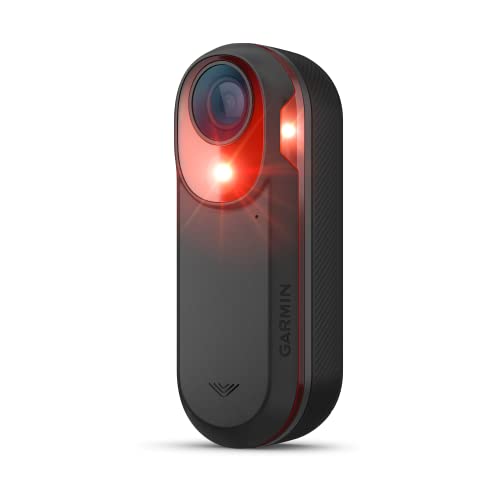
- Rearview radar reaches up to 140 meters
- Built-in 1080p incident-recording camera
- Pairs with Garmin devices and the Varia app
Best For: Riders who want radar, lighting, and video recording in one unit
Best Long-Battery Radar Light

- Up to 17 hours of continuous use
- 190-meter detection range with 220° coverage
- 73-lumen light with tool-free seat-post mounting
Best For: Commuters and endurance riders seeking extended runtime
Best Garmin-Compatible Basic Radar

- Detects vehicles up to 140 meters away
- Tail light brightens and blinks for approaching traffic
- Compatible with numerous Garmin Edge and wearable devices
Best For: Garmin riders seeking a focused radar-and-tail-light setup
Best Value Radar Tail Light

- 140-meter vehicle alerts with compatible displays
- 70-lumen light with brake detection and seven modes
- Up to 40 hours of battery life; IPX7 rated
Best For: Budget-minded road, MTB, and commuter riders
Best Advanced Tracking
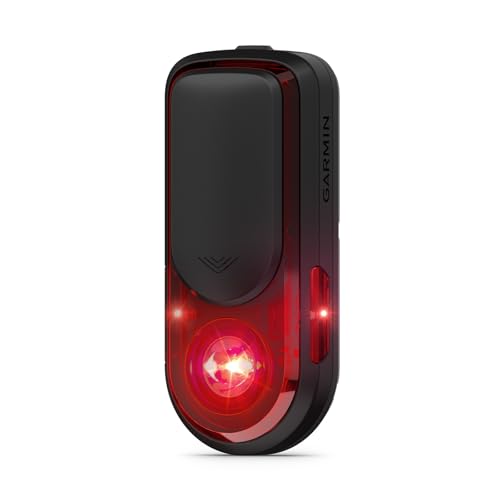
- Tracks vehicle movement and threat level
- Tail light visible from up to 2 kilometers
- Up to 30 hours in radar-only mode
Best For: Garmin-connected riders wanting detailed rear awareness
Best for eBikes

- Powered directly by a compatible eBike
- Vehicle alerts reach up to 140 meters
- Daylight-visible tail light with four modes
Best For: eBike commuters and touring riders
Proven Garmin Coverage – Varia RTL515
For riders comparing lightweight cycling radar systems, the Garmin Varia RTL515 combines rear-vehicle detection with a visible tail light in a compact 2.56-ounce design. It detects approaching vehicles up to 140 meters away and works with compatible Edge computers, smartphones, Garmin wearables, and select third-party apps.
Best For: Road cyclists who want broad Garmin and smartphone compatibility with dependable battery life.
Pros:
- Detects vehicles from up to 153 yards away.
- Offers visual, audible, tone, and vibration alerts through compatible devices.
- Provides up to 16 hours in day-flash mode.
- Includes a low-intensity Peloton mode for group rides.
Cons:
- Full alert features depend on a compatible display, smartphone, or wearable.
- Solid-light runtime is limited to up to 6 hours.
The RTL515 is a well-rounded choice for riders already using Garmin equipment. Its compact vertical form and long day-flash runtime make it practical for regular road riding.
Long-Range Value – iGPSPORT SR mini
The iGPSPORT SR mini is a lightweight cycling radar system with 160-meter detection, a 220-degree tail-light visibility angle, and support for multiple bike-computer ecosystems. Its braking sensor, USB-C charging, and radar-only mode add useful flexibility for commuting and longer rides.
Best For: Riders seeking long battery life, broad standard-protocol compatibility, and automatic brake-light enhancement.
Pros:
- Tracks up to eight vehicles simultaneously from as far as 160 meters.
- Automatically increases tail-light brightness when braking.
- Runs up to 20 hours in light mode or 25 hours in radar-only mode.
- Supports compatible iGPSPORT, Garmin, Wahoo, and Bryton devices.
Cons:
- Alert functionality requires a compatible bike computer, smartwatch, or app.
- At 0.15 kg, it is heavier than some compact radar lights.
With its extensive lighting modes and strong stated battery life, the SR mini is an appealing option for riders who prioritize runtime and device flexibility over minimum weight.
Bundle Convenience – Garmin Varia Power Bundle
This Wearable4U bundle pairs the Garmin Varia RTL515 with its mounting kit, cables, and a 2200 mAh Wearable4U power bank. As a lightweight cycling radar system, the included RTL515 provides vehicle alerts up to 140 meters away, plus a bright tail light and smartphone or Garmin integration.
Best For: Garmin riders who want the RTL515 together with an included backup charging accessory.
Pros:
- Includes the proven RTL515 radar tail light and mounting essentials.
- Provides vehicle awareness up to 153 yards behind the rider.
- Supports the Varia app, compatible Garmin devices, and Ride with GPS integration.
- Includes a 2200 mAh Wearable4U E-Bank.
Cons:
- The bundle adds an accessory rather than changing the RTL515’s core specifications.
- The radar’s solid-light runtime remains up to 6 hours.
This package makes sense when the included power bank is useful to you. Otherwise, compare its bundle contents and price with the standalone RTL515 before buying.
Wahoo-Centered Control – TRACKR Radar Tail Light
The Wahoo TRACKR combines vehicle detection, adaptive lighting, and brake-light functionality in one cycling radar system. It detects cars up to 150 meters away and connects with ELEMNT computers, compatible bike computers, fitness watches, and the Wahoo App.
Best For: Wahoo ELEMNT users who want app-controlled lighting and automatic battery-saving behavior.
Pros:
- Detects approaching vehicles from up to 150 meters behind.
- Increases luminosity when braking.
- Remembers the last-used light mode between rides.
- Battery Extender Mode reduces brightness when no vehicles are detected.
Cons:
- At 99 g, it is heavier than several compact radar tail lights.
- Its strongest integration is centered on Wahoo ELEMNT products and the Wahoo App.
The TRACKR is a practical fit for Wahoo riders who value hands-free control and adaptive power management. Its radar range is competitive, while the 99-gram weight may matter to weight-focused cyclists.
Best Camera-Equipped Radar – Garmin Varia RCT715
For riders who want more than alerts, the Garmin Varia RCT715 combines rearview radar, a tail light, and a built-in camera in one compact seat-post-mounted unit. It is a strong option among lightweight cycling radar systems when incident recording and Garmin ecosystem integration matter.
Best For: Cyclists who want vehicle detection plus automatic video recording.
Pros:
- Detects approaching vehicles up to 153 yards (140 meters) away.
- Records 1080p video at 30 fps and can automatically save incident footage.
- Works with the Varia app, compatible Edge computers, and select Garmin wearables.
- Includes a 16 GB SD card and offers multiple battery-saving modes.
Cons:
- Battery life is up to 4 hours with 1080p recording in certain light modes.
- The camera function may be regulated or prohibited in some jurisdictions.
- It is heavier than radar-and-light-only alternatives at 5.2 ounces.
The RCT715 is the most feature-rich choice here, especially for riders who value evidence after an incident. Its camera and app add usefulness, but they also bring shorter stated battery life and more legal considerations than simpler radar lights.
Best Long-Battery Radar Light – Bryton Gardia R300L
The Bryton Gardia R300L pairs rearview radar with a 73-lumen tail light and broad 220-degree coverage. For shoppers comparing lightweight cycling radar systems, its long battery claim, USB-C charging, and tool-free mounting make it practical for commuting and extended rides.
Best For: Riders who prioritize long runtime, visibility, and flexible mounting.
Pros:
- Detects vehicles up to 207 yards (190 meters) away with 220-degree coverage.
- Offers up to 17 hours of continuous use and six light modes.
- Supports ANT+ and Bluetooth connections with bike computers.
- Mounts to standard, D-shaped, and Aero seat posts without tools.
Cons:
- Uses the Bryton app or a compatible display for visual and audible alerts.
- Its supplied protection rating is IP65 rather than the IPX7 rating stated in the product title.
- It does not include a camera for recording rides or incidents.
The R300L stands out for riders who want radar and lighting without frequent charging. Its broad coverage, app support, and adaptable mount are useful, though camera recording and Garmin-specific integration are not part of this model’s listed feature set.
Best Garmin-Compatible Basic Radar – Garmin Varia RTL 500
The Garmin Varia RTL 500 is a straightforward rearview radar tail light for riders already using compatible Garmin computers or wearables. It keeps the lightweight cycling radar systems approach simple by focusing on vehicle detection and an alert-enhancing light.
Best For: Garmin users who want a basic radar tail light with established device compatibility.
Pros:
- Detects approaching vehicles from up to 140 meters away.
- The tail light brightens and blinks when vehicles are detected.
- Supports a broad list of compatible Edge, wearable, and Varia devices.
- Includes seat-post mounts, a microUSB cable, and manuals.
Cons:
- It does not list a built-in camera or smartphone app features.
- Compatibility is centered on listed Garmin devices rather than general phone use.
- Uses microUSB charging instead of USB-C.
The RTL 500 is a sensible choice for riders who already have compatible Garmin hardware and want radar without extra camera features. Its main advantage is focused integration, while newer alternatives may offer longer range, longer runtime, or broader connectivity.
Best Value Radar Tail Light – COOSPO TR70
For riders comparing lightweight cycling radar systems, the COOSPO TR70 combines rear-approach alerts with a 70-lumen tail light in one 100-gram package. It offers broad visibility, automatic braking alerts, and up to 40 hours of battery life, making it a practical choice for road, MTB, and commuting setups.
Best For: Riders who want an affordable all-in-one radar and tail light with long battery life.
Pros:
- Detects approaching vehicles from up to 140 meters and can display distance and speed through compatible Garmin or COOSPO devices.
- Offers 220-degree visibility, seven lighting modes, automatic approach flashing, and brake detection.
- Provides up to 40 hours of use, USB-C charging, IPX7 water resistance, and a tool-free quick-release mount.
Cons:
- Requires charging for activation on first use, and the instructions advise avoiding fast charging.
- Radar display compatibility is centered on supported Garmin, COOSPO, and COOSPORIDE devices.
The TR70 is a strong value pick for cyclists who prefer one compact unit instead of separate radar and light devices. Its long runtime and flexible mounting are especially useful for frequent riders.
Best Advanced Tracking – Garmin Varia RearVue 820
The Garmin Varia RearVue 820 is a refined option among lightweight cycling radar systems, pairing advanced rear-vehicle tracking with a bright tail light. It provides alerts through compatible Edge computers, Garmin wearables, or the Varia smartphone app, while tracking vehicle movement and threat level.
Best For: Garmin users who want detailed vehicle tracking, bright visibility, and multiple alert options.
Pros:
- Detects approaching vehicles and shows visual and audible alerts, including vehicle size, movement, and threat level on compatible devices.
- Tail light visibility reaches up to 2 kilometers, with brake signaling and day flash, night flash, solid, and peloton modes.
- Offers up to 24 hours in day-flash mode or 30 hours in radar-only mode, with IPX7 water resistance.
Cons:
- Full visual and audible alert features require a compatible Edge computer, Garmin smartwatch, smartphone, or Varia app.
- The seat rail mount kit is sold separately.
The RearVue 820 stands out for riders who value precise tracking and a rich alert experience. Its battery modes and peloton setting also make it adaptable to solo rides and group cycling.
Best for eBikes – Garmin Varia eRTL615
For eBike riders seeking lightweight cycling radar systems, the Garmin Varia eRTL615 draws power directly from the bike instead of using a rechargeable battery. It detects vehicles up to 140 meters behind and combines radar alerts with a daylight-visible tail light for consistent commuting or touring support.
Best For: eBike riders who want radar and lighting without managing a separate battery charge.
Pros:
- Provides visual and audible alerts for approaching vehicles from up to 140 meters away through compatible devices.
- Its high-intensity tail light is visible from up to 1 mile in daylight and includes four lighting modes.
- Uses eBike power, supports Garmin, Wahoo, Hammerhead, Bryton, and smartphone connections, and has IPX7 water resistance.
Cons:
- It requires a compatible eBike cable and is not a standalone battery-powered light.
- Its direct-power design is intended for eBike setups rather than conventional bicycles.
The eRTL615 is a sensible choice when reliable integration matters more than battery independence. Its direct eBike power connection eliminates routine charging while retaining radar alerts and strong rear visibility.
How We Picked the Best Lightweight Cycling Radar Systems
We evaluated these radar tail lights as complete riding tools rather than judging radar range alone. Our comparison considers how clearly each unit detects approaching vehicles, how effectively it communicates alerts through compatible bike computers or phones, and whether the rear light remains visible in daytime traffic.
We also looked at stated battery life, charging requirements, water resistance, mounting flexibility, size, and feature differences between basic radar lights and advanced models with cameras or e-bike support. Product specifications can vary by operating mode, so advertised runtimes and detection distances should be treated as useful benchmarks rather than guarantees.
Quick Comparison
| What to compare | Best fit |
|---|---|
| Simple radar and tail light | Riders who want essential vehicle alerts with minimal setup |
| Long detection range | Commuters and road cyclists riding on faster, busier roads |
| Camera recording | Riders who want incident footage in addition to radar alerts |
| Extended battery life | Touring, commuting, and frequent riders who charge less often |
| E-bike integration | Users who want radar and lighting designed for an e-bike system |
Key Buying Factors for Lightweight Cycling Radar Systems
Detection and Alert Compatibility
Check the stated detection distance, but also confirm how alerts reach you. Some systems work best with a compatible cycling computer, while others can pair with a phone or provide their own audible and visual warnings. A radar light is an awareness aid, not a replacement for shoulder checks or traffic judgment.
Tail-Light Visibility
Look for daytime flash patterns, brightness controls, and modes that balance visibility with battery use. A unit should remain clearly visible from behind without creating distracting patterns for other road users.
Battery Life and Charging
Consider typical ride length and whether you use radar, lighting, or both continuously. USB charging is convenient, while longer runtimes reduce maintenance for commuters and touring cyclists. Camera-equipped models generally require more frequent charging.
Size, Mounting, and Weather Resistance
Lightweight designs are easier to leave on a seatpost, but mounting stability matters just as much as weight. Verify compatibility with round or aero seatposts, saddle bags, and fenders. For year-round riding, a strong water-resistance rating is especially valuable.
Who Should Buy Which Lightweight Cycling Radar Systems?
Choose a basic radar tail light if you want straightforward rear-vehicle awareness and a compact setup. A model with extended range can suit riders on rural roads or high-speed routes, while a camera-equipped unit is better for cyclists who value incident documentation and are willing to accept extra weight and charging demands.
Commuters should prioritize dependable visibility, convenient charging, and reliable mounting. Long-distance riders should focus on battery endurance and weather protection. E-bike owners should check system compatibility before buying, particularly if they want the radar light to integrate with existing controls or displays. Across all categories, the best choice is the model whose alerts, runtime, and mounting system fit your actual riding routine.
