
After sunset, cycling glasses need to protect your eyes without making the road harder to see. Clear lenses are the safest starting point for low light, while some riders prefer yellow lenses for their perceived contrast.
These 10 options cover clear, yellow, photochromic, and interchangeable-lens designs. The right choice depends on your route, lighting, fit, and whether you also ride during the day.
Best 10 Cycling Glasses for Night Riding Picks for 2026
Flexible Full-Frame Pick
KAPVOE K9408 Photochromic Cycling Glasses

- CAT 1-to-CAT 2 photochromic lens
- Two anti-slip nose-pad options
- Flexible full-frame TR90 design
Best For: Variable-light rides and adjustable nose fit
Interchangeable-Lens Pick
ROCKBROS Four-Lens Sports Sunglasses

- Yellow and clear low-light lenses
- Four interchangeable lens choices
- Vented wraparound design
Best For: Riders who prefer dedicated night and daytime lenses
Prescription-Insert Pick
KAPVOE K9023 Photochromic Cycling Glasses

- Stated 85%-to-15% transmission range
- Myopia frame included
- Adjustable anti-slip nose pad
Best For: Prescription-insert users riding through changing light
Wide-View Adaptive Pick
ROCKBROS Photochromic Anti-Fog Glasses

- Stated 83%-to-16% transmittance
- Oversized wraparound lens
- Myopia frame and case included
Best For: Wide coverage on rides with changing light
Reflected-Glare Pick
KAPVOE K9022 Yellow Polarized Cycling Glasses

- Fixed transparent yellow polarized lens
- Lightweight TR90 frame with grippy nose pads
- Wraparound wind and insect coverage
Best For: Riders seeking a consistent yellow tint and reflected-glare control
Changing-Light Pick
ROCKBROS 22g Photochromic Sports Sunglasses

- Photochromic lens adjusts to changing light
- Lightweight 22 g rimless design
- Adjustable soft rubber nose bridge
Best For: Rides transitioning between brighter and dimmer conditions
Three-Pair Option
3PACK Polarized Night Vision Cycling Glasses

- Three-item sports-eyewear pack
- Lightweight semi-rimless design
- Listed polarized coating and anti-glare features
Best For: Buyers seeking multiple pairs who can verify the lens options
Best for Changing Light
ROCKBROS Photochromic Sports Glasses
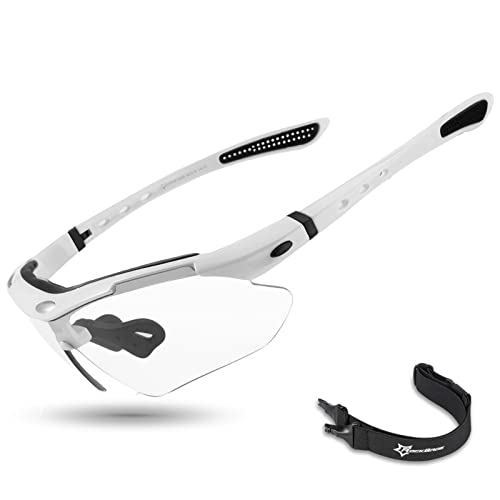
- Photochromic lenses adjust to changing light
- Removable band helps secure the fit
- No dedicated night lens listed
Best For: Rides with changing outdoor light
Most Versatile Lens Kit
X-TIGER 5-Lens Cycling Glasses

- Yellow lens designated for night riding
- Clear lens for cloudy or low light
- Five lenses require manual swaps
Best For: Riders who want separate night and daytime lenses
Lightweight Multi-Sport Pick
X-TIGER Interchangeable Sports Sunglasses

- Includes yellow night and clear lenses
- Frame weight listed at 19.2 grams
- Manual lens swaps needed
Best For: Lightweight eyewear across cycling and other sports
Flexible Full-Frame Pick – KAPVOE K9408 Photochromic Cycling Glasses
For riders comparing cycling glasses for night riding, the KAPVOE K9408 offers a photochromic lens that gradually lightens as UV exposure falls. Its stated range is CAT 1 to CAT 2, so it is worth considering how much tint you want after dark.
Best For: Riders who want a flexible full-frame pair for changing outdoor light and value two nose-pad options.
Pros:
- Photochromic lens adjusts between light and medium tint with UV exposure.
- 2 mm polycarbonate lens is impact-resistant and provides UV400 protection.
- Flexible TR90 frame includes standard and thinner anti-slip nose pads.
Cons:
- Its CAT 1-to-CAT 2 range does not establish that the lens becomes fully clear at night.
- Optional inner frame for prescription lenses is sold separately.
This is a practical choice for variable-light rides, but riders who need a reliably untinted lens for dark routes may prefer a dedicated clear-lens option.
Interchangeable-Lens Pick – ROCKBROS Four-Lens Sports Sunglasses
These ROCKBROS cycling glasses for night riding include separate yellow and clear lenses, letting you choose a lens for the conditions rather than relying on a tint transition. The set also includes a polarized black lens for brighter, glare-heavy rides.
Best For: Riders who want dedicated clear or yellow lenses for low-light trips and other lenses for daytime use.
Pros:
- Four interchangeable lenses include yellow for night rides and clear for low-light conditions.
- Wraparound coverage helps shield eyes from wind and debris; airflow vents are designed to limit fogging.
- Flexible TR90 frame has adjustable anti-slip rubber nose pads.
Cons:
- Only the black lens is polarized.
- Changing conditions may require stopping to swap lenses.
The dedicated low-light lenses make this the most direct option here for after-dark use, provided you do not mind carrying and changing lenses.
Prescription-Insert Pick – KAPVOE K9023 Photochromic Cycling Glasses
The KAPVOE K9023 is a photochromic option among cycling glasses for night riding: its lens is specified to return toward clear as light fades, with a stated visible-light transmission range of 85% to 15%. An included myopia frame is useful if you plan to have prescription lenses fitted.
Best For: Riders who want an included prescription insert and a lens that adapts between daylight and lower light.
Pros:
- Photochromic lens is stated to range from 85% to 15% visible-light transmission.
- Myopia frame comes in the package.
- Adjustable anti-slip nose pad and flexible temples help tailor the fit.
Cons:
- Prescription lenses are not listed among the included accessories.
- Photochromic darkening depends on UV exposure rather than giving you a manually selected tint.
Its high-transmission end makes it a compelling adaptive-lens candidate for fading light, while the included insert distinguishes it for riders who use prescription eyewear.
Wide-View Adaptive Pick – ROCKBROS Photochromic Anti-Fog Glasses
For cycling glasses for night riding that also handle bright daytime stretches, this ROCKBROS pair offers photochromic lenses with a stated 83%-to-16% transmittance range. Its oversized wraparound lens is designed to provide a wide field of view.
Best For: Riders seeking wide coverage, an adaptive tint, and an included frame for prescription lenses.
Pros:
- Lens is stated to shift from 83% transmittance in low light to 16% in bright conditions.
- Oversized wraparound design offers a claimed 180° field of view.
- Includes a myopia frame, hard case, pouch, and cleaning cloth.
Cons:
- Prescription lenses are not included; the maker recommends the insert for myopia below 400° and astigmatism below 200°.
- The lens is non-polarized.
This is a well-equipped choice for rides spanning changing light, especially if wide lens coverage matters. Its stated 83% maximum transmittance is worth weighing against a dedicated clear lens for dark routes.
Reflected-Glare Pick – KAPVOE K9022 Yellow Polarized Cycling Glasses
If you want cycling glasses for night riding with a fixed yellow tint, the KAPVOE K9022 offers a transparent yellow polarized lens designed to reduce reflections from roads and other shiny surfaces. Its wraparound shape also helps keep wind and insects out of your eyes.
Best For: Riders who prefer a consistent yellow-tinted view and want to manage reflected glare on outdoor rides.
Pros:
- Polarized PC lens reduces reflected glare.
- Flexible, lightweight TR90 frame and grippy nose pads support an active fit.
- Wraparound coverage helps shield against wind, dust and insects.
Cons:
- The single, fixed-tint lens cannot adapt to changing light.
- Polarization may make some electronic displays harder to see.
This is a practical option if surface reflections bother you, but the yellow lens should not be mistaken for added illumination on an unlit route.
Among cycling glasses for night riding, the ROCKBROS pair is most relevant if your ride starts before dark and light conditions change along the way. Its photochromic lens adjusts to changing light, while the 22 g, rimless design keeps weight down and leaves the periphery unobstructed by a frame.
Best For: Cyclists who want one lightweight pair for rides that move between brighter and dimmer conditions.
Pros:
- Photochromic lens adjusts without a lens swap.
- 22 g weight and adjustable soft rubber nose bridge support comfort.
- Rimless design avoids frame obstruction in peripheral vision.
Cons:
- Non-polarized lens does not offer polarized reflected-glare control.
- The notes do not specify how clear the lens becomes after dark.
Its adaptability makes it useful for changing light, but check whether its low-light lens appearance suits your route before relying on it for a fully dark ride.
For shoppers comparing cycling glasses for night riding, this three-pack offers a lightweight, semi-rimless sports design with polarized, anti-glare features. The listed color combination is black, yellow and clear, though the supplied details do not explain how those colors are divided among the three pairs.
Best For: Buyers who want three cycling-oriented glasses in one purchase and can confirm the included lens options before ordering.
Pros:
- Three items are included.
- Listed as lightweight and semi-rimless.
- Polarized coating and anti-glare features are specified.
Cons:
- Lens colors and polarization are not specified for each individual pair.
- Fit and low-light visibility details are limited.
This pack offers flexibility in quantity, but its sparse specifications make it worth checking the exact lenses before choosing it for dark routes.
Best for Changing Light – ROCKBROS Photochromic Sports Glasses
For riders comparing cycling glasses for night riding, these ROCKBROS glasses offer photochromic lenses that adjust as light conditions change. The rimless design, adjustable non-slip nose pads, and removable elastic band make them a practical option for rides that continue into lower light.
Best For: Cyclists who want one pair for changing outdoor light rather than swapping lenses.
Pros:
- Photochromic lenses adjust to changing light and provide UV protection.
- Removable elastic band adds a more secure fit when needed.
- Adjustable, non-slip nose pads help keep the glasses stable during sweaty rides.
Cons:
- No dedicated yellow night-riding lens is listed.
- Lens transmission in very dark conditions is not specified.
Choose these for the convenience of an adjusting lens, but check whether their low-light performance meets your needs before relying on them for fully dark rides.
Most Versatile Lens Kit – X-TIGER 5-Lens Cycling Glasses
These X-TIGER cycling glasses for night riding include a yellow lens designated for night use, plus a clear lens for cloudy or low-light conditions. The five-lens kit also covers brighter rides with a polarized black lens and two Revo lenses.
Best For: Riders who want dedicated night and low-light lens options alongside daytime lenses.
Pros:
- Includes yellow and clear lenses for different low-light situations.
- Adjustable, non-slip nose pad supports a more personalized fit.
- Comes with a case, headband, ear hooks, and a myopia frame.
Cons:
- You need to change lenses when conditions call for a different tint.
- The black polarized lens is intended for strong reflected light, not dark rides.
This is the stronger pick if lens choice matters more to you than the simplicity of a single adjusting lens. Select the lens for the actual light conditions rather than leaving a dark lens fitted after sunset.
Lightweight Multi-Sport Pick – X-TIGER Interchangeable Sports Sunglasses
If you want cycling glasses for night riding that also serve other outdoor activities, this X-TIGER set includes a yellow night lens and a clear lens alongside brighter-light options. Its frame is listed at 19.2 grams, making low frame weight a notable feature.
Best For: Cyclists who prefer a lightweight frame and interchangeable lenses for varied sports and light conditions.
Pros:
- Includes yellow night and clear lenses.
- Listed 19.2-gram frame keeps the frame itself lightweight.
- TR90 frame and included myopia insert add versatility.
Cons:
- Requires manual lens changes as lighting shifts.
- Its polarized lens is better suited to bright conditions than night riding.
This set offers useful low-light options without committing you to night-only eyewear. Allow time to swap to the yellow or clear lens before a ride gets dark.
How We Picked These Cycling Glasses for Night Riding
We focused on the lens options and design features that matter when daylight fades: clear or light-tint availability, coverage against wind and debris, ventilation, and the ability to switch lenses for daytime rides. The list includes dedicated yellow-lens glasses, photochromic styles, and multi-lens sets. Product names and stated features alone cannot establish optical clarity, impact protection, or real-world anti-fog performance, so check current specifications and buyer feedback before purchasing.
Quick Comparison: Which Lens Type Fits Your Ride?
- Clear lenses: The most versatile default for truly dark streets and trails because they preserve available light while shielding your eyes.
- Yellow lenses: May feel comfortable under some artificial lighting, but they still reduce light transmission. Choose a light tint only if you can clearly see hazards on your route.
- Photochromic lenses: Convenient for rides that start in daylight, but verify how clear the lens gets and how quickly it changes. Some retain a tint or react slowly in changing conditions.
- Interchangeable-lens sets: Useful if you ride across different light levels and want a dedicated clear lens for night use. Confirm that the included kit actually contains one.
Key Buying Factors for Cycling Glasses for Night Riding
Prioritize Light Transmission
Lens color is not a reliable measure of nighttime suitability. Look for visible light transmission (VLT) or a stated lens category; a clear, high-transmission lens is generally the straightforward choice after dark. UV400 and polarization can be useful daytime features, but neither makes a dark lens appropriate for night riding. Polarization can also affect how some riders see digital displays and reflective surfaces.
Check Fit, Coverage, and Fog Control
Glasses should stay put over bumps without pinching at the nose or temples. Check whether the frame works with your helmet and whether its shape leaves enough room for airflow. Ventilation and lens coatings may help limit fog, but no “anti-fog” claim guarantees a clear view during hard efforts or cold, damp weather. Coverage matters too: a well-fitting lens can keep wind, insects, and road grit out of your eyes without blocking peripheral vision.
Verify What Comes in the Box
For multi-lens models, check the included lens colors, replacement availability, and how easily lenses can be changed without touching the viewing area. If you need prescription correction, confirm that the frame accepts a compatible insert or can be used comfortably with contacts.
Who Should Buy Which Cycling Glasses for Night Riding?
Mostly after-dark riders: Start with a comfortable clear-lens option. Day-to-night commuters: Consider photochromic glasses only after confirming they become sufficiently clear for your route. Riders who want one frame for varied conditions: Choose an interchangeable kit with an included clear lens. Yellow-lens shoppers: Treat tint as a personal preference for adequately lit routes, not a substitute for good bike lights. Whatever you choose, test visibility in a safe setting before relying on new glasses in traffic.
