
The best lightweight inverter generators make portable power easier to carry without giving up the clean, stable electricity that sensitive electronics need. This roundup includes compact gasoline models, dual-fuel options, RV-ready designs, and higher-output units for home backup.
Before choosing, consider more than the advertised wattage. Starting power, running time, noise, weight, fuel flexibility, outlet selection, and carbon-monoxide safety features all affect how useful a generator will be in real-world conditions.
Best 10 Lightweight Inverter Generators Picks for 2026
Best Ultra-Lightweight Pick
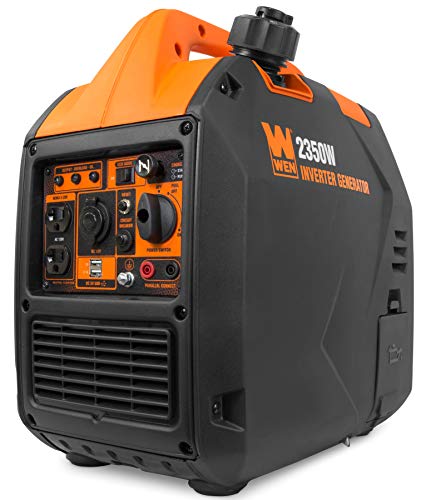
- 39-pound portable design
- 1,900 rated watts of clean power
- Quiet operation with fuel shutoff
Best For: Camping and lightweight electronics backup
Best Dual-Fuel Option
BILT HARD 4500W Inverter Generator
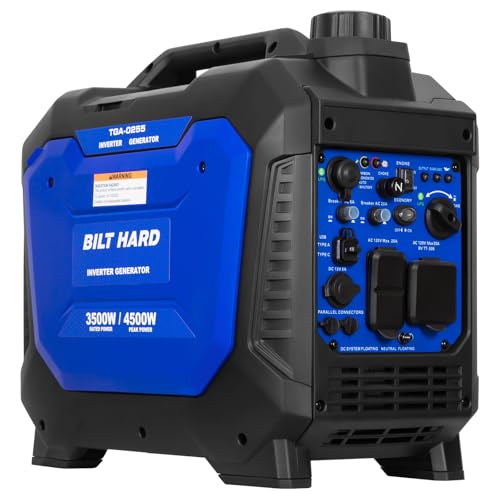
- Gasoline and propane operation
- 3,500 gasoline-rated watts
- RV-ready outlets and CO sensor
Best For: RV use, camping, and flexible backup power
Best Compact Camping Pick
AIVOLT 1600W Inverter Generator

- Very light 28-pound design
- 1,260 running watts with clean output
- Up to eight hours at 25% load
Best For: Camping, tailgating, and charging small devices
Best High-Output RV Pick
WEN 6800W Dual-Fuel Inverter Generator

- Up to 5,100 gasoline-rated watts
- RV-ready and 120V/240V capable
- Electric start with wheels and handle
Best For: RV power and high-output emergency backup
Quiet Camping Power
PowerSmart 4000-Watt Inverter Generator

- 4,000 peak and 3,200 rated watts
- 59 dBA operation at 25% load
- Up to 8 hours at 25% load
Best For: Quiet camping and basic home backup
Dual-Fuel RV Choice
WEN DF360iX 3600-Watt Inverter Generator

- Runs on gasoline or propane
- RV-ready TT-30R outlet
- CO Watchdog shutdown protection
Best For: RV camping with flexible fuel options
Extended Runtime Pick
Oxseryn 4400-Watt Inverter Generator

- 4,400 peak and 3,400 running watts
- Up to 14 hours at 25% load
- RV-ready with ECO mode and fuel gauge
Best For: Longer-running RV and home backup power
Best with Extra Features

- Gasoline and propane operation
- 4,800 surge/4,000 rated watts
- RV-ready outlets and CO shutdown
Best For: RV users and campers needing flexible, higher-output power
Best Ultra-Light Option
SIOKIUU 2500W Inverter Generator

- Only 39.46 pounds
- Up to 17 hours at 25% load
- Quiet, clean power with CO sensor
Best For: Camping and outdoor use where portability is the priority
Best High-Output Gas Model

- 4,800 surge/4,000 rated watts
- RV-ready with multiple outlet types
- Fuel shutoff and CO Watchdog sensor
Best For: RV and residential users needing high gasoline-powered output
Best Ultra-Lightweight Pick – WEN 2350W Inverter Generator
For shoppers comparing lightweight inverter generators, the WEN 56235i stands out at just 39 pounds. It supplies 1,900 rated watts and 2,350 surge watts of clean power, making it a practical choice for camping and charging sensitive electronics.
Best For: Campers and users who prioritize easy carrying, quiet operation, and compact backup power.
Pros:
- Ultralight 39-pound design is easy to transport and store.
- Quiet operation is comparable to a normal conversation.
- Clean inverter power supports phones, computers, televisions, and other sensitive electronics.
- Fuel shutoff uses remaining carburetor fuel before shutdown, and the unit includes a two-year warranty.
Cons:
- Its 1,900-watt running output is lower than larger portable generators.
- Gasoline-only operation offers less fuel flexibility than dual-fuel models.
Choose this WEN when portability matters more than high-output capacity. Its quiet 10-hour runtime and useful mix of AC, DC, and USB outlets make it a well-rounded small generator for outdoor use.
Best Dual-Fuel Option – BILT HARD 4500W Inverter Generator
The BILT HARD TGA-0255 combines useful output with dual-fuel flexibility in a portable inverter design. It delivers up to 3,500 rated watts on gasoline or 3,200 rated watts on propane, while its enclosed housing keeps operating noise around 58 dBA at 23 feet.
Best For: RV users, campers, and homeowners who want gasoline-or-propane flexibility with substantial 120V output.
Pros:
- Runs on either gasoline or propane and includes an LPG hose with regulator.
- Produces less than 3% THD for sensitive electronics.
- Includes RV, 20A, USB, and 12V DC outlets.
- CO sensor, ECO mode, and parallel capability add useful safety and operating flexibility.
Cons:
- At 57.7 pounds, it is heavier than the most portable lightweight inverter generators.
- The parallel kit required to connect another unit is not included.
- It uses recoil start rather than electric start.
This model is a strong middle ground for buyers who need more capacity than a compact camping generator but still want inverter power and manageable portability. Dual-fuel operation is especially useful when propane storage is part of your backup plan.
Best Compact Camping Pick – AIVOLT 1600W Inverter Generator
At only 28 pounds, the AIVOLT VS1600101 is one of the easiest lightweight inverter generators to carry to a campsite or job site. Its 1,260 running watts, clean output below 3% THD, and 57 dBA operating level suit small electronics and modest outdoor power needs.
Best For: Campers and tailgaters who need a very light generator for charging devices and running small loads.
Pros:
- Exceptionally portable 28-pound body.
- Clean inverter output below 3% THD is suitable for phones and laptops.
- Eco mode can provide up to eight hours of runtime at 25% load.
- Includes USB-A and USB-C ports, CO protection, low-oil shutdown, and parallel capability.
Cons:
- Its 1,260-watt running output limits the size of appliances it can power.
- Full-load runtime is approximately two hours.
- The parallel kit is not included, and the unit is not approved for California use according to the supplied notes.
The AIVOLT is best viewed as a personal-power and small-load generator rather than a whole-home backup solution. Its very low weight, quiet operation, and device-friendly ports make it particularly convenient for camping.
Best High-Output RV Pick – WEN 6800W Dual-Fuel Inverter Generator
The WEN DF680iX is not lightweight by small-generator standards, but its wheels and telescoping handle make the 99.2-pound unit easier to move. It provides up to 5,100 rated watts on gasoline or 4,500 rated watts on propane, plus RV-ready connections and a bonded-neutral 240V configuration for low-power Level 2 EV charging.
Best For: RV owners and backup-power users who need high output, dual-fuel operation, and electric start.
Pros:
- Dual-fuel engine provides substantial gasoline or propane output.
- Electric start, onboard wheels, and telescoping handle improve usability.
- Includes an RV TT-30R outlet and 120V/240V L14-30R receptacle.
- CO Watchdog, fuel shutoff, and three-year warranty add useful ownership features.
Cons:
- At 99.2 pounds, it is far heavier than compact lightweight inverter generators.
- Listed runtime is six hours, and the gasoline tank capacity is 2.9 gallons.
- Its high-output design is less convenient for carrying over distances.
This WEN is a capacity-first choice for RV service, emergency backup, and select EV charging needs. Buy it for its output and feature set, not for lightweight portability; the wheels and handle are important parts of its transport design.
Quiet Camping Power – PowerSmart 4000-Watt Inverter Generator
For shoppers comparing lightweight inverter generators, the PowerSmart offers a useful balance of portable output, quiet operation, and clean electricity. It produces 4,000 peak watts and 3,200 rated watts, with a 1.3-gallon tank that can run for up to 8 hours at 25% load.
Best For: Campers and homeowners who need quiet 120-volt power for electronics, appliances, or emergency backup.
Pros:
- Clean power with less than 3% THD for sensitive electronics.
- Quiet 59 dBA operation at 25% load from 23 feet.
- Includes a 30A twist-lock outlet, household outlet, DC port, and USB ports.
- Parallel-ready design and a two-year warranty with lifetime technical support.
Cons:
- Gasoline-only operation limits fuel flexibility.
- At 50.7 pounds, it is portable but not especially light for frequent carrying.
- The parallel kit is not included.
This PowerSmart is a practical middle ground for users who value quiet camping performance and clean power without stepping down to a low-output compact generator.
Dual-Fuel RV Choice – WEN DF360iX 3600-Watt Inverter Generator
The WEN DF360iX stands out among lightweight inverter generators because it can run on either gasoline or propane. It delivers up to 3,600 surge watts on gasoline, includes an RV-ready TT-30R outlet, and adds carbon-monoxide shutdown protection for camping or residential use.
Best For: RV owners and campers who want dual-fuel flexibility, quiet operation, and built-in CO protection.
Pros:
- Runs on gasoline or propane for added fuel flexibility.
- RV-ready with a TT-30R receptacle, plus household, DC, and USB outlets.
- CO Watchdog automatically shuts down the generator when dangerous carbon-monoxide levels are detected.
- Fuel-shutoff feature and three-year limited warranty.
Cons:
- Rated output is 2,900 watts on gasoline and 2,600 watts on propane.
- Listed runtime is 5 hours, so extended use may require refueling.
- Propane operation produces less power than gasoline operation.
With a 49-pound weight and dual-fuel design, the DF360iX is a strong fit when RV compatibility and fuel choice matter more than maximum runtime.
Extended Runtime Pick – Oxseryn 4400-Watt Inverter Generator
Among lightweight inverter generators, the Oxseryn emphasizes higher output and long runtime rather than the lowest carrying weight. Its 4,400 peak watts, 3,400 running watts, 2-gallon tank, and ECO mode make it suited to RV use and home backup.
Best For: RV users and homeowners who need extended gasoline runtime and more than 3,000 watts of continuous output.
Pros:
- Produces 4,400 peak watts and 3,400 running watts.
- Runs for up to 14 hours at 25% load with ECO mode.
- Fuel gauge makes it easier to monitor the 2-gallon tank.
- Includes two 120V AC ports, a 12V DC port, and an RV port.
Cons:
- At 56 pounds, it is heavier than the other listed options.
- Its noise rating is under 72 dBA, so it may be less suitable for quiet campsites.
- Includes a one-year manufacturer warranty.
The Oxseryn is the output-and-runtime choice in this group. Its longer 25%-load runtime is appealing for backup use, while the heavier open-frame design may be less convenient for frequent transport.
Best with Extra Features – WEN DF480iX
The WEN DF480iX is a practical choice among lightweight inverter generators when you want RV-ready output with fuel flexibility. Its 224cc engine delivers up to 4,800 surge watts and 4,000 rated watts on gasoline, while propane provides up to 4,320 surge watts and the same 4,000 rated watts.
Best For: RV users, campers, and households that value dual-fuel operation, quiet performance, and higher output.
Pros:
- Runs on gasoline or propane for added fuel flexibility.
- Produces clean power for sensitive electronics.
- Includes RV, USB, 12V DC, and multiple 120V outlets.
- CO Watchdog sensor, fuel shutoff, wheels, and telescoping handle add convenience and safety.
Cons:
- At 78.5 pounds, it is heavier than smaller portable generators.
- Its 1.9-gallon tank provides a listed runtime of about 7 hours.
Choose this model if versatile fueling and substantial RV-ready capacity matter more than minimizing carry weight. The three-year warranty is another useful benefit for regular recreational or residential use.
Best Ultra-Light Option – SIOKIUU 2500W Inverter Generator
At 39.46 pounds, this SIOKIUU is one of the more portable lightweight inverter generators for camping, outdoor work, or limited home backup. It supplies 2,500 peak watts and 1,900 running watts, with a listed runtime of up to 17 hours at 25% load.
Best For: Campers and users who prioritize easy transport, quiet operation, and extended low-load runtime.
Pros:
- Ultra-lightweight design with a carrying handle.
- Runs at under 59 dBA from 23 feet away.
- Provides clean power with less than 3% THD for sensitive electronics.
- CO sensor, ECO mode, parallel capability, and three-year warranty add value.
Cons:
- Its 1,900 running watts are lower than the two 4,000-watt WEN models.
- Uses gasoline only and starts with a recoil mechanism.
This generator makes the most sense when portability and long low-load operation are more important than maximum capacity. Its compact size and quiet rating suit campsites and outdoor tasks where transport effort matters.
Best High-Output Gas Model – WEN 56477i
WEN Quiet and Lightweight 4800-Watt RV-Ready Portable Inverter Generator with Fuel Shut Off (56477i)
Check Price On AmazonThe WEN 56477i is a strong fit for shoppers seeking lightweight inverter generators with substantial gasoline-powered capacity. Its 224cc engine produces up to 4,800 surge watts and 4,000 rated watts, while the enclosed design and listed quiet operation make it suitable for RV and residential use.
Best For: RV owners and homeowners who want high output, clean power, and a gasoline-only setup.
Pros:
- Delivers 4,000 rated watts and 4,800 surge watts.
- RV-ready TT-30R outlet plus 120V, USB, and 12V DC connections.
- Fuel shutoff helps use remaining carburetor fuel before shutdown.
- CO Watchdog sensor and three-year warranty support safer, longer-term use.
Cons:
- Gasoline-only operation provides less fuel flexibility than the dual-fuel WEN DF480iX.
- At 72.7 pounds, it is portable but not especially easy to carry long distances.
For buyers who need higher output without moving to a conventional open-frame generator, the 56477i offers a capable enclosed package. Wheels and a telescoping handle help offset its weight during transport.
How We Picked These Lightweight Inverter Generators
We focused on models that balance portable design with practical electrical output. The selection includes compact generators for camping and tailgating, midrange units for RV use, and larger inverter generators suited to emergency backup. We also considered dual-fuel capability, RV-ready outlets, electric starting, CO-monitoring systems, parallel capability, economy modes, fuel shutoff features, and the advertised noise and weight ratings.
Because generator specifications can vary by operating mode, treat the listed wattage as a starting point. Always confirm the manufacturer’s running watts, starting watts, fuel capacity, dimensions, and current safety certifications before purchasing.
Quick Comparison
- Most portable: Compact 1,600- to 2,500-watt models are easiest to carry for camping and light-duty use.
- Best for RVs: Look for an RV-ready outlet and enough surge capacity for an air conditioner or other demanding appliance.
- Best for fuel flexibility: Dual-fuel generators can run on gasoline or propane, giving you more storage and operating options.
- Best for home backup: Higher-output 4,000- to 6,800-watt models can support more appliances, but they are heavier and require more careful setup.
Key Buying Factors for Lightweight Inverter Generators
Wattage and Surge Capacity
Match running watts to the appliances you expect to use at the same time, then allow extra capacity for motors in refrigerators, pumps, tools, and air conditioners. A generator that is technically powerful enough may still overload when several devices start together.
Weight, Size, and Portability
“Lightweight” is relative. Compact units are generally easier for one person to move, while larger models may need wheels or two-person lifting. Check the dry weight, handle design, wheel kit, and storage footprint rather than relying only on the product name.
Fuel and Runtime
Gasoline is widely available and often provides strong output. Propane stores well and can be useful during long outages, although output and runtime may differ. Compare runtime at a stated load, not just the tank size.
Noise and Safety
Inverter generators are often quieter than conventional open-frame units, but published decibel ratings may use different testing conditions. Prioritize CO sensors or automatic shutoff, overload protection, proper grounding guidance, and safe outdoor operation. Never run a generator in a home, garage, basement, or enclosed RV.
Who Should Buy Which Lightweight Inverter Generators?
Campers and tailgaters should favor the smallest quiet model that meets their needs. RV owners should prioritize an RV-ready receptacle, adequate surge power, and parallel capability if they may expand later. Homeowners preparing for outages should choose a larger unit with enough capacity for essential circuits, while confirming transfer-switch requirements with a qualified electrician. Shoppers seeking storage flexibility may prefer dual-fuel operation, especially when propane is easier to keep on hand than gasoline.
