
The best cargo electric bikes for beginners make errands, commuting, and carrying passengers easier without requiring an intimidating learning curve. The options in this roundup include fat-tire bikes, folding models, electric trikes, and two-rider designs.
When choosing, focus on stability, battery capacity, payload room, braking performance, and how easily the bike fits your storage and transportation needs. The right match depends as much on confidence and daily use as on motor power.
Best 10 Cargo Electric Bikes for Beginners Picks for 2026
Long-Range Hauler
Powerful 2-Seater Fat-Tire Cargo Ebike

- 960Wh removable battery with claimed 70–80-mile PAS range
- 1450W peak motor with 82N.m torque
- 20×4-inch tires, suspension, and dual disc brakes
Best For: Long commutes, passengers, and mixed-terrain utility
Stable Utility Pick
Jasion Electric Tricycle with Covered Cargo Basket
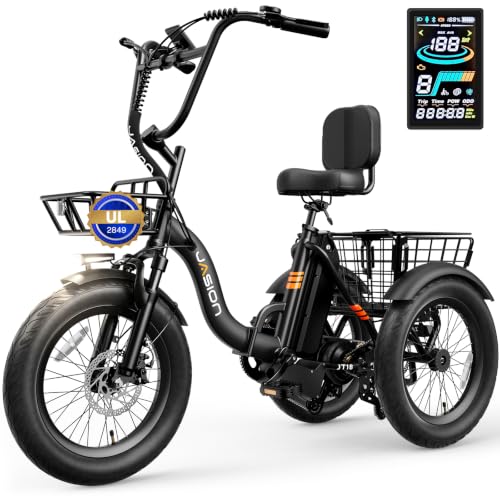
- Covered rear basket rated for up to 77 pounds
- 400-pound total rider-and-cargo capacity
- Five speeds with front suspension and disc brakes
Best For: Grocery runs and stable paved-road hauling
Compact Beginner Choice

- Folding step-through frame for compact storage
- 300-pound total payload with rear cargo rack
- 374.4Wh battery and claimed 25-mile PAS range
Best For: Apartment dwellers, commuters, and short errands
High-Capacity Trail Runner
TST Dual-Suspension Fat-Tire Ebike

- 450-pound maximum load rating
- 48V 15Ah battery with claimed 60-mile PAS range
- Dual suspension and 20×4-inch puncture-proof tires
Best For: Higher-load commuting and mixed road or trail riding
Long-Range Cargo Pick

- Up to 70-mile removable-battery range
- Fat tires and dual suspension for mixed surfaces
- 330-lb payload with rear seat pad
Best For: Beginners wanting range and flexible everyday carrying
Compact Trail Cargo Pick

- Up to 55-mile PAS range
- Fat tires and front suspension for rough paths
- Removable under-seat basket for essentials
Best For: Beginners who want compact storage and trail capability
Passenger-Friendly Cargo Pick

- Step-through frame for easier mounting
- Dual seats with rear footrests
- Up to 60-mile PAS range and DIY trunk option
Best For: Beginners prioritizing passengers and urban errands
Best High-Capacity Pick

- Dual motors and up to a 550-pound load
- Dual removable batteries for extended range
- Step-through frame with full suspension
Best For: Heavy-duty errands, family rides, and hilly terrain
Best Versatile Commuter
Jasion EB5 MAX Fat-Tire E-Bike

- Rear rack supports everyday carrying
- Fat tires suit pavement and unpaved trails
- Removable battery and informative display
Best For: Commuting, errands, and mixed-terrain rides
Best Stability Pick

- Three-wheel design supports stable riding
- Step-through frame and three riding modes
- Folds for storage and includes a cargo rack
Best For: Errands, seniors, and riders prioritizing balance
Long-Range Hauler – Powerful 2-Seater Fat-Tire Cargo Ebike
For beginners comparing cargo electric bikes for beginners, the EUYBIKE stands out for its high-capacity battery, fat tires, and two-seat design. Its step-through frame, three riding modes, front and seat suspension, and seven-speed gearing provide useful flexibility for commuting, errands, and varied terrain.
Best For: Riders who want long pedal-assist range, passenger capacity, and all-terrain versatility.
Pros:
- 48V 20Ah removable battery offers a claimed 70–80 miles in PAS mode.
- 750W motor with 1450W peak output and 82N.m torque supports steep hills.
- 20×4-inch puncture-resistant fat tires, suspension, and dual disc brakes improve comfort and control.
- Arrives 90% pre-assembled and includes a 12-month warranty.
Cons:
- The 11.4-pound battery and cargo-oriented build may be cumbersome to handle.
- Its large fat-tire, two-seater format may be more bike than some short urban trips require.
This is a feature-rich choice for beginners who prioritize range and carrying flexibility over minimal size. Before riding, confirm the bike’s fit and review the included setup instructions.
Stable Utility Pick – Jasion Electric Tricycle with Covered Cargo Basket
Among cargo electric bikes for beginners, the Jasion electric tricycle is a practical option for riders who value three-wheel stability and generous storage. It includes front and rear baskets, a covered rear basket rated for up to 77 pounds, and a 400-pound total rider-and-cargo capacity.
Best For: Beginners seeking a stable, road-focused trike for groceries and everyday cargo.
Pros:
- Covered rear basket supports up to 77 pounds of cargo.
- 400-pound maximum total load includes rider and cargo.
- Front and rear baskets provide flexible storage.
- Five speeds, front suspension, and disc brakes are included.
Cons:
- The supplied notes do not specify motor power, range, or charging time.
- Its three-wheel design is intended for paved-road use rather than broad off-road versatility.
The Jasion is an approachable cargo solution when balance and storage matter more than speed or trail performance. Check the trike’s dimensions and available battery details before purchase to ensure it matches your routes.
Compact Beginner Choice – Folding 20-Inch Cargo Ebike
This folding model is one of the more beginner-friendly cargo electric bikes for beginners for apartment living, commuting, and short errands. Its step-through frame, folding aluminum design, 300-pound total payload, and 20×3-inch tires balance useful cargo capacity with easier storage.
Best For: Riders 5 feet and taller who need a compact commuter for groceries, campuses, and short trips.
Pros:
- Folds for storage under a desk, in a closet, or in a car trunk.
- Heavy-duty rear rack supports a 300-pound total rider-and-cargo payload.
- Three riding modes, five pedal-assist levels, and six gears offer approachable control.
- UL2849 and UL2271 certifications are listed, with a one-year limited warranty.
Cons:
- The 374.4Wh battery is rated for up to 25 miles in PAS mode, less than the long-range options here.
- Its stated 20 MPH maximum and 350W motor suit urban use more than demanding climbs.
Choose this bike if convenient storage and straightforward controls are central to your buying decision. Its shorter claimed range makes it best suited to planned local trips with regular charging.
High-Capacity Trail Runner – TST Dual-Suspension Fat-Tire Ebike
For beginners looking at cargo electric bikes for beginners with a higher load rating, the TST combines a 450-pound maximum load with dual suspension and 20×4-inch tires. Its removable 48V battery, seven-speed drivetrain, throttle and pedal-assist modes, and LCD display support both commuting and recreational riding.
Best For: Adult riders who need a high-capacity fat-tire ebike for roads, trails, and varied terrain.
Pros:
- 450-pound maximum load rating accommodates substantial rider and gear weight.
- 48V 15Ah removable battery claims up to 60 miles in PAS mode.
- Dual suspension and 20×4-inch puncture-proof tires improve rough-surface comfort.
- Seven speeds, throttle assist, pedal assist, and an LCD display provide riding flexibility.
Cons:
- The supplied notes list a 180-day warranty, shorter than several alternatives.
- At 66 pounds, it may be difficult to lift or transport.
- Mechanical brakes require inspection and adjustment before the first ride and subsequent rides.
The TST is a strong fit when carrying capacity and rough-surface comfort are priorities. Beginners should allow time for the remaining assembly and carefully check all components, especially the brakes, before riding.
Long-Range Cargo Pick – Jasion RetroVolt 330
For beginners comparing cargo electric bikes for beginners, the Jasion RetroVolt 330 is a practical choice when range, stability, and everyday carrying flexibility matter. Its removable 48V 15Ah battery is rated for up to 70 miles, while fat tires, dual suspension, and a rear seat pad suit commutes, errands, and relaxed mixed-surface rides.
Best For: Beginners who want long range, a comfortable fat-tire ride, and occasional passenger or cargo use.
Pros:
- Up to 70 miles of range with a removable, UL-certified battery.
- 20 x 4.0-inch fat tires and dual suspension add grip and comfort on varied surfaces.
- 330-pound payload capacity, rear seat pad, five riding modes, and a 7-speed drivetrain support versatile daily use.
- Arrives 85% pre-installed and includes front and rear lighting.
Cons:
- Its moped-style design may be heavier or less compact than a conventional bike.
- The full battery recharge takes about 5–6 hours.
The RetroVolt 330 stands out for beginners who prioritize fewer charging stops and a more planted ride. It is especially appealing for everyday routes that combine pavement, gravel, uneven streets, or light outdoor riding.
Compact Trail Cargo Pick – EB6 MINI Electric Bike
Among cargo electric bikes for beginners, the EB6 MINI is suited to riders who want a compact fat-tire format with useful storage. Its 48V 13Ah removable battery offers up to 55 miles in pedal-assist mode, while front suspension, puncture-resistant tires, and a removable under-seat basket add everyday practicality.
Best For: Beginners seeking a compact electric bike for errands, rough paths, and occasional cargo or storage needs.
Pros:
- 1500W peak motor and 80Nm of torque support steep hills and rugged terrain.
- Removable battery provides up to 55 miles in PAS mode.
- 16 x 4.0-inch puncture-resistant fat tires and front suspension help smooth uneven routes.
- Removable under-seat basket, dual disc brakes, and 90% pre-assembly improve convenience.
Cons:
- Its listed range is lower than some long-range options in this roundup.
- Front suspension is less comprehensive than a dual-suspension setup.
- The supplied details describe a 330-pound rider capacity, not a separate cargo-rack capacity.
The EB6 MINI makes a strong beginner case by combining a smaller 16-inch wheel format with substantial motor output and built-in storage. Choose it for maneuverability and trail capability rather than maximum carrying volume.
Passenger-Friendly Cargo Pick – TST Urban Fat-Tire E-Bike
For beginners shopping cargo electric bikes for beginners, the TST urban fat-tire e-bike emphasizes easy access and flexible carrying. Its step-through frame, dual seats, rear footrests, removable 48V 15Ah battery, and full suspension make it a practical option for city rides, errands, and occasional passenger trips.
Best For: Beginners who want a step-through frame, passenger seating, and adaptable rear storage for urban use.
Pros:
- Step-through design makes getting on and off easier.
- Removable battery offers up to 60 miles in PAS mode and 30–40 miles in throttle mode, according to the supplied notes.
- Dual seats and rear footrests support passenger rides, while the rear seat can be modified for a trunk.
- Full suspension, fenders, front and rear lights, and mechanical disc brakes add everyday utility.
Cons:
- At 66 pounds, it may be cumbersome to lift or transport.
- The listed warranty is 180 days, shorter than the one-year warranties noted for the other bikes.
- Riders should check that all parts are tightened before riding.
The TST is the most cargo-oriented choice here for riders who value passenger seating and customization. Its step-through layout is especially approachable, though its weight and shorter warranty deserve consideration before buying.
Best High-Capacity Pick – Dual-Motor Cargo E-Bike
For beginners seeking cargo electric bikes for beginners with substantial carrying capacity, this dual-motor model emphasizes stability, range, and versatility. Its step-through frame, long two-rider seat, rear rack, and full suspension make it practical for errands, commuting, and family rides, though its 86-pound weight is worth considering before purchase.
Best For: Riders who need maximum cargo capacity, long range, and strong hill or off-road performance.
Pros:
- Dual motors provide strong acceleration, traction, and climbing performance.
- Dual removable 48V 30Ah batteries offer a claimed 70–120 miles in PAS mode, depending on conditions.
- Step-through frame, full suspension, rear rack, and 550-pound maximum load support practical everyday use.
- Extended seat can accommodate two riders.
Cons:
- At 86 pounds, it may be difficult to lift or transport.
- Its powerful dual-motor setup may be more bike than a beginner needs for simple flat-road errands.
- Range varies significantly with rider weight, terrain, speed, and riding conditions.
This is the most capable option here for hauling people and gear, especially on hills or mixed terrain. Beginners should confirm they have enough storage space and are comfortable handling a heavier cargo bike.
Best Versatile Commuter – Jasion EB5 MAX Fat-Tire E-Bike
The Jasion EB5 MAX is a strong choice for beginners comparing cargo electric bikes for beginners that can handle both commuting and light adventure riding. Its rear rack adds carrying utility, while fat tires, a suspension fork, lights, fenders, and a digital display make the bike adaptable for urban streets and unpaved trails.
Best For: Beginners who want one bike for commuting, errands, and varied terrain.
Pros:
- 2000W peak motor and claimed speeds over 28 MPH provide substantial performance.
- Removable, lockable 48V 15Ah battery offers up to 65 miles with assist under stated conditions.
- 26-by-4-inch puncture-resistant fat tires provide grip on gravel, mud, sand, and wet roads.
- Rear rack, fenders, bright lights, display, and cruise control add everyday convenience.
Cons:
- It has a front suspension fork rather than full suspension.
- The large fat-tire design may feel less nimble and may require more storage space.
- Throttle range is listed at up to 35 miles, shorter than the maximum assist range.
With a useful rear rack and broad terrain capability, the EB5 MAX offers a balanced introduction to cargo-capable electric riding. It is best suited to riders who value versatility more than a dedicated, high-capacity cargo layout.
Best Stability Pick – Qlife Folding Electric Trike
For beginners prioritizing balance and easy handling, the Qlife folding trike is a practical alternative among cargo electric bikes for beginners. Its three-wheel design, step-through frame, low 18 MPH top speed, and built-in rear rack suit everyday errands on paved roads, while the folding frame helps with storage in an apartment, SUV, or RV.
Best For: Seniors, new riders, and anyone who values three-wheel stability and easy storage.
Pros:
- Three-wheel design with rear differential provides a planted feel on uneven pavement and gravel.
- Step-through frame is designed for riders from 5’1″ to 6’2″ and supports easier mounting.
- Removable, lockable battery offers a claimed range of up to 50 miles.
- Folding design, fat tires, and rear cargo rack support practical errands and storage.
Cons:
- Its 18 MPH top speed and single-speed setup are less performance-focused than the other options.
- It is intended primarily for paved roads and urban terrain.
- The three-wheel format may require an adjustment in cornering technique for first-time trike riders.
The Qlife is the most approachable option for riders who want stability, a low step-over, and straightforward cargo carrying. Its folding design is especially useful when storage space is limited, although it is less suited to steep or highly technical terrain.
How We Picked the Best Cargo Electric Bikes for Beginners
We compared these 10 models across the features that matter most to new riders: frame stability, step-through access, tire design, battery capacity, claimed range, motor output, passenger and cargo accommodations, portability, and everyday comfort. We also considered whether each bike suits errands, commuting, neighborhood riding, or carrying another person.
Power and range claims can vary with rider weight, terrain, temperature, assist level, and cargo load. Treat advertised specifications as estimates, and confirm local e-bike, passenger, helmet, and equipment rules before buying.
Quick Comparison
| Bike type | Best for | Important strengths | Potential trade-off |
|---|---|---|---|
| Fat-tire cargo e-bike | Mixed surfaces and heavier loads | Traction, comfort, versatile utility | Usually heavier and harder to store |
| Folding e-bike | Small homes, cars, and occasional cargo | More portable and easier to store | Often less cargo room than a full-size bike |
| Electric trike | Maximum low-speed stability | Three-wheel balance and useful storage | Wider turning radius and different handling |
| Long-seat or dual-motor bike | Two riders or substantial loads | High capacity and strong acceleration | Greater weight, cost, and stopping demands |
Key Buying Factors for Cargo Electric Bikes for Beginners
Stability and Rider Access
A low step-through frame, wide tires, and an upright riding position can make starts and stops less stressful. Trikes offer extra stationary stability, but they require practice when turning and may feel different on uneven ground.
Battery and Realistic Range
Look at watt-hours when comparing batteries; it is calculated by multiplying volts by amp-hours. A larger battery generally offers more flexibility, especially with hills or cargo, but it also adds weight. A removable battery is useful for charging indoors.
Payload, Seating, and Storage
Check the manufacturer’s total weight limit, which includes the rider, passengers, accessories, and cargo. A long seat or rear rack is not automatically suitable for a passenger—look for compatible footrests, handholds, and safety equipment.
Brakes, Tires, and Controls
Hydraulic or well-designed mechanical disc brakes are valuable on heavier bikes. Fat tires can improve comfort and traction, while smaller folding tires may be easier to maneuver and transport. Make sure the display and assist controls are easy to read and operate.
Who Should Buy Which Cargo Electric Bikes for Beginners?
Choose a fat-tire cargo model if you want an adaptable bike for errands, rough pavement, or heavier loads. A folding bike is better for apartment storage, car transport, and lighter-duty utility. Select an electric trike if balance and low-speed confidence are your top priorities, especially for shopping trips.
For carrying a passenger or substantial cargo, prioritize the long-seat or dual-battery option—but confirm its weight rating, dimensions, and braking capability before purchase. Riders seeking longer urban trips should favor the largest practical battery, while beginners who value simplicity may be better served by a moderate-power model with removable charging and accessible controls.
