
The best lightweight solar generator kits make it easier to keep phones, lights, laptops, and small appliances running without fuel or complicated wiring. The right choice depends on more than battery capacity: panel size, inverter output, weight, charging speed, and port selection all affect real-world usefulness.
Our roundup covers compact 172Wh and 292Wh kits as well as larger 1,024Wh and 1,070Wh power stations. Use the guide below to match each capacity class with your camping, travel, or backup-power needs.
Best 10 Lightweight Solar Generator Kits Picks for 2026
Best Ultralight Pick

- 7.5-pound power station design
- 300W output with six-device connectivity
- Includes 40W solar panel
Best For: Hiking, camping, and charging personal electronics
Best High-Output Kit
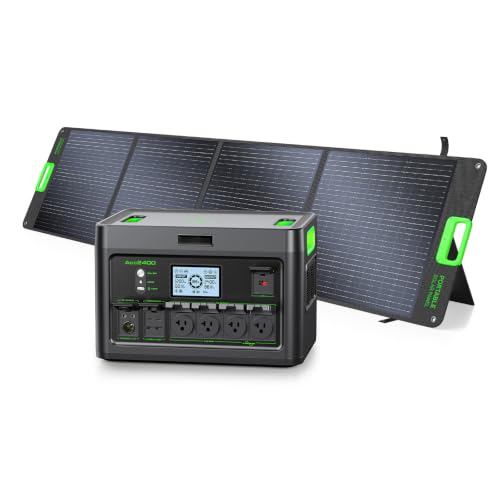
- 2400W continuous output
- Includes 200W foldable solar panel
- UPS mode and LiFePO4 battery
Best For: Vehicle camping and running multiple appliances
Best Premium Lightweight Kit

- 1070Wh capacity with 1500W output
- Two lightweight 100W flexible panels
- IP68 panels and app control
Best For: RV travel, camping, and higher-demand backup power
Best Versatile Midrange Kit

- 999Wh capacity and 1000W output
- Includes 200W, 23.5%-efficient panel
- Supports up to 10 devices
Best For: RV use, outage backup, and everyday off-grid power
Best Expandable Kit

- 1,024Wh LiFePO4 battery with 2,000W AC output
- Includes a 240W solar panel
- Expandable to 5,120Wh
Best For: RV trips, camping, CPAP use, and home backup
Best Budget Camping Kit

- 280Wh battery with 300W output
- Includes a 40W foldable solar panel
- Multiple AC, DC, and USB ports
Best For: Small electronics, camping, tents, and RV accessories
Best for Comfort

- 3.3-pound power station and 2.3-pound panel
- Includes a 40W foldable solar panel
- 200W AC output with USB-C and USB-A ports
Best For: Day trips, road trips, and charging personal electronics
Best Compact Pick

- 300W power station with 60W panel
- Multiple AC, DC, and USB outputs
- Flashlight with reading and SOS modes
Best For: Camping and charging small electronics
Best High-Output Pick
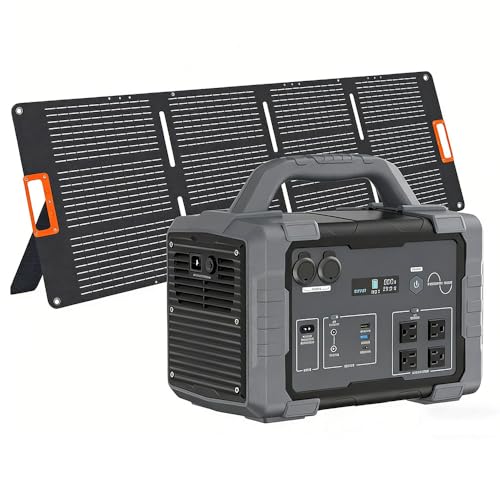
- 1800W output with 3600W surge
- 1024Wh battery and 200W solar panel
- LiFePO4 cells rated for 3,500-plus cycles
Best For: Home backup, RVs, and demanding appliances
Best Feature-Rich Compact Pick

- 237Wh battery with 60W foldable panel
- Pure-sine-wave 300W AC output
- Multiple USB, DC, and lighting options
Best For: Outdoor trips and small-device charging
Best Ultralight Pick – Jackery Explorer 300 Kit
For hikers and campers prioritizing low carry weight, this lightweight solar generator kit pairs a 292Wh Explorer 300 with a 40W solar panel. Its 300W output handles common personal electronics while the compact design is easier to pack than larger power stations.
Best For: Day hikes, camping, cameras, drones, laptops, and other modest-power devices.
Pros:
- Explorer 300 is listed at 7.5 pounds and has an integrated carry handle.
- Offers AC, USB-C, USB-A, and 120W car-port connectivity for up to six devices.
- LiFePO4 battery is rated for more than 4,000 cycles before reaching 70% capacity.
- Includes a 40W solar panel and can reach 80% charge in about 7.5 hours under stated conditions.
Cons:
- The 292Wh capacity and 300W output are not intended for high-draw appliances.
- The included 40W panel charges more slowly than the larger panels in this roundup.
This is the most carry-friendly option here for lightweight outdoor power. Choose it when portability matters more than long runtimes or appliance-level output.
Best High-Output Kit – 2400W Camping Power Station
This lightweight solar generator kit is the high-capacity choice for campers who need to run several appliances at once. It combines a 2400W power station with a 200W foldable monocrystalline panel, although its 58-pound weight makes it better suited to vehicle-based trips than backpacking.
Best For: Short multi-day camping trips, refrigerators, lights, cookers, and other higher-demand gear.
Pros:
- Provides 2400W of continuous power for simultaneous appliance use.
- Includes a 200W foldable panel with stated 23% conversion efficiency.
- LiFePO4 battery, UPS mode, and selectable slow/fast charging support practical backup use.
- Built-in safety monitoring, cooling, LED lighting, wireless charging, and an adjustable panel stand add convenience.
Cons:
- At 58 pounds, it is substantially heavier than the other listed kits.
- The supplied notes identify a 12-month manufacturer warranty.
This kit offers the strongest stated output in the group, but it is not the right fit for lightweight trekking. It makes more sense when capacity and appliance support outweigh easy carrying.
Best Premium Lightweight Kit – Jackery Explorer 1000 v2
For a balance of substantial capacity and manageable weight, this lightweight solar generator kit combines a 1070Wh Explorer 1000 v2 with two 100W flexible panels. The 23.8-pound power station delivers 1500W AC output, while the panels are designed for easy transport and curved-surface mounting.
Best For: RV travel, off-grid camping, backup power, and users who need to run appliances such as fridges or AC units.
Pros:
- Offers 1070Wh capacity, 1500W continuous output, and 3000W surge capacity.
- Includes two 100W panels weighing 4.52 pounds each, with 25% stated conversion efficiency.
- LiFePO4 battery is rated for 4,000 cycles while retaining 70% or more capacity.
- Panels are IP68-rated, flexible, and compatible with curved surfaces such as RV roofs.
Cons:
- The included panels provide 200W total, so solar recharge speed depends on available sunlight.
- The fastest one-hour AC charging mode must be enabled through the Jackery app.
This is a strong middle ground for buyers who want more capacity than an ultralight compact station without moving to a much heavier system. Its flexible panels are especially useful for RV and vehicle setups.
Best Versatile Midrange Kit – EBL 1000W Solar Generator
This lightweight solar generator kit pairs a 999Wh, 1000W power station with a 200W monocrystalline panel. It is built for flexible off-grid use, with multiple charging ports, MPPT solar management, and enough output for essentials such as lights, fans, laptops, CPAP devices, and mini-fridges.
Best For: RV camping, home-outage backup, marine use, and powering several smaller devices at once.
Pros:
- Combines 999Wh capacity, 1000W continuous output, and 2000W peak output.
- 200W panel is rated at 23.5% efficiency and works with built-in MPPT charging.
- Supports up to 10 devices through AC, USB-C, USB-A, wireless, car, and DC outputs.
- Includes weather-resistant panel construction and power-station protection against overload, overheating, and short circuits.
Cons:
- The supplied notes do not state the kit’s total weight, so portability is harder to compare directly.
- Devices rated above 1000W should not be connected.
With nearly 1kWh of storage and broad connectivity, this EBL bundle is a practical all-purpose option. It suits buyers who want useful solar recharging and many ports without stepping up to the 1500W-class Jackery.
Best Expandable Kit – OUPES Mega 1
For shoppers comparing lightweight solar generator kits, the OUPES Mega 1 stands out as a higher-capacity option that still weighs 27.8 pounds. Its included 240W monocrystalline panel, 1,024Wh LiFePO4 battery, and 2,000W AC output make it suitable for more demanding backup and outdoor power needs.
Best For: RV trips, camping, CPAP use, refrigerators, and home backup users who may want expandable capacity.
Pros:
- Includes a 240W panel and supports solar plus AC charging.
- LiFePO4 battery offers a stated 3,500+ cycle lifespan.
- Expandable to 5,120Wh with an additional battery.
- 20ms UPS switching and app monitoring add convenience for backup use.
Cons:
- Heavier and larger than the smaller kits in this roundup.
- The 5,120Wh capacity requires purchasing an additional battery.
- Solar recharge time depends on sunlight conditions.
The Mega 1 is the strongest choice here when output, battery longevity, and future expansion matter more than minimizing pack weight. Its included panel makes it a ready-to-use kit, while UPS support broadens its usefulness during outages.
Best Budget Camping Kit – ZeroKor 300W Solar Generator
Among lightweight solar generator kits, this ZeroKor package offers a practical balance of portability and basic off-grid charging. The 280Wh power station includes a 40W foldable solar panel, multiple USB ports, two AC outlets, and an SOS flashlight for small electronics and campsite essentials.
Best For: Camping, tents, RV accessories, phones, tablets, laptops, and other devices rated below 300W.
Pros:
- Includes a 40W foldable solar panel and 280Wh battery.
- Provides AC, DC, USB, and QC3.0 charging options.
- Gas-free, low-noise operation suits indoor and outdoor use.
- Built-in protections help guard against overload, over-current, over-voltage, and short circuits.
Cons:
- 300W output is not intended for coffee makers, hair dryers, water pumps, or similar high-demand appliances.
- Its 280Wh capacity is better suited to small electronics than extended backup.
- Solar charging performance depends on available sunlight.
This is a sensible entry-level kit for keeping personal electronics charged without carrying a large power station. Check your device’s running and startup requirements carefully, since the 300W limit excludes many heat-producing or compressor-equipped appliances.
Best for Comfort – MARBERO 172Wh Solar Kit
For buyers prioritizing minimal carry weight, the MARBERO kit is one of the most portable lightweight solar generator kits available in this comparison. The power station weighs 3.3 pounds, the foldable 40W panel weighs 2.3 pounds, and the system provides AC, DC, USB-A, and USB-C outputs for everyday electronics.
Best For: Backpack-style travel, day trips, road trips, phones, cameras, tablets, laptops, and emergency device charging.
Pros:
- Very light at 3.3 pounds for the power station and 2.3 pounds for the panel.
- Includes a foldable 40W solar panel with a stated 21.5–23.5% conversion rate.
- Offers three recharge methods: wall outlet, solar panel, and car outlet.
- Provides 200W AC output with a 270W peak and several USB ports.
Cons:
- The 172Wh capacity is limited compared with larger generator kits.
- Its 200W AC output limits the appliances it can run.
- Solar recharging requires direct sunlight and the included cable setup.
The MARBERO is best when portability takes priority over runtime and appliance capacity. It can keep personal electronics topped up on the move, but shoppers needing refrigerator, CPAP, or other higher-demand backup should consider a larger battery and higher output.
Best Compact Pick – 300W Solar Generator Kit
For shoppers comparing lightweight solar generator kits for camping and everyday small-device charging, this ZeroKor setup combines a 300W power station with an included 60W foldable monocrystalline solar panel. It supports phones, tablets, laptops, headphones, and similar low-wattage gear, while its built-in light adds practical utility outdoors.
Best For: Tent camping, travel, and emergency charging for small electronics.
Pros:
- Includes a 60W solar panel with up to 20.5% stated conversion efficiency.
- Offers AC, DC, USB-A, and quick-charge USB outputs for multiple devices.
- Built-in flashlight includes reading and SOS modes, with battery-management protections.
Cons:
- Devices drawing more than 300W may damage or disable the generator.
- The solar panel junction box is not waterproof and should be kept dry.
- The smaller output capacity is intended for electronics rather than high-wattage appliances.
This is a practical lightweight solar generator kit when portability and broad device compatibility matter more than powering heating appliances or large equipment.
Best High-Output Pick – 1800W LiFePO4 Solar Generator
Among lightweight solar generator kits, this 1800W model is designed for substantially higher power demands. Its 1024Wh LiFePO4 battery, 200W solar panel, 3600W surge rating, and four AC outlets make it suitable for home backup, RV use, camping, and demanding appliances.
Best For: Home backup, RV camping, power tools, refrigerators, and other higher-wattage equipment.
Pros:
- Provides 1800W continuous output with 3600W surge capacity.
- Includes a 200W foldable panel rated at up to 23.5% conversion efficiency.
- LiFePO4 battery is rated for 3,500-plus cycles to 80% capacity.
- Supports stated 1.5-hour AC charging, 100W USB-C PD, and a five-year warranty.
Cons:
- Its 9.25-by-12.83-by-14.84-inch design is less compact than small 300W kits.
- Solar charging speed depends on sunlight and the included panel’s 200W rating.
- The product listing identifies the solar panel as water-resistant, not fully waterproof.
This kit prioritizes capacity, appliance support, and long-term battery life over the smallest possible footprint, making it the stronger choice for serious backup needs.
Best Feature-Rich Compact Pick – MARBERO 237Wh Solar Kit
This MARBERO kit is a convenient option for shoppers seeking lightweight solar generator kits for outdoor trips and emergency use. It pairs a 237Wh battery with a foldable 60W panel, pure-sine-wave AC output, several USB connections, and a three-mode LED flashlight.
Best For: Hiking, fishing, overnight camping, and charging phones, tablets, laptops, and headphones.
Pros:
- Includes a foldable 60W panel with a stated 21.5–23.5% conversion rate.
- Pure-sine-wave AC outlets provide 300W rated and 375W peak output.
- Offers QC3.0 USB-A, standard USB-A, USB-C PD, DC, and AC outputs.
- Flashlight includes flashlight, strobe, and SOS modes.
Cons:
- Devices exceeding 300W may damage the generator, especially heating devices.
- The 237Wh capacity is better suited to small electronics than extended high-load use.
- Includes a 12-month warranty, shorter than some larger kits.
With its flexible port selection and pure-sine-wave AC outlets, this MARBERO model offers a well-rounded portable setup for small devices, provided you stay within its 300W output limit.
How We Picked the Best Lightweight Solar Generator Kits
We evaluated these kits by focusing on the features that matter most away from a wall outlet: usable battery capacity, continuous and surge output, included panel wattage, portability, charging options, and battery chemistry where specified. We also considered whether a kit is better suited to personal electronics, weekend camping, vehicle use, or short-term emergency backup.
Because published specifications and actual performance can vary, check the seller’s current listing for exact weight, dimensions, outlet configuration, recharge times, and supported solar input before buying.
Quick Comparison
| Capacity Class | Best For | Typical Loads | Portability |
|---|---|---|---|
| About 170–300Wh | Short trips and personal essentials | Phones, lights, cameras, small laptops | Highest |
| About 1,000–1,070Wh | Extended camping and backup | Multiple devices, CPAPs, small appliances | Moderate |
| About 1,800–2,400W output | Higher-demand equipment | Tools, kitchen appliances, heaters with care | Lowest |
Key Buying Factors for Lightweight Solar Generator Kits
Battery Capacity and Usable Energy
Watt-hours indicate how much energy the battery stores. Smaller 172Wh to 300Wh units are easier to carry but may need daily recharging. Around 1,000Wh provides substantially more flexibility, while larger systems are better for demanding or multi-day use. Account for conversion losses and avoid planning to drain a battery completely.
Inverter Output and Surge Capacity
Continuous wattage determines which devices can run at the same time. Startup surges from refrigerators, pumps, and power tools may require considerably more. Pure sine wave output is generally preferable for sensitive electronics and devices with motors.
Solar Panel Size and Recharge Time
A 40W or 60W panel can help maintain small electronics, but it may recharge a larger battery slowly. Kits with 200W or 240W panels are better matched to 1,000Wh-class stations. Actual solar performance depends on sunlight, panel angle, temperature, and the station’s solar-input limit.
Portability, Battery Chemistry, and Safety
Check the complete kit weight, folding-panel design, carrying handles, ventilation, warranty, and protection features. LiFePO4 batteries typically offer long cycle life and strong thermal stability, though they can add weight. Confirm that the unit has the outlets and USB ports you need.
Who Should Buy Which Lightweight Solar Generator Kits?
Choose a compact 172Wh to 300Wh kit if you prioritize low weight for hiking-basecamp use, photography, phones, lights, or occasional laptop charging. Move to a 1,000Wh-class model for family camping, CPAP backup, longer outages, or several devices operating across a day or more. Select a higher-output 1,800W to 2,400W system when you need to run larger appliances or tools, and accept the added size and weight.
Finally, compare the complete package rather than the headline battery rating. A well-matched solar panel, faster AC charging, reliable ports, and a manageable carrying weight can make a smaller station more useful than a heavier model with greater capacity but a poorly matched kit.
