
A ride can move from open sun to shaded roads or trails in minutes. Photochromic cycling glasses adjust their tint as light changes, so you may not need to swap lenses or carry a second pair.
These 10 picks span lightweight sport frames, larger-coverage designs, and options with prescription-insert compatibility. The right choice depends on when you ride, how your helmet fits, and how much coverage you want.
Best 10 Photochromic Cycling Glasses Picks for 2026
Flexible Full-Frame Pick

- Clear-to-dark-gray photochromic lens
- Flexible full-rim TR90 frame
- Grippy rubber nose pads
Best For: Riders wanting full-frame coverage and a secure fit
Adjustable Fit Pick

- Stated 85%–15% light transmission
- Adjustable rubber nose pad
- Includes a prescription-lens insert
Best For: Riders seeking fit adjustment and prescription-insert compatibility
Wide-View Pick
ROCKBROS Photochromic Sports Sunglasses
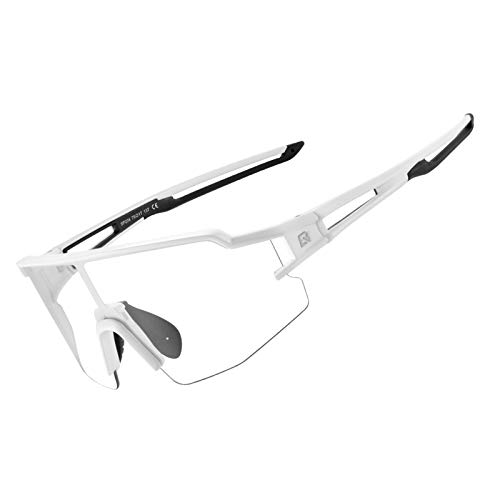
- Stated 180° wraparound view
- 16%–83% light-transmission range
- Includes a prescription-lens insert
Best For: Riders prioritizing a broad view and insert compatibility
Vented Lens Pick

- Clear-to-gray photochromic lens
- Lens vents designed to limit fogging
- Includes an inner prescription frame
Best For: Riders seeking airflow and an inner prescription frame
Lightest Rimless Pick
ROCKBROS 22g Photochromic Sports Sunglasses

- Listed at 22 g
- Rimless peripheral view
- Adjustable rubber nose bridge
Best For: Riders seeking low weight and an open view
Specified Tint Range
ROCKBROS Full-Rim Photochromic Sunglasses

- Stated 80%–18% transmission
- Full-rim wraparound design
- Adjustable nose bridge
Best For: Riders comparing stated tint ranges
Prescription-Insert Pick
ROCKBROS Wide-View Photochromic Sunglasses
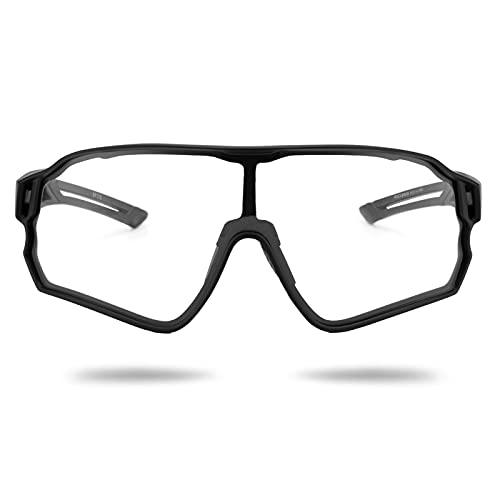
- Oversized wraparound lens
- Myopia frame included
- Case, pouch, and cloth included
Best For: Riders needing a prescription-lens insert
Lightweight All-Rounder
ROCKBROS 29g Photochromic Cycling Glasses

- 80%–18% stated light transmission
- 29 g listed weight
- Adjustable rubber nose bridge
Best For: Lightweight eyewear for changing outdoor light
Secure-Fit Multi-Sport Pick
ROCKBROS White Rimless Sports Glasses
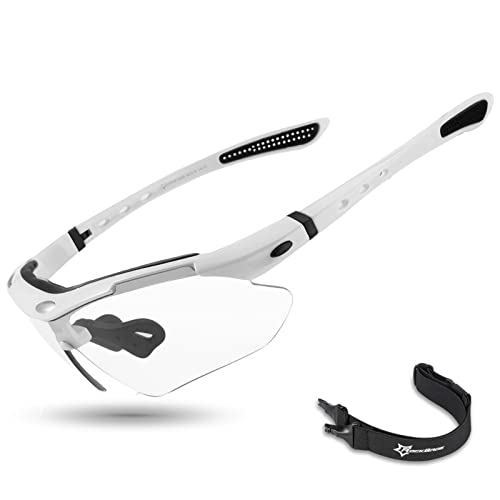
- Removable elastic band
- Non-slip nose pads
- Photochromic, UV-protective lenses
Best For: Cycling and pickleball with optional band retention
Blue Cycling Fit
ROCKBROS Blue Rimless Photochromic Glasses

- Medium size listed
- Removable elastic band
- Adjustable nose pad
Best For: Cyclists seeking a medium-size, secure-fit option
Flexible Full-Frame Pick – KAPVOE K9408
These photochromic cycling glasses pair clear-to-dark-gray polycarbonate lenses with a flexible, full-rim TR90 frame. They’re a practical choice if you want one pair for changing light without switching lenses.
Best For: Riders who prefer full-frame coverage and a grippy fit.
Pros:
- Photochromic lenses darken in UV light and return toward clear in lower light.
- Polycarbonate lenses offer UV400 protection and impact resistance.
- Flexible TR90 frame and rubber nose pads support a secure fit, even when wet.
Cons:
- No prescription insert is listed among the included components.
- One-size fit may not suit every face equally.
The K9408 stands out for its straightforward full-frame design and wet-weather nose grip. Choose it if those fit details matter more than prescription compatibility.
For photochromic cycling glasses with more fit flexibility, the KAPVOE K9023 combines an adjustable rubber nose pad, flexible temples, and a clear-to-dark-gray lens. Its stated visible-light transmission range is 85% to 15%.
Best For: Riders who want an adjustable nose fit and an included prescription-lens insert.
Pros:
- Photochromic lens adapts to UV exposure and provides UV400 protection.
- Adjustable nose pad and flexible temples help tailor the fit.
- Includes a myopia frame, case, pouch, cloth, and glasses rope.
Cons:
- Prescription lenses for the included insert are not listed as included.
- Non-polarized lens won’t provide polarization-specific glare reduction.
The K9023 is the most accessory-focused option here. Its adjustable nose pad and included insert make it worth considering if standard one-piece fits or prescription needs are concerns.
These photochromic cycling glasses use an oversized wraparound lens for a stated 180° field of view. ROCKBROS lists a 16%–83% light-transmission range, making them suited to rides that move between brighter and dimmer conditions.
Best For: Riders who prioritize a broad view and want a prescription-lens insert included.
Pros:
- Large wraparound lens provides broad coverage and a stated 180° view.
- Photochromic polycarbonate lens offers UV400 protection.
- Includes a myopia frame, hard case, pouch, and cleaning cloth.
Cons:
- Prescription lenses are not included; ROCKBROS recommends the insert for myopia below 400° and astigmatism below 200°.
- Non-polarized lens does not offer polarization-specific glare reduction.
The large lens is the main reason to choose this pair. Check the stated prescription-insert limits if you plan to use it with corrective lenses.
If airflow is a priority, these photochromic cycling glasses have lens air inlets intended to help limit fogging. The KAPVOE K63 also pairs a clear-to-gray polycarbonate lens with a flexible TR90 frame.
Best For: Riders who want a vented lens and an included inner frame for prescription lenses.
Pros:
- Photochromic lens changes from clear to gray in sunlight.
- Lens vents are designed to reduce fogging while riding.
- Flexible TR90 frame, soft rubber nose pad, and included inner frame add fit and prescription options.
Cons:
- Prescription lenses for the inner frame are not included.
- No light-transmission range is specified in the supplied notes.
The K63’s vented design sets it apart for riders concerned about fogging. The inner frame is useful to have, but you’ll need separate prescription lenses to use it.
Lightest Rimless Pick – ROCKBROS 22g Photochromic Sports Sunglasses
At a listed 22 g, these photochromic cycling glasses prioritize low weight and an open peripheral view. Their rimless lenses adjust to changing light, so you do not need to swap lenses during a ride.
Best For: Riders who want a lightweight, unobstructed feel.
Pros:
- 22 g listed weight reduces bulk on the nose and temples.
- Rimless design leaves more of your peripheral view open.
- Adjustable soft-rubber nose bridge helps tailor the fit.
- PC lenses have a UV400 coating and are described as shatter- and scratch-resistant.
Cons:
- Non-polarized lenses will not provide polarized glare reduction.
Choose this pair if minimal weight and a less obstructed view matter more to you than polarization.
Specified Tint Range – ROCKBROS Full-Rim Photochromic Sunglasses
These photochromic cycling glasses are the option here with a stated light-transmission range: the lenses are described as shifting from 80% in low UV to 18% in high UV. A full-rim, wraparound design and adjustable nose bridge round out the fit.
Best For: Riders who want a stated tint range in a full-rim pair.
Pros:
- Lenses respond to UV intensity without a lens swap.
- Stated 80%–18% light-transmission range helps set tint expectations.
- Adjustable soft-rubber nose bridge allows a more personalized fit.
Cons:
- At a listed 29 g, it is heavier than the 22 g rimless ROCKBROS option in this roundup.
- Non-polarized lenses do not offer polarized glare reduction.
The specified tint range is useful when comparing options, but the full-rim build comes with a little more listed weight.
Prescription-Insert Pick – ROCKBROS Wide-View Photochromic Sunglasses
These photochromic cycling glasses combine an oversized wraparound lens with an included myopia frame for riders who need prescription compatibility. ROCKBROS describes a 180° field of view, and the package includes a hard case, pouch, and cleaning cloth.
Best For: Riders seeking a wide-view lens with a prescription-lens insert.
Pros:
- Oversized lens is designed for a broad field of view.
- Included myopia frame can hold prescription lenses.
- PC lens has UV400 protection and a scratch-resistant coating.
- Hard case, pouch, and cleaning cloth are included.
Cons:
- Prescription lenses are not included; the stated recommendation is below 400° myopia and 200° astigmatism.
- Non-polarized lenses will not provide polarized glare reduction.
This is the most accessory-focused choice of the three, particularly if you plan to fit the supplied insert with compatible prescription lenses.
Lightweight All-Rounder – ROCKBROS 29g Photochromic Cycling Glasses
These photochromic cycling glasses suit riders who want one pair for changing daylight without swapping lenses. ROCKBROS lists a visible-light transmission range of 80% in low UV to 18% in high UV, with a wraparound polycarbonate frame.
Best For: Riders seeking lightweight, adjustable eyewear for cycling and other outdoor activities.
Pros:
- UV-responsive lenses darken as UV intensity increases.
- Listed at 29 g for lightweight wear.
- Soft rubber nose bridge adjusts for fit.
Cons:
- Non-polarized lenses will not provide polarized glare reduction.
- One-size-fits-most sizing may not suit every face.
The broad stated transmission range makes this the most clearly specified choice here for variable outdoor light; check the fit if you usually need a particular frame size.
For cyclists who also play court sports, these photochromic cycling glasses combine UV-responsive lenses with a removable elastic band. The rimless design includes non-slip nose pads, and the product highlights mention a myopia insert.
Best For: Cyclists and pickleball players who want an optional retention band for active sessions.
Pros:
- Photochromic lenses adjust to changing light.
- Removable elastic band offers another way to secure the glasses.
- Non-slip nose pads support a stable fit during sweaty workouts.
Cons:
- Non-polarized lenses do not offer polarized glare reduction.
- The notes give a 30% visible-light transmission figure but no full light-to-dark range.
Choose this white rimless version if band retention and multi-sport use matter more to you than a specified photochromic transmission range.
These blue photochromic cycling glasses are listed in a medium size and pair UV-responsive lenses with a removable elastic band. Their rimless construction and adjustable nose pad make them worth considering if a secure, configurable fit is a priority.
Best For: Cyclists looking for a medium-size option with an optional retention band.
Pros:
- Photochromic lenses adjust to changing light conditions.
- Removable elastic band helps keep the glasses secure during activity.
- Adjustable nose pad allows fit tuning.
Cons:
- No visible-light transmission range is provided in the notes.
- The specifications list linear polarization, but the notes do not explain its effect alongside the photochromic lens.
This variant stands out for its stated medium sizing and blue color. Confirm the lens specifications if polarization or a particular tint range is central to your choice.
How We Picked These Photochromic Cycling Glasses
We focused on features that affect everyday riding: changing-light usefulness, lens coverage, stated UV protection, frame weight, ventilation, and fit-related details. We also considered practical extras such as prescription inserts. Product descriptions do not establish how quickly a lens changes tint or how it fits every face, so check current specifications and return terms before ordering. Repeated or similarly named listings may represent variants; verify the model and included accessories rather than assuming they differ.
Quick Comparison: Which Style Fits Your Ride?
For long rides, start with a lightweight frame that stays comfortable under your helmet. For mountain biking or windy descents, prioritize wraparound coverage and a secure fit. If you wear prescription lenses, look for a clearly specified insert option, such as the myopia-frame configuration listed for one ROCKBROS model, and confirm how you would obtain compatible lenses. If you ride at dawn, dusk, or under dense tree cover, pay particular attention to how clear the lens gets, not just how dark it becomes.
Key Buying Factors
Lens Tint Range and UV Protection
Look for a stated visible light transmission (VLT) range: a higher VLT means a lighter lens, while a lower VLT means a darker one. A broad range can be useful across mixed conditions, but a photochromic lens may not get light enough for every night ride or dark enough for intense midday glare. UV protection and tint darkness are separate claims; confirm the stated UV rating for the exact version you buy.
Fit, Coverage, and Fogging
Glasses should sit securely without pinching your temples or interfering with helmet straps. Check nose-pad adjustability, temple shape, and lens width where dimensions are available. More coverage can help block wind, dust, and insects, but close-fitting lenses may fog when airflow drops. Anti-fog claims are worth considering, though ventilation and fit still matter.
Limits of Photochromic Lenses
Tint changes are not instantaneous, and performance can vary with temperature and UV exposure. Many photochromic lenses may stay lighter behind a vehicle windshield, which blocks some UV. For frequent night riding or extreme glare, a dedicated clear or dark lens may be more predictable.
Who Should Buy Which Photochromic Cycling Glasses?
Choose a light, stable pair for all-day road riding; a high-coverage pair for exposed routes and trail debris; or an insert-compatible model if prescription use is essential. For variable dawn-to-daylight rides, prioritize the specified tint range over styling. If two listings appear identical, compare their exact model numbers, dimensions, accessories, and seller terms before choosing the better value.
