
Long rides, rough trails, changing weather, and unfamiliar roads demand more than basic speed and distance data. The best heavy-duty bike navigation computers combine dependable GPS, readable maps, durable construction, and battery life suited to serious cycling.
This roundup compares 10 capable options, from premium Garmin units and rugged MTB bundles to affordable touchscreen computers with offline maps, rerouting, climb data, and wireless connectivity.
Best 10 Heavy-Duty Bike Navigation Computers Picks for 2026
Premium Navigation

- 3.5-inch touchscreen with course creation
- Up to 60 hours in battery-saver mode
- Built-in speaker and advanced training tools
Best For: Feature-focused riders who want premium navigation and training
Voice Route Guidance

- 3.3-inch touchscreen with button controls
- Dual-band, five-satellite positioning
- Voice prompts and automatic rerouting
Best For: Explorers who value audible guidance and easy route recovery
Compact Training Navigator

- Multi-band GNSS for challenging environments
- Up to 26 hours of demanding-use battery
- Button controls and adaptive coaching
Best For: Training riders who prefer compact, button-based navigation
Offline Route Flexibility
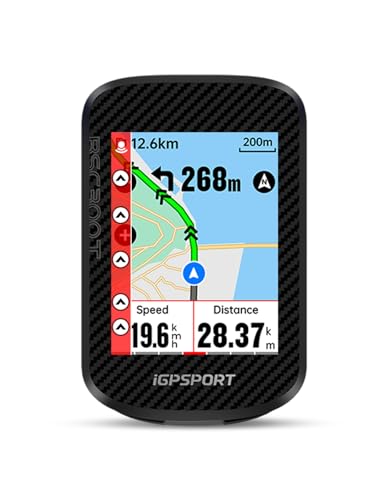
- Worldwide offline maps and turn prompts
- Supports road, MTB, and e-bike modes
- Over 130 metrics with ANT+ and Bluetooth
Best For: Mixed-terrain riders who want offline maps and wide compatibility
Best All-Rounder
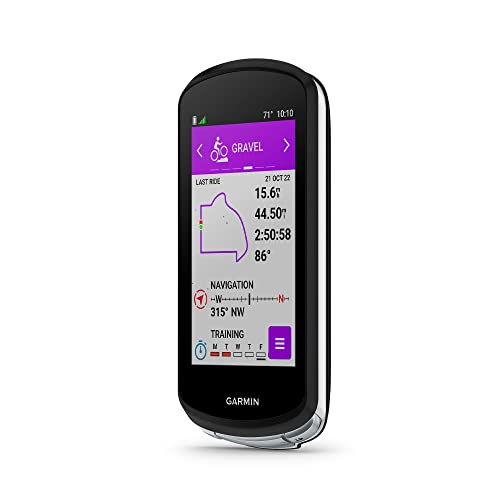
- Solar-assisted battery life for extended rides
- Multi-band GNSS and searchable cycling maps
- Advanced training and sensor-supported insights
Best For: Long-distance riders wanting navigation and training features
Best Long-Range Explorer

- Up to 50 hours of battery life
- Offline maps and rerouting without cell service
- Touchscreen and tactile controls for rough rides
Best For: Remote gravel, bikepacking, and endurance adventures
Best for Mountain Biking

- Trailforks maps with Forksight trail guidance
- 5 Hz GPS and dedicated enduro/downhill profiles
- Rugged seven-button design for trail abuse
Best For: Mountain bikers focused on trail navigation and descent performance
Smart Route Navigator

- 3.5-inch touchscreen with route planning and automatic rerouting
- 35-hour battery with dual-band GPS and five satellite systems
- Adds climb planning, training analysis, and music control
Best For: Long-distance riders seeking feature-rich touchscreen navigation
All-Weather Training Companion
COOSPO CS600 GPS Bike Computer

- IPX7 waterproof design with 36-hour battery life
- Color touchscreen with route and breadcrumb navigation
- Supports ANT+, Bluetooth, radar, e-bikes, and trainers
Best For: Weather-prone riders building a connected training setup
Offline Mapping Pro
GEOID CC700 Pro GPS Bike Computer

- 2.8-inch color screen with offline maps and turn prompts
- Re-route planning, five satellite systems, and fast AGNSS positioning
- Wi-Fi syncing plus indoor smart-trainer support
Best For: Adventure riders prioritizing detailed offline navigation
Premium Navigation – Garmin Edge 1050
The Garmin Edge 1050 is a premium choice among heavy-duty bike navigation computers, combining a vivid 3.5-inch touchscreen with detailed navigation, cycling metrics, and smart ride features. Its built-in speaker, road-hazard alerts, course creation, and long battery-saver runtime make it well suited to demanding training and touring use.
Best For: Riders who want a large touchscreen, advanced training tools, and connected navigation features.
Pros:
- Bright 3.5-inch touchscreen supports on-device course creation and map planning.
- Up to 20 hours of demanding-use battery life or up to 60 hours in battery-saver mode.
- Built-in speaker provides navigation prompts, voice alerts, and a bike bell.
- Offers ClimbPro, power guidance, road-hazard alerts, Garmin Pay, and group-ride features.
Cons:
- Many connected and coaching features require a compatible smartphone or sensors.
- Its premium feature set may be more than casual riders need.
The Edge 1050 stands out when navigation, training feedback, and ride awareness matter equally. Choose it for a feature-rich computer with a particularly useful screen and speaker.
Voice Route Guidance – iGPSPORT BSC500
The iGPSPORT BSC500 is a practical option among heavy-duty bike navigation computers, pairing a 3.3-inch touchscreen with button controls, dual-band positioning, and voice navigation. Its automatic rerouting, speed-based turn warnings, and broad satellite support are useful for riders exploring unfamiliar roads.
Best For: Cyclists who want touchscreen convenience, voice prompts, and automatic off-course rerouting.
Pros:
- 3.3-inch display supports both touch and button operation and shows up to 12 data fields per page.
- Dual-band positioning supports GPS, BeiDou, GLONASS, Galileo, and QZSS.
- Automatically replans a route after going off course and adjusts turn warnings to riding speed.
- Supports route imports from iGPSPORT, Strava, Komoot, and some route files.
Cons:
- Some training, group-ride, and connected features depend on compatible devices or apps.
- At 107 grams, it is heavier than some compact cycling computers.
The BSC500 offers a strong balance of readable navigation and straightforward operation. It is especially appealing if voice guidance and responsive rerouting are higher priorities than an ultra-light design.
Compact Training Navigator – Garmin Edge 540
The Garmin Edge 540 is a compact button-controlled option for riders comparing heavy-duty bike navigation computers. It combines multi-band GNSS, ride-specific maps, ClimbPro, adaptive coaching, and power-based guidance in a small unit with up to 26 hours of demanding-use battery life.
Best For: Training-focused cyclists who prefer physical controls and a compact computer.
Pros:
- Multi-band GNSS helps improve positioning accuracy in challenging environments.
- Up to 26 hours of regular battery life or up to 42 hours in battery-saver mode.
- Button controls are useful when riding with gloves or in wet conditions.
- Includes ClimbPro, suggested workouts, adaptive coaching, stamina insights, and power guidance.
Cons:
- The 2.6-inch display is smaller than the screens on the other listed models.
- It lacks touchscreen input, so route interaction relies on buttons.
- Several advanced training features require compatible power and heart-rate sensors.
The Edge 540 is a focused choice for structured training and reliable navigation without adding touchscreen controls. Its battery life and multi-band positioning make it well suited to long rides and varied environments.
Offline Route Flexibility – iGPSPORT BSC300T
The iGPSPORT BSC300T is a versatile pick among heavy-duty bike navigation computers for road, mountain, and e-bike riding. It combines offline worldwide maps, turn prompts, off-course warnings, real-time tracking, and more than 130 ride metrics in a compact touchscreen-and-button design.
Best For: Riders who need offline maps, broad bike compatibility, and extensive ride data.
Pros:
- Supports worldwide offline map downloads, route previews, and turn prompts.
- Works with road bikes, mountain bikes, and e-bikes, including power-level display.
- Provides off-course warnings, real-time group tracking, and more than 130 data points.
- ANT+ and Bluetooth support connects to sensors, e-bikes, smart trainers, radar, and lights.
Cons:
- Battery life is listed at up to 20 hours, less than some competing options here.
- A USB-C cable is not included.
- The 2.4-inch display is smaller than the BSC500 and Edge 1050 screens.
The BSC300T is a capable all-around computer for riders who value route independence and broad device compatibility. Its offline mapping and e-bike support give it flexibility for mixed-terrain and touring use.
Best All-Rounder – Garmin Edge 1040 Solar
For riders seeking heavy-duty bike navigation computers with long battery life, broad mapping tools, and advanced training features, the Garmin Edge 1040 Solar is a versatile choice. Its solar-charging lens can extend runtime substantially, while multi-band GNSS helps provide accurate positioning in challenging environments.
Best For: Long-distance cyclists who want navigation, performance tracking, and extended battery life in one device.
Pros:
- Solar charging supports up to 100 hours in battery-saver mode or up to 45 hours in demanding use.
- Multi-band GNSS, ride-specific maps, searchable points of interest, and navigation tools support varied routes.
- Power guide, stamina insights, cycling-ability analysis, and sensor compatibility add serious training depth.
- Includes touchscreen and button controls, multiple mounts, a silicone case, and IPX7 water resistance.
Cons:
- Some advanced training features require compatible sensors.
- The most demanding use cases produce less runtime than battery-saver mode.
The Edge 1040 Solar stands out when you need one computer for touring, training, and navigation. It is especially compelling for riders who value long rides and a mature connected ecosystem including Strava, Komoot, and TrainingPeaks.
Best Long-Range Explorer – Bryton Rider S810
The Bryton Rider S810 is built for cyclists who need heavy-duty bike navigation computers for long, remote outings. Its 3.5-inch color touchscreen, tactile buttons, offline maps, and claimed 50-hour battery make it well suited to bikepacking, gravel routes, and areas without cell service.
Best For: Gravel riders, bikepackers, and endurance cyclists navigating remote routes without relying on phone data.
Pros:
- Up to 50 hours of battery life supports century rides and multi-day adventures.
- Preloaded maps and GPS-based turn-by-turn navigation work without cell service or phone data.
- Combines a large color touchscreen with tactile buttons designed for gloves, rain, and rough terrain.
- Supports ANT+ sensors, rear-view radar, smart trainers, Strava Live Segments, and Climb Challenge 2.0.
Cons:
- This listed Rider S810E version is device-only.
- The supplied notes do not specify a detailed IP water-resistance rating.
With its unusually long stated runtime and true offline navigation, the S810 is a practical choice for riders traveling beyond dependable coverage. Its combination of physical controls and touchscreen operation also suits changing weather and rough surfaces.
Best for Mountain Biking – Garmin Edge MTB Bundle
For riders who want heavy-duty bike navigation computers designed specifically for dirt, the Garmin Edge MTB bundle focuses on trail routing and performance feedback. Preloaded Trailforks maps, Forksight mode, 5 Hz GPS recording, and a rugged seven-button design target demanding mountain-bike use.
Best For: Mountain bikers, enduro riders, and downhill cyclists who want trail-specific navigation and descent analysis.
Pros:
- Preloaded full-color Trailforks maps and Forksight mode show upcoming forks, trail names, elevation, and distance.
- Dedicated enduro and downhill profiles automatically record descents and reset laps after shuttles or lifts.
- 5 Hz GPS recording and split-time tracking provide detailed feedback for lines, sections, and race segments.
- Rugged build, scratch-resistant Corning Gorilla Glass, and seven-button operation suit demanding trail conditions.
Cons:
- Up to 14 hours of battery life is shorter than the other listed options.
- Its specialized trail focus may be less useful for riders primarily doing road touring.
- The bundle is listed at 1.3 pounds, so it is substantially heavier than many compact bike computers.
The Edge MTB is the most purpose-built option here for technical trail riding. It trades all-day battery endurance for focused MTB mapping, rugged controls, and performance data that can help riders refine descents and race segments.
Smart Route Navigator – iGPSPORT BiNavi
For riders who want heavy-duty bike navigation computers with long battery life and advanced route guidance, the iGPSPORT BiNavi combines a 3.5-inch touchscreen with dual-band GPS, automatic rerouting, and broad satellite support.
Best For: Long-distance cyclists who want touchscreen navigation, climb planning, and training features in a lightweight unit.
Pros:
- Automatic rerouting helps when you leave the planned course.
- Supports routes from the iGPSPORT app, Strava, Komoot, and select route files.
- 35-hour battery life, dual-band GPS, and five satellite systems support extended rides.
- Includes music control, climb planning, and training analysis features.
Cons:
- Some features require a paired smartphone or app connection.
- The supplied details do not specify a software-update date.
Its combination of navigation flexibility, a large color touchscreen, and 35-hour endurance makes the BiNavi a strong option for riders who prioritize route exploration and ride continuity.
All-Weather Training Companion – COOSPO CS600 GPS Bike Computer
The COOSPO CS600 is one of the heavy-duty bike navigation computers built for riders who need weather protection, wireless connectivity, and extended battery life. Its color touchscreen, breadcrumb navigation, and IPX7 rating support everyday training and touring.
Best For: Cyclists who want a waterproof navigation computer with customizable data screens and broad accessory compatibility.
Pros:
- IPX7 protection is designed for heavy rain and storms.
- 36-hour battery life supports long rides and multi-day adventures.
- Built-in route navigation includes uploaded routes and breadcrumb trails.
- Connects with ANT+ and Bluetooth accessories, radar lights, e-bikes, and trainers.
Cons:
- Cadence, heart-rate, and power sensors are sold separately.
- The 2.4-inch display is smaller than some competing navigation computers.
With strong water resistance, a 36-hour battery, and a customizable dashboard, the CS600 is a practical choice for riders who want navigation and detailed ride tracking without bundled sensors.
Offline Mapping Pro – GEOID CC700 Pro GPS Bike Computer
The GEOID CC700 Pro brings detailed offline mapping and automatic rerouting to the heavy-duty bike navigation computers category. Its 2.8-inch color touchscreen, four gigabytes of route storage, Wi-Fi syncing, and IPX7 waterproofing make it suited to navigation-focused rides.
Best For: Adventure and training riders who want offline maps, fast positioning, route rerouting, and indoor smart-trainer support.
Pros:
- Offline maps include turn prompts, street names, zoom, and dual-perspective views.
- Recalculates routes after going off course when connected to the designated app.
- Wi-Fi supports faster syncing, AGNSS updates, firmware updates, and ride-record transfers.
- Supports ANT+, Bluetooth, indoor training, and auto-sync with Strava and TrainingPeaks.
Cons:
- Automatic rerouting requires connection to the designated app.
- DJI camera controls work only with DJI Action 4 and Action 5 Pro.
- The supplied details do not list battery life.
The CC700 Pro stands out for riders who value map detail and offline route access, while its Wi-Fi workflow and indoor-training features extend its usefulness beyond outdoor navigation.
How We Picked These Heavy-Duty Bike Navigation Computers
We focused on the features that matter when a bike computer must perform beyond short recreational rides: navigation accuracy, map availability, route guidance, screen usability, battery endurance, water resistance, connectivity, and compatibility with cycling sensors. We also considered the different demands of road riding, gravel, mountain biking, e-bike use, training, and touring.
A premium price does not automatically make a computer the best choice. The right model should match your route length, navigation needs, riding environment, and preferred controls. Touchscreens can make map interaction easier, while physical buttons may be more dependable in rain, mud, or winter gloves.
Quick Comparison
| Best For | Look For |
|---|---|
| Advanced training and navigation | Detailed maps, structured workouts, sensors, and performance metrics |
| Long-distance touring | Extended battery life, offline maps, rerouting, and reliable route storage |
| Mountain biking | Rugged construction, trail maps, climb data, and glove-friendly controls |
| Budget-conscious riders | Core GPS navigation, color mapping, wireless connectivity, and clear alerts |
| E-bike and connected riding | ANT+ or Bluetooth support, accessory compatibility, and broad route guidance |
Key Buying Factors for Heavy-Duty Bike Navigation Computers
Navigation and Mapping
Check whether maps work offline, provide turn-by-turn directions, support rerouting, and cover the regions where you ride. A large color display is helpful for route decisions, but map clarity and responsive zooming matter just as much as screen size.
Battery Life and Charging
Shorter battery estimates may be sufficient for daily training, while touring and endurance riders should prioritize extended runtimes. Solar charging can help on long exposed rides, but actual performance depends on sunlight, display brightness, navigation use, and connected sensors.
Durability and Weather Resistance
Look for a water-resistant design, a secure mount, and a screen that remains readable in changing light. Riders on rough terrain should favor computers or bundles designed for MTB use, especially when impact resistance and trail-specific features are important.
Connectivity and Sensors
ANT+ and Bluetooth support allow compatibility with heart-rate monitors, cadence sensors, power meters, radar, e-bike systems, and smartphones. Wi-Fi or automatic syncing can simplify route uploads and ride-data transfers.
Who Should Buy Which Heavy-Duty Bike Navigation Computers?
Choose a premium Garmin model if you want a mature navigation platform, extensive training tools, and broad accessory support. Long-distance riders should consider the highest battery-capacity options, including models with solar assistance or extended runtime claims. Mountain bikers will benefit from a rugged MTB-focused computer with trail navigation and durable mounting.
If you want a large touchscreen and practical mapping without stepping into premium pricing, iGPSPORT, Bryton, COOSPO, and GEOID options can offer a strong feature-to-cost balance. Prioritize offline maps and rerouting if you regularly ride beyond familiar roads. For mainly local training, a compact GPS computer with dependable ride recording may be all you need.
