
Winter e-bike rides call for more than a warm hat under a helmet. Cold wind, early darkness, and bulky layers can change how well a helmet fits and how visible you are to drivers.
These 10 options span commuter, mountain bike, and winter-sports-style designs. The right choice depends on your riding speed, weather, and whether you need built-in lights, face coverage, or room for a thin liner.
Best 10 Electric Bike Helmet for Winter Picks for 2026
Best for Dark Commutes
Commute Smart C720 E-Bike Helmet

- NTA 8776 certified for e-bikes
- 54 LEDs and remote-controlled turn signals
- IPX5 rated; check 59–63 cm fit
Best For: Low-light e-bike commuters who want built-in signaling
Best Retro Style
Adjustable E-Bike Commuter Helmet

- Retro profile with low-profile visor
- Dial fit and washable liner
- No NTA 8776 certification listed
Best For: Style-conscious city riders on bikes and scooters
Best Tech Features
Lumos Ultra E-Bike MIPS Helmet

- Front and rear LEDs with turn signals
- MIPS and retractable face shield
- App controls; 54–61 cm fit
Best For: Riders seeking connected lighting and signaling
Best Lightweight Pick

- Meets CPSC and NTA 8776 standards
- Listed weight of 10.56 ounces
- Dial fit for 58–61 cm heads
Best For: E-bike riders wanting a simple, lightweight helmet
Goggle-Friendly Pick

- Goggle-strap fixing bracket
- Adjustable head-circumference dial
- Certification not specified
Best For: Cold-weather riders who use ski goggles
Trail-Ready E-Bike Pick

- Stated NTA-8776 certification
- Three-position adjustable visor
- 17 vents; no insulation specified
Best For: E-bike trail riding with certification a priority
Low-Light Commuter Pick
Favoto E-Bike Helmet with Signals

- Remote-operated turn signals
- Rechargeable rear light
- Glove-friendly magnetic buckle
Best For: Low-light winter e-bike commuting
E-Bike Safety Pick
MET Terrae MIPS Mountain Bike Helmet

- NTA 8776 e-bike certified
- MIPS-C2 and extended coverage
- 19 vents; no listed ear protection
Best For: Protection-focused e-bike riders who can add their own winter layers
Cold-Weather Coverage Pick
Winter Helmet with Dark Visor and Ear Protectors

- Removable ear protectors
- Dark visor and eight directional vents
- No bike certification specified in notes
Best For: Cold, bright rides where built-in ear coverage is a priority
Visibility Pick
ILM E3-10L Bike Helmet with Front and Rear Lights
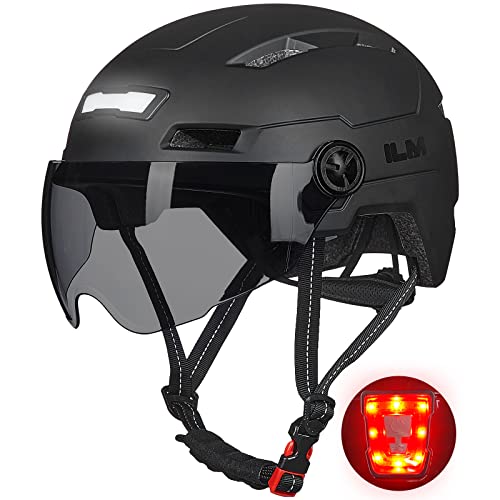
- USB-rechargeable front and rear lights
- Listed ASTM, CPSC, CE and EN1078 certifications
- No listed ear coverage or insulation
Best For: Urban riders commuting in low light
Best for Dark Commutes – Commute Smart C720 E-Bike Helmet
If you need an electric bike helmet for winter commutes that start or end in the dark, the Commute Smart C720 stands out for its built-in front and rear lighting. Its NTA 8776 certification is also relevant to riders using faster e-bikes.
Best For: E-bike commuters who want integrated lights and handlebar-controlled turn signals.
Pros:
- NTA 8776 certified for e-bike use up to 28 mph, with CPSC, ASTM, and CE certifications also listed.
- 54 built-in LEDs provide front and rear lighting; a wireless handlebar remote controls the turn signals.
- IPX5 water resistance, a magnetic Fidlock buckle, and an adjustable fit add commuting convenience.
Cons:
- The listed large size fits 59–63 cm heads, so check your measurement before ordering.
- Runtime varies by lighting setting: up to 40 hours in pulse mode, but 4 hours in fog mode.
The lighting and turn signals make this a practical choice for low-light riding, but they do not replace checking your route, visibility, and battery level before a winter trip.
Best Retro Style – Adjustable E-Bike Commuter Helmet
For riders shopping for an electric bike helmet for winter who prefer a casual city look, this commuter model pairs a retro profile with a low-profile visor. Its adjustable dial and removable liner are useful everyday features, though the notes do not list winter-specific insulation.
Best For: City riders who prioritize a classic look and an adjustable fit across bike and scooter trips.
Pros:
- ABS shell and EPS core; the supplied notes list CPSC, ASTM, and CE standards.
- A 360-degree adjustment dial and flexible straps help fine-tune fit.
- Removable moisture-wicking liner simplifies cleaning, while the visor provides daytime shade.
Cons:
- Twelve vents and five cooling channels may call for separate cold-weather headwear.
- No integrated lights or e-bike-specific NTA 8776 certification is listed in the supplied notes.
This is the style-focused option for everyday mobility rather than a helmet with built-in visibility features. Check the selected size carefully; the listed large option fits 57–61 cm.
Best Tech Features – Lumos Ultra E-Bike MIPS Helmet
The Lumos Ultra is an electric bike helmet for winter riders who want built-in visibility features for shorter daylight hours. It combines front and rear LEDs, remote-controlled turn signals, and a retractable face shield with MIPS impact-protection technology.
Best For: Riders who want lighting, signaling, and app-based customization in one helmet.
Pros:
- NTA 8776 certification is stated in the product title; the notes also state compliance with the U.S. CPSC bicycle helmet standard.
- Front and rear LEDs and a wireless handlebar remote provide lighting and turn-signal controls.
- MIPS is included, and the Lumos app can customize LED patterns and brightness.
Cons:
- App customization and rechargeable electronics add steps compared with a basic helmet.
- The notes do not specify insulation, weather resistance, or a lighting runtime.
Choose this model for its connected safety features, not as a substitute for cold-weather gear. Its stated fit range is 54–61 cm, so measure before buying.
Best Lightweight Pick – Schwinn Avion E-Bike Helmet
If you want an electric bike helmet for winter without charging another device, the Schwinn Avion offers a straightforward setup. It meets CPSC and NTA 8776 standards, with extended head coverage and a dial-adjustable fit.
Best For: E-bike riders who prefer certified protection and simple, non-electronic features.
Pros:
- Meets CPSC and NTA 8776 standards and is designed for speeds up to 28 mph.
- In-mold construction weighs a listed 10.56 ounces.
- Dial fit, adjustable straps, and removable interior padding support fit and cleaning.
Cons:
- No built-in lights or turn signals are listed for dark commutes.
- The specified fit range is 58–61 cm, despite its one-size listing.
The Avion is a sensible choice if you value low weight and an uncomplicated helmet. For winter riding, plan separate lighting and cold-weather accessories as needed.
Goggle-Friendly Pick – Winter Warm Cycle Helmet
If your search for an electric bike helmet for winter includes riding with ski goggles, this adjustable helmet is worth a look. It has a bracket to hold goggle straps, an ABS shell, EPS foam, and 11 ventilation holes. The listing does not specify a bike or e-bike safety certification, so check its suitability before using it for electric-bike riding.
Best For: Riders who want a goggle-strap holder and adjustable fit for cold-weather outings.
Pros:
- Bracket holds ski-goggle straps of different widths.
- Rotating head-circumference adjuster helps fine-tune the fit.
- ABS shell and EPS foam provide impact-cushioning construction.
Cons:
- No bike or e-bike safety certification is stated in the supplied details.
- No specific insulation or ear coverage is described.
The goggle bracket is its clearest winter-oriented feature; confirm both fit and the safety standard you need before buying it for an e-bike.
Trail-Ready E-Bike Pick – KINGBIKE NTA-8776 MTB Helmet
For riders comparing an electric bike helmet for winter trail use, the KINGBIKE offers an e-bike-specific NTA-8776 certification alongside stated US and EU standards. Its adjustable visor, rear fit dial, and removable, washable padding are practical features, though its 17 large vents are designed to move plenty of air.
Best For: E-bike trail riders who prioritize stated safety certifications and an adjustable visor over built-in warmth.
Pros:
- States NTA-8776 certification plus US and EU safety-standard compliance.
- Three-position visor adapts to changing conditions.
- Rear dial adjusts fit; inner padding is removable and washable.
- Includes an action-camera-compatible mount under the visor.
Cons:
- Seventeen large vents may admit a lot of cold air on winter rides.
- No insulated liner or ear coverage is described.
This is a stronger match for riders who want a stated e-bike standard than for those seeking a helmet that supplies its own winter insulation. Check the listed medium and large circumference ranges before choosing a size.
Low-Light Commuter Pick – Favoto E-Bike Helmet with Signals
If an electric bike helmet for winter needs to work on dim commutes, the Favoto pairs a rechargeable LED rear light with handlebar-remote turn signals. Its magnetic buckle is described as easy to fasten while wearing winter cycling gloves, and the listing states compliance with CPSC, CE, and NTA-8776 standards.
Best For: E-bike commuters who want rear lighting and turn signals for low-light rides.
Pros:
- Remote-operated turn signals let you signal without taking a hand off the bars.
- USB-rechargeable rear light offers five modes and up to five hours of stated runtime.
- Magnetic buckle is designed for fastening with winter gloves.
- States CPSC, CE, and NTA-8776 compliance.
Cons:
- Lighting requires charging and has a stated runtime of up to five hours.
- No insulation or ear coverage is specified.
- The listed large-size fit range is 57–61 cm; check sizing carefully.
The lights and glove-friendly closure address common winter-commute hassles, but this is not described as an insulated helmet. Confirm the fit range before ordering.
E-Bike Safety Pick – MET Terrae MIPS Mountain Bike Helmet
If you’re shopping for an electric bike helmet for winter but still ride trails or commute in milder weather, the MET Terrae MIPS offers e-bike-specific protection. It is NTA 8776 certified and combines extended rear and temple coverage with a MIPS-C2 system.
Best For: E-bike riders who prioritize certified protection and an adjustable fit over built-in cold-weather coverage.
Pros:
- NTA 8776 certified for e-bikes and meets the U.S. CPSC bicycle helmet standard.
- Rear dial fit system provides 360-degree adjustment and three vertical settings.
- Adjustable, safety-release visor and sunglasses port add trail-ready convenience.
Cons:
- Its 19 vents and lack of supplied ear coverage may make it chilly on winter rides.
- No integrated lights or weather shield are listed.
Choose this for its documented e-bike rating and coverage, then plan your winter layering around its highly ventilated design.
Cold-Weather Coverage Pick – Winter Helmet with Dark Visor and Ear Protectors
For shoppers seeking an electric bike helmet for winter, this model focuses on features for cold rides: removable ear protectors, a dark tinted visor and a padded chin strap. Eight directional vents aim to balance airflow with wind exposure.
Best For: Riders who want integrated ear coverage and a visor for cold, bright conditions.
Pros:
- Removable ear protectors offer flexible coverage as temperatures change.
- Dark tinted visor helps with bright winter sunlight and snow glare.
- Rear adjustment dial helps stabilize the fit; stated weight is about 460 g.
Cons:
- The supplied notes do not identify a bicycle or e-bike safety certification.
- The dark visor may be less useful in low light.
Its winter-oriented accessories stand out, but check the helmet’s applicable safety certification before choosing it for e-bike riding.
Visibility Pick – ILM E3-10L Bike Helmet with Front and Rear Lights
ILM Adult Bike Helmet with LED Front Back Light Bicycle Helmets E3-10L(Matte Black, Large/X-Large)
Check Price On AmazonIf your search for an electric bike helmet for winter is driven by darker commutes, the ILM E3-10L offers USB-rechargeable front and rear lights with three modes. Its detachable tinted lens and adjustable fit add flexibility for everyday city riding.
Best For: Urban riders who want helmet-mounted lighting for low-light commutes.
Pros:
- Front and rear lights offer steady, flashing and blinking modes.
- Listed certifications include ASTM, CPSC, CE and EN1078.
- Detachable tinted lens accommodates eyeglasses; lining is removable and washable.
Cons:
- No ear coverage or cold-weather insulation is listed.
- Its 10 vents may admit cold air, and the manufacturer notes the electronic lights are not guaranteed to work 100% of the time.
This is a practical visibility-focused option, not a dedicated insulated winter helmet. Check and charge its lights before relying on them for a ride.
How We Picked the Best Electric Bike Helmet for Winter
We selected 10 helmets that address different winter e-bike needs: commuter visibility, adjustable fit, trail coverage, and protection from wind and cold. We considered the safety certifications stated in product listings, along with advertised features such as lights, visors, face shields, and ear coverage. A listing alone cannot verify a certification or real-world performance, so check the label on the helmet and the manufacturer’s current specifications before buying.
Quick Comparison
For dark commutes, start with helmets offering built-in front and rear lights, such as the Lumos Ultra, Commute Smart, Favoto, and ILM models. If your priority is a stated e-bike-specific rating, compare the NTA 8776-labeled Lumos Ultra, Commute Smart, KINGBIKE, and MET Terrae MIPS. The MET is a trail-oriented option; the Schwinn Avion and retro-visor model offer simpler commuter styling. The two winter-sports-style helmets emphasize cold-weather coverage, but confirm their cycling suitability and applicable certifications before using either on an e-bike.
Key Buying Factors for an Electric Bike Helmet for Winter
Certification and Coverage
Look for a bicycle helmet certification applicable where you ride, then verify any additional NTA 8776 claim if you want a helmet designed for higher-speed e-bike use. A ski or motorcycle-style appearance does not establish that a helmet meets bicycle standards. Check the actual label rather than relying on the product name.
Fit with Winter Layers
Measure your head and follow the brand’s size chart. Try the helmet with the thin cap or liner you will actually wear: it should sit level, remain stable when you move your head, and fasten without pressure points. Avoid thick hats that prevent the helmet from sitting correctly. Adjustable dials help fine-tune fit, but they cannot fix a shell that is the wrong size.
Wind, Moisture, and Visibility
Ear coverage and a face shield may make cold rides more comfortable, but enclosed designs can trap heat or fog eyewear. Consider whether vents can be managed for your conditions. Built-in LEDs add visibility, yet they do not replace required bike lights or reflective clothing. Check light placement, charging access, and whether a visor or shield works with your glasses. Replace a helmet after a significant impact, even if damage is not obvious.
Who Should Buy Which Electric Bike Helmet for Winter?
Choose a light-equipped commuter helmet if you regularly ride before sunrise or after dark. Consider an NTA 8776-labeled model if you want an additional e-bike-specific rating; verify its label before purchase. Trail riders may prefer the MET’s mountain-bike-focused design, while riders seeking uncomplicated everyday fit can compare the Schwinn and other dial-adjustable commuter options. If wind and cold are your main concerns, look at face shields, compatible thin liners, and ear coverage—but put verified cycling protection and a secure fit ahead of warmth.
