
Compact cycling radar systems give riders an extra layer of awareness by detecting approaching vehicles from behind and pairing alerts with bright rear lighting. The right model can make busy roads, commuting routes, and long training rides feel more manageable without adding much bulk.
This roundup compares ten radar-equipped cycling and motorcycle options, including camera models, standalone radar units, and budget-friendly radar tail lights. Focus on compatibility, detection range, battery life, visibility, and the type of riding you do most.
Best 10 Compact Cycling Radar Systems Picks for 2026
Best Overall

- Detects vehicles up to 153 yards away
- Integrated tail light with day-flash runtime up to 16 hours
- Works with compatible Garmin devices and smartphones
Best For: Road cyclists wanting a mature radar-and-light setup
Motorcycle Radar Detector

- Detects listed police radar and laser bands
- Offers 360-degree protection
- Waterproof with adjustable LED alert
Best For: Motorcyclists needing police radar and laser detection
Longest Battery Life
COOSPO TR70 Bike Radar Tail Light

- Up to 40 hours of continuous use
- Radar, brake detection, and tail light in one unit
- IPX7 waterproof with quick-release mount
Best For: Cyclists wanting long runtime and an all-in-one light
Best for Motorcycles

- Rearview and blind-spot motorcycle radar
- External indicator lights improve visibility
- Works with compatible zūmo navigators or smartphones
Best For: Motorcyclists wanting discreet radar and blind-spot alerts
Integrated Radar Lighting

- Radar detects vehicles up to 150 meters away
- Adaptive light includes brake-light functionality
- ANT+ and Wahoo app connectivity
Best For: Riders wanting a connected radar and tail light combination
Radar-Only Awareness
Garmin Varia RVR315 Rearview Radar

- Detects vehicles up to 140 meters away
- Supports smartphone, Edge, and wearable alerts
- Up to 8 hours of battery life
Best For: Cyclists seeking a dedicated radar for an existing connected setup
App-Free Radar Light
ACRUNU Smart Bike Radar Tail Light

- Detects vehicles up to 70 meters away
- Adds brake sensing and close-range alerts
- USB-C rechargeable with dual mounting options
Best For: Commuters wanting a self-contained radar tail light
Camera-Equipped Choice
Garmin Varia RCT715 Radar Camera
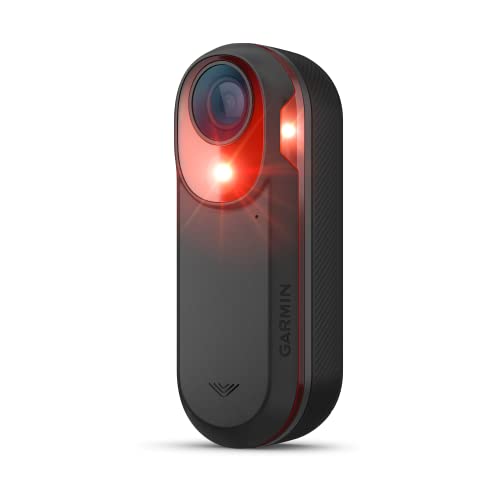
- 140-meter rear vehicle detection
- 1080p camera with incident capture
- Garmin and Varia app integration
Best For: Riders wanting radar alerts plus recorded ride footage
Alert-Focused Value
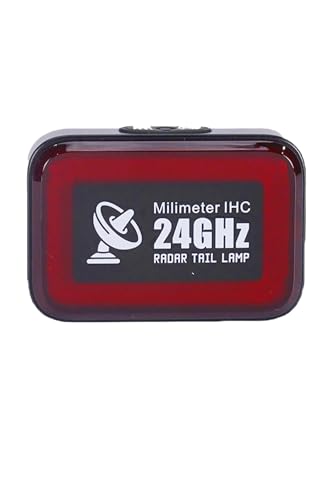
- 60-meter radar sensing with audio alerts
- Brake sensing and five light modes
- Seatpost and saddle-rail mounting
Best For: Commuters wanting self-contained radar and light alerts
Long-Range Endurance Pick
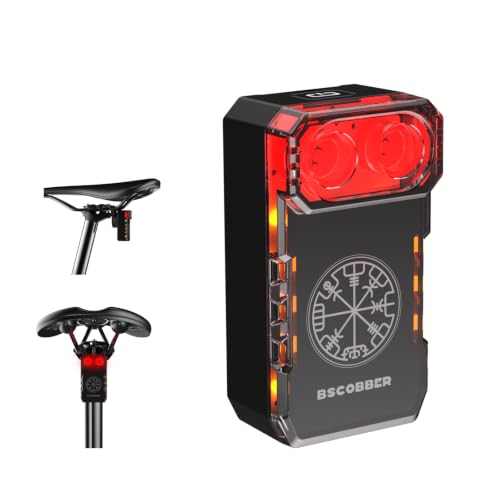
- 140-meter radar with Garmin and Wahoo alerts
- Up to 25 hours of USB-C runtime
- 120-lumen smart brake light with 220° visibility
Best For: Long rides, commuting, and connected group riding
Best Overall – Garmin Varia RTL515
The Garmin Varia RTL515 is a strong choice for riders seeking compact cycling radar systems with an integrated rear light. It detects vehicles approaching from up to 153 yards and can send visual, audible, tone, and vibration alerts through compatible Garmin devices or smartphones.
Best For: Road cyclists who want proven Garmin compatibility, long day-flash battery life, and an integrated visibility light.
Pros:
- Radar detects approaching vehicles up to 153 yards away.
- Pairs with compatible Edge computers, wearables, smartphones, and third-party apps.
- Daylight visibility reaches up to 1 mile.
- Offers up to 16 hours in day-flash mode.
Cons:
- Full functionality depends on compatible devices or the Varia app.
- Solid-mode battery life is listed at up to 6 hours.
Its compact vertical design, Peloton mode, and broad Garmin compatibility make the RTL515 a well-rounded option for riders who want radar awareness without adding a separate rear light.
Motorcycle Radar Detector – TPX A-01-01 Version 2.0
TPX A-01-01 Motorcycle Radar and Laser Detection System Version 2.0,1 Pack , Black
Check Price On AmazonThe TPX A-01-01 is a motorcycle-focused detection system rather than a bicycle tail light. Among compact cycling radar systems, it is relevant mainly for riders who also need 360-degree police radar and laser detection, with waterproof construction and a plug-and-play installation.
Best For: Motorcyclists seeking broad radar and laser band detection with an adjustable visual alert.
Pros:
- Detects all listed police radar and laser bands.
- Provides 360-degree radar and laser protection.
- Waterproof design supports use in wet conditions.
- Includes an ultra-bright, adjustable LED alert.
Cons:
- Designed for motorcycles, not a bicycle rearview vehicle-warning system.
- Its 1.3-pound weight is substantial for a compact cycling setup.
- Does not list a tail light or bicycle-specific radar display.
This product fits a different use case from bicycle rear-approach radar: it focuses on police radar and laser detection. Consider it only if that motorcycle-oriented function matches your riding needs.
Longest Battery Life – COOSPO TR70 Bike Radar Tail Light
The COOSPO TR70 combines a bike radar with a bright tail light, making it a practical pick among compact cycling radar systems for riders who want fewer handlebar or seatpost devices. It reports approaching-vehicle data through compatible Garmin computers, COOSPO devices, or the COOSPORIDE app.
Best For: Road, mountain, and commuter cyclists prioritizing long battery life, flexible mounting, and integrated lighting.
Pros:
- Offers up to 40 hours of continuous use on one charge.
- Provides radar data including approaching-vehicle distance and speed on compatible displays.
- Includes multiple lighting modes, brake detection, and 220-degree visibility.
- IPX7 waterproof rating and quick-release mounting support varied riding conditions.
Cons:
- Requires charging for activation before first use.
- Instructions advise avoiding fast charging.
- Compatibility is centered on listed Garmin and COOSPO devices or the app.
The TR70 stands out for its stated 40-hour runtime and adaptable seatpost mount. It is especially appealing when integrated lighting, weather resistance, and reduced charging frequency matter more than an established brand ecosystem.
Best for Motorcycles – Garmin zūmo R1 Radar
The Garmin zūmo R1 is a motorcycle rearview and blind-spot radar, so it is not a conventional bicycle product. For riders comparing compact cycling radar systems across two-wheeled vehicles, its discreet license-plate mounting, indicator lights, and smartphone or zūmo display support make its motorcycle specialization clear.
Best For: Motorcyclists seeking rearview and blind-spot awareness with external visibility lights and optional audio alerts.
Pros:
- Provides rearview and blind-spot radar coverage for motorcycles.
- Side-facing amber lights and an optional rear-facing red light improve visibility.
- Displays radar information on compatible zūmo navigation devices or smartphones.
- Discreet license-plate mounting has a rugged, weather-ready design.
Cons:
- Requires corded electrical power rather than an included rechargeable battery.
- Designed for motorcycles, not standard bicycles.
- Wet roads and adverse weather may interfere with operation.
The zūmo R1 is a specialized choice for motorcycle safety awareness. Its integrated indicators and optional headset audio are useful for riders who want alerts without constantly looking away from the road.
Integrated Radar Lighting – Wahoo TRACKR Radar Tail Light
For riders seeking compact cycling radar systems with an integrated light, the Wahoo TRACKR combines vehicle detection, adaptive lighting, and bike-computer connectivity in one road-ready unit. It detects approaching vehicles up to 150 meters away and supports hands-free control through compatible ELEMNT computers.
Best For: Cyclists who want radar alerts and a smart tail light in a single Wahoo-connected device.
Pros:
- Detects approaching vehicles up to 150 meters behind.
- Combines radar, adaptive lighting, and brake-light functionality.
- Offers mode memory, battery extender mode, and ANT+ Smart Light Control.
- Settings can be customized through the Wahoo App.
Cons:
- Its full feature set is most useful with compatible Wahoo or other connected devices.
- At 99 grams, it may be heavier than a radar-only unit.
The TRACKR is a strong all-in-one option for riders who prefer fewer accessories on the bike. Its long detection range and adaptive light features add useful traffic awareness without requiring a separate radar and tail light.
Radar-Only Awareness – Garmin Varia RVR315 Rearview Radar
The Garmin Varia RVR315 is a compact cycling radar system focused on rear-approach awareness rather than lighting. It detects vehicles up to 140 meters away and can send visual, audible, and vibration alerts through compatible smartphones, Edge computers, Garmin wearables, or supported third-party apps.
Best For: Road cyclists who already use a compatible Garmin device or smartphone and want a dedicated rearview radar.
Pros:
- Provides vehicle detection up to 140 meters away.
- Works with compatible Edge computers, smartphones, wearables, and radar displays.
- Varia app supports graphics, tones, and vibration alerts.
- Compact vertical design mounts to most road-use bicycles.
Cons:
- It is a radar unit rather than a radar tail light.
- Battery life is rated at up to 8 hours.
The RVR315 is a straightforward choice for riders who already have a compatible display or phone and do not need an integrated rear light. Its app and third-party compatibility make it flexible for established cycling setups.
App-Free Radar Light – ACRUNU Smart Bike Radar Tail Light
The ACRUNU combines compact cycling radar systems functionality with a 70-lumen rear light and does not require an app or smartphone connection. It detects vehicles up to 70 meters away, provides close-range alerts within 10 meters, and adds brake sensing for everyday road, commuter, and e-bike use.
Best For: Commuters and daily riders who want an app-free radar tail light with flexible mounting.
Pros:
- Detects approaching vehicles up to 70 meters with a 54-degree monitoring range.
- Includes active alerts within 10 meters and smart brake sensing.
- Offers USB-C charging, IP64 weather resistance, and up to 7.5 hours of runtime.
- Includes seatpost and saddle-rail mounting options.
Cons:
- Its detection range is shorter than the Wahoo and Garmin options.
- The supplied warranty description is only one month.
- Product notes list both 70 lumens and a 50-lumen maximum output.
The ACRUNU is appealing when simplicity matters: it provides radar and lighting without relying on a phone or cycling computer. Its dual mounting options and USB-C charging also suit varied daily-riding setups.
Camera-Equipped Choice – Garmin Varia RCT715 Radar Camera
For riders seeking compact cycling radar systems with added recording capability, the Garmin Varia RCT715 combines rear-approach detection, a tail light, and a built-in camera. It detects vehicles up to 153 yards away and can record 1080p footage while integrating with compatible Garmin devices, smartphones, and the Varia app.
Best For: Cyclists who want radar alerts, rear visibility, and automatic incident video recording in one device.
Pros:
- Detects approaching vehicles up to 140 meters away.
- Records at 1080p/30 fps and includes automatic incident capture.
- Includes a 16 GB SD card and multiple battery-saving modes.
- Works with select Garmin computers, wearables, and the Varia app.
Cons:
- Camera operation may be restricted by local privacy laws.
- Battery life is limited to approximately 4–6 hours with recording and lighting active.
The RCT715 is the most feature-rich option here, especially for riders who value video evidence. Its camera and Garmin ecosystem integration add functionality, though riders should plan around its shorter recording-focused runtime and check applicable camera regulations.
Alert-Focused Value – 24GHz Radar Brake Tail Light
This compact cycling radar system pairs 24GHz vehicle detection with audible and flashing alerts, brake sensing, and a bright rear light. Its 60-meter sensing range, vibration wake-up, and seatpost or saddle-rail mounting make it suited to everyday road, MTB, and e-bike use.
Best For: Commuters and recreational riders who want built-in radar, brake signaling, and simple mounting without relying on a cycling computer.
Pros:
- Provides dual-tone audio and flashing alerts when vehicles approach.
- Brake sensing activates a brighter red warning light.
- Offers five lighting modes and vibration-based power saving.
- Includes seatpost and saddle-rail mounts in a compact 1.9-ounce design.
Cons:
- Its 60-meter detection range is shorter than the other listed radar options.
- Battery runtime is approximately 3–6 hours.
- Listed warranty coverage is six months.
This model emphasizes immediate, self-contained warnings through sound and light, making it practical for riders who do not use a bike computer. Its shorter range and modest runtime are trade-offs for the compact design and straightforward operation.
Long-Range Endurance Pick – Smart Brake Radar Tail Light
For riders comparing compact cycling radar systems, this smart brake tail light offers up to 140-meter vehicle detection and sends alerts through compatible Garmin or Wahoo computers, its app, or an audible beep. It also adds automatic brake brightness, wide side visibility, USB-C charging, and a long stated runtime.
Best For: Long-distance riders, commuters, and group cyclists who prioritize extended battery life and connected radar alerts.
Pros:
- Detects approaching vehicles up to 140 meters away.
- Supports Garmin, Wahoo, app, and audible alert options.
- Automatically boosts brightness to 120 lumens while braking or descending.
- Offers up to 25 hours of runtime and USB-C charging.
Cons:
- Its 120-lumen maximum is lower than the 300-lumen output listed for one competing light.
- GroupSync and connected alerts depend on the app and compatible devices.
- The supplied specifications list an IPX6 rating rather than a fully dust-rated IP code.
The EYERAD-1 stands out for endurance and long-range alerts, with useful integration for Garmin and Wahoo users. Its automatic brake light and 220-degree visibility broaden its safety features, while the connected functions are most valuable to riders already using compatible equipment.
How We Picked These Compact Cycling Radar Systems
We selected products based on the features that matter most during real-world riding: rear-approach detection, alert clarity, tail-light visibility, battery endurance, device compatibility, mounting practicality, and overall use case. The list includes established Garmin and Wahoo options alongside lower-cost radar tail lights, so shoppers can compare premium integrations with simpler safety-focused designs.
Radar is an awareness aid, not a substitute for looking over your shoulder or following traffic laws. Detection distances and alert behavior can vary with road layout, weather, traffic speed, and device placement.
Quick Comparison
| Best For | Look For | Notable Features |
|---|---|---|
| Connected road cyclists | Phone or bike-computer compatibility | Clear visual and audible alerts |
| Maximum visibility | Radar plus integrated tail light | Multiple flash modes and brake sensing |
| Video-equipped safety | Built-in camera and storage | Ride recording alongside radar alerts |
| Budget-conscious riders | Standalone display or app support | Basic detection and lighting at a lower price |
| Motorcycle riders | Motorcycle-specific mounting and coverage | Rearview or blind-spot awareness |
Key Buying Factors for Compact Cycling Radar Systems
Compatibility and Alerts
Check whether the radar connects to your cycling computer, smartwatch, phone app, or none of the above. Compatible head units usually provide more useful on-screen information, while standalone units may rely on audible, visual, or vibration alerts from the radar itself.
Detection Range and Reliability
Long advertised range can be useful on open roads, but practical performance matters more than the headline number. Look for consistent vehicle tracking, clear approach indicators, and alerts that do not become distracting in dense traffic.
Light Output and Brake Sensing
A bright tail light improves your visibility even when no vehicle is detected. Multiple modes help balance daytime conspicuity with battery life, while brake-sensing functions can add useful context for following traffic.
Battery, Weather Resistance, and Mounting
Choose a battery capacity that suits your typical ride length and confirm charging requirements before buying. Secure, weather-resistant mounting is equally important; a radar that shifts, points incorrectly, or is difficult to remove will be less useful over time.
Camera and Data Features
Camera-equipped systems cost more and require attention to storage, recording controls, and privacy considerations. They are worth considering if incident documentation is as important to you as vehicle alerts.
Who Should Buy Which Compact Cycling Radar Systems?
Choose a Garmin Varia or Wahoo model if you already use a compatible cycling computer and want polished alerts with dependable ecosystem integration. A camera-equipped radar is the better fit for riders who want recorded evidence as well as rear-approach warnings.
Budget radar tail lights make sense for commuters and recreational cyclists who primarily want extra visibility and basic vehicle detection. Prioritize battery life and simple controls if you do not want to manage an app or pair another device.
Motorcycle riders should focus on motorcycle-specific radar systems rather than assuming a bicycle unit will provide the same mounting, coverage, or alert behavior. Whatever you choose, position the device correctly, keep its lens and light clean, and continue using normal visual checks.
