
The best budget portable power stations make it easier to keep phones, lights, laptops, cameras, and other essentials running away from an outlet. The right model depends on whether you prioritize low weight, longer runtime, fast charging, or enough output for larger devices.
We compared 10 affordable options across battery capacity, inverter output, portability, charging features, and emergency-readiness to help you choose with confidence.
Best 10 Budget Portable Power Stations Picks for 2026
Best Lightweight Value
Yewpiny EM300 300W Power Station
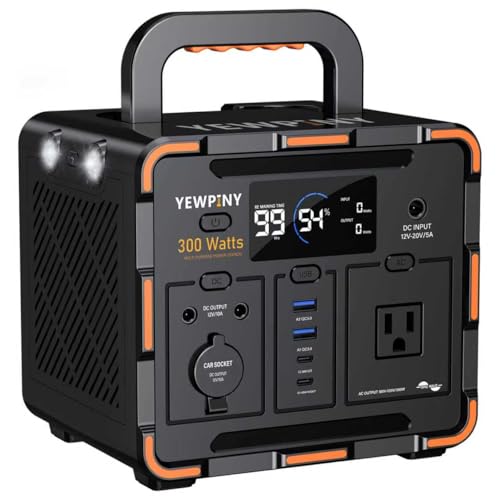
- 259Wh LiFePO4 battery with 300W output
- Seven ports, including 65W USB-C PD
- 7.2 pounds and solar-ready
Best For: Lightweight camping and basic emergency backup
Best Proven Compact Pick

- 292Wh capacity and 300W rated output
- Six-device charging with two AC outlets
- LiFePO4 battery rated for 4,000+ cycles
Best For: Compact camping, travel, and small-device backup
Best Higher-Capacity Upgrade

- 1,070Wh battery with 1,500W output
- 3,000W surge capacity for larger loads
- App-enabled one-hour full charging mode
Best For: Home backup, appliances, and high-demand camping
Best Overall Value

- 288Wh capacity and 600W continuous output
- Fast 45-minute 80% wall charge
- 10ms UPS for essential electronics
Best For: Camping, road trips, and versatile home backup
Best Lightweight Budget Pick
HOWEASY 88Wh Portable Power Station

- weighs only 2.3 pounds
- 120W AC output with eight total ports
- AC, car, and solar recharge options
Best For: Light camping, travel, and small electronics
Best for Travel

- Four-pound, compact travel-friendly design
- 200W AC and 100W USB-C output
- 10ms UPS for laptops and routers
Best For: Travel, remote work, and compact emergency backup
Compact Camping Pick
ZeroKor 300W Portable Power Station

- 280Wh capacity with 300W AC output
- Multiple ports and three charging methods
- About 5 pounds; solar panel sold separately
Best For: Camping, road trips, and light home backup
Warranty-Backed Choice
Westinghouse iGen400s 183Wh Power Station

- 183Wh capacity with 200W running output
- Nine outlets, including multiple USB-C ports
- Two-year limited warranty and lifetime support
Best For: Camping, travel, and small indoor backup loads
Best Lightweight Value – Yewpiny EM300 300W Power Station
For shoppers comparing budget portable power stations, the Yewpiny EM300 offers a practical mix of capacity, portability, and charging flexibility. Its 259Wh LiFePO4 battery, 300W pure sine wave output, and seven-port layout suit camping, road trips, small electronics, and basic emergency backup.
Best For: Campers and emergency-preparedness buyers who want a lightweight, solar-ready unit for laptops, drones, small devices, or CPAP equipment.
Pros:
- Lightweight 7.2-pound design with a built-in carry handle.
- LiFePO4 battery rated for more than 3,000 charge cycles.
- Offers AC, USB-C, USB-A, DC, and car-port outputs, including 65W USB-C PD.
- Supports wall, car, and solar charging, plus pass-through charging.
Cons:
- The 300W output limits it to smaller appliances and electronics.
- The solar panel is sold separately.
- The product notes describe the AC output as corrected sine wave, so buyers should verify compatibility with sensitive equipment.
The EM300 is a well-rounded budget option when low weight and flexible connectivity matter more than running high-wattage appliances. Its LiFePO4 battery and solar-readiness add useful long-term value for occasional backup and outdoor use.
Best Proven Compact Pick – Jackery Explorer 300
The Jackery Explorer 300 is a compact choice among budget portable power stations, pairing a 292Wh battery with 300W output and six-device charging. Its integrated handle, multiple outlet types, and optional solar-panel compatibility make it convenient for camping, travel, and short-term backup needs.
Best For: Campers and travelers who want a familiar, lightweight power station for laptops, cameras, drones, CPAP use, and other small electronics.
Pros:
- Lightweight design at about 7.1 to 7.5 pounds with an integrated handle.
- Includes two AC outlets, USB-C PD, two USB-A ports, and a car port.
- LiFePO4 battery is rated for more than 4,000 cycles before reaching 70% capacity.
- Can reach 80% charge in about 2.8 hours with a compatible 100W Jackery solar panel.
Cons:
- Its 300W rating is intended for smaller devices rather than large appliances.
- Solar panels are optional and not included in the listed package.
- Jackery notes that orders require a physical delivery address rather than only a PO Box.
The Explorer 300 stands out for its balanced capacity, compact form, and broad port selection. It is a sensible pick for buyers who prioritize portability and a longer stated cycle life over higher output or large-appliance support.
Best Simple Emergency Option – DYNESS PPS300 300W
The DYNESS PPS300 keeps the budget portable power stations category straightforward with a 256Wh LiFePO4 battery, 300W continuous output, and six output ports. It is designed for small appliances and electronics during camping trips, outdoor activities, or short power outages.
Best For: Buyers seeking a compact, easy-to-carry backup unit for laptops, routers, cameras, mini fridges, and other modest loads.
Pros:
- LiFePO4 battery technology provides stable storage and long cycle life.
- 300W continuous output with a listed 600W starting-wattage capability.
- Provides AC, USB-C, USB-A, DC, and car-outlet connectivity.
- Supports wall, solar, car, and dual-input charging.
Cons:
- The 256Wh capacity is smaller than some similarly rated alternatives.
- Only one AC outlet is listed.
- The solar panel is optional rather than included.
The PPS300 is a practical fit when you want basic backup functionality without moving to a larger, heavier power station. Its flexible recharge methods and compact dimensions make it particularly useful for simple camping and outage-preparedness tasks.
Best Higher-Capacity Upgrade – Jackery Explorer 1000 v2
For shoppers willing to spend more for substantially greater capacity, the Jackery Explorer 1000 v2 is a powerful step up from entry-level budget portable power stations. It combines a 1,070Wh LiFePO4 battery with 1,500W of AC output, making it suitable for larger appliances, camping equipment, and more demanding emergency loads.
Best For: Campers and homeowners who need to run appliances such as refrigerators, AC units, or electric pots, along with several smaller devices.
Pros:
- 1,500W continuous output and 3,000W surge capacity.
- Large 1,070Wh battery in a relatively compact 23.8-pound design.
- Three AC outlets, two USB-C ports, USB-A, and a car port support multiple devices.
- LiFePO4 battery is rated to retain more than 70% capacity after 4,000 cycles.
Cons:
- At 23.8 pounds, it is considerably heavier than the 300W models in this roundup.
- The one-hour full-charge mode requires activation in the Jackery App; the default charge time is 1.7 hours.
- Solar charging is compatible only with Jackery solar panels.
The Explorer 1000 v2 is the capacity-focused choice here. Its higher output and larger battery make it more versatile for home backup and demanding outdoor use, though its weight, app-dependent emergency charging mode, and brand-specific solar compatibility are worth considering.
Best Overall Value – BLUETTI Elite 30 V2
For shoppers comparing budget portable power stations, the BLUETTI Elite 30 V2 stands out when you need more output and capacity without moving to a much larger unit. Its 288Wh battery, 600W continuous output, and compact 9.5-pound design suit camping, road trips, and basic home backup.
Best For: Campers, road-trippers, and households wanting versatile backup power for small appliances, laptops, CPAP machines, and essential electronics.
Pros:
- 288Wh capacity with 600W continuous and 1,500W lifting output
- Fast wall charging reaches 80% in about 45 minutes
- 10ms UPS support helps protect laptops, routers, and CPAP machines during outages
- Eight charging modes, including AC, solar, and car charging
Cons:
- Heavier and larger than the smaller options in this roundup
- Solar panel is not included
The Elite 30 V2 is a strong all-around pick if your definition of budget power includes useful appliance support, rapid recharging, and emergency-ready UPS functionality. Its higher output makes it more flexible than compact power banks while remaining portable.
Best Lightweight Budget Pick – HOWEASY 88Wh Portable Power Station
The HOWEASY 88Wh is one of the most compact budget portable power stations for basic charging needs. Weighing just 2.3 pounds, it provides a 120W AC output, USB and DC ports, and built-in lighting for camping, short trips, and simple emergency use.
Best For: Campers and travelers who need lightweight power for phones, cameras, lights, mini fans, and other devices drawing under 120W.
Pros:
- Very light 2.3-pound design with a space-saving hidden handle
- Eight output ports support AC, USB, USB-C, and DC devices
- Rechargeable from an AC outlet, car socket, or compatible solar panel
- Built-in steady, flashing, and SOS lighting modes
Cons:
- 88Wh capacity and 120W output limit it to smaller electronics
- Solar panel is not included
- USB-C output is limited to 18W
This HOWEASY model prioritizes portability and low-cost convenience over high output. It is a practical choice for keeping personal electronics and small camping accessories running, but it is not intended for larger appliances or extended backup.
Best for Travel – BLUETTI Elite 10 Mini
The BLUETTI Elite 10 Mini is a compact option for shoppers seeking budget portable power stations that fit easily into a backpack. Its 128Wh capacity, 200W AC output, 100W USB-C charging, and four-pound weight make it useful for travel, camping, and short emergency outages.
Best For: Travelers, remote workers, and campers charging laptops, cameras, drones, phones, routers, and other small devices.
Pros:
- Compact four-pound design that may be airline-friendly with prior approval
- 200W AC outlet plus 100W USB-C fast charging
- 10ms UPS helps keep laptops, routers, and security cameras connected
- Fast AC, solar, and car charging options
Cons:
- 128Wh capacity is better for personal electronics than appliances
- Only one AC outlet is listed
- Airline transport requires checking rules and obtaining prior approval
The Elite 10 Mini bridges the gap between a power bank and a full-size power station. Its small footprint, fast USB-C charging, and UPS feature make it particularly appealing for mobile work and travel, provided you stay within its 200W output limit.
Compact Camping Pick – ZeroKor 300W Portable Power Station
For shoppers comparing budget portable power stations, this ZeroKor model offers a useful middle ground between portability and capacity. Its 280Wh battery, 300W AC output, multiple USB ports, and three charging options make it practical for basic electronics, camping, and short power interruptions.
Best For: Camping, road trips, small electronics, and light home backup.
Pros:
- 280Wh capacity with two 300W maximum AC outlets.
- Includes USB, USB-C-style QC, DC, and car-charging options.
- About 5 pounds with a carry handle and built-in flashlight with SOS mode.
- Supports AC, car, and separately purchased compatible solar-panel charging.
Cons:
- Solar panel is not included.
- Devices drawing more than 300W are not suitable.
- The AC output must be switched on and off manually.
This is a versatile budget option when you need more capacity than a phone-sized power bank but do not need to run high-wattage appliances. Keep its 300W limit and charging-maintenance requirements in mind.
Lightweight Essentials Pick – MARBERO 88Wh Portable Power Station
If your priority is keeping the price and weight down, this MARBERO unit is one of the more compact budget portable power stations to consider. Its 88Wh battery, eight output ports, fast wall charging, and built-in lighting suit small electronics and short-duration roadside or camping needs.
Best For: Phones, tablets, laptops, lighting, road trips, and compact emergency kits.
Pros:
- Compact 6.5-by-4.6-by-3.1-inch design weighing about 3.2 pounds.
- Eight output ports can support several devices simultaneously.
- Charges to 80% in about two hours with the included adapter.
- Three-level LED lighting and SOS mode add emergency usefulness.
Cons:
- Its 88Wh capacity is lower than larger stations in this roundup.
- Solar charging requires a compatible MARBERO panel sold separately.
- Its listed output is intended for smaller electronics rather than high-draw appliances.
The MARBERO is best viewed as a lightweight electronics companion, not a whole-home backup battery. Its small footprint and charging flexibility make it appealing when portability matters more than runtime.
Warranty-Backed Choice – Westinghouse iGen400s 183Wh Power Station
The Westinghouse iGen400s is a strong contender among budget portable power stations for buyers who want a recognizable brand, broad connectivity, and a longer warranty. It provides 183Wh of capacity, 200W running output with a 400W peak, and nine outlets for camping, travel, and small indoor backup tasks.
Best For: Camping, travel, laptops, phones, and quiet indoor emergency power.
Pros:
- Nine outlets include two AC outlets, USB-A, USB-C, and a 12V DC port.
- Charges to 80% in about two hours using a suitable 100W AC power adapter.
- Lightweight 5-pound design with handle, display, and weather-resistant shell.
- Includes a two-year limited warranty and lifetime technical support.
Cons:
- No AC power adapter is included; the included USB-C cable is provided.
- Its 200W running output limits use with high-draw appliances.
- Solar panel is not included.
This model balances useful capacity, modern USB-C connectivity, and brand support. It is a practical choice for electronics and low-power convenience rather than heaters, cooking appliances, or other demanding loads.
How We Picked the Best Budget Portable Power Stations
We focused on practical value rather than maximum specifications alone. Each model was considered for usable battery capacity, continuous and peak AC output, USB and DC connectivity, battery chemistry, recharge options, size, and likely use cases such as camping, travel, remote work, and short power outages.
LiFePO4 batteries generally offer a longer cycle life than conventional lithium-ion batteries, while higher wattage and capacity are useful only if your devices actually require them. We also looked for features that improve everyday convenience, including USB-C Power Delivery, pure sine wave AC output, display readability, solar compatibility, and pass-through or backup-oriented functions where stated by the manufacturer.
Quick Comparison
| Best For | Recommended Capacity | What to Prioritize |
|---|---|---|
| Phones, lights, and small accessories | 80–150Wh | Low weight, USB-C, compact design |
| Camping and weekend trips | 200–350Wh | 300W-class output, solar input, LiFePO4 battery |
| Laptops and camera equipment | 200–500Wh | Pure sine wave AC and USB-C PD |
| Longer outages or RV use | 700Wh or more | Higher capacity, faster charging, stronger inverter |
Key Buying Factors for Budget Portable Power Stations
Capacity and Runtime
Capacity is measured in watt-hours. As a rough estimate, divide the station’s watt-hours by your device’s wattage, then reduce the result to account for inverter and charging losses. A 300Wh model may handle phones, lights, routers, and a laptop well, but it will not run a high-wattage appliance for long.
Output and Device Compatibility
Check continuous wattage before buying. A 300W station is suitable for many electronics, while a 600W or 1,500W inverter provides more flexibility for demanding equipment. Surge ratings help with startup loads, but they do not replace sufficient continuous output. Pure sine wave AC is preferable for sensitive electronics and many motor-driven devices.
Battery Chemistry and Charging
LiFePO4 models are often the better long-term choice because they typically withstand more charge cycles. Compare wall, car, and solar charging options, and check whether a solar panel is included or sold separately. USB-C PD can be especially valuable if you want to charge a laptop without using the AC inverter.
Portability and Safety
Higher capacity usually means more weight. Look for a clear display, sturdy handle, temperature protection, overload protection, and a layout that keeps frequently used ports accessible. For emergency use, consider standby behavior and whether the unit supports the backup features you need.
Who Should Buy Which Budget Portable Power Stations?
Choose a compact 88Wh to 128Wh model for phones, lights, tablets, and lightweight travel. A 175Wh to 300Wh station is the most versatile range for camping, laptops, cameras, and basic home backup. Pick a larger 1,000Wh-class model when you need extended runtime, RV flexibility, or support for more demanding equipment.
For most shoppers, a 300W-class LiFePO4 station with USB-C, pure sine wave AC, and optional solar charging offers the best balance of price, portability, and capability. Before ordering, confirm the exact capacity, outlet rating, recharge time, included accessories, and current manufacturer specifications.
