
A helmet with turn signals can make your intentions easier to spot in traffic, especially when you ride after dark. The best choice still starts with a secure fit and a safety certification appropriate for your ride.
These 10 selected listings span commuter, e-bike, and connected helmets. Here’s what to check before choosing between brighter lights, automatic features, and simpler controls.
Best 10 Bike Helmet with Built in Turn Signals Picks for 2026
Best for Long E-Bike Commutes

- NTA 8776 e-bike certification
- 54 LEDs with remote-controlled signals
- Up to 40 hours in pulse mode
Best For: Adult e-bike commuters prioritizing lighting runtime
Best for Audio and Signaling

- Bluetooth speaker functionality
- Automatic brake light
- 19 vents and remote-controlled signals
Best For: Riders who want audio alongside visible signaling
Best for Connected Lighting

- Included Remote Lite for turn signals
- App-adjustable light modes
- Up to 10 hours of battery life
Best For: Cyclists building a compatible Lumos lighting setup
Best for Visor-Equipped E-Bike Riding

- NTA 8776 e-bike certification
- Visor and washable pads
- Remote signals with sound alert
Best For: E-bike commuters who prefer a built-in visor
Best for Automatic Signaling
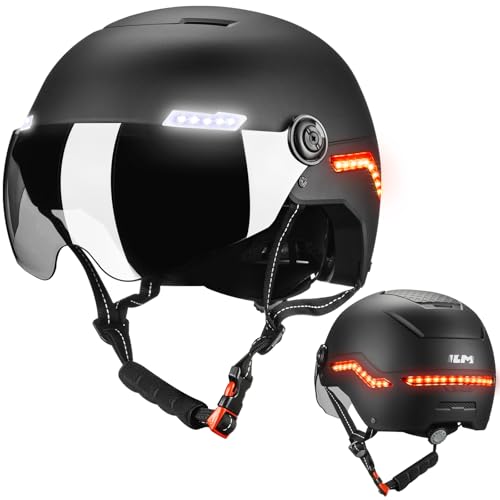
- Head-tilt turn signals
- Front, side, and rear LEDs
- NTA-8776 and CPSC listed
Best For: Hands-off signaling on e-bike commutes
Best for App-Controlled Lighting
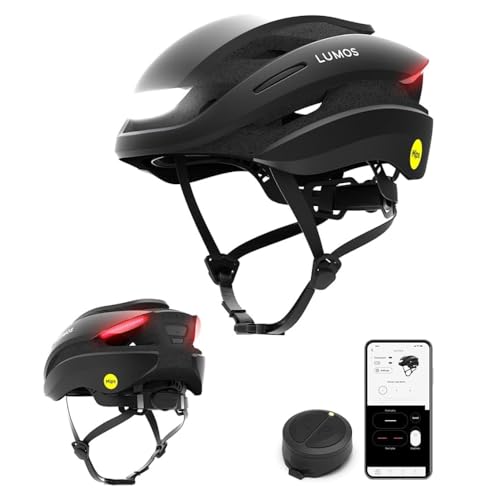
- Included turn-signal remote
- App-adjustable LED lighting
- USB-C charging; up to 10 hours
Best For: Customizable lights and remote-operated signaling
Best E-Bike Commuter Kit

- NTA8776, CPSC1203, and CE EN1078
- Pre-paired signal remote
- Goggles included; up to 5 hours
Best For: E-bike commutes with remote-controlled signals
Best for Customization

- Turn signals and brake-warning display
- 100+ app-selectable LED patterns
- Dial fit for 58–61 cm heads
Best For: Riders who want customizable signaling displays
Best for E-Bike Commuting
Certified Remote-Signal Helmet

- Remote-operated left/right signals
- Listed CPSC, CE, and NTA 8776 certifications
- Front light, rear modes, and sun visor
Best For: E-bike commuters who prefer manual signaling
Best for Hands-Free Signaling

- Head-tilt-activated turn signals
- Front, side, and rear LEDs
- Brake warning and detachable visor
Best For: Riders who want automatic signals without a remote
Best for Long E-Bike Commutes – Commute Smart C720
If you want a bike helmet with built in turn signals for faster e-bike commutes, the Commute Smart C720 pairs NTA 8776 certification with a handlebar-controlled, 54-LED lighting system.
Best For: Adult e-bike riders who want extended lighting runtime and turn signals without an app.
Pros:
- Meets NTA 8776, CPSC, ASTM, and CE helmet standards.
- Wireless remote shows the current light status; helmet and remote charge by USB-C.
- Up to 40 hours in pulse mode, plus adjustable fit, eight vents, and a ponytail opening.
Cons:
- Listed large size fits 59–63 cm heads; check sizing before ordering.
- Runtime drops to about four hours in fog mode.
The long pulse-mode runtime is useful for repeated commutes, but plan charging around the lighting mode you actually use.
Best for Audio and Signaling – LS01 Bluetooth Smart Helmet
The LS01 is a bike helmet with built in turn signals for riders who also want Bluetooth speaker functionality. Its wireless remote controls the rear signals, while an automatic brake light responds to sudden stops or impacts.
Best For: Riders seeking turn signals, integrated audio, and extensive ventilation in one helmet.
Pros:
- Meets the U.S. CPSC bicycle helmet safety standard.
- Includes 80-lumen front and 120-lumen rear lights, with remote-controlled signals.
- Has 19 vents and a listed 365 g lightweight design.
Cons:
- Three-hour steady-light runtime is shorter than its flashing-mode runtimes.
- Speaker use may further reduce battery life; listed S size fits 51–58 cm.
This is the feature-rich pick if audio matters, though steady lighting and speaker use warrant closer attention to charging.
Best for Connected Lighting – Lumos Ultra
The Lumos Ultra is a bike helmet with built in turn signals that suits riders interested in a connected lighting setup. The included Remote Lite operates its rear signals, while the app lets you adjust brightness and light modes.
Best For: Cyclists who want app-adjustable lighting and compatibility with other Lumos lights.
Pros:
- TÜV-certified 360° lighting visibility and CPSC-certified helmet protection.
- Includes front and rear LEDs, a wireless Remote Lite, and USB-C charging.
- Offers up to 10 hours of battery life, depending on lighting settings.
Cons:
- Automatic brake lights require a separate Lumos Remote.
- MIPS is available on select models, not necessarily every Lumos Ultra configuration.
Check the exact configuration if MIPS or automatic braking signals are priorities; neither should be assumed from the Ultra name alone.
Best for Visor-Equipped E-Bike Riding – Shinmax GH-37
For an urban bike helmet with built in turn signals and a visor, the Shinmax GH-37 combines NTA 8776 certification with handlebar-operated signals, rear lighting modes, and an adjustable dial fit.
Best For: Adult e-bike or scooter commuters who want a visor and remote-controlled signaling.
Pros:
- Certified to NTA 8776, CPSC, and CE standards.
- Remote-triggered turn signals include a sound alert; USB-C charging takes about two hours.
- Has a visor, eight vents, and removable, washable pads.
Cons:
- Front safety light is for signaling, not road illumination.
- Listed runtime is up to five hours, so frequent riders may need regular charging.
The visor and e-bike certification make it a practical commuter option, provided you use a separate light when you need to illuminate the road.
Best for Automatic Signaling – ILM MB101L Smart Bike Helmet
If you want a bike helmet with built in turn signals without operating a handlebar remote, the ILM MB101L uses a gentle head tilt to activate its signals. Front, side, and rear LEDs add visibility around the helmet.
Best For: Riders who prefer automatic signaling, especially on e-bikes and faster commutes.
Pros:
- Meets NTA-8776, CPSC, CE, and ASTM standards; rated in the supplied specifications for speeds up to 28 mph.
- Head-tilt turn signals and a brake warning light for sudden stops.
- Ten vents, an adjustable dial, removable liner, and detachable tinted visor.
Cons:
- Head-tilt activation may not suit riders who prefer a button-controlled signal.
- The front, side, and rear lights are visibility aids, not a stated substitute for a road-illuminating headlight.
This is the most hands-off signaling option here. Choose it if the automatic controls and broad lighting coverage matter more to you than manual signal selection.
Best for App-Controlled Lighting – Lumos Ultra Bike Helmet
The Lumos Ultra is a bike helmet with built in turn signals for riders who want to control signaling from an included wireless Remote Lite. Its front and rear LEDs, USB-C charging, and app-adjustable lighting make it a flexible choice for commuting or recreational rides.
Best For: Riders who want rechargeable, customizable helmet lights and handlebar-operated signals.
Pros:
- TÜV-certified 360° visibility with built-in front and rear LEDs.
- Included Remote Lite operates the rear turn signals.
- App-adjustable brightness and modes, with up to 10 hours of battery life depending on use.
- CPSC-certified; the specified charcoal-black model includes MIPS.
Cons:
- Automatic brake lights require a separate Lumos Remote.
- Battery life varies with lighting mode and usage.
The Ultra stands out for lighting customization and its included signal remote. Factor the separately sold remote into your decision if automatic brake lighting is a priority.
Best E-Bike Commuter Kit – KINGLEAD Smart Bike Helmet
For shoppers seeking a bike helmet with built in turn signals and an included handlebar remote, the KINGLEAD bundles the key controls with front and rear LEDs. Its NTA 8776 certification and adjustable fit make it worth considering for everyday e-bike rides.
Best For: E-bike commuters who want a remote-controlled signaling kit with removable goggles.
Pros:
- Certified to CE EN1078, CPSC1203, and NTA8776 standards.
- Pre-paired remote operates left and right signals without removing a hand from the bar.
- Twelve vents, removable padding, and a 360° fit dial.
- Includes removable goggles; lights recharge in about two hours.
Cons:
- Up to five hours of light operation may call for frequent charging.
- The front safety light indicates direction; it is not designed to illuminate the road.
Pick this model if an included remote, e-bike certification, and goggles are useful to you. For longer outings, plan around the stated five-hour maximum lighting runtime.
Best for Customization – Smart LED Display Helmet
If you want a bike helmet with built in turn signals that can also show custom messages, this model pairs left/right indicators and a brake-light display with more than 100 app-selectable LED patterns. A wireless remote lets you change modes while riding.
Best For: Riders who want visible signaling and customizable displays for commutes or group rides.
Pros:
- Displays turn signals, a “STOP” brake warning, and speed indicators.
- App supports custom text, emojis, animations, and other patterns.
- Ambient light sensor adjusts display brightness; dial fit accommodates 58–61 cm heads.
Cons:
- Listed fit range excludes riders outside 58–61 cm.
- Customizing patterns requires using the app.
Choose this one for its flexible display rather than a simple indicator-only setup. Its eight vents, removable padding, and included remote round out the package.
Best for E-Bike Commuting – Certified Remote-Signal Helmet
For commuters comparing a bike helmet with built in turn signals, this model offers handlebar-remote-controlled left and right indicators, plus front and rear lighting. Its listed CPSC, CE, and NTA 8776 certifications make it particularly relevant to e-bike riders.
Best For: Urban and e-bike riders who prefer button-operated signals and want the listed certifications.
Pros:
- Wireless handlebar remote controls left and right turn indicators.
- Listed as meeting CPSC, CE, and NTA 8776 standards.
- Front warning light, four rear light modes, and an integrated sun visor.
Cons:
- Listed M size fits 54–58 cm heads only.
- Turn signals require pressing the remote rather than activating automatically.
This is a practical pick if you want deliberate, handlebar-operated signaling. Check your head measurement against the listed size before ordering.
Best for Hands-Free Signaling – ILM MB101L Smart Helmet
This bike helmet with built in turn signals takes a different approach: a gentle head tilt activates its gravity-sensing indicators without a handlebar remote. It also has front, side, and rear LEDs and a brake warning that brightens during sudden stops.
Best For: Riders who want automatic turn indication and lighting visible from multiple directions.
Pros:
- Head-tilt-activated turn signals leave the handlebars free of a remote.
- Front, side, and rear LEDs offer three light modes.
- Listed NTA 8776, CPSC, CE, and ASTM standards; includes 10 vents and a detachable tinted visor.
Cons:
- Head-tilt signaling may not suit riders who prefer button-controlled indicators.
- Supplied details identify the size as Small-Medium but do not give a head-circumference range.
The automatic controls are the main reason to choose the MB101L. Its dial fit and removable liner add everyday convenience, but confirm sizing before buying.
How We Picked the Best Bike Helmet with Built in Turn Signals
We focused on the features buyers can compare across the 10 selected listings: stated safety certifications, turn-signal controls, front and rear lighting, fit adjustments, and extras such as brake-warning lights or Bluetooth audio. Product titles can omit important details, so treat a listed feature as a starting point—not proof that every size, color, or regional version includes it. Confirm current specifications with the seller before ordering.
Quick Comparison: Which Features Matter Most?
For a straightforward commute, prioritize a helmet with clear rear signals and controls you can operate without looking away from the road. If you ride an e-bike, check the helmet’s claimed NTA 8776 certification and whether it suits your local requirements. For frequent low-light rides, compare light placement and side visibility rather than LED count alone. Bluetooth speakers and automatic brake alerts may be convenient, but they add charging and setup considerations.
The selected list repeats the Lumos Ultra and ILM MB101L. Compare those duplicate listings by size, price, included accessories, and seller terms rather than assuming they are different helmet models.
Key Buying Factors for a Bike Helmet with Built-In Turn Signals
Fit and Safety Standards
Choose a size that matches your measured head circumference. The helmet should sit level, stay stable when you shake your head, and feel snug without pressure points. Check the exact certification marking on the helmet you receive—such as CPSC, CE/EN 1078, or NTA 8776 where applicable—rather than relying only on a listing title. NTA 8776 is especially worth checking for faster e-bike use, but requirements vary by location.
Signals and Controls
Look for distinct left and right indications that are visible from behind. A wireless handlebar remote may be easier to reach than a helmet-mounted button; check whether it is included, how it attaches, and whether the signal shuts off manually or automatically. Practice using the controls before riding in traffic. Turn lights supplement hand signals and attentive riding; they do not guarantee that drivers will see you.
Lighting, Battery, and Weather Resistance
Consider front, rear, and side visibility based on your route. Check claimed runtime at the brightness setting you expect to use, charging method, low-battery warnings, and whether replacement parts are available. Verify the stated water-resistance rating if you ride in rain. Automatic brake lights depend on sensors, so their behavior may differ from a bike’s actual braking.
Who Should Buy Which Bike Helmet with Built in Turn Signals?
Daily commuters: Favor reliable controls, a comfortable fit, and rear lighting you will remember to charge. E-bike riders: Start with the appropriate certification and fit, then compare signals. Night riders: Seek useful side visibility and pair the helmet with legally required bike lights. Feature-focused riders: Consider Bluetooth or automatic alerts only if you are comfortable maintaining and charging another connected device.
