
Choosing a bike computer with live tracking can make solo training, group rides, and route discovery far more connected and useful. The best models now combine accurate GPS, real-time ride data, navigation, and broad sensor support.
Below, we’ve narrowed the field to 10 standout options for 2026, with picks that suit different budgets, screen preferences, and riding styles.
Best 10 Bike Computer with Live Tracking Picks for 2026
Best for Navigation & Live Racing
Magene C706 Smart GPS Bike Computer

- Dual-band GNSS for better positioning accuracy
- Turn-by-turn maps with voice guidance
- Strava Live Segments and climb tools
Best For: Cyclists who want routing, climb data, and live segment competition in one color touchscreen head unit.
Best for Navigation and Training
Garmin Edge 540 GPS Cycling Computer

- Long battery life for big training days
- Accurate multi-band GNSS navigation
- Adaptive coaching and power guidance
Best For: Riders who want a compact cycling computer with reliable navigation and structured training support.
Best Route Navigation
iGPSPORT BSC200S GPS Bike Computer

- Route creation plus Strava, Komoot, and Ride with GPS imports
- One-touch navigation with back-to-start and ride history support
- 2.4-inch screen and up to 25-hour battery life
Best For: Cyclists who prioritize navigation, long rides, and app-connected ride tracking.
Best for Trail Accuracy
Garmin Edge MTB Rugged GPS Bike Computer

- Purpose-built for mountain biking and rough trail use
- Multi-band GPS with 5 Hz recording improves descent tracking
- Trailforks maps, Forksight, and MTB performance metrics
Best For: Mountain bikers who want a rugged GPS computer with precise trail tracking and navigation.
Best for Long Rides
Magene C606 Pro GPS Bike Computer

- 25-hour battery life for endurance rides
- Map navigation plus climb and reroute tools
- Wi-Fi Strava Live Segments and smart training support
Best For: Endurance riders who want navigation, live segments, and long battery life in one GPS head unit.
Best for Live Ride Data
GPS Bike Computer with Auto Backlight

- Accurate GPS ride metrics without wheel sensors
- Auto backlight and 2.4-inch LCD for visibility
- IPX7 waterproof with up to 28-hour battery life
Best For: Riders who want simple GPS tracking, easy setup, and readable ride data in all lighting conditions.
Best for Climbing & Live Segments
Magene C606 V2 GPS Bike Computer
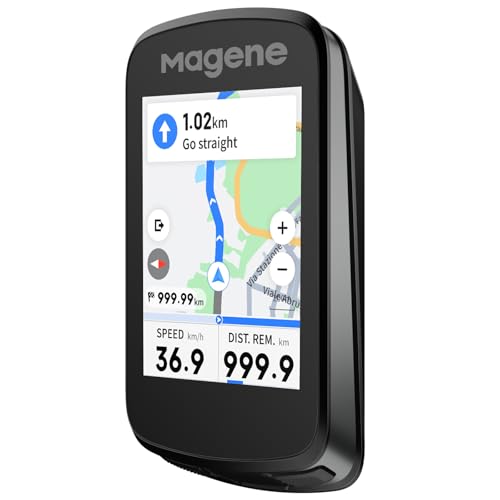
- ClimbPro-style live climb data and alerts
- Strava Live Segments with competitive tracking
- 2.8" touchscreen plus offline navigation
Best For: Riders who want climb guidance, live segment competition, and route navigation in one head unit.
Best Budget GPS Tracker
COOSPO BC107 GPS Bike Computer
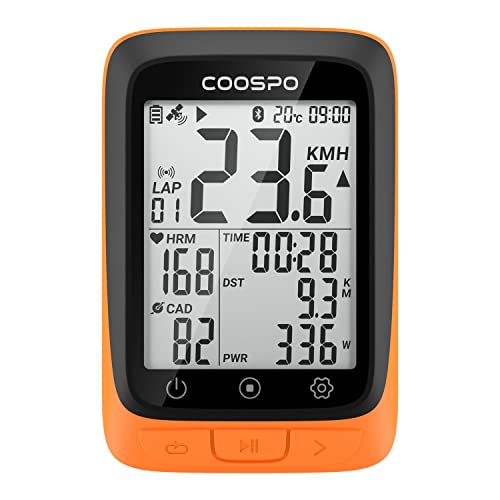
- Low-cost GPS bike computer with GPS/Beidou positioning
- ANT+ sensor support for heart rate, speed/cadence, and power
- App-based setup and Strava sync with a compact 2.4-inch screen
Best For: Budget riders who want a simple GPS computer for ride tracking and sensor pairing.
Best Value for Long Rides
Bryton Rider 650 Color Touch GPS Computer

- 2.8-inch color touchscreen with simple controls
- 33-hour battery life for long-distance riding
- Live Tracking, radar support, and turn-by-turn maps
Best For: Cyclists who want an affordable GPS computer with live tracking, navigation, and long battery life.
Best Simple Pick

- Built-in GPS records route, distance, time, and altitude
- 55+ hour battery life with IPX6 waterproofing
- Automatic backlight and wireless design keep rides simple
Best For: Riders who want a long-lasting wireless GPS bike computer for straightforward ride tracking.
Best for Navigation & Live Racing – Magene C706 Smart GPS Bike Computer
If you want a bike computer with live tracking features that also feels capable on long rides, the Magene C706 stands out with dual-band GNSS, full map navigation, voice prompts, and Strava Live Segments. It’s built for riders who care about route guidance, climb data, and race-style performance feedback in one display.
Best For: Riders who want turn-by-turn navigation, live segment competition, and a bright touchscreen for outdoor training and event days.
Pros:
- Dual-band GNSS improves positioning in cities, forests, and other tricky areas.
- Map navigation with voice guidance helps you follow routes without staring at the screen.
- Strava Live Segments and Freeride ClimbPro add useful competition and climbing tools.
- Large 3.3-inch color touchscreen makes ride data easy to read at a glance.
Cons:
- Feature-rich interface may feel more complex than simpler head units.
- Touchscreen and connected features can be more than casual riders need.
Overall, the C706 is a strong pick if you want a bike computer with live tracking-style ride feedback, navigation, and training tools in a single affordable package. It’s especially appealing for cyclists who want a modern display and competitive features without moving up to a high-end flagship unit.
Best for Navigation and Training – Garmin Edge 540 GPS Cycling Computer
If you want a bike computer with live tracking capabilities plus strong navigation and training tools, the Garmin Edge 540 is a smart pick. It combines button controls, multi-band GNSS accuracy, adaptive coaching, and long battery life in a compact unit built for serious road and gravel riders.
Best For: Riders who want a compact, button-controlled cycling computer with reliable navigation, structured training, and smart ride tracking.
Pros:
- Up to 26 hours of battery life, or 42 hours in battery saver mode
- Multi-band GNSS improves positioning accuracy in challenging terrain
- Adaptive coaching and power guidance help tailor training and pacing
- ClimbPro and advanced navigation tools work on every ride
Cons:
- No touchscreen, which may slow some users down
- Top coaching features work best with compatible sensors
- Pricier than basic cycling computers
The Edge 540 is a strong choice if you need a bike computer with live tracking support, dependable route handling, and workout guidance in one compact package. It is especially appealing for riders who value accuracy and training feedback over app-style simplicity.
Best Route Navigation – iGPSPORT BSC200S GPS Bike Computer
If you want a bike computer with live tracking features focused on navigation and ride continuity, the iGPSPORT BSC200S is a strong value pick. It supports route creation in the iGPSPORT app, imports from Strava, Komoot, and Ride with GPS, and adds turn reminders plus smart alerts for a more connected ride.
Best For: Riders who want affordable navigation-first GPS functionality with long battery life, clear data display, and basic smart notifications.
Pros:
- Supports route creation and third-party route imports for easy trip planning
- One-touch navigation, back-to-start guidance, and riding record navigation
- 2.4-inch readable screen with up to 25-hour battery life
- Works with iGPSPORT front light and radar light for added safety
Cons:
- Live tracking features depend on pairing with the app and connected ecosystem
- Not as advanced as higher-end bike computers for full training analytics
- Best navigation experience is tied to the iGPSPORT app workflow
Overall, the BSC200S is a practical choice if you want a bike computer with live tracking-adjacent navigation tools, dependable battery life, and simple ride management without paying for a premium head unit.
Best for Trail Accuracy – Garmin Edge MTB Rugged GPS Bike Computer
If you want a bike computer with live tracking that’s built for rough trails, the Garmin Edge MTB is a strong fit. It’s designed specifically for mountain biking, with rugged construction, accurate multi-band GPS, and trail-focused maps that help you ride faster and with more confidence.
Best For: Mountain bikers who want a durable, trail-ready GPS computer with accurate tracking, split timing, and detailed ride data.
Pros:
- Rugged, compact design with a 7-button layout and Gorilla Glass
- Multi-band GPS with 5 Hz recording for sharper descent tracking
- Trailforks and TopoActive maps plus Forksight trail guidance
- Grit, Flow, jump speed, and hang time metrics for MTB analysis
Cons:
- Battery life drops to 14 hours in demanding use
- Trail-focused features may be more than casual riders need
This is a purpose-built option if you need a bike computer with live tracking that prioritizes trail precision over road extras. For mountain bikers who want reliable navigation, split timing, and deeper performance insights, the Edge MTB stands out as a specialized tool rather than a general-purpose cycling computer.
Best for Long Rides – Magene C606 Pro GPS Bike Computer
If you want a bike computer with live tracking features and route guidance that can handle all-day training, the Magene C606 Pro is built for endurance riders who need navigation, climb data, and smart connectivity in one unit. Its transflective touchscreen stays readable in bright sun while keeping power draw low enough for long rides.
Best For: Riders who want a feature-rich GPS head unit for long-distance road, gravel, or indoor training sessions with live segments and navigation.
Pros:
- Up to 25-hour battery life with a sunlight-readable 2.8" transflective touchscreen
- Map navigation, back-to-start, rerouting, and climb pro tools for better ride planning
- Wi-Fi Strava Live Segments, smart trainer control, and broad sensor compatibility
- Useful ecosystem features like camera control, lighting integration, and shifting support
Cons:
- More advanced than casual riders may need
- Some features depend on compatible sensors, trainers, or connected devices
The C606 Pro stands out as a versatile bike computer with live tracking-style ride data, navigation, and performance tools, especially if you care about long battery life and deep training support over a simple display.
Best for Live Ride Data – GPS Bike Computer with Auto Backlight
If you want a bike computer with live tracking that keeps pace with real rides, this GPS model covers the core data without the need for wheel sensors or extra wiring. It tracks speed, distance, ride time, altitude, gradient, and ascent, while the auto backlight and 2.4-inch LCD make it easier to check stats on the move.
Best For: Riders who want straightforward GPS ride data, easy wireless setup, and a screen that stays readable in changing light.
Pros:
- Accurate GPS tracking with useful ride metrics for road and mountain biking
- Auto backlight and 2.4-inch LCD improve visibility day or night
- Wireless setup with auto start/stop keeps installation simple
- IPX7 waterproof rating and up to 28-hour battery life
Cons:
- Live tracking features are limited to onboard ride data rather than app-based sharing
- No wheel sensor option for riders who prefer sensor-based speed readings
This is a practical pick if you need a bike computer with live tracking-style ride visibility and don’t want a complicated setup. It favors convenience, clear display readability, and long battery life over advanced connectivity extras.
Best for Climbing & Live Segments – Magene C606 V2 GPS Bike Computer
If you want a bike computer with live tracking features that also helps you ride smarter, the Magene C606 V2 is a strong all-around option. Its standout mix of ClimbPro-style climb guidance, Strava Live Segments, offline navigation, and a bright touchscreen makes it especially useful for riders who train on varied routes and want real-time data without too much fuss.
Best For: Riders who want climb alerts, live segment battles, and dependable route guidance in one GPS head unit.
Pros:
- Multi-Scenario ClimbPro shows gradient, remaining distance, elevation gain, and climb profile in real time.
- Strava Live Segments support gives you live segment alerts, starred segment sync, and competitive on-screen progress.
- 2.8″ color touchscreen is large, clear, and easy to use mid-ride.
- Offline navigation supports GPX imports, route rerouting, and back-to-start guidance for long rides.
Cons:
- Cycling dynamics require compatible power meters, so not every rider will use that feature.
- The feature set is rich enough that first-time users may need time to learn the menus and settings.
- Live tracking relies on app/ecosystem support, so it may not feel as seamless as top-tier premium units.
Overall, the Magene C606 V2 is a smart pick if you want a bike computer with live tracking-related performance tools, strong climb support, and segment racing features without moving into ultra-premium pricing.
Best Budget GPS Tracker – COOSPO BC107 GPS Bike Computer
If you want a bike computer with live tracking-style convenience without paying premium prices, the COOSPO BC107 is a solid entry-level GPS head unit. It focuses on the basics riders actually use: GPS speed and ride data, ANT+ sensor support, app syncing, and a compact display that stays easy to read on the road.
Best For: Budget-minded riders who want a simple GPS bike computer for ride recording, sensor pairing, and Strava syncing through the app.
Pros:
- Affordable GPS bike computer with GPS/Beidou positioning
- ANT+ compatible for heart rate, speed/cadence, and power sensors
- CoospoRide app support for setup, route loading, and Strava sync
- Compact 2.4-inch display with auto backlight and waterproof design
Cons:
- Bluetooth is limited to app pairing, not sensor connection
- No direct USB upload of FIT files to Strava
- Small screen may feel basic for riders who want advanced mapping
Overall, the BC107 is a practical pick if you want a bike computer with live tracking-related app features and dependable GPS ride logging at a low cost. It’s less feature-heavy than premium units, but it covers the essentials well for everyday training and commuting.
Best Value for Long Rides – Bryton Rider 650 Color Touch GPS Computer
If you want a bike computer with live tracking that feels more like a modern app than a basic head unit, the Bryton Rider 650 is a strong value pick. It combines a bright 2.8-inch color touchscreen, preloaded maps, and turn-by-turn navigation with a long battery life that suits endurance rides and daily training.
Best For: Cyclists who want an affordable GPS computer with live tracking, navigation, and long battery life for commuting, touring, or solo rides.
Pros:
- 2.8-inch color touchscreen with an easy-to-use interface
- 33-hour battery life is excellent for long rides and multi-day use
- Live Tracking, radar support, and smart notifications add useful safety features
- Preloaded maps and turn-by-turn guidance make route following easier
Cons:
- Touchscreen GPS units can be less ideal in heavy rain or with gloves
- More performance-focused riders may want deeper training metrics
Overall, the Rider 650 stands out as a practical bike computer with live tracking for riders who care more about dependable navigation and battery life than elite race features. It delivers a lot of everyday usefulness for the price, especially if you ride alone or want family to follow your location in real time.
Best Simple Pick – CYCPLUS GPS Bike Computer
If you want a practical bike computer with live tracking-style GPS ride logging, the CYCPLUS GPS Bike Computer covers the essentials without adding handlebar clutter. It gives you route and ride stats from built-in GPS, plus an automatic backlight, waterproofing, and a battery built for long outings.
Best For: Riders who want a simple wireless GPS computer with long battery life, readable daylight/night display, and reliable ride data for training or touring.
Pros:
- Built-in GPS tracks ride distance, time, altitude, and route data
- Automatic backlight and FSTN screen improve visibility in bright sun or at night
- IPX6 waterproof design and 55+ hour battery life suit longer rides
- Wireless setup keeps the cockpit cleaner and easier to manage
Cons:
- No advanced smart/live phone syncing features are highlighted
- Manual power-off clears current ride data, so sleep mode is preferable
Overall, this is a strong pick if you mainly need a dependable bike computer with live tracking-style GPS recording, clear visibility, and battery life that won’t quit on all-day rides. It’s less about app-heavy extras and more about straightforward ride data that’s easy to read and hard to outlast.
How We Picked the Best Bike Computer with Live Tracking
We focused on devices that offer dependable GPS performance, practical live tracking or sharing features, clear displays, solid battery life, and compatibility with common cycling sensors and accessories. We also considered whether each Bike Computer with Live Tracking is easy to use on the road or trail, since interface design matters as much as specs.
Quick Comparison: What Sets Them Apart
Some models lean toward advanced navigation and training tools, while others emphasize simplicity, durability, or value. Touchscreen units are often easier for map use, but button-controlled computers can be better in wet, muddy, or gloved conditions. Battery life, map detail, and sensor connectivity are the other major separators.
Key Buying Factors for a Bike Computer with Live Tracking
Navigation and Mapping
If you ride unfamiliar roads or trails, prioritize turn-by-turn routing, preloaded maps, and rerouting support. Riders who mainly follow planned routes may prefer simpler mapping, but live tracking is most useful when navigation is reliable.
Display and Controls
Look for a screen that stays readable in bright sun and in low light. Touchscreens are convenient for maps and data pages, while physical buttons can be more dependable in rain, gloves, or rough terrain.
Connectivity and Live Features
A good Bike Computer with Live Tracking should pair cleanly with your phone and support Bluetooth or ANT+ for sensors, power meters, heart-rate straps, and radars. Check whether tracking is shared through an app, a cloud service, or a live ride link.
Battery Life and Ruggedness
Long rides and multi-day events call for stronger battery life, while off-road riders should look for water resistance and a durable housing. Trail riders and commuters may value toughness more than extra training metrics.
Who Should Buy Which Bike Computer with Live Tracking?
Road cyclists who want structured workouts and efficient controls should look at compact, training-focused units. Gravel and adventure riders may prefer larger displays with better maps and climb data. Mountain bikers usually benefit from rugged builds and trail-specific navigation. Budget buyers can still get core GPS and tracking features without paying for advanced coaching tools.
If you want the most versatile choice, choose a Bike Computer with Live Tracking that balances visibility, navigation, battery life, and sensor compatibility for the way you actually ride.
