
Looking for better ventilation without wasting heated or cooled air? The right all-weather heat recovery ventilator can help refresh indoor air while reducing energy loss.
Below, we’ve rounded up 10 strong options for different room sizes, mounting setups, and airflow needs so you can compare quickly and buy with confidence.
Best 10 All-Weather Heat Recovery Ventilators Picks for 2026
Compact HRV Pick

- 150 CFM airflow for smaller ventilation needs
- 50-watt unit with 35 dB noise level
- Simple forced-air HRV for basic installations
Best For: Small spaces needing quieter, modest-capacity ventilation
High-Airflow Ventilation
iLIVING 12-inch 960 CFM Shutter Fan

- 960 CFM output for large areas up to 1400 sq. ft.
- Variable speed plus thermostat control
- Automatic shutters and wall-mount installation
Best For: Large indoor spaces needing powerful exhaust ventilation
Replacement HRV Component
Field Controls FC150HRV 150 CFM

- 150 CFM HRV component for smaller systems
- Compact 24 x 8 x 6 inch package
- Light 5.0 lb shipped weight
Best For: Replacement or component-based HRV installations
Maximum Airflow Pick
iLIVING 18-inch 1736 CFM Shutter Fan

- 1736 CFM output for very large spaces
- Variable speed plus 32 to 130°F thermal control
- Automatic shutters and UL/cUL listed build
Best For: Very large spaces needing maximum wall-mounted airflow
Plug-In Wall HRV
4 Inch Ceramic Core Reversible Ventilator

- Plug-in, no-electrician setup
- Reversible intake/exhaust control
- Washable ceramic core with 5W EC motor
Best For: Bedrooms and small residential rooms
High-Flow Exhaust Vent
10 Inch Shutter Fan with Thermostat

- 820 CFM airflow for large spaces
- Variable speed plus temperature control
- Automatic shutters and steel/aluminum build
Best For: Garages, workshops, and greenhouses
Basic Recuperator Pick
Fan Motor Energy Recuperator HRV

- Title suggests energy recuperation use
- Very limited supplied specs
- Verify exact heat recovery function
Best For: Buyers who want to confirm specs first
High-Airflow Vent Fan
GROWNEER 12 Inch Shutter Exhaust Fan
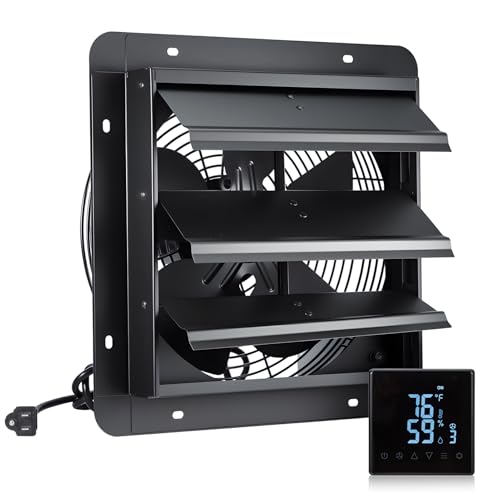
- Moves 1200 CFM for large-area ventilation
- Auto control uses temperature and humidity settings
- Aluminum alloy build is made for humid or dusty spaces
Best For: Large spaces that need fast exhaust ventilation
Spot Recovery
AccuraSEE CLIMATE Single Room HRV

- Supplies fresh air and removes stale air
- Retains 80% of room heat in up to 500 sq ft
- Supports wall, ceiling, window, and ductless installs
Best For: Small rooms needing flexible heat-recovery ventilation
Wall-Mounted HRV
Weiworld 6 Inch Heat Recovery Ventilator
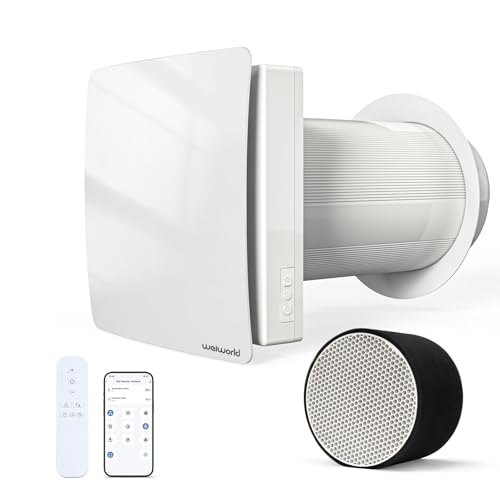
- Recovers up to 90% of heat energy
- Tuya app, remote, and button control
- Quiet EC motor runs under 30dB
Best For: Small spaces needing efficient, quiet heat recovery
Compact HRV Pick – Honeywell TRUEBREEZE 150 CFM
If you need all-weather heat recovery ventilators for a smaller home, room, or targeted ventilation setup, the Honeywell VNT5150H1000 TRUEBREEZE offers a straightforward 150 CFM solution. It runs on 50 watts and is built for controlled forced-air ventilation with a 35 dB noise level, making it a practical pick where lower airflow and quieter operation matter.
Best For: Smaller spaces or buyers who want a compact 150 CFM heat recovery ventilator with relatively quiet operation.
Pros:
- 150 CFM airflow suits lighter ventilation needs
- 35 dB noise rating supports quieter operation
- Uses only 50 watts
- Simple one-unit setup
Cons:
- Not designed for high-volume airflow needs
- Specifications provided are limited compared with some larger systems
This model makes sense when you want a basic heat recovery ventilator with modest airflow and a compact power profile. It is best matched to situations where steady ventilation matters more than large-capacity output.
High-Airflow Ventilation – iLIVING 12-inch 960 CFM Shutter Fan
For buyers comparing all-weather heat recovery ventilators and looking for strong exhaust-style airflow, this iLIVING 12-inch wall-mounted fan stands out for volume and control. It delivers 960 CFM with automatic shutters, variable speed, and thermal control from 32 to 130°F, so it is built for aggressive air exchange in larger indoor areas.
Best For: Large garages, workshops, greenhouses, and other spaces that need powerful wall-mounted ventilation.
Pros:
- 960 CFM airflow covers up to 1400 sq. ft.
- Variable speed and temperature control from 32 to 130°F
- Automatic shutters and wall-mount design
- UL/cUL listed with corrosion-resistant construction
Cons:
- Exhaust-fan design is different from a dedicated HRV unit
- Noise level is listed as under 65 dB, so it is not a quiet option
This is a strong choice when airflow and controllability are the priority. It is less about subtle, balanced ventilation and more about moving a lot of air in demanding work areas.
Replacement HRV Component – Field Controls FC150HRV 150 CFM
The Field Controls FC150HRV is a 150 CFM heat recovery ventilator component aimed at buyers who want a straightforward replacement or system part rather than a full-featured whole-home package. With compact package dimensions and a 5.0 lb package weight, it is positioned as a practical, lighter-duty option in the all-weather heat recovery ventilators category.
Best For: Replacement projects or installations that need a 150 CFM HRV component.
Pros:
- 150 CFM capacity matches smaller ventilation needs
- Compact package size simplifies handling
- Light 5.0 lb package weight
- Made in the United States
Cons:
- Product details are sparse, so comparison shopping may be harder
- Listed as an electronic component, not a full system description
As a replacement-focused option, this model is best when you already know the capacity you need and want a simple 150 CFM part. The limited spec sheet means it is more of a targeted buy than a feature-rich one.
Maximum Airflow Pick – iLIVING 18-inch 1736 CFM Shutter Fan
If you are shopping all-weather heat recovery ventilators or heavy-duty ventilation alternatives for very large spaces, the iLIVING 18-inch wall-mounted shutter exhaust fan offers a much higher 1736 CFM airflow. It includes automatic shutters, variable speed, and thermal control with a 32 to 130°F range, making it suited to spaces that need more aggressive air exchange.
Best For: Extra-large garages, warehouses, workshops, and greenhouse ventilation.
Pros:
- 1736 CFM airflow handles very large spaces
- Variable speed and thermal control from 32 to 130°F
- Automatic shutters help manage airflow
- UL/cUL listed with corrosion-resistant construction
Cons:
- Exhaust-fan design is not a dedicated HRV unit
- Wall-mount installation requires suitable space and setup
This model is the strongest airflow option in the group and is best when coverage area matters more than compact size. It is a practical fit for demanding ventilation jobs where a high-capacity wall fan is the priority.
Plug-In Wall HRV – 4 Inch Ceramic Core Reversible Ventilator
If you’re comparing all-weather heat recovery ventilators for a small room, this 4-inch wall unit is built around simple plug-in operation and reversible airflow. It can switch between exhaust and intake modes, and the stainless steel rain hood is designed to help with outdoor exposure and humidity.
Best For: Bedrooms or other small residential spaces where easy installation and seasonal airflow control matter.
Pros:
- Plug-in design means no electrician is required for basic setup.
- Reversible remote lets you switch between intake and exhaust.
- Washable ceramic core reduces ongoing replacement needs.
- 5W EC motor is designed for energy efficiency and near-silent operation.
Cons:
- Requires drilling and wall mounting during installation.
- Best suited to smaller spaces rather than whole-home ventilation.
- Only one unit is included.
This is a practical pick if you want a low-wattage wall ventilator with reversible airflow and minimal maintenance. The rain hood and washable core make it a sensible option for year-round use in a residential setting.
High-Flow Exhaust Vent – 10 Inch Shutter Fan with Thermostat
For buyers looking at all-weather heat recovery ventilators for larger utility spaces, this wall-mounted shutter exhaust fan focuses on strong air exchange rather than heat recovery. It delivers up to 820 CFM with variable speed and temperature control, making it useful when ventilation needs change with the season.
Best For: Garages, workshops, greenhouses, and other larger spaces that need powerful exhaust ventilation.
Pros:
- 820 CFM airflow is strong enough for spaces up to 1200 square feet.
- Includes variable speed and thermostat-style temperature control.
- Automatic shutters help close off the opening when the fan is off.
- Galvanized steel frame and aluminum parts are built for durable use.
Cons:
- Designed as an exhaust fan, not a true heat recovery unit.
- 65W power draw is much higher than small plug-in ventilators.
- Installation is hardwired according to the product details.
This is the right choice if your priority is high-volume ventilation and controllable airflow in a demanding space. It is less about energy recovery and more about reliably moving stale air out.
Basic Recuperator Pick – Fan Motor Energy Recuperator HRV
This product is listed as a fan motor energy recuperator heat recovery ventilator, but the supplied notes only identify it as a fan. For shoppers searching all-weather heat recovery ventilators, that means you should verify the exact functionality and installation details before assuming it offers full heat recovery performance.
Best For: Buyers who are willing to confirm specs directly before choosing a basic ventilation product.
Pros:
- Product title suggests an energy recuperation and heat recovery role.
- Could be relevant for ventilation-focused comparisons.
- May appeal to shoppers prioritizing a simple fan-based solution.
Cons:
- Supplied notes provide very limited feature information.
- No confirmed airflow, wattage, mounting, or control details are listed.
- Heat recovery performance cannot be verified from the provided data.
Because the listing details are sparse, this is the least defined option in the roundup. It may still be worth a look if you want a possible recuperator-style unit, but the available information is too thin for a strong recommendation.
High-Airflow Vent Fan – GROWNEER 12 Inch Shutter Exhaust Fan
This GROWNEER fan is more of a high-airflow exhaust solution than a true heat recovery ventilator, but it can still be useful when your priority is moving hot, humid air out of large spaces. With 1200 CFM airflow and automatic temperature and humidity control, it is built for fast ventilation in demanding environments.
Best For: Greenhouses, garages, barns, attics, and sheds that need powerful air exchange and humidity relief.
Pros:
- 1200 CFM airflow handles large spaces up to 1400 sq. ft.
- Smart controller supports Auto, Manual, and Eco modes
- Temperature and humidity-based operation reduces hands-on adjustment
- Durable aluminum alloy construction suits dusty or humid areas
Cons:
- It exhausts air rather than recovering heat like an HRV
- Best suited to ventilation-heavy use, not heat retention
- Wall-mount design may require a dedicated installation location
If you mainly need aggressive ventilation instead of heat recovery, this is the strongest airflow-focused option in the group. It excels in workspaces and hobby buildings where heat, odor, and moisture need to be cleared quickly.
Spot Recovery – AccuraSEE CLIMATE Single Room HRV
If you’re comparing all-weather heat recovery ventilators for a single room, the AccuraSEE CLIMATE is built around fresh-air exchange without giving up as much indoor heat. It can supply outdoor air and remove stale air, and it’s designed for flexible installs in walls, ceilings, or windows.
Best For: Rooms, offices, bathrooms, basements, and other small spaces where you want heat retention plus continuous ventilation.
Pros:
- Spot ventilates up to 500 sq ft while retaining 80% of room heat
- Supports ducted or ductless installation through windows, doors, walls, or ceilings
- Independent supply and exhaust control helps manage CO2 and moisture
- Tested and certified to ANSI/AMCA and ANSI/ASHRAE standards
Cons:
- Single-room coverage is more limited than whole-home systems
- Installation flexibility may still require careful planning for your opening type
- Not positioned as a high-capacity multi-room ventilation solution
Overall, this is a practical pick if you want a compact all-weather heat recovery ventilator with broad mounting options and simple control. Its heat retention claim and certification focus make it especially appealing for targeted ventilation jobs.
Wall-Mounted HRV – Weiworld 6 Inch Heat Recovery Ventilator
This 6-inch model is a strong fit if you want an all-weather heat recovery ventilator with a more efficiency-focused design. It uses a ceramic heat exchanger to recover up to 90% of heat energy from exhaust air, while offering app, remote, and button control for everyday use.
Best For: Small rooms and utility spaces where quiet, efficient heat recovery and WiFi control matter.
Pros:
- Ceramic heat exchanger recovers up to 90% of heat energy
- Smart WiFi control via Tuya app plus included remote
- Three airflow modes: Fresh Air, Exhaust, and Recirculation
- Low-noise EC motor is rated under 30dB
Cons:
- 60 cubic meters per hour airflow is best suited to smaller spaces
- Requires wall mounting and a 6-inch duct opening
- Product notes focus on single-room use rather than larger whole-house coverage
For buyers prioritizing heat recovery efficiency and smart controls, this model stands out. Its wide-voltage compatibility and adjustable install depth also make it a flexible option for different building types.
How We Picked the Best All-Weather Heat Recovery Ventilators
We focused on practical factors that matter in real homes and light commercial spaces: airflow capacity, heat recovery design, installation flexibility, control options, and suitability for different room sizes. We also prioritized models that make sense for year-round use, not just seasonal exhaust.
Quick Comparison
Not every ventilator serves the same job. Some of these All-Weather Heat Recovery Ventilators are better for single rooms or smaller zones, while others are built for larger areas that need stronger air exchange. Wall-mounted exhaust units tend to favor high airflow and simple installation, while dedicated heat recovery units are the better choice when you want fresh air exchange with less thermal loss.
Key Buying Factors for All-Weather Heat Recovery Ventilators
Airflow and Room Size
Match the unit’s CFM rating to the space. Higher CFM works better for bigger rooms, open layouts, and spaces with more moisture or stale air. Smaller rooms usually do well with compact recovery ventilators that prioritize balanced exchange over brute-force airflow.
Heat Exchange Efficiency
The core job of these systems is to move air while retaining as much indoor temperature as possible. Look for ceramic-core or other heat exchange designs if efficiency is a priority, especially in climates with large seasonal temperature swings.
Controls and Automation
Thermostats, humidity sensors, variable speed settings, and remote controls can make operation easier and help the unit respond to changing indoor conditions. These features are especially useful if you want the ventilator to run automatically instead of manually.
Mounting and Installation
Check whether the product is wall-mounted, ceiling-mounted, or window-compatible. The best choice depends on your available space, ducting constraints, and whether you’re replacing an old fan or installing a new recovery system from scratch.
Who Should Buy Which All-Weather Heat Recovery Ventilators?
If you want balanced fresh-air exchange with lower energy waste, choose a true heat recovery ventilator. If your main need is moisture removal or strong exhaust in a garage, workshop, or larger utility area, a high-CFM shutter exhaust fan may be the better fit. For apartments, single rooms, and smaller living spaces, compact All-Weather Heat Recovery Ventilators are usually the most practical option because they’re easier to place and simpler to size.
In short, choose the model that fits your room size, control preferences, and installation layout first. That will do more for comfort and efficiency than chasing the highest airflow number alone.
