
Portable energy recovery ventilators can help improve indoor air quality while reducing energy loss during ventilation. They are a smart fit for homeowners, renovators, and anyone looking for fresher air without sacrificing efficiency.
Below, we’ve rounded up six options with different sizes, power setups, and airflow capabilities so you can find the best match for your space and budget.
Best 6 Portable Energy Recovery Ventilators Picks for 2026
Whole-Home ERV Pick
Total Recovery Premium ERV w/Line Cord

- 30-225 CFM airflow range
- Premium energy recovery ventilator
- Includes a line cord
Best For: Buyers who want a premium ERV with a wide airflow range
Portable Cooling Side Pick
6000mAh Handheld Ice Cooling Fan
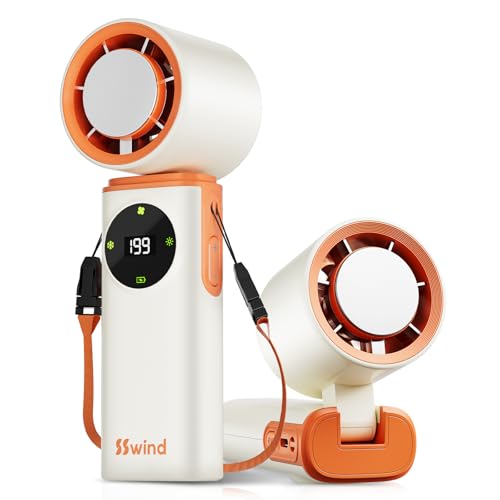
- TEC cooling plate for instant cold air
- 6000mAh battery up to 20 hours
- 199 stepless speeds with foldable design
Best For: People who want a rechargeable personal fan for travel or outdoor use
Workshop Recovery Pro
KATOOL Automatic R134a AC Recovery Machine

- Automates recovery, recycling, and recharge
- Advanced filtration for cleaner handling
- Supports R134a or R1234yf setup
Best For: Automotive shops needing automatic refrigerant recovery and recharge equipment
Solar-Powered Ventilation Pick
Metal Solar Exhaust Fan with Pull Switch

- 12000mAh battery supports day and night running
- Solar and USB-C charging improve flexibility
- 35dB quiet operation suits coops and sheds
Best For: Small off-grid spaces that need quiet, flexible ventilation
Smart Heat Recovery Choice
6 Inch Heat Recovery Ventilator
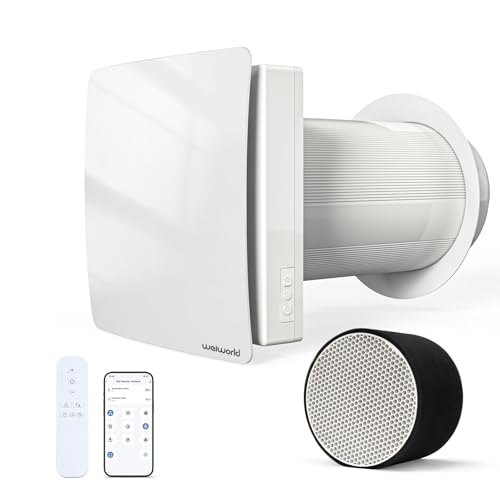
- Ceramic core recovers up to 90% of heat energy
- WiFi, app, and remote control add convenience
- 8.5W EC motor is quiet and energy efficient
Best For: Rooms and small buildings needing heat-retaining fresh air exchange
Compact Reversible Ventilation Option
4 Inch Ceramic Core Wall Ventilator

- Reversible remote toggles intake and exhaust
- Plug-in setup avoids electrician work
- Washable ceramic core and 5W EC motor
Best For: Small rooms needing simple reversible wall ventilation
Whole-Home ERV Pick – Total Recovery Premium ERV w/Line Cord
If you’re comparing portable energy recovery ventilators for a small project or a larger ventilation need, this Total Recovery Premium unit stands out for its 30-225 CFM airflow range. The line cord setup keeps installation straightforward, while the higher-end airflow capacity gives it room to handle more demanding applications.
Best For: Buyers who want a premium ERV with a wide airflow range and simple line-cord setup.
Pros:
- Wide airflow capacity from 30 to 225 CFM
- Premium energy recovery ventilator design
- Includes a line cord for convenient setup
Cons:
- No additional performance details were provided beyond airflow capacity
- May be more than needed for very small ventilation jobs
Overall, this is the most straightforward choice if you want a higher-capacity ERV and value a simple, practical configuration. The main strength here is the broad airflow range, which makes it easier to match to different ventilation demands.
Portable Cooling Side Pick – 6000mAh Handheld Ice Cooling Fan
Although it is not a ventilation system, this portable device may appeal to shoppers browsing portable energy recovery ventilators and looking for a compact personal cooling option instead. It focuses on handheld airflow, ice cooling, and long battery life, making it a travel-friendly alternative for individual comfort.
Best For: People who want a rechargeable personal fan with cooling features for travel, commuting, or outdoor use.
Pros:
- TEC semiconductor cooling plate for instant cold air
- 6000mAh battery rated for up to 20 hours at low speed
- 199 stepless speeds for fine airflow control
- Foldable, handheld, desk, neck, and phone-holder use
Cons:
- It is a personal fan, not an energy recovery ventilator
- Battery life depends on speed setting
For buyers comparing compact cooling products, this fan is best viewed as a portable comfort accessory rather than a true ventilator. Its strength is flexible, rechargeable personal cooling with several use modes and a large battery.
Workshop Recovery Pro – KATOOL Automatic R134a AC Recovery Machine
If your search for portable energy recovery ventilators is really about refrigerant recovery equipment, this KATOOL automatic machine is built for workshop use. It automates refrigerant recovery, recycling, and recharge tasks, with filtration and oil-independent plumbing designed to help keep the process organized and clean.
Best For: Automotive shops that need a fully automatic refrigerant recovery and recharge machine for R134a or R1234yf workflows.
Pros:
- Fully automatic recovery, recycling, and recharge cycle
- Advanced filtration designed to remove impurities
- Oil-independent module helps prevent cross-contamination
- Supports either R134a or R1234yf, depending on initial setup
Cons:
- Not a general-purpose portable ventilator
- Refrigerant type cannot be switched after first use
- Designed for workshop procedures, not casual home use
This is a specialized service tool, not a ventilation product, but it offers strong automation for refrigerant handling tasks. The key buying consideration is compatibility planning up front, since the machine must stay with the refrigerant type chosen at first use.
Solar-Powered Ventilation Pick – Metal Solar Exhaust Fan with Pull Switch
If you need portable energy recovery ventilators for small outbuildings, this solar exhaust fan is built more like a flexible venting solution than a traditional HRV. It combines solar charging, USB-C backup power, and a built-in battery so airflow can continue day and night without needing constant wiring or wall power.
Best For: Chicken coops, greenhouses, sheds, kennels, and other small spaces that need quiet, low-maintenance ventilation.
Pros:
- Built-in 12000mAh battery supports all-day operation and night use
- Solar charging plus USB-C backup charging adds power flexibility
- Three smart modes with timer options for simple control
- 35dB low-noise design is suitable for animal spaces
Cons:
- Designed as an exhaust fan, not a full heat-recovery system
- Best suited to smaller wall-mounted applications
For buyers prioritizing portable, off-grid ventilation, this model stands out for its power flexibility and easy installation. It is especially practical where quiet airflow matters more than advanced recovery features.
Smart Heat Recovery Choice – 6 Inch Heat Recovery Ventilator
Among portable energy recovery ventilators, this 6-inch HRV is the most clearly focused on heat recovery and indoor air management. Its ceramic heat exchanger is designed to recover up to 90% of heat energy from exhaust air, while WiFi, remote control, and multiple airflow modes make it easier to fine-tune daily ventilation.
Best For: Apartments, offices, tiny homes, garages, barns, and sheds that need controlled fresh-air exchange with heat retention.
Pros:
- Ceramic heat exchanger recovers up to 90% of heat energy
- Smart WiFi and remote control support app-based adjustments
- Three airflow modes: Fresh Air, Exhaust, and Recirculation
- 8.5W EC motor runs quietly under 30dB with low energy use
Cons:
- Requires wall-mounted installation and duct setup
- Wired power supply means it is not a battery-powered portable unit
This is the strongest match if your priority is actual heat recovery rather than simple exhaust ventilation. It offers a balanced mix of efficiency, smart control, and wide installation compatibility.
Compact Reversible Ventilation Option – 4 Inch Ceramic Core Wall Ventilator
If you are comparing portable energy recovery ventilators for a smaller room, this 4-inch wall ventilator is a compact reversible option with practical recovery-focused features. It plugs into a standard outlet, uses a washable ceramic core, and lets you switch between intake and exhaust without rewiring.
Best For: Bedrooms and other small rooms where you want simple plug-in ventilation with reversible airflow.
Pros:
- Reversible remote switches between intake and exhaust airflow
- Plug-in design avoids the need for electrician installation
- Washable ceramic core reduces replacement needs
- 5W EC motor is built for energy-efficient, near-silent use
Cons:
- Requires drilling and wall mounting for installation
- Smaller 4-inch format is less suited to larger spaces
- Detailed heat-recovery percentage is not specified
This model is a good fit if you want a straightforward reversible ventilator with minimal setup. Its plug-in design and washable core make it appealing for smaller spaces where simple maintenance matters.
How We Picked These Portable Energy Recovery Ventilators
We focused on practical buying factors that matter most in real-world use: airflow capacity, heat or energy recovery design, installation flexibility, noise expectations, power requirements, and overall value. Because Portable Energy Recovery Ventilators can serve very different rooms and applications, we also considered whether a unit is better suited to a small room, a larger living area, or a more targeted ventilation setup.
Quick Comparison
In a fast comparison, the best choice depends on space and use case. Higher-CFM models are better for larger areas and stronger ventilation needs, while compact ceramic-core units are often a better fit for smaller rooms or localized fresh-air exchange. If you want simpler setup and fewer modifications, look for models with straightforward mounting or plug-in operation.
Key Buying Factors for Portable Energy Recovery Ventilators
Airflow and Room Size
Match airflow to the room. Too little airflow won’t refresh the space effectively, while too much can feel noisy or overpowered. Check the CFM rating and compare it with the area you want to ventilate.
Energy Recovery Type
Not all units use the same recovery method. Some are designed to exchange heat through ceramic cores or heat exchangers, helping preserve indoor comfort as stale air is replaced with fresh air.
Installation and Portability
Some Portable Energy Recovery Ventilators are easier to place and power than others. Consider whether you need a plug-in unit, a wall-mounted design, or something that can be moved between rooms.
Noise, Controls, and Maintenance
Look for simple controls, reversible airflow if needed, and filters or cores that are easy to clean. Lower-maintenance designs are usually better for everyday use.
Who Should Buy Which Portable Energy Recovery Ventilators?
Choose a higher-capacity ventilator if you’re trying to support a larger room, basement, workshop, or open-plan area. Go with a compact ceramic-core model if you want a more discreet solution for bedrooms, offices, or smaller spaces. If your priority is convenience, focus on models with straightforward power setup and easy operation.
For most buyers, the best Portable Energy Recovery Ventilators balance airflow, efficiency, and simplicity rather than chasing the highest specs. Start with your room size and ventilation goal, then choose the model that fits your installation constraints and comfort preferences.
