
The best portable bike GPS computers make it easier to follow routes, monitor performance, and stay informed without relying on your phone. The right model depends on whether you prioritize simple ride tracking, detailed navigation, training data, or long battery life.
We compared ten options across screen design, connectivity, mapping features, durability, and everyday usability to help you choose a cycling computer that fits your routes and riding style.
Best 10 Portable Bike GPS Computers Picks for 2026
Best Value

- 40-hour battery with USB-C charging
- 40+ metrics and five-satellite positioning
- IPX7 waterproof with ANT+/Bluetooth support
Best For: Budget-conscious riders who want simple, long-lasting ride tracking
Premium Pick

- 3.5-inch color touchscreen with course planning
- Up to 60 hours in battery-saver mode
- Advanced training, safety, speaker, and payment features
Best For: Performance riders wanting comprehensive navigation and connected features
Best Navigation Features

- 3.3-inch touchscreen with button backup
- Dual-band positioning and five satellite systems
- Voice guidance and automatic off-course rerouting
Best For: Riders who want flexible controls and strong route guidance
Best Compact Training Computer

- Up to 26 hours, or 42 in battery-saver mode
- Multi-band GNSS for challenging environments
- Button controls with advanced training tools
Best For: Goal-oriented riders who prefer a compact, button-controlled computer
Best Connected Navigator
iGPSPORT BSC200S GPS Bike Computer

- Route creation and imports from Strava, Ride with GPS, and Komoot
- 25-hour battery with IPX7 water resistance
- ANT+/Bluetooth sensor and compatible light support
Best For: Long-distance riders who want customizable navigation and extensive ride data
Best Battery Value
COOSPO Wireless GPS Cycling Computer

- Up to 80 hours of stated battery life
- ANT+ support for heart rate, speed, cadence, and power sensors
- Sunlight-readable display with automatic backlight
Best For: Riders seeking long battery life and essential GPS tracking
Best Offline Mapping
iGPSPORT BSC300T GPS Bike Computer
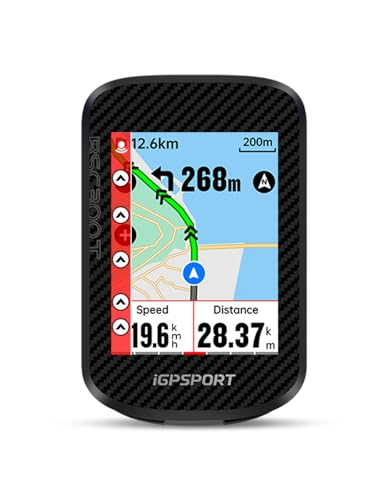
- Worldwide offline maps with turn prompts and route previews
- Off-course warnings and real-time group tracking
- Touchscreen, e-bike mode, and 130+ data fields
Best For: Exploratory riders who need offline mapping and route alerts
Long-Range Ride Tracker

- 60-hour battery supports extended rides
- Includes speed/cadence sensor
- ANT+/Bluetooth and Strava synchronization
Best For: Long-distance riders who want included sensors
Navigation-Focused Explorer

- 2.8-inch color touchscreen with offline maps
- Turn prompts and connected rerouting
- Wi-Fi, ANT+/Bluetooth, and IPX7 protection
Best For: Exploratory rides and route navigation
Connected Training Companion
COOSPO CS600 GPS Bike Computer

- Color touchscreen with auto-backlight
- Route navigation and customizable data pages
- Works with radar, trainers, and smart accessories
Best For: Connected training and customizable ride data
Best Value – iGPSPORT BSC100S
The iGPSPORT BSC100S is a practical choice for riders seeking portable bike GPS computers with straightforward tracking, broad satellite coverage, and long battery life. Its 2.6-inch anti-glare screen displays more than 40 riding metrics, while ANT+ and Bluetooth support lets you connect compatible sensors.
Best For: Budget-conscious cyclists who want dependable ride data, long runtime, and simple app-based analysis.
Pros:
- Up to 40 hours of battery life with USB-C charging
- Supports GPS, BeiDou, GLONASS, Galileo, and QZSS positioning
- Tracks more than 40 metrics and syncs with Strava and Komoot
- IPX7 waterproof rating and ANT+/Bluetooth connectivity
Cons:
- Uses buttons rather than a touchscreen
- USB-C charging cable is not included
The BSC100S keeps the focus on essential cycling data and reliable endurance. It is a strong fit for daily rides, training sessions, and longer outings where simplicity matters more than on-device mapping.
Premium Pick – Garmin Edge 1050
The Garmin Edge 1050 is a premium option among portable bike GPS computers, combining a vivid 3.5-inch touchscreen with advanced navigation, training tools, and connected-riding features. It also adds a built-in speaker for prompts and a bike bell, plus road-hazard alerts when paired with a compatible smartphone.
Best For: Performance-focused cyclists who want advanced navigation, training analysis, and rich smart connectivity.
Pros:
- Large color touchscreen with on-device course creation
- Up to 20 hours in demanding use or 60 hours in battery-saver mode
- Includes ClimbPro, power guidance, personalized coaching, and stamina insights
- Built-in speaker, bike bell, Garmin Pay, and group-ride features
Cons:
- Many connected features require a compatible smartphone or sensors
- Premium feature set may be more than casual riders need
The Edge 1050 is designed as a full-featured cycling command center rather than a basic speedometer. Its large display and extensive training and safety tools make it especially compelling for organized rides, navigation-heavy outings, and structured training.
Best Navigation Features – iGPSPORT BSC500
The iGPSPORT BSC500 stands out among portable bike GPS computers for riders who want on-device route guidance without giving up a compact format. Its 3.3-inch touchscreen supports button control, while dual-band positioning, turn reminders, voice navigation, and automatic rerouting help keep rides on course.
Best For: Cyclists who prioritize route navigation, clear guidance, and flexible touchscreen or button operation.
Pros:
- 3.3-inch touchscreen shows up to 12 cycling data fields per page
- Dual-band positioning supports five satellite systems
- Offers turn reminders, yaw rerouting, and voice navigation
- Supports routes from iGPSPORT, Strava, Komoot, and route files
Cons:
- Supplied notes do not specify battery life
- Some training and connected functions depend on compatible apps or devices
With its combination of touchscreen controls, mapping tools, and audible guidance, the BSC500 is more navigation-oriented than a basic data computer. It is a useful middle ground for riders who want route support and training analysis in one unit.
Best Compact Training Computer – Garmin Edge 540
The Garmin Edge 540 is a compact choice for portable bike GPS computers, using button controls to deliver navigation, training guidance, and cycling metrics in a 2.6-inch format. Its multi-band GNSS positioning is designed for challenging environments, while ClimbPro, power guidance, and stamina insights support more structured riding.
Best For: Cyclists who prefer physical controls and want advanced training features in a compact computer.
Pros:
- Up to 26 hours of battery life, or 42 hours in battery-saver mode
- Multi-band GNSS supports enhanced positioning accuracy
- Provides ClimbPro, suggested workouts, coaching, and training prompts
- Compact 2.6-inch design with ride-type maps and searchable points of interest
Cons:
- No touchscreen; operation is button-based
- Several advanced insights require compatible power and heart-rate sensors
The Edge 540 offers a focused alternative to larger touchscreen computers. Its physical controls can be practical in varied riding conditions, while the training ecosystem makes it particularly suitable for cyclists following goals or preparing for events.
Best Connected Navigator – iGPSPORT BSC200S GPS Bike Computer
The iGPSPORT BSC200S is a practical choice among portable bike GPS computers for riders who want route guidance, broad sensor compatibility, and a clear display without a bulky unit. Its app supports imported routes from Strava, Ride with GPS, and Komoot, while the 25-hour battery is suited to extended rides.
Best For: Long-distance road, gravel, and recreational riders who want customizable navigation and extensive ride data.
Pros:
- Supports route creation, third-party route imports, one-touch navigation, and back-to-start guidance.
- Offers more than 100 riding metrics with customizable data pages and up to 400 hours of ride storage.
- Provides a sunlight-readable 2.4-inch color display, IPX7 water resistance, and up to 25 hours of battery life.
- Works with ANT+ and Bluetooth sensors, plus compatible iGPSPORT front and radar lights.
Cons:
- Type-C charging cable is not included.
- Navigation and route setup depend on the iGPSPORT app and connected phone workflow.
The BSC200S balances navigation, connectivity, and endurance well. It is especially appealing if you want long battery life and detailed data, though riders seeking full offline maps or a touchscreen may prefer a more advanced model.
Best Battery Value – COOSPO Wireless GPS Cycling Computer
The COOSPO BC107-B-L is a straightforward option among portable bike GPS computers, combining GPS tracking with a sunlight-readable 2.4-inch display and an unusually long stated battery life. It also connects to ANT+ accessories and can sync recorded rides to Strava through the CoospoRide app.
Best For: Riders prioritizing long battery life, essential GPS tracking, and compatibility with common cycling sensors.
Pros:
- Offers up to 80 hours of battery life for extended use between charges.
- Supports ANT+ heart-rate, speed, cadence, and power sensors.
- Uses a 2.4-inch sunlight-readable FSTN screen with automatic backlight adjustment.
- CoospoRide app supports setup, route loading, activity analysis, firmware updates, and Strava syncing.
Cons:
- Initial GPS positioning can take three to five minutes and requires being outdoors.
- Out-front mount is not included and may require an additional purchase.
- IP67 protection is suitable for rainy rides, but the supplied notes do not identify it as fully submersible.
The COOSPO emphasizes dependable basics and endurance rather than advanced navigation features. It is a sensible fit for riders who already use ANT+ sensors and want a simple computer that can record and sync rides for many hours.
Best Offline Mapping – iGPSPORT BSC300T GPS Bike Computer
The iGPSPORT BSC300T stands out among portable bike GPS computers for riders who want offline maps, turn prompts, and off-course alerts. Its 2.4-inch touchscreen combines with six buttons, while multi-satellite positioning and ANT+/Bluetooth 5.0 connectivity support varied bikes and training accessories.
Best For: Exploratory road, mountain, and e-bike riders who need offline mapping and route correction alerts.
Pros:
- Supports worldwide offline map downloads, route previews, multiple saved routes, and turn prompts.
- Provides off-course warnings until the rider returns to the correct route.
- Works with five satellite systems and offers more than 130 riding data fields.
- Includes e-bike support, real-time group tracking, and ANT+/Bluetooth connectivity for cycling devices.
Cons:
- Stated battery life is up to 20 hours, shorter than the BSC200S and COOSPO options here.
- Type-C charging cable is not included.
- Offline map downloads and sharing features require setup through the iGPSPORT app.
The BSC300T is the strongest navigation-focused pick in this group. Its offline maps and off-course warnings add confidence on unfamiliar routes, while the touchscreen and e-bike mode broaden its usefulness beyond basic ride recording.
Long-Range Ride Tracker – CYCPLUS M1 GPS Bike Computer
The CYCPLUS M1 is a practical choice among portable bike GPS computers for riders who want dependable route tracking, a large monochrome display, and included speed and cadence sensing. Its 60-hour battery and ANT+/Bluetooth connectivity suit extended rides and structured training.
Best For: Long-distance riders and cyclists who want included speed/cadence sensors and Strava-compatible ride records.
Pros:
- Up to 60 hours of battery life.
- 2.9-inch glare-free backlit LCD with automatic lighting based on time zone sunrise and sunset.
- Includes a speed/cadence sensor and supports ANT+ and Bluetooth accessories.
- IPX6 protection and a compact handlebar mount.
Cons:
- The included mount is specified for 31.8 mm handlebars.
- Initial setup requires setting the time zone for normal operation.
- Its LCD display is less feature-rich than a color touchscreen.
The M1 stands out for battery endurance and included sensors rather than advanced on-device mapping. It is a sensible portable bike GPS computer for data-focused riders who primarily need ride recording and training metrics.
Navigation-Focused Explorer – GEOID CC700 Pro GPS Computer
The GEOID CC700 Pro is one of the more navigation-oriented portable bike GPS computers in this roundup. Its 2.8-inch color touchscreen, offline maps, turn prompts, and automatic rerouting are designed for riders who regularly explore unfamiliar roads.
Best For: Touring and exploratory cyclists who want color mapping, offline route storage, and rerouting support.
Pros:
- Color touchscreen with three physical buttons for flexible operation.
- Supports offline map downloads, turn prompts, street names, zoom, and dual-perspective views.
- Recalculates routes when you go off course while connected to the designated app.
- Wi-Fi, ANT+, and Bluetooth connectivity, plus IPX7 waterproofing.
Cons:
- Reroute planning requires a connection to the designated app.
- AGNSS data is valid for 14 days and needs periodic synchronization.
- DJI camera controls are limited to DJI Action 4 and Action 5 Pro.
The CC700 Pro is the strongest fit here for riders who prioritize navigation over maximum battery runtime or bundled sensors. Its offline mapping and reroute features make it especially useful for route discovery.
Connected Training Companion – COOSPO CS600 GPS Bike Computer
The COOSPO CS600 combines a color touchscreen with route navigation, customizable data pages, and broad accessory compatibility. For cyclists comparing portable bike GPS computers, its 36-hour battery and support for radar, smart lights, trainers, and electronic shifting make it a versatile connected option.
Best For: Training-focused riders who want customizable metrics and compatibility with a wider cycling ecosystem.
Pros:
- 2.4-inch color touchscreen with automatic backlight adjustment.
- Supports uploaded routes and breadcrumb navigation.
- Syncs with the COOSPORIDE app, Strava, and TrainingPeaks.
- IPX7 waterproofing and compatibility with radar, smart lights, trainers, and electronic shifters.
Cons:
- Battery life is rated at 36 hours, shorter than the CYCPLUS M1.
- Additional speed, cadence, heart-rate, and power sensors are sold separately.
- The supplied package does not include extension mounts.
The CS600 is a well-rounded choice when connected training features matter more than bundled accessories. Its dashboard customization and extensive device compatibility give it room to grow with a cyclist’s setup.
How We Picked the Best Portable Bike GPS Computers
We focused on the features that matter most during real rides: dependable GPS tracking, readable displays, wireless sensor compatibility, route guidance, water resistance, battery capacity, and ease of setup. We also considered the differences between basic head units and advanced computers with color maps, touchscreen controls, rerouting, training metrics, and smart connectivity.
Because riders have different priorities, this list includes compact models for casual cycling, navigation-focused computers for unfamiliar roads, and premium options designed for structured training and data-rich rides.
Quick Comparison
- Best for premium features: Garmin Edge 1050
- Best compact training computer: Garmin Edge 540
- Best value navigation options: iGPSPORT BSC500 or BSC300T
- Best for simple GPS tracking: iGPSPORT BSC100S or CYCPLUS M1
- Best touchscreen alternatives: GEOID CC700 Pro or COOSPO CS600
Key Buying Factors for Portable Bike GPS Computers
Navigation and Mapping
Determine whether you need basic breadcrumb routing or full maps with turn-by-turn directions, rerouting, voice prompts, and off-course alerts. Riders exploring unfamiliar areas will benefit most from a larger color screen and stored offline maps.
Display and Controls
LCD screens can offer strong visibility and efficient battery use, while color touchscreens make maps and menus easier to interact with. Physical buttons are often more dependable in rain, cold weather, or when wearing gloves.
Battery and Weather Resistance
Check the claimed runtime against your typical ride length, especially if you use navigation, backlighting, or connected sensors. IPX6, IPX7, and similar ratings indicate protection from rain and splashes, but the exact rating and manufacturer instructions still matter.
Connectivity and Sensors
Bluetooth and ANT+ support allow compatibility with heart-rate monitors, cadence sensors, power meters, lights, and other cycling accessories. If you already own sensors, verify that the computer supports their connection standard before buying.
Phone and App Integration
Consider how easily the device syncs rides, imports routes, receives notifications, and uploads data to your preferred fitness platforms. Wi-Fi syncing can be especially convenient for frequent riders.
Who Should Buy Which Portable Bike GPS Computers?
Choose a basic model if you mainly want speed, distance, route recording, and a simple display with minimal setup. These computers are a good fit for commuters, recreational riders, and cyclists upgrading from a phone.
Choose a navigation-focused model if you regularly ride new routes or want offline maps, rerouting, and off-course warnings. A larger screen and touchscreen can improve map interaction, though they may use more battery.
Choose a premium training computer if you use power data, structured workouts, advanced performance metrics, or a broad ecosystem of connected accessories. These models cost more but can replace several separate cycling tools.
Before buying, match the computer’s navigation depth, sensor support, screen controls, and battery rating to your actual riding habits rather than paying for features you will not use.
