
Compact solar generators make it easier to keep phones, lights, laptops, and small appliances running away from a wall outlet. The best choice depends on more than battery capacity: output limits, recharge options, portability, and included solar panels all matter.
We selected 10 portable power stations ranging from lightweight emergency chargers to higher-capacity systems for camping and short outages. Use the guide below to compare their strengths and choose a practical fit for your needs.
Best 10 Compact Solar Generators Picks for 2026
Best Lightweight Solar Kit
Jackery Explorer 300 with 40W Panel

- 7.5-pound design with integrated handle
- 300W output with six-device charging
- Includes a 40W solar panel
Best For: Lightweight camping and hiking power
Best Ultra-Portable Budget Pick

- Only 2.3 pounds and pocket-sized
- Eight output ports for small devices
- Supports AC, solar, and car charging
Best For: Short trips and lightweight emergency kits
Best High-Output Compact Generator

- 1,500W output with 3,000W surge
- 1,070Wh capacity and 200W solar panel
- App control and 4,000-cycle LiFePO4 battery
Best For: Appliances, road trips, and emergency backup
Best Panel-Optional Mid-Size Pick

- 292Wh capacity with 300W output
- Multiple AC, USB, and car-port options
- Supports fast charging with a 100W panel
Best For: Camping and travel with a separately chosen panel
Best Ultra-Portable Kit

- 30W folding solar panel included
- 2.3-pound power station design
- Multiple USB, AC, and DC outputs
Best For: Lightweight charging during camping, road trips, and short outages
Best Long-Life Backup
ALLWEI 300W Portable Power Station
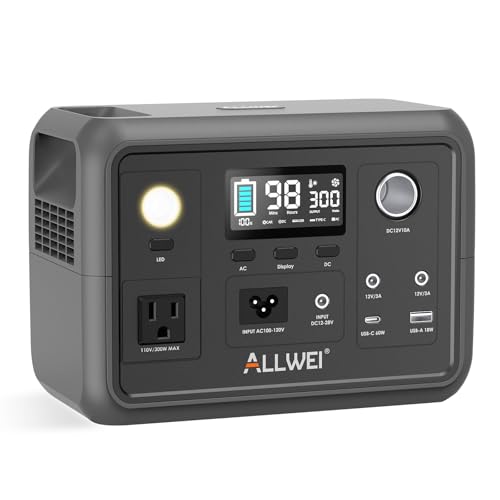
- 256Wh LiFePO4 battery
- 300W continuous, 600W peak output
- AC, car, solar, and dual charging
Best For: Camping and home backup with moderate power needs
Best Included-Panel Capacity

- 237Wh battery with 60W panel
- 300W pure sine wave AC output
- USB, USB-C, DC, and emergency light
Best For: Extended camping and small-device off-grid power
Pocket Power Pick
Daran 89.6Wh LiFePO4 Power Station

- Smartphone-sized, 2.54-pound design
- Silent operation with seven output ports
- LiFePO4 battery rated for 3,500+ cycles
Best For: Backpacking and quiet personal-device charging
Ready-to-Camp Bundle
ZeroKor 300W Generator with 60W Panel

- Includes a foldable 60W solar panel
- 300W output with multiple AC, DC, and USB ports
- Supports AC, car, and solar recharging
Best For: Camping bundles and basic off-grid charging
Capacity-Focused Pick
ZeroKor 280Wh 300W Power Station

- 280Wh capacity in a roughly five-pound design
- 300W AC output with varied charging ports
- Supports AC, car, and optional solar charging
Best For: Car camping and longer electronics-charging sessions
Best Lightweight Solar Kit – Jackery Explorer 300 with 40W Panel
This Jackery package is a practical pick among compact solar generators for camping, hiking, and basic backup power. Its 292Wh capacity, 300W output, and included 40W panel provide portable charging without a bulky setup.
Best For: Campers and hikers who want a lightweight generator-and-panel bundle for phones, cameras, laptops, and other smaller devices.
Pros:
- Weighs 7.5 pounds and has an integrated carry handle.
- Offers two AC outlets, USB-C, two USB-A ports, and a 120W car port.
- LiFePO4 battery is rated for more than 4,000 charge cycles before reaching 70% capacity.
- Includes a 40W solar panel and can reach 80% charge in about 7.5 hours with that panel.
Cons:
- The 300W output is intended for smaller electronics rather than high-wattage appliances.
- The included 40W panel charges more slowly than a 100W panel.
- The listed product weight is inconsistent across the supplied specifications.
Choose this bundle if portability and an included solar panel matter more than running large appliances. It is a compact, long-lasting option for everyday outdoor charging and modest emergency needs.
Best Ultra-Portable Budget Pick – HOWEASY 88Wh Power Station
For shoppers prioritizing minimal size and weight, this HOWEASY unit is one of the most portable compact solar generators in the group. Its 88Wh battery and 120W output suit small electronics, lighting, and short outdoor trips.
Best For: Campers and emergency-kit users who need a lightweight source for phones, lights, fans, cameras, and other devices under 120W.
Pros:
- Weighs just 2.3 pounds and measures 6.6 by 4 by 3 inches.
- Provides eight outputs, including AC, USB, USB-C, and DC ports.
- Supports AC, solar, and 12V/24V car charging.
- Includes three LED lighting modes and a two-year warranty.
Cons:
- Its 88Wh capacity and 120W output limit runtime and device compatibility.
- The solar panel is not included.
- It is not suitable for larger appliances or equipment requiring more than 120W.
This is the practical choice when easy carrying and basic device charging are the priorities. Its small battery makes it less suitable for extended off-grid use, but the multiple charging methods add flexibility.
Best High-Output Compact Generator – Jackery Explorer 1000 v2
This Jackery stands out among compact solar generators for combining a 1,070Wh battery with 1,500W of AC output. The included 200W panel, LiFePO4 battery, and app controls make it suited to camping, road trips, and emergency backup.
Best For: Users who need compact portable power for appliances such as refrigerators, AC units, and electric pots, while still valuing a relatively light design.
Pros:
- Delivers 1,500W continuous output and 3,000W surge power.
- Includes a 200W solar panel and reaches 80% charge in about six hours with it.
- 23.8-pound body with a foldable handle and 1,070Wh capacity.
- LiFePO4 battery is rated for more than 4,000 cycles, with app-controlled charging modes.
Cons:
- It is substantially heavier than smaller 300W-class options.
- The one-hour full-charge mode requires activation in the Jackery app.
- Solar charging is slower than the stated one-hour emergency AC charging mode.
This model offers the strongest balance of capacity and portability in this selection. Pick it when you need to run larger equipment but still want a manageable generator for travel or emergency storage.
Best Panel-Optional Mid-Size Pick – Jackery Explorer 300
The Jackery Explorer 300 is a straightforward choice among compact solar generators when you already have a charging solution or want to add a panel later. It combines a 292Wh battery with 300W output in a lightweight enclosure for camping, travel, and blackout preparation.
Best For: Outdoor users who need portable power for laptops, cameras, drones, phones, or CPAP equipment and prefer to choose their own solar panel.
Pros:
- Compact design weighs about 7.1 to 7.5 pounds, depending on the supplied specification.
- Includes two AC outlets, a 100W USB-C port, two USB-A ports, and a 120W car port.
- LiFePO4 battery supports more than 4,000 charge cycles before reaching 70% capacity.
- Can reach 80% charge in about 2.8 hours with a 100W solar panel.
Cons:
- A solar panel is optional and is not included in this listing.
- The 300W output is not designed for large appliances.
- Some supplied specifications list different dimensions, weight, and battery-cell details.
This version makes sense for shoppers who want the Explorer 300 power station without committing to a bundled panel. It provides useful ports and durable battery chemistry, while leaving solar-panel selection open.
Best Ultra-Portable Kit – MARBERO 111Wh Solar Generator
For shoppers comparing compact solar generators, the MARBERO M82MAX stands out as a lightweight power kit that includes a 30W folding solar panel. Its 111Wh battery, multiple USB ports, AC outlets, and small footprint make it suited to charging personal electronics while camping, traveling, or handling short outages.
Best For: Campers, road-trippers, and anyone needing lightweight backup power for phones, lights, laptops, and other small devices.
Pros:
- Includes a 30W foldable solar panel rather than requiring a separate purchase.
- Very portable, with a power station weight of about 2.3 pounds and compact dimensions.
- Offers four USB-A ports, one USB-C port, two AC outlets, and a DC port.
- Built-in protection features include overcharge, overload, over-voltage, and short-circuit protection.
Cons:
- The 111Wh capacity and 80W rated AC output are better suited to small electronics than demanding appliances.
- The included 30W panel will generally recharge more slowly than higher-wattage panels.
This is a practical pick when portability and an included solar panel matter more than extended runtime or high AC output. It is best matched with personal electronics and compact camping gear.
Best Long-Life Backup – ALLWEI 300W Portable Power Station
Among compact solar generators, the ALLWEI 256Wh power station offers a useful balance of capacity, output, and portability. Its LiFePO4 battery supports up to 300W continuous output, while solar, wall, car, and combined charging options give it flexibility for camping and emergency use.
Best For: Campers and households wanting a compact backup station for laptops, small appliances, CPAP machines, and other moderate-power essentials.
Pros:
- LiFePO4 battery is rated for 3,000 charge-discharge cycles and nearly a decade of regular use.
- Provides 300W continuous output and 600W peak pure sine wave power.
- Supports AC, 12V car, solar, and AC-plus-solar recharging.
- Six output ports can charge multiple devices simultaneously, including through a 60W USB-C port.
Cons:
- The solar panel is sold separately.
- At 6.4 pounds, it is less lightweight than the smallest personal power stations.
The ALLWEI is a strong choice for buyers who prioritize battery longevity and versatile recharging over an included solar kit. Its 300W rating expands its usefulness for emergency backup and longer outdoor trips.
Best Included-Panel Capacity – MARBERO 237Wh Solar Generator
For compact solar generators with more battery capacity, the MARBERO M823 combines a 237Wh power station with a 60W foldable solar panel. It delivers 300W of pure sine wave AC power, numerous charging ports, and an emergency light, making it a versatile option for camping, hiking, fishing, and short off-grid stays.
Best For: Outdoor users who want an included solar panel, more capacity than a basic personal power bank, and flexible charging for several small devices.
Pros:
- Includes a 60W foldable solar panel and a 237Wh battery.
- Two pure sine wave AC outlets provide 300W rated output with a 375W peak.
- Offers USB-A, USB-C, and DC outputs for charging a broad range of devices.
- Built-in flashlight includes flashlight, strobe, and SOS modes.
Cons:
- Devices drawing more than 300W, especially heating appliances, may damage the generator.
- The supplied notes do not specify the unit’s weight or full recharge time with the included panel.
This MARBERO kit is appealing when you want more capacity than a tiny generator without moving to a much larger system. The included 60W panel and multiple outputs make it particularly convenient for extended outdoor use.
Pocket Power Pick – Daran 89.6Wh LiFePO4 Power Station
If portability is your priority, this Daran unit is one of the most compact solar generators in this roundup. Its smartphone-sized design, 2.54-pound weight, fanless operation, and 100W output suit personal electronics, camping, and short-duration backup needs.
Best For: Backpacking, quiet bedside or tent use, and charging phones, laptops, cameras, and other devices within its 100W limit.
Pros:
- Very compact 6.5 × 3.3 × 4-inch design with a soft carry handle.
- Long-lasting LiFePO4 battery rated for more than 3,500 cycles.
- Seven output ports, USB-C PD charging, flashlight, and silent fanless operation.
- Supports AC, USB-C, car, and solar charging; reaches 0–80% in about 1.5 hours according to the notes.
Cons:
- Solar panel and cable are not included.
- The 100W maximum output limits use with larger appliances.
- Its 89.6Wh capacity is better for electronics than extended backup.
This is the most travel-friendly option here, especially when low noise and a small footprint matter more than running high-wattage equipment. Choose it for personal-device charging rather than appliance backup.
Ready-to-Camp Bundle – ZeroKor 300W Generator with 60W Panel
This ZeroKor package stands out among compact solar generators because it includes a 60W foldable solar panel. With a 300W rated output, multiple charging ports, and an SOS flashlight, it is a practical all-in-one choice for camping and basic off-grid charging.
Best For: Tent camping, outdoor trips, and users who want a solar panel included for charging phones, tablets, laptops, and smaller camping electronics.
Pros:
- Includes a 60W monocrystalline solar panel with stated 20.5% conversion efficiency.
- Offers two 300W-max AC outlets plus DC, USB, and quick-charge USB ports.
- Can recharge from AC, car power, or a compatible solar input with built-in MPPT.
- Panel includes USB-A, USB-C, and DC outputs for charging smaller devices directly.
Cons:
- Devices over 300W may damage or disable the power station.
- The solar panel junction box is not waterproof.
- A cooling fan may operate as the unit heats up.
The included panel makes this the simplest package for buyers starting from scratch. Its 300W ceiling is useful for electronics and light camping gear, but it is not intended for heating appliances, compressors, or other high-demand loads.
Capacity-Focused Pick – ZeroKor 280Wh 300W Power Station
For shoppers prioritizing stored energy, this ZeroKor model combines a 280Wh battery with 300W AC output in a portable package weighing about five pounds. It is among the more practical compact solar generators for longer device-charging sessions, though the solar panel must be purchased separately.
Best For: Car camping, RV or van use, home power interruptions, and charging several smaller electronics when extra capacity matters.
Pros:
- 280Wh capacity provides more stored energy than the smaller Daran model.
- Two AC outlets, DC output, USB ports, and QC USB support multiple devices.
- Rechargeable through a wall outlet, car adapter, or compatible 13–23V solar panel.
- Built-in MPPT and multiple protection mechanisms support safer operation.
Cons:
- Solar panel is not included.
- AC output must be switched on or off manually.
- Loads above 300W are not supported, and the unit is not recommended for long-term emergency storage without maintenance charging.
This model is a sensible middle ground for buyers who want more runtime than a pocket-sized station while retaining a manageable form factor. Add a compatible solar panel if off-grid recharging is important.
How We Picked These Compact Solar Generators
We focused on portable power stations that combine rechargeable battery storage with solar-charging capability or solar-panel compatibility. The lineup includes compact models for phones and lighting, midrange units with AC outlets, and larger systems suitable for laptops, small appliances, and longer trips.
Our comparison emphasizes usable capacity, inverter output, battery chemistry, charging flexibility, portability, and whether a solar panel is included. Published specifications can vary by configuration, so check the exact package and output ratings before ordering.
Quick Comparison
- Smallest and lightest options: Units around 90–120Wh are convenient for emergency charging, phones, lights, cameras, and other low-power devices.
- Best general-purpose range: Models around 230–300Wh offer a useful balance for camping, remote work, CPAP backup in some cases, and multiple device charges.
- Longest runtime: The 1,070Wh Jackery system is designed for substantially greater energy needs, though it is heavier and less compact.
- Solar-ready convenience: Bundles with 30W, 40W, 60W, or 200W panels reduce the need to purchase compatible charging equipment separately.
Key Buying Factors for Compact Solar Generators
Battery Capacity and Runtime
Capacity is measured in watt-hours. A 100Wh unit may handle several phone charges and lights, while a 300Wh model can support more devices or longer sessions. Actual runtime is lower than the stated capacity because of conversion losses, especially when using AC power.
Output and Port Selection
Check continuous wattage rather than peak wattage. Continuous output determines whether the generator can run your device without overload protection shutting it down. Confirm that it has the ports you need, such as USB-C Power Delivery, USB-A, 12V DC, and AC outlets.
Battery Chemistry and Recharge Speed
LiFePO4 batteries generally offer a long cycle life and strong safety profile, while other lithium-ion designs may be lighter or more affordable. Also compare wall, car, and solar recharge times. A larger solar panel can restore capacity more quickly in suitable sunlight.
Size, Weight, and Included Accessories
For hiking or emergency kits, every pound matters. For car camping or home backup, higher capacity may be worth the extra weight. An included panel improves value, but verify its rated output, connector compatibility, folding design, and whether a charge controller is built in.
Who Should Buy Which Compact Solar Generators?
Choose a small 89.6–111Wh model if you mainly need backup for phones, lights, routers, cameras, or other low-demand electronics. These are the easiest to carry and store.
Choose a 230–300Wh generator for balanced camping, travel, tailgating, and short emergency outages. This range is typically more versatile without becoming difficult to transport.
Choose the 1,070Wh system when extended runtime, laptop charging, multiple devices, or higher-wattage equipment matters more than compactness. Before buying, compare the total weight and confirm that the inverter can handle your intended appliance’s startup demand.
