
High-capacity solar generators provide a flexible way to keep essential appliances, electronics, and tools running during outages or away from the grid. The models in this roundup range from portable 3,000Wh-class power stations to expandable systems designed for extended home backup.
We compare battery capacity, output, expansion options, charging performance, portability, and included solar equipment so you can match a system to your actual power needs and budget.
Best 10 High-Capacity Solar Generators Picks for 2026
Best All-Around Capacity

- 3,072Wh battery with 3,600W pure-sine output
- 13 ports for simultaneous device charging
- 0–100% AC recharge in about two hours
Best For: Home backup, RV trips, and multi-device power
Best for Extended Home Backup

- 3,584Wh capacity with 3,600W output
- Expandable storage up to 21kWh per unit
- Wheels and handle improve portability
Best For: Longer household outages and high-demand appliances
Best Expandable Whole-Home Option

- 4,096Wh base capacity with extra battery included
- Expandable to 48kWh with compatible equipment
- 4,000W output with 120V/240V support
Best For: Whole-home backup and large expandable systems
Best Lightweight 3kWh Pick

- 3,072Wh capacity with 3,600W output
- 20ms-or-faster UPS for essential devices
- Lighter 59.5-pound design with RV port
Best For: Portable home essentials, RVs, and outdoor use
Whole-Home Powerhouse

- 12,000W output for whole-home backup
- Includes two batteries; expandable to 180kWh
- Fast backup response and LiFePO4 safety system
Best For: Residential backup and large energy-storage needs
Expandable Emergency Hub

- 3,072Wh battery with 3,600W output
- Expandable to 24kWh and supports 240V pairing
- Solar, wall, and generator charging options
Best For: Outages, RVs, and extended essential-load backup
Quiet Portable Backup

- 3,600W output with 7,200W surge capacity
- Includes two 220W solar panels
- 25dB operation and under-10ms UPS switching
Best For: Quiet home, RV, and camping backup
Maximum Capacity Pick
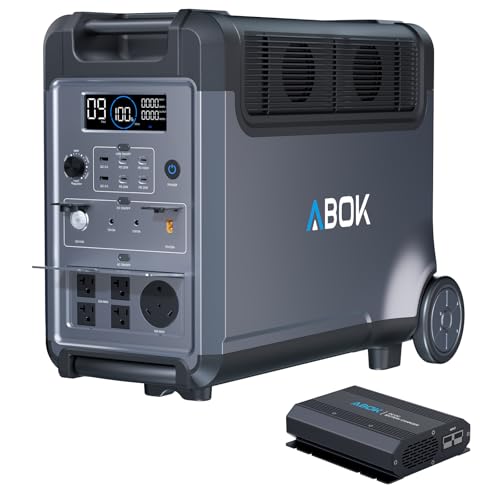
- 3,840Wh capacity expands to 11,520Wh
- 3,600W output supports most appliances
- 15 ports and Bluetooth monitoring
Best For: Home backup, RVs, emergencies, and off-grid power
Backup-Focused Choice

- 3,840Wh expands to 11,520Wh
- Under-10ms UPS switching
- Four charging methods and 15 ports
Best For: Home backup, essential appliances, camping, and mobile work
Quiet Smart-Power Pick

- 3,072Wh expands to 11kWh
- 25dB operation under load
- 3,600W output with 7,200W surge
Best For: Quiet home backup, RVs, camping, and smart energy management
Best All-Around Capacity – PECRON F3000LFP
The PECRON F3000LFP is a practical choice among high-capacity solar generators when you need strong output, numerous ports, and straightforward home-backup capability. Its 3,072Wh LiFePO4 battery and 3,600W pure-sine-wave output can support demanding appliances and multiple smaller devices.
Best For: Home backup, RV use, camping, and powering several devices at once.
Pros:
- 3,600W output and 3,072Wh capacity support refrigerators, air conditioners, and power tools.
- Can power up to 13 devices, including laptops through 100W USB-C ports.
- Recharges from 0% to 100% in about two hours through 1,800W AC input.
- UPS switching and app monitoring add useful backup and control features.
Cons:
- At 63.3 pounds, it is substantial to move.
- The optional extra battery requires a separately sold XT120-M cascade cable.
With a strong balance of capacity, output, connectivity, and charging speed, the F3000LFP is a versatile option for shoppers who want one unit for both emergency preparedness and outdoor use.
Best for Extended Home Backup – Jackery HomePower 3600 Plus
The Jackery HomePower 3600 Plus stands out among high-capacity solar generators for expandable storage and home-oriented features. Its 3,584Wh capacity, 3,600W output, and optional parallel operation make it a strong fit for longer outages and demanding household loads.
Best For: Household backup, heavier appliances, and users who value expandable capacity and easy mobility.
Pros:
- Supports 3,600W output, with up to 7,200W in parallel and 120V/240V operation in parallel.
- Capacity can expand to 21kWh per unit or 43kWh with multiple units.
- Hybrid AC+DC charging can reach full capacity in about two hours.
- Wheels and a telescoping handle make the 77.2-pound unit easier to reposition.
Cons:
- The unit is still heavy despite its rolling design.
- Advanced home integration and parallel operation may require additional equipment or setup.
Choose this model if your priority is scalable household backup rather than lightweight portability. Its long stated battery life, multiple charging options, and rolling form factor make it especially practical for outage preparation.
Best Expandable Whole-Home Option – EcoFlow DELTA Pro 3
The EcoFlow DELTA Pro 3 is one of the most expandable high-capacity solar generators in this group. With a 4,096Wh base battery, an included extra battery, 120V/240V support, and expansion potential up to 48kWh, it is designed for serious backup needs.
Best For: Whole-home backup, central air or pump support, and users planning a large expandable energy system.
Pros:
- Provides 4,000W output, 6,000W with X-Boost, and scalability up to 12,000W.
- Base capacity can expand to 48kWh with extra batteries or smart generators.
- Supports numerous charging methods, including AC, solar, EV charging, and generators.
- Offers 10ms transfer switching and operation as quiet as 30dB.
Cons:
- The combined system weighs 188 pounds.
- The power station and extra battery ship in separate packages.
- Its broader expansion and home-backup capabilities may be more than casual campers need.
The DELTA Pro 3 is the strongest choice here for buyers building a substantial backup system. It trades portability for exceptional expansion potential, appliance support, quiet operation, and flexible recharging.
Best Lightweight 3kWh Pick – Jackery HomePower 3000
The Jackery HomePower 3000 offers a compact way to get high-capacity solar-generator performance without the bulk of many comparable systems. It combines 3,072Wh of storage with 3,600W output, a fast UPS, and included 200W solar panels for home essentials and outdoor use.
Best For: Essential home backup, RV use, and shoppers who prioritize a smaller, lighter 3kWh power station.
Pros:
- 3,600W output with 7,200W surge capacity can handle common household essentials.
- Built-in UPS switches within 20ms for devices such as routers, cameras, and medical refrigerators.
- Dual 100W USB-C ports and a TT-30 RV port improve everyday versatility.
- At 59.5 pounds, it is positioned as a lighter and smaller 3kWh option.
Cons:
- Solar charging with the included panels reaches up to 80% in about nine hours.
- Its 3,072Wh capacity is less expandable than the larger systems in this roundup.
This model makes sense when portability matters nearly as much as capacity. It is well suited to keeping refrigerators, networking equipment, lights, and other essentials running while remaining easier to transport than many high-output alternatives.
Whole-Home Powerhouse – DELTA Pro Ultra X
For shoppers comparing high-capacity solar generators, the EF ECOFLOW DELTA Pro Ultra X is designed for whole-home backup rather than occasional device charging. Its 12,000W output, included batteries, and expandable capacity make it a substantial residential energy system for outages and everyday energy management.
Best For: Whole-home backup, residential energy storage, and users who want expandable capacity.
Pros:
- 12,000W output supports demanding home loads, including air conditioning and EV charging.
- Includes two extra batteries and can expand from 12kWh to as much as 180kWh.
- Under-20-millisecond backup response helps keep refrigerators, Wi-Fi, and medical equipment running.
- LiFePO4 cells, dual battery-management systems, and more than 100 safety checks support long-term use.
Cons:
- At 350 pounds, it is not practical for frequent portable use.
- Its whole-home capabilities may be excessive for basic camping or occasional backup needs.
- The inverter and extra batteries ship in separate packages.
The DELTA Pro Ultra X stands out when maximum capacity and whole-home coverage matter more than compact size. Its expandable design also gives homeowners room to increase storage over time.
Expandable Emergency Hub – Anker SOLIX F3000
The Anker SOLIX F3000 is a versatile choice among high-capacity solar generators, combining a 3,072Wh LiFePO4 battery with 3,600W output and multiple charging options. It is sized for home emergencies, RV use, and extended essential-appliance backup without moving into whole-home-system territory.
Best For: Emergency backup, RV trips, and users who want expandable storage with generator compatibility.
Pros:
- 3,600W output can power essential appliances at 120V, while two units can be paired for 240V operation.
- Expandable from 3,072Wh to 24kWh for longer outages.
- Supports portable and rigid solar panels through 165V and 60V solar inputs.
- Low idle consumption enables up to 125 hours of AC standby or up to 42 hours for a 190W refrigerator.
Cons:
- Its 91.5-pound weight limits easy transport compared with smaller power stations.
- Some advanced home-energy features require additional equipment, such as a bidirectional inlet box and smart meter.
- The listed 3,600W output is below the capacity of dedicated whole-home systems.
With strong expansion potential, solar compatibility, and generator-ready charging, the F3000 is a flexible middle ground for homeowners, RV owners, and emergency-preparedness buyers.
Quiet Portable Backup – DELTA 3 Ultra
The EF ECOFLOW DELTA 3 Ultra offers a balanced option for shoppers seeking high-capacity solar generators for home backup, RV travel, or camping. With 3,600W continuous output, a 7,200W surge rating, and two included 220W solar panels, it can handle many demanding essentials while remaining quieter than many comparable systems.
Best For: Quiet overnight backup, RV use, camping, and essential home appliances.
Pros:
- 3,600W continuous output and 7,200W surge capacity support refrigerators, microwaves, heaters, and power tools.
- Under-10-millisecond UPS switching helps protect PCs, Wi-Fi equipment, and medical devices from interruptions.
- Operates at about 25dB under load, making it suitable for bedrooms, apartments, and RVs.
- Includes two 220W solar panels and supports wall, car, and smart-generator charging.
Cons:
- Its 3,072Wh capacity is smaller than large expandable home systems.
- The power station and solar panels arrive in separate packages.
- Solar charging speed depends on available sunlight and the included panel capacity.
The DELTA 3 Ultra is a practical compromise between output, portability, and quiet operation. It is especially appealing when uninterrupted electronics backup and low operating noise are priorities.
Maximum Capacity Pick – ABOK Ark3600
The ABOK Ark3600 is a strong option among high-capacity solar generators when you need substantial output and room to expand. Its 3,840Wh LiFePO4 battery scales to 11,520Wh, while the 3,600W rated output can support most household appliances.
Best For: Home backup, RV trips, off-grid use, emergencies, and users who need expandable storage.
Pros:
- Large 3,840Wh capacity expandable to 11,520Wh
- 3,600W continuous and 4,500W peak output
- LiFePO4 battery rated for over 4,000 cycles
- 15 output ports plus Bluetooth app control
Cons:
- Heavy at 92 pounds
- Large footprint may be less convenient for frequent transport
Its wheels and telescoping handle improve portability, while combined AC and solar charging can fully recharge the unit in about 1.29 hours under supported conditions. It is best suited to buyers prioritizing capacity and appliance support over lightweight portability.
Backup-Focused Choice – AFERIY 3840Wh Power Station
The AFERIY 3840Wh is designed for buyers comparing high-capacity solar generators for home backup and extended outdoor use. It combines expandable 3.8kWh storage, 3,600W output, UPS switching under 10ms, and four charging methods.
Best For: Home outages, refrigerators and essential devices, camping, mobile workstations, and users who want app-based control.
Pros:
- Expandable from 3,840Wh to 11,520Wh
- UPS transfer time under 10ms for compatible critical devices
- AC, solar, car, and combined AC-plus-solar charging
- 15 ports and a smart app for monitoring and control
Cons:
- Actual runtime varies with appliance load and conditions
- Reported product weight is substantial, making transport less convenient
Supported charging conditions can bring a full recharge to about 1.5 hours, and the stated use cases include refrigerators, routers, lights, and other essentials. Its UL listing and seven-year support period add appeal for preparedness-minded buyers.
Quiet Smart-Power Pick – EcoFlow DELTA 3 Ultra Plus
The EcoFlow DELTA 3 Ultra Plus stands out among high-capacity solar generators for its quiet operation, expandable storage, and broad charging compatibility. Its 3,072Wh capacity grows to 11kWh, with 3,600W continuous output and a 7,200W surge rating.
Best For: Quiet home backup, RV use, camping, extended outages, and users who want smart energy scheduling.
Pros:
- Expandable capacity from 3kWh to 11kWh
- Under-10ms UPS switching for supported sensitive devices
- Quiet operation rated at 25dB under load
- Six charging options and EcoFlow app controls
Cons:
- Base capacity is lower than the 3,840Wh options in this group
- Product details list only two total power outlets
X-Stream charging reaches 80% in under an hour under supported conditions, while the LiFePO4 battery and smart battery management system are designed for long-term daily use. This is a compelling choice when quiet performance and flexible system expansion matter as much as capacity.
How We Picked the Best High-Capacity Solar Generators
We focused on power stations with roughly 3,000Wh or more of usable battery capacity, along with enough inverter output for demanding household equipment, RV appliances, tools, and backup essentials. We also considered LiFePO4 battery chemistry, solar-input capability, expansion options, charging flexibility, portability, included accessories, and the practical differences between a portable generator and a whole-home backup system.
Product specifications can vary by configuration, so verify the exact bundle before buying—especially solar-panel wattage, extra batteries, transfer equipment, and usable capacity.
Quick Comparison
| What to Compare | Why It Matters |
|---|---|
| Battery capacity | Determines how long the unit can run appliances before recharging. |
| AC output | Shows which appliances, tools, and startup loads the inverter can support. |
| Expandability | Allows longer runtime and can make a system more suitable for home backup. |
| Solar input | Influences how quickly the battery can recharge from panels. |
| Portability | Important when moving the unit between rooms, vehicles, campsites, or job sites. |
Key Buying Factors for High-Capacity Solar Generators
Capacity and Runtime
Battery capacity is measured in watt-hours. Estimate runtime by adding the wattage of the devices you plan to use, then allowing for inverter losses. A 3,000Wh-class unit may handle essentials for a day or more, but heating appliances, air conditioners, pumps, and electric cooking equipment can drain it quickly.
Output and Surge Performance
Check both continuous wattage and peak or surge capability. Refrigerators, pumps, compressors, and power tools may briefly require much more power when starting. A higher rating provides more flexibility, but it does not guarantee compatibility with every appliance.
Battery Type, Charging, and Expansion
LiFePO4 batteries are generally preferred for their long cycle life and stable chemistry. Compare AC charging speed, maximum solar input, vehicle charging, and whether additional batteries can be connected. Expansion is especially valuable if your backup needs may grow.
Portability and Installation
Large-capacity units can be heavy. Wheels, handles, and a manageable form factor matter if you expect to move the generator regularly. For home circuits, confirm whether the system supports an approved transfer switch or professional installation rather than assuming a standard outlet can power the entire house.
Who Should Buy Which High-Capacity Solar Generators?
Choose a 3,000Wh-class portable model if you need outage coverage for refrigerators, networking equipment, lights, medical devices, or occasional tools. These units balance meaningful capacity with easier transport.
Choose a bundled system with solar panels if you want a ready-to-use emergency or camping setup and do not already own compatible panels. Compare the panel wattage and charging limits, not just the headline battery size.
Choose an expandable or ultra-high-capacity system if you need extended runtime, frequent backup use, or support for multiple household circuits. These systems offer greater resilience but usually cost more, weigh more, and may require additional equipment or installation.
