
When outages hit, you want backup power that starts easily, runs efficiently, and can handle changing conditions. The best all-weather inverter home generators are built to keep essential circuits, appliances, and comfort systems running when the grid goes down.
In this roundup, we focused on high-output models with practical fuel options, remote or electric start, and features that make real-world home backup easier.
Best 10 All-Weather Inverter Home Generators Picks for 2026
Dual-Fuel Home Backup Pick
AIVOLT 11250W Dual Fuel Inverter Generator 50A for Home Backup
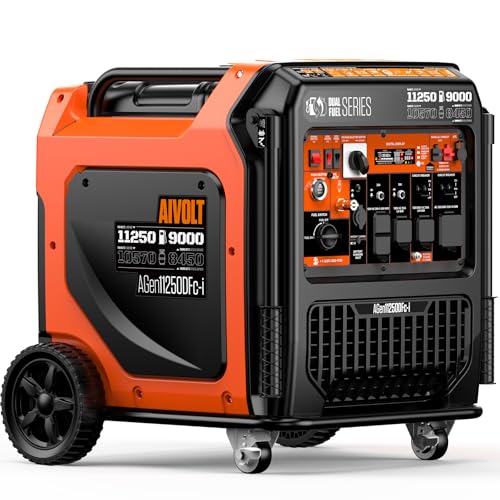
- Dual fuel output for gasoline or propane use.
- 50A outlet plus ATS compatibility for home or RV backup.
- Quiet operation and long runtime for overnight outages.
Best For: Home backup buyers who want dual-fuel flexibility and remote-start convenience.
Quiet Mid-Size Inverter Choice
Genkins 8000W Portable Quiet Inverter Generator for Home, Electric Start

- Pure sine-wave output is safe for sensitive electronics.
- Electric start and digital display simplify setup and monitoring.
- Telescopic handle and tires improve portability for a 112-lb unit.
Best For: Homeowners who want a quieter mid-size backup generator with clean power.
Most Flexible Fuel Option
Pulsar PGD125TiSRCO 12500W Tri Fuel Inverter Generator, ATS Ready

- Runs on gasoline, propane, or natural gas for fuel flexibility.
- Up to 12,500 peak watts for major appliance and HVAC support.
- 50A output with ATS compatibility and CO Sentry protection.
Best For: Buyers who want tri-fuel backup power and home-panel compatibility.
Remote Start Home Backup Pick
Champion 11,000-Watt Wireless Remote Start Portable Inverter Generator

- Wireless remote start works from up to 80 feet away.
- 11,000 starting watts and 9,000 running watts for backup power.
- CO Shield and Cold Start Technology add safety and ease of use.
Best For: Homeowners who want remote-start convenience and strong gasoline backup power.
Whole-Home Dual-Fuel Backup
WEN DF680iX 6800W Dual-Fuel Inverter

- Runs on gas or propane with electric start.
- 240V bonded-neutral setup supports low-power Level 2 charging.
- CO Watchdog and fuel shutoff add safety and convenience.
Best For: Home backup with EV/hybrid charging support
Remote-Start Tri-Fuel Convenience
Champion 6500W Tri-Fuel Inverter
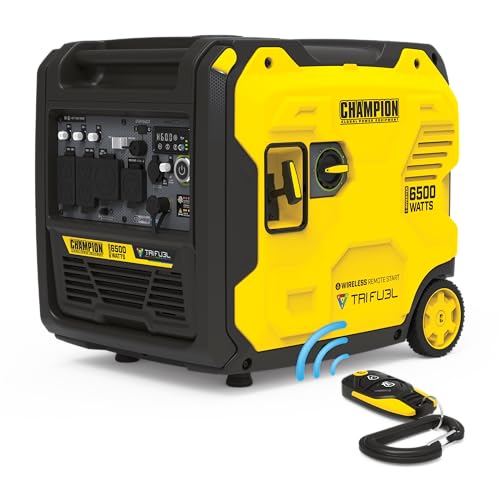
- Works with natural gas, propane, or gasoline.
- Wireless remote and electric start improve convenience.
- Can connect to ESS or automatic transfer switches.
Best For: Easy-start home backup with tri-fuel flexibility
High-Output Home Backup Workhorse
Pulsar GD10KBN 10500W Dual-Fuel Inverter

- 10500-watt output suits heavier home backup loads.
- Dual-fuel design runs on gasoline or propane.
- Digital multimeter and protection features aid monitoring.
Best For: Higher-output backup for essentials and some central A/C
Tri-Fuel Whole-Home Pick

- Gas, propane, or natural gas operation
- 120V/240V with transfer-switch-ready outlets
- CO Watchdog and electric start included
Best For: Whole-home backup with maximum fuel flexibility
Dual-Fuel Home Backup Value
Westinghouse 12,500W Dual Fuel Backup

- Gasoline or propane operation
- Remote, electric, and recoil start
- Transfer-switch-ready home backup outlets
Best For: Homeowners wanting simple dual-fuel emergency power
Quiet Inverter Backup Choice
Westinghouse iGen12000DFc Dual Fuel Inverter

- Low-THD inverter power for electronics
- Gas or propane with long runtime
- Remote start and CO sensor included
Best For: Quiet whole-home backup with cleaner power
Dual-Fuel Home Backup Pick – AIVOLT 11250W Dual Fuel Inverter Generator 50A for Home Backup
If you’re shopping for all-weather inverter home generators, this AIVOLT model stands out for flexible fueling, strong output, and home-backup-friendly features. It delivers enough power for essential appliances and can run on gasoline or propane, while staying quiet enough for overnight use.
Best For: Homeowners who want a dual-fuel inverter generator with high output, remote start convenience, and ATS compatibility.
Pros:
- 11,250 starting watts on gasoline and 10,570 starting watts on propane for serious backup capacity.
- 50A outlet and ATS compatibility make it easier to connect to RVs, food trucks, or a home panel.
- Runs at 60 dBA at 23 ft and up to 19 hours on a 7.1-gallon tank at light load.
- Remote fob, push-button start, and recoil backup help in bad weather or low-light conditions.
Cons:
- Engine oil is not included, so it is not fully ready without a first setup step.
- At this power level, it is still a large unit compared with smaller portable inverter generators.
Overall, this is a strong all-weather inverter home generators option if you want fuel flexibility and practical backup features in one package. The copper windings, safety protections, and long runtime make it especially appealing for outage preparedness.
Quiet Mid-Size Inverter Choice – Genkins 8000W Portable Quiet Inverter Generator for Home, Electric Start
This Genkins model is a practical pick for all-weather inverter home generators when you want clean power without jumping to the largest, heaviest units. It offers pure sine-wave output, electric start, and a quiet enough operating profile for home emergency use or camping.
Best For: Buyers who want a mid-size inverter generator with stable power, easy starting, and manageable portability.
Pros:
- 8000W peak and 6500W rated power with pure sine-wave output for sensitive electronics.
- Electric start and digital display make operation straightforward.
- ESC Mode helps improve fuel efficiency and extends runtime to 8 hours at 50% load.
- At 112 lbs, it includes a telescopic handle and tires for easier movement and storage.
Cons:
- Smaller fuel tank and shorter runtime than some larger home backup units.
- Not as high-output as the biggest whole-home-ready inverter generators in this roundup.
For households that want dependable emergency power in a quieter, easier-to-move format, this generator hits a useful middle ground. It is especially appealing if clean power and simple startup matter more than maximum wattage.
Most Flexible Fuel Option – Pulsar PGD125TiSRCO 12500W Tri Fuel Inverter Generator, ATS Ready
Among all-weather inverter home generators, this Pulsar model is designed for maximum fuel flexibility and strong backup capability. With gasoline, propane, or natural gas operation, it gives you options when supplies or convenience matter during an outage.
Best For: Households that want tri-fuel backup power with 120V/240V output and ATS-ready home emergency use.
Pros:
- Tri-fuel design lets you run on gasoline, propane, or natural gas.
- Up to 12,500 peak watts supports major appliances, HVAC systems, RVs, and tools.
- Electric push-button start and remote fob make starting easy.
- 50A output, ATS compatibility, and CO Sentry protection suit home backup use.
Cons:
- At approximately 66 dB at 50% load, it is quiet for its class but not the quietest unit here.
- The feature set is robust, which may be more generator than smaller households need.
This is a strong choice if you want a generator built around flexibility first and foremost. The combination of tri-fuel operation, home-backup connectivity, and clean inverter power makes it easy to justify for outage readiness.
Remote Start Home Backup Pick – Champion 11,000-Watt Wireless Remote Start Portable Inverter Generator
If you want an all-weather inverter home generators option that prioritizes convenience, this Champion unit is easy to recommend. It pairs strong home-backup output with wireless remote start, making it simple to operate when the weather is bad or access is limited.
Best For: Home users who want a high-output gasoline inverter generator with remote start and proven backup-oriented features.
Pros:
- 11,000 starting watts and 9,000 running watts provide solid home backup capability.
- Wireless remote key fob lets you start and stop it from up to 80 feet away.
- CO Shield auto shutoff and Cold Start Technology add practical safety and cold-weather usability.
- Multiple outlets, including 120/240V options, support a range of household needs.
Cons:
- At 200 pounds, it is one of the heavier units in this roundup.
- Gasoline-only fueling means less flexibility than dual-fuel or tri-fuel models.
This Champion is a straightforward home backup generator for buyers who want power, remote convenience, and a known feature set. It is especially useful if you value easy starting and don’t need multi-fuel support.
Whole-Home Dual-Fuel Backup – WEN DF680iX 6800W Dual-Fuel Inverter
If you want an all-weather inverter home generator that can cover backup power and vehicle charging duties, the WEN DF680iX brings a flexible 224cc dual-fuel setup. It runs on gasoline or propane, includes electric start, and adds a bonded-neutral 240V configuration for low-power Level 2 charging compatibility. That makes it a practical pick for households looking for more than just basic outage coverage.
Best For: Homeowners who want dual-fuel backup power with EV or hybrid charging support.
Pros:
- Runs on gasoline or propane for fuel flexibility.
- Includes a 240V bonded-neutral configuration for low-power Level 2 charging.
- WEN Watchdog CO Shutdown Sensor adds an automatic safety shutoff.
- Fuel shutoff helps use up remaining carburetor fuel before storage.
Cons:
- Lower rated output on propane than on gasoline.
- Heavier-duty setup may be more than needed for simple portable use.
- Some users may not need the EV-focused 240V feature.
Overall, this model stands out by combining home-backup flexibility with extra utility features, including RV-ready outlets and charging support. If your priority is a generator that can do more than one job during outages, it fits that role well.
Remote-Start Tri-Fuel Convenience – Champion 6500W Tri-Fuel Inverter
For buyers comparing all-weather inverter home generators, this Champion model is built around convenience and fuel flexibility. It operates on natural gas, propane, or gasoline, and it ships with hoses for natural gas and propane so it is ready to run right away. With remote start, electric start, and transfer-switch/ESS connectivity, it is especially well suited to home backup setups that benefit from easy automation.
Best For: Home backup users who want tri-fuel flexibility and easy remote starting.
Pros:
- Runs on natural gas, propane, or gasoline.
- Includes hoses for natural gas and propane for out-of-box setup.
- Wireless remote key fob starts it from up to 80 feet away.
- Can connect to Energy Storage Systems or Automatic Transfer Switches.
Cons:
- Output is lower than larger whole-home backup units.
- Best value depends on having access to the fuel source you plan to use.
- Remote features may be unnecessary for simpler backup needs.
This is a strong option if you want a generator that is easier to start, easier to integrate, and flexible about fuel choice. Its quiet operation and long runtime make it a practical fit for home backup or RV use.
High-Output Home Backup Workhorse – Pulsar GD10KBN 10500W Dual-Fuel Inverter
If you need an all-weather inverter home generator with more output headroom, the Pulsar GD10KBN is built for home backup and emergency use. It delivers dual-fuel operation on gasoline or propane, an electric start, and a 120/240V RV-ready outlet. The generator also includes a digital multimeter, overload protection, and short-circuit protection, making it a practical choice for monitoring and protection during outages.
Best For: Homeowners who need higher output for essentials and some central A/C coverage during outages.
Pros:
- High 10,500-watt starting output for demanding backup needs.
- Runs on gasoline or propane for fuel flexibility.
- Digital multimeter shows voltage, frequency, run hours, and maintenance hours.
- Includes overload and short-circuit protection plus low-oil shutdown.
Cons:
- At 125 pounds, it is not a lightweight portable option.
- Fuel runtime is listed at 10 hours, which may not suit very long outages without refueling.
- Single-unit use may be more generator than needed for smaller loads.
For buyers who want stronger backup capacity and useful monitoring features, this Pulsar offers a compelling mix. Its larger output and home-ready outlet set make it well suited to storm prep and residential emergency power.
Tri-Fuel Whole-Home Pick – WEN 13,000W Tri-Fuel Inverter
If you’re shopping for all-weather inverter home generators that can flex between fuel types, the WEN TF1300iX is built for serious backup duty. It delivers tri-fuel versatility, 120V/240V output, and transfer-switch-friendly outlets, making it a strong fit for whole-home emergency planning, EV charging, and utility backup.
Best For: Homeowners who want tri-fuel flexibility and 120V/240V backup power with an inverter design.
Pros:
- Runs on gasoline, propane, or natural gas with wattage levels clearly listed for each fuel.
- Quiet, bonded-neutral 120V/240V setup is compatible with transfer switches and Level 2 charging use cases.
- CO Watchdog shutdown sensor adds an important safety layer during backup operation.
- Electric start, wheel kit, and multiple outlets make it easier to use for home emergencies.
Cons:
- At 246.9 pounds, it is heavy and not meant for frequent moving without the wheel kit.
- Runtime is listed at up to 7.7 hours at half load, which is shorter than some large-tank competitors.
This is a practical choice if fuel flexibility matters more to you than portability. It combines inverter output, safety shutoff protection, and home-ready connections in one large backup package.
Dual-Fuel Home Backup Value – Westinghouse 12,500W Dual Fuel Backup
For buyers comparing all-weather inverter home generators, this Westinghouse model is a high-output dual-fuel option with the convenience of remote start. It is not an inverter unit, but it does offer transfer-switch-ready connections, solid runtime, and the kind of home backup capacity many families want for outages.
Best For: Home backup buyers who want dual-fuel convenience, remote start, and a straightforward high-wattage generator.
Pros:
- Dual-fuel setup supports gasoline and propane for more fueling flexibility.
- Remote electric start with key fob adds convenience during outages.
- Transfer switch-ready L14-30R and RV-ready 14-50R outlets improve home-use versatility.
- Digital hour meter, VFT display, and low oil shutdown help with monitoring and upkeep.
Cons:
- This is a conventional portable generator, not an inverter, so it lacks inverter-specific low-THD positioning.
- It is relatively heavy at 210 pounds.
If you want reliable backup power and dual-fuel flexibility more than inverter features, this model is an easy-to-understand option. It focuses on practical output, useful outlets, and simple startup for residential emergency use.
Quiet Inverter Backup Choice – Westinghouse iGen12000DFc Dual Fuel Inverter
If your priority is one of the more refined all-weather inverter home generators, the Westinghouse iGen12000DFc brings low-THD output, dual-fuel flexibility, and quieter operation into a home-backup-ready package. It is designed for sensitive electronics, transfer switch or interlock kit setups, and long runtimes when the power stays out.
Best For: Homeowners who want inverter-quality power for electronics, quiet operation, and long runtime.
Pros:
- Low THD output is positioned as safe for sensitive electronics.
- Dual-fuel design runs on gasoline or propane with strong wattage ratings for both fuels.
- Very quiet operation is listed as low as 64 dBA.
- Includes CO sensor, remote start key fob, and transfer-switch/interlock-ready outlets.
Cons:
- At 187.4 pounds, it is still a substantial machine to store and move.
- The 3-outlet setup is less expansive than some larger backup generators.
This model stands out if you want inverter technology for cleaner power and lower fuel use without giving up serious backup capability. It balances long runtime, home-ready connections, and convenient start features well.
How We Picked the Best All-Weather Inverter Home Generators
We selected All-Weather Inverter Home Generators with the strongest mix of usable power, fuel flexibility, and home-backup convenience. Priority went to models with electric or remote start, transfer-switch readiness, dual-fuel or tri-fuel capability, and safety features such as CO shutdown protection. We also favored units that better support outage conditions, including larger tanks, wheel kits, and 120V/240V output for more demanding household loads.
Quick Comparison
At a high level, the lineup breaks into three groups: high-capacity dual-fuel models for broad home coverage, tri-fuel options for maximum fuel flexibility, and quieter inverter models that are easier to live with during extended outages. If you need the simplest setup, look for remote start and transfer-switch compatibility. If fuel access is your biggest concern, tri-fuel models offer the most options.
Key Buying Factors for All-Weather Inverter Home Generators
Power Output and Voltage
Check both running watts and starting watts, plus whether the unit provides 120V/240V output. Homes with well pumps, sump pumps, central HVAC components, or other larger loads usually need the added versatility of 240V support.
Fuel Flexibility
Dual-fuel and tri-fuel designs are especially valuable during emergencies because they give you backup choices when gasoline is scarce. Propane stores well for long periods, while natural gas can be convenient for extended outages if your home has that connection.
Starting and Controls
Remote start and electric start are more than convenience features in bad weather; they can make a generator much easier to use in rain, cold, or low light. If you expect frequent outages, these features are worth prioritizing.
Noise, Runtime, and Portability
Inverter designs are generally easier on the ears than conventional generators and tend to deliver cleaner power for electronics. For larger home-backup units, portability matters too, so wheel kits and handle designs can make a big difference.
Who Should Buy Which All-Weather Inverter Home Generators?
If you want the most flexible emergency setup, choose a tri-fuel model. If you prefer a simpler system with strong household coverage, a dual-fuel generator is often the best balance of cost and convenience. If quiet operation and cleaner power matter most, focus on inverter models with lower-noise profiles and enough capacity for your essential circuits. For homeowners building a more complete outage plan, the best All-Weather Inverter Home Generators are the ones that match your transfer switch, fuel supply, and essential load needs—not just the biggest wattage on the box.
