
Lightweight heat recovery ventilators can improve indoor air quality without the bulk or complexity of larger ventilation systems. They’re a smart fit for apartments, single rooms, additions, and homes that need efficient fresh air exchange.
In this roundup, we focus on compact, install-friendly options that balance airflow, efficiency, and convenience so you can choose the right model for your space and budget.
Best 10 Lightweight Heat Recovery Ventilators Picks for 2026
Whole-Home Smart Pick

- 230 CFM capacity
- VIRTUO self-adjustment tech
- Built-in LCD and remote control
Best For: Homeowners needing a feature-rich whole-home HRV
Quiet Single-Room Upgrade
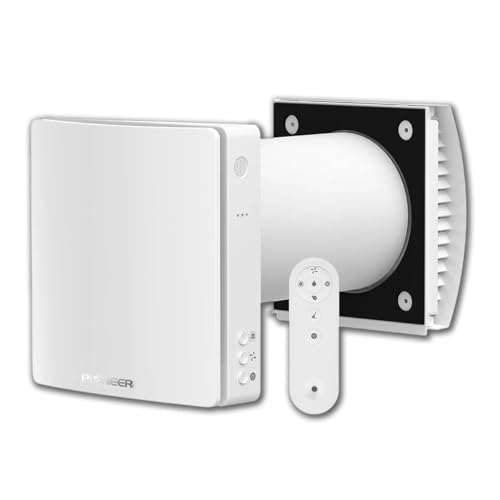
- Only 8W average power draw
- Up to 35 CFM airflow
- Wi-Fi app control and CO2 sensor
Best For: Bedrooms and small rooms needing quiet, efficient ventilation
Compact Wall Vent Pick
LINGGONGAIR 4-Inch Reversible Vent

- 4-inch wall-mounted format
- 5W EC motor
- Reversible intake/exhaust with remote
Best For: Small rooms needing a compact, low-power wall ventilator
High-Capacity Recovery Choice

- 30-225 CFM airflow range
- Includes line cord
- Higher-capacity recovery option
Best For: Users needing a broad airflow range in an ERV
Compact WiFi HRV
6 Inch Heat Recovery Ventilator with Ceramic Heat Exchanger
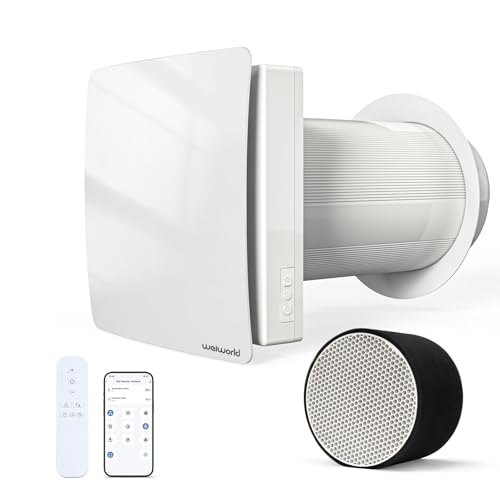
- Up to 90% heat recovery with ceramic exchanger
- 8.5W EC motor runs under 30dB
- Tuya app, remote, and 3 airflow modes
Best For: Single-room ventilation in small spaces with smart control
Balanced Ventilation Pro
Panasonic FV-12ESC1 Intelli-Balance Elite Plus ERV, 120 CFM

- SmartFlow ECM motors maintain airflow quietly
- Adjustable 30-120 CFM with balanced, positive, or negative pressure
- Dual MERV 13 filters included
Best For: Flexible, filtered ventilation in homes or indoor spaces
Wall or Ceiling ERV
Broan B160H65RS AI 150 CFM Heat Recovery Ventilator
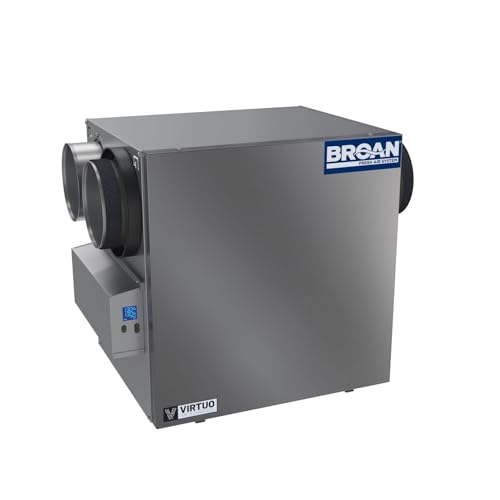
- 150 CFM ventilation capacity
- Wall or ceiling mounting options
- Includes VIRTUO Air Technology
Best For: Home ventilation upgrades with flexible mounting
Compact Smart ERV
Pioneer ECOasis 150 Wi‑Fi Single-Room ERV
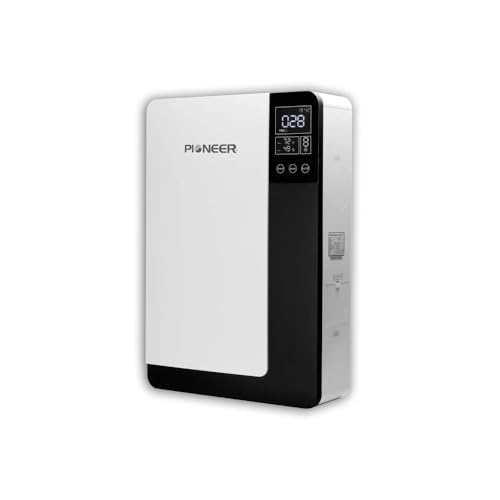
- 82% efficient heat exchanger with 35W power draw
- PM2.5 and CO2 monitoring with automatic fan adjustment
- 4-stage filtration plus app, touch, and remote control
Best For: Quiet single-room ventilation with smart monitoring
Whole-Home Balance Ventilator
Aprilaire V22BEC 120 CFM Whole-House ERV

- 120 CFM for homes up to 6,000 sq. ft.
- Energy recovery core tempers air and can lower HVAC load
- Wall, ceiling, or floor mounting with simple push-button controls
Best For: Large homes needing balanced whole-house fresh air
Quiet Adjustable ERV
Panasonic WhisperComfort 60 ERV

- High-efficiency capillary core recovers heat and moisture
- 20-50 CFM low speed with up to 60 CFM boost
- Ceiling or wall mount with ASHRAE 62.2 airflow access
Best For: Quiet, adjustable ventilation in smaller homes
Whole-Home Smart Pick – Broan B230H75RT 230 CFM HRV
If you want a lightweight heat recovery ventilators option for whole-home ventilation, this Broan HRV focuses on controlled airflow, automated balancing, and indoor air-quality support. It pairs a 230 CFM capacity with VIRTUO technology and a built-in LCD screen, making it easier to manage than a basic passive unit.
Best For: Homeowners who want a higher-capacity HRV with smart self-adjustment features and wall- or suspended-mount installation.
Pros:
- 230 CFM capacity for broader ventilation coverage
- VIRTUO technology with airflow verification, balancing, and self-adjustment
- Built-in LCD screen and remote control method
- Universal platform supports top and side port configurations
Cons:
- Weighs 55 pounds, so it is not a compact plug-in style unit
- Uses 210 watts, which is higher than small single-room ventilators
- Designed for installation rather than simple portable use
Overall, this is a strong choice if you want a feature-rich HRV with smart controls and a more traditional whole-home installation profile. The airflow verification and balancing features are especially useful if consistency matters more than a minimal footprint.
Quiet Single-Room Upgrade – Pioneer 50 Wi-Fi ERV
For buyers comparing lightweight heat recovery ventilators in a single-room format, this Pioneer 50 stands out for its very low power draw, Wi-Fi control, and compact wall-mounted design. It delivers up to 35 CFM of treated airflow while using an average of only 8W, making it a practical fit for targeted room ventilation.
Best For: Bedrooms or small rooms where quiet operation, app control, and low energy use matter most.
Pros:
- Average power draw of only 8W
- Up to 35 CFM of treated airflow
- Wi-Fi control via smartphone app plus standard controller
- Quiet operation with a maximum sound output of 32.7 dB(A)
Cons:
- Single-room output is much lower than whole-home HRV systems
- Requires in-wall channel fit within the stated wall thickness range
- Needs a plug-in power connection rather than being battery operated
This is a smart option if you want efficient room-by-room ventilation without a large, power-hungry unit. The combination of washable prefilters, F7 filtration, and CO2 sensing adds useful everyday convenience.
Compact Wall Vent Pick – LINGGONGAIR 4-Inch Reversible Vent
If you need lightweight heat recovery ventilators for a simple through-the-wall setup, this LINGGONGAIR model is built around easy plug-in operation and a compact 4-inch form factor. It uses a ceramic heat exchange core and a 5W EC motor, so it keeps the footprint small while supporting reversible airflow for intake or exhaust.
Best For: Bedrooms or small spaces where a compact wall-mount ventilator with reversible airflow is ideal.
Pros:
- Very compact 4-inch wall-mounted design
- 5W EC motor for low-energy operation
- Reversible remote switches between intake and exhaust
- Washable ceramic core with no replacement parts needed
Cons:
- Lower-capacity style unit versus larger HRV systems
- Requires drilling and a through-the-wall install
- Best suited to a single room rather than whole-home use
This is a practical pick when you want straightforward, low-power ventilation without complex wiring. The rain hood, washable core, and remote-controlled airflow direction make it easy to use for everyday room ventilation.
High-Capacity Recovery Choice – Total Recovery 30-225 CFM ERV
For shoppers comparing lightweight heat recovery ventilators with stronger output, this Total Recovery unit is positioned as a higher-capacity energy recovery ventilator with a 30-225 CFM range. The supplied details are limited, but the airflow range suggests it is aimed at users who want more ventilation flexibility than a small single-room unit.
Best For: Buyers who want a higher-capacity energy recovery ventilator with a wide airflow range.
Pros:
- Wide airflow range from 30 to 225 CFM
- Line cord included for powered installation
- Potentially suited to larger ventilation needs than compact units
Cons:
- Supplied notes provide limited detail on filtration and controls
- No size, weight, or sound data were provided
- Less clearly specified than the other models in this roundup
This is the most open-ended listing in the group, so it makes sense mainly if you already know you need the stated airflow range. With fewer published details, it is better for buyers prioritizing capacity over feature comparison.
Compact WiFi HRV – 6 Inch Heat Recovery Ventilator with Ceramic Heat Exchanger
If you want a lightweight heat recovery ventilators option for a single room setup, this 6-inch HRV focuses on efficient airflow without a big energy draw. Its ceramic heat exchanger is rated to recover up to 90% of heat energy from exhaust air, while the EC motor keeps operation quiet and efficient for everyday ventilation.
Best For: Apartments, tiny homes, offices, sheds, barns, and garages that need compact heat recovery ventilation with smart control.
Pros:
- Recovers up to 90% of heat energy with a ceramic heat exchanger
- 8.5W EC motor with PWM control for low energy use and quieter operation under 30dB
- Tuya app and remote control support for convenient adjustments
- Three airflow modes: Fresh Air, Exhaust, and Recirculation
Cons:
- Designed for single-room ventilation rather than whole-home coverage
- Requires wall installation and an appropriate opening size
Overall, this is a practical pick if you want a compact HRV with smart controls, flexible modes, and easy maintenance features like the detachable magnetic panel. It is best suited to buyers who value energy savings and simple day-to-day operation in a small space.
Balanced Ventilation Pro – Panasonic FV-12ESC1 Intelli-Balance Elite Plus ERV, 120 CFM
For buyers comparing lightweight heat recovery ventilators in a more whole-system style, this Panasonic ERV stands out for balanced airflow control and filtered air exchange. It uses SmartFlow ECM motors that adjust automatically to maintain airflow, and its hygroscopic transfer core helps balance both heat and moisture.
Best For: Homes or indoor spaces that need balanced, filtered ventilation with flexible mounting and airflow settings.
Pros:
- Dual SmartFlow ECM motors automatically adjust for optimal airflow and quiet operation
- Adjustable 30-120 CFM airflow with balanced, positive, or negative pressure options
- Dual MERV 13 filters included for incoming and outgoing air
- Flexible ceiling, wall, or floor installation with Wi-Fi module compatibility
Cons:
- Larger and more installation-intensive than a simple single-room ventilator
- Wi-Fi module and some control accessories are mentioned as compatible, not necessarily included
This is a strong choice if you want an ERV that can be tuned for different ventilation needs while still prioritizing filtration and balanced performance. The broad mounting options also make it easier to fit into different build layouts.
Wall or Ceiling ERV – Broan B160H65RS AI 150 CFM Heat Recovery Ventilator
If you need lightweight heat recovery ventilators for a home ventilation upgrade, this Broan unit is built for wall or ceiling mounting with a 150 CFM rating. Its VIRTUO Air Technology is the key differentiator in the supplied notes, making it a straightforward option for buyers looking at a home-focused HRV/ERV style solution.
Best For: Homeowners who want a wall- or ceiling-mounted ventilation unit from a major ventilation brand.
Pros:
- 150 CFM capacity for stronger ventilation output
- Can be mounted on the wall or ceiling
- VIRTUO Air Technology is included in the design
- From a leading provider of home ventilation and air-quality solutions
Cons:
- Supplied notes provide limited detail on filters, controls, and efficiency
- Less feature-specific information than the other products in this roundup
In practical terms, this Broan model is the simplest pick here if you want a recognizable brand and a flexible installation format. It makes the most sense when you care more about mounting options and airflow capacity than deep feature comparisons.
Compact Smart ERV – Pioneer ECOasis 150 Wi‑Fi Single-Room ERV
If you want a lightweight heat recovery ventilator-style solution for a single room, the Pioneer ECOasis 150 is built around quiet, ductless fresh-air delivery with energy recovery. It fits rooms up to 500 sq. ft. and adds air monitoring, multi-speed control, and filtration in one wall-mounted unit.
Best For: Bedrooms, living rooms, and other single rooms where quiet fresh-air ventilation and air-quality monitoring matter.
Pros:
- 82% efficient heat exchanger helps temper incoming air while using just 35W
- Built-in PM2.5 sensor and CO2 monitor automatically adjust the 8-speed fan
- 4-stage filtration includes OA/RA primary filter, PM2.5 filter, and Activated Charcoal HEPA H10 filter
- Whisper-quiet operation from 23 to 37.9 dB(A) with app, touch, and remote control
Cons:
- Designed for single-room coverage rather than whole-home ventilation
- Requires wall-mount installation with side or rear connection options
- May be more feature-rich than buyers who only want basic ventilation need
This is a strong pick if you want a compact energy recovery ventilator with smart controls and filtration, not just air exchange. Its main appeal is combining comfort, monitoring, and low noise in one streamlined package.
Whole-Home Balance Ventilator – Aprilaire V22BEC 120 CFM Whole-House ERV
The Aprilaire V22BEC is a whole-house energy recovery ventilator for buyers who need a more robust lightweight heat recovery ventilators option for fresh-air exchange across larger spaces. It moves 120 CFM and uses an energy recovery core to temper incoming air with heat and moisture from exhaust air.
Best For: Whole-home ventilation in larger houses up to 6,000 sq. ft. that need balanced fresh-air exchange.
Pros:
- 120 CFM airflow supports homes up to 6,000 sq. ft.
- Energy recovery core helps lower HVAC load and may reduce heating and cooling costs
- Balanced air exchange preserves indoor temperature and humidity
- Wall, ceiling, or floor mounting adds installation flexibility
Cons:
- At 53 dB, it is louder than compact room units
- 95-watt operation is higher than small single-room ventilators
- Best suited to larger systems, so it may be overkill for one room
If you need an ERV for whole-house use, this model focuses on practical ventilation performance rather than compact size. It stands out for its balanced exchange, flexible mounting, and straightforward push-button control.
Quiet Adjustable ERV – Panasonic WhisperComfort 60 ERV
The Panasonic WhisperComfort 60 is a compact ERV for homeowners who want balanced fresh air without a bulky setup. With a high-efficiency capillary core, multi-speed airflow, and ceiling-or-wall mounting, it fits well into a lightweight heat recovery ventilators shortlist for smaller-scale ventilation.
Best For: Homes that need a quiet, adjustable ERV with straightforward installation options.
Pros:
- High-efficiency capillary core recovers heat and helps maintain moisture levels
- Multi-speed selector offers 20 to 50 CFM on low and up to 60 CFM boost
- Can be mounted on the ceiling or wall for flexible placement
- Static pressure access ports help verify airflow for ASHRAE 62.2 compliance
Cons:
- 60 CFM output is more modest than larger whole-house ERVs
- No app or remote control features listed
- Best suited to homes needing controlled ventilation rather than high-capacity airflow
This model is appealing if you want a no-frills, efficient ventilator with adjustable airflow and certified performance. It keeps the feature set focused on comfort, installation ease, and balanced exchange.
How We Picked the Best Lightweight Heat Recovery Ventilators
We focused on models that make sense for smaller footprints and easier installation, while still delivering meaningful ventilation performance. That means looking at airflow range, heat or energy recovery efficiency, noise levels, mounting flexibility, and whether a unit is better suited for single-room or whole-home use.
We also considered controls and connectivity, since features like Wi-Fi, wall-mounted formats, and reversible operation can make Lightweight Heat Recovery Ventilators easier to live with day to day.
Quick Comparison: What Matters Most
The fastest way to narrow the list is by room size and ventilation goal. Lower-CFM units are usually better for bedrooms, offices, and small apartments, while higher-CFM models fit larger living areas or whole-house applications. ERVs are generally preferable in humid climates because they transfer some moisture, while HRVs are often a better fit for colder, drier regions.
Single-Room Vs. Whole-Home
Single-room units are simpler to install and can be ideal when you only need targeted fresh air. Whole-home models are better when you want consistent ventilation across multiple rooms or an entire house, but they may require more planning and ductwork.
Key Buying Factors for Lightweight Heat Recovery Ventilators
Airflow capacity: Match CFM to the room size and occupancy. Too little airflow limits effectiveness; too much can increase noise and drafts.
Recovery type: HRVs focus on heat transfer, while ERVs help manage both heat and moisture. Choose based on your climate and comfort priorities.
Installation format: Wall-mounted, ceiling-mounted, and ductless designs can simplify setup. Check clearances, exhaust pathways, and any electrical requirements before buying.
Noise and controls: Quieter operation matters in bedrooms and workspaces. Remote controls, timers, and app-based scheduling can improve everyday usability.
Maintenance: Look for easy-access filters or cores, since regular cleaning is essential for performance and indoor air quality.
Who Should Buy Which Lightweight Heat Recovery Ventilators?
If you want a compact solution for one room, choose a lower-CFM wall-mounted or ductless model. If you need balanced ventilation for a larger home, step up to a higher-capacity ERV or HRV with enough airflow to handle the space efficiently. For colder climates, an HRV is often the better match; for mixed or humid climates, an ERV may deliver better comfort.
Ultimately, the best Lightweight Heat Recovery Ventilators are the ones that fit your space, climate, and installation limits without sacrificing steady fresh air. Focus on the airflow you actually need, and you’ll get better comfort, better efficiency, and fewer compromises.
