
Choosing among trail cameras for beginners can be confusing when specifications, wireless features, trigger speeds, and night-vision claims vary widely. The right camera should be simple to set up, reliable outdoors, and matched to how often you can check it.
This roundup compares 10 beginner-friendly options, from affordable non-cellular cameras to app-connected cellular models and convenient multi-camera packs.
Best 10 Trail Cameras for Beginners Picks for 2026
Best All-Around Starter

- 64MP photos and up to 4K video
- 0.2-second trigger with 120° detection
- Built-in 2-inch LCD for playback
Best For: Versatile wildlife scouting and property monitoring
Best Simple Long-Battery Option
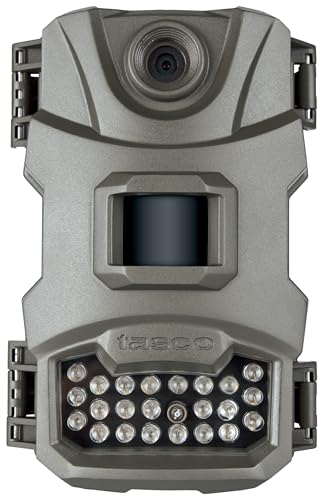
- 12MP photos and 720p video
- 70-foot motion and infrared range
- Up to 12 months on eight AA batteries
Best For: Basic, low-maintenance outdoor monitoring
Best Fast-Trigger Pick

- 0.1-second trigger with three PIR sensors
- 64MP photos and 1296p video with sound
- 100-foot no-glow night vision
Best For: Fast-moving wildlife and flexible recording modes
Best App-Friendly Choice
Zonetiger 4K Wi-Fi Trail Camera

- Bluetooth TrailCam Go app control
- 4K video and 48MP photos
- 0.05-second trigger with no-glow LEDs
Best For: Nearby smartphone access and high-resolution captures
Best Cellular Upgrade
Moultrie Edge 3 Cellular Trail Camera

- 40MP photos and 1080p HD video
- Four-carrier auto-connect with app alerts
- AI buck detection, GPS, and 0.5-second trigger
Best For: Remote deer scouting with advanced cellular features
Best Budget Starter

- 30MP photos and 1080p video
- Compact design with infrared night vision
- Simple strap mounting and SD card storage
Best For: Local wildlife, garden, and property monitoring
Best Easy-Setup Cellular Camera
TACTACAM Reveal X 3.0 Cellular Trail Camera

- Pre-installed SIM and antenna simplify setup
- Auto-connect LTE with AT&T and Verizon
- Up to 6+ months of battery life and built-in storage
Best For: Remote wildlife and property monitoring with minimal setup
Best Beginner Pick

- Simple one-side setup with a 2-inch LCD
- 36MP photos and 2K day/night video
- IP66 housing for outdoor use
Best For: First-time users monitoring wildlife, property, or a backyard
Best Multi-Camera Value
WOSODA 3-Pack 4K Trail Cameras

- Three cameras for monitoring multiple locations
- 4K video, 48MP photos, and 0.2s triggering
- Includes batteries, 16GB cards, and readers
Best For: Beginners needing broad property or wildlife coverage
Best Compact Bundle
WOSODA Mini 4-Pack 1080P Trail Cameras

- Four compact cameras with camouflage housings
- 30MP photos and 1080P video
- Includes four SD cards and 16 AA batteries
Best For: Beginners covering gardens, farms, backyards, or wildlife areas
Best All-Around Starter – WOSPORTS G600 4K Trail Camera
For beginners comparing trail cameras for beginners, the WOSPORTS G600 offers a straightforward mix of high-resolution imaging, fast motion capture, and simple on-camera playback. Its 2-inch color LCD lets you review footage without removing the SD card, while no-glow infrared LEDs help keep nighttime wildlife undisturbed.
Best For: Beginners who want one versatile camera for wildlife scouting, property monitoring, or backyard security.
Pros:
- Captures adjustable 5MP–64MP photos and up to 4K video.
- Fast 0.2-second trigger, 120-degree detection angle, and burst shooting help capture movement.
- 2-inch LCD supports convenient in-camera playback and setup.
- Supports AA batteries, an optional rechargeable battery, or a compatible solar panel.
Cons:
- Eight AA batteries, rechargeable battery, solar panel, and larger SD cards are sold separately.
- Non-cellular and non-Wi-Fi design requires retrieving the camera or card to access recordings remotely.
The G600 is a practical starting point when image detail and flexible mounting matter more than remote connectivity. Its simple controls and built-in screen make initial setup less intimidating.
Best Simple Long-Battery Option – Tasco 12MP Trail Camera
The Tasco 12MP is a no-frills choice for shoppers seeking trail cameras for beginners with basic motion-activated recording. It combines 12MP still images, 720p video, and a low-glow infrared flash with a stated battery life of up to 12 months.
Best For: Beginners who prioritize simple outdoor surveillance and infrequent battery changes.
Pros:
- 12MP photos provide useful detail for general wildlife monitoring.
- Records 720p HD video.
- 70-foot PIR detection range and 70-foot low-glow infrared flash support nighttime coverage.
- Up to 12 months of battery life on eight AA batteries is convenient for remote placement.
Cons:
- 720p video and 12MP stills are less detailed than the higher-resolution alternatives in this roundup.
- Eight AA batteries are not included.
- Low-glow infrared illumination may be more visible than no-glow designs.
This Tasco model favors easy ownership over advanced features. It is a sensible beginner pick for a set-and-check setup where long battery life is more important than maximum resolution.
Best Fast-Trigger Pick – GardePro E5S Trail Camera
The GardePro E5S is a strong option for beginners shopping for trail cameras for beginners who want fast response times without cellular or Wi-Fi setup. Its three PIR sensors, 0.1-second trigger, no-glow night vision, and in-camera playback make it well suited to active wildlife locations.
Best For: Beginners tracking fast-moving wildlife who want sharp photos and multiple recording modes.
Pros:
- Captures 64MP photos and 1296p HD video with sound.
- Three PIR sensors and a 0.1-second trigger help record quick movement.
- 100-foot no-glow night vision supports discreet nighttime monitoring.
- Motion detection, time-lapse, and hybrid modes offer useful flexibility.
Cons:
- Eight AA batteries and an SD card are not included.
- Non-cellular and non-Wi-Fi operation means no remote access through a network.
- Optional solar-panel support adds an extra purchase for continuous operation.
The E5S balances beginner-friendly operation with unusually quick triggering and broad storage support up to 512GB. Choose it when capturing fleeting wildlife activity is a higher priority than app access.
Best App-Friendly Choice – Zonetiger 4K Wi-Fi Trail Camera
For beginners who want easier file access, this Zonetiger model stands out among trail cameras for beginners with Bluetooth app control. The TrailCam Go app can provide quick access to photos and videos and lets you control the camera, while 4K video, 48MP photos, and a 0.05-second trigger add performance.
Best For: Beginners who want to manage and review a trail camera from a nearby smartphone.
Pros:
- Bluetooth app control supports viewing recordings and operating the camera.
- 4K video and 48MP photos provide detailed captures.
- 0.05-second trigger and a 30-meter detection range help catch fast movement.
- No-glow infrared LEDs and IP66 construction suit discreet outdoor use.
Cons:
- Bluetooth app access is not the same as remote cellular access.
- Home Wi-Fi connection is not supported.
- The supplied notes do not specify included batteries or storage media.
This camera is appealing if smartphone convenience is central to your setup. Keep expectations realistic: its app connection is Bluetooth-based, so it is designed for nearby access rather than viewing footage from anywhere.
Best Cellular Upgrade – Moultrie Edge 3 Cellular Trail Camera
For beginners seeking trail cameras for beginners that can send updates remotely, the Moultrie Edge 3 combines cellular connectivity, app control, and automated wildlife detection. Its fast trigger, long detection range, and low-glow night vision make it a practical choice for monitoring deer without frequent visits to the camera.
Best For: Beginners who want remote deer scouting, real-time alerts, and advanced app features.
Pros:
- 40MP photos and 1080p HD video provide detailed captures.
- Automatically connects to the strongest of four major U.S. networks.
- AI buck detection, GPS, Live Aim, and real-time photo alerts simplify remote scouting.
- 0.5-second trigger and a 100-foot detection range help capture moving deer.
Cons:
- Cellular features require a plan, with plans starting at $9.99.
- Its app-based feature set may be more than beginners need for basic local monitoring.
The Edge 3 is a strong all-around option when convenience matters more than minimizing ongoing costs. Beginners can place it, check the view remotely, and receive useful deer information without repeatedly entering the property.
Best Budget Starter – WOSPORTS Mini Trail Camera
For shoppers comparing trail cameras for beginners, the WOSPORTS Mini keeps the setup straightforward: mount it with the included strap, add four AA batteries and an SD card, and let motion activation handle monitoring. Its compact design suits yards, gardens, farms, and wildlife observation.
Best For: Beginners who want an affordable, simple camera for local outdoor monitoring.
Pros:
- 30MP photos and 1080p video deliver useful detail for wildlife and property monitoring.
- Compact, lightweight camouflage body is easy to carry, conceal, and install.
- 850nm infrared night vision supports day-and-night monitoring.
- IP66 water resistance and an adjustable mounting strap support outdoor use.
Cons:
- It does not provide cellular connectivity or phone alerts; alerts are motion-only.
- Four AA batteries and an SD card are required but not included.
- SD card support is limited to 32GB.
This WOSPORTS model is a practical entry point for beginners who prefer a no-subscription camera and do not need remote access. It is best when you can visit the camera periodically to retrieve the stored photos and videos.
Best Easy-Setup Cellular Camera – TACTACAM Reveal X 3.0 Cellular Trail Camera
The TACTACAM Reveal X 3.0 is a beginner-friendly choice among trail cameras for beginners because its SIM and antenna come pre-installed. After scanning the QR code in the REVEAL app, users can receive cellular updates without Wi-Fi or the extra step of buying and formatting an SD card.
Best For: Beginners who want quick cellular setup, long battery life, and remote property monitoring.
Pros:
- Auto-connect multi-carrier LTE uses AT&T and Verizon to seek a stronger signal.
- Pre-installed SIM and antenna support setup in minutes through the REVEAL app.
- Up to 6+ months of battery life is suited to hands-off deployment.
- Built-in GPS and onboard storage reduce the need for separate storage accessories.
Cons:
- Cellular operation requires an appropriate service plan.
- The listed night vision range is 96 feet, slightly shorter than some long-range models.
- Its remote monitoring features may be unnecessary for basic backyard use.
For a first cellular camera, the Reveal X 3.0 emphasizes convenience: quick activation, automatic carrier selection, app-based alerts, and fewer storage components to manage. It also works well for monitoring gates, equipment, and remote acreage beyond wildlife scouting.
Best Beginner Pick – CEYOMUR 36MP 2K Trail Camera
For shoppers comparing trail cameras for beginners, the CEYOMUR emphasizes straightforward setup and operation. Its integrated one-side design, built-in LCD screen, motion activation, and automatic night vision make it practical for backyard wildlife observation, hunting, and property monitoring.
Best For: First-time users who want an easy-to-operate camera for general outdoor monitoring.
Pros:
- Simple controls and a 2-inch LCD screen for setup and playback.
- Captures 36MP photos and 2K video in day or night conditions.
- IP66-rated housing is designed for rain, dust, heat, and cold.
- Includes motion detection, time-lapse, audio recording, timestamps, and password protection.
Cons:
- Eight AA batteries and an SD card are not included.
- Its 850nm infrared illumination may be more noticeable to wildlife than no-glow 940nm lighting.
The CEYOMUR is a sensible starting point when ease of use matters more than advanced connectivity. Budget for a memory card and batteries, then use the integrated controls to position and configure it in the field.
Best Multi-Camera Value – WOSODA 3-Pack 4K Trail Cameras
This WOSODA three-camera bundle suits beginners who need coverage across several locations. It combines 4K video, 48MP photos, a wide 120-degree sensor, no-glow 940nm night vision, and included memory cards and batteries for a convenient starting setup.
Best For: Beginners who want to monitor multiple areas or deploy several cameras at once.
Pros:
- Three cameras provide broader property or wildlife coverage.
- Records 4K video and captures up to 48MP still images.
- 0.2-second trigger speed helps capture moving subjects promptly.
- Includes 16GB memory cards, AA batteries, and card readers.
Cons:
- Managing three cameras requires more setup and file organization.
- Storage is limited to the included 16GB cards unless upgraded.
For a beginner building a multi-point monitoring system, this bundle offers useful equipment in one package. Its no-glow night vision is particularly suitable when minimizing visible illumination around wildlife is important.
Best Compact Bundle – WOSODA Mini 4-Pack 1080P Trail Cameras
The WOSODA Mini four-pack is a practical option for beginners who prefer small, simple cameras and need several monitoring points. Each unit records 30MP photos and 1080P video, uses four AA batteries, and includes a 16GB SD card, making the bundle ready for basic outdoor surveillance.
Best For: Beginners who want compact cameras for wildlife, garden, farm, or property monitoring.
Pros:
- Four compact cameras make it easy to cover multiple locations.
- Captures 30MP photos and 1080P day/night video.
- Includes four 16GB SD cards and 16 AA batteries.
- 0.3-second trigger speed, 120-degree field of view, and camouflage housing.
Cons:
- No phone connectivity; files must be accessed by removing the SD card.
- 1080P video is lower resolution than the 4K option in this roundup.
- IP65 protection and a listed 65-foot night-vision range may be less suited to demanding placements.
This bundle keeps the learning curve low while providing four cameras and the basic consumables needed to begin. Choose it if compact size and coverage matter more than wireless access or higher-resolution video.
How We Picked the Best Trail Cameras for Beginners
We focused on the features that matter most to first-time users: straightforward setup, dependable motion detection, useful image and video quality, weather resistance, nighttime performance, and overall value. We also considered different monitoring styles, including cameras that store files on an SD card and cellular models that send photos remotely.
Because advertised specifications do not always reflect real-world performance, treat resolution and trigger-speed numbers as starting points rather than guarantees. Placement, lighting, battery condition, and memory-card quality can affect results just as much.
Quick Comparison
| Camera Type | Best For | Main Advantage | Important Trade-Off |
|---|---|---|---|
| Basic non-cellular | Simple wildlife monitoring | Lower upfront cost | Requires site visits to retrieve files |
| Wi-Fi or Bluetooth | Nearby camera checks | Convenient local transfers | Limited range compared with cellular service |
| Cellular | Remote monitoring | Photos and alerts from a distance | Requires a compatible data plan and ongoing fees |
| Multi-camera pack | Covering several locations | More monitoring points for the money | More batteries, cards, and setup work |
Key Buying Factors for Trail Cameras for Beginners
Setup and Controls
Look for clear menus, a built-in screen, and simple mounting options. An included LCD can make framing and reviewing clips easier, especially if the camera has no phone connection.
Trigger Speed and Detection Range
A quick trigger can help capture fast-moving animals, but detection distance and recovery time matter too. Wide-angle coverage is useful for open areas, while a narrower view may better frame a trail.
Night Vision and Flash Type
No-glow infrared is less visible to wildlife and people, while low-glow systems may provide useful illumination at a lower price. Check whether the camera records nighttime video with sound if that feature matters to you.
Power, Storage, and Durability
Confirm battery requirements, SD-card compatibility, waterproof ratings, and operating conditions before buying. Use a high-quality, properly formatted memory card and protect the camera from direct runoff or flooding.
Cellular Costs
Cellular cameras can save trips but need network coverage, activation, and a service plan. Verify carrier compatibility at the installation site and compare monthly fees with the value of remote access.
Who Should Buy Which Trail Cameras for Beginners?
Choose a basic non-cellular model if you want an affordable first camera and can visit the location regularly. A Wi-Fi or Bluetooth model suits users who work within short range and want easier file transfers. Cellular options are better for remote properties, security checks, or locations that are difficult to access.
Compact cameras work well for discreet placement and smaller animals, while multi-camera packs make sense when you want to monitor several trails, feeders, or property edges at once. For most first-time buyers, prioritize dependable operation and easy setup over the highest advertised megapixel count.
