
Race Face pedals are a popular choice for riders who want dependable grip, a stable platform, and durable performance on everything from daily trail rides to aggressive enduro laps.
In this roundup, we focus on the best options across the lineup so you can match pedal shape, pin feel, and build quality to your riding style.
Best 10 Race Face Pedals Picks for 2026
Premium Flat Pedal Grip

- Thin concave platform
- Fully sealed bearings
- Threaded metal pins for extra bite
Best For: Mountain bikers wanting a secure, slim flat pedal.
Simple Commuter Platform

- Nylon platform construction
- Built for hybrid/commuter bikes
- Black everyday-use design
Best For: Commuter and hybrid riders wanting a simple platform pedal.
Lightweight Blue Platform

- Thin concave platform
- Sealed bearings and threaded pins
- Blue flat-style finish
Best For: Riders who want a grippy platform pedal in blue.
Durable Trail Pedal Value

- Built for trail, DH, FR, and DJ
- 18 molded pins per pedal
- Cartridge bearings and DU bushings
Best For: Aggressive riders wanting a nylon flat pedal for mixed terrain.
Atlas Wide Platform
Wide, Lightweight Alloy Platform

- 101 x 114mm platform with double concave shape
- 20 traction pins and slim 12-14.5mm height
- 4 sealed bearings with serviceable design
Best For: Trail, all-mountain, freeride, and downhill riders
Turbine Grip Pedals

- 6061 aluminum body with corrosion resistance
- 3mm concavity and 44 steel pins for grip
- Rebuildable bushing and sealed bearing system
Best For: Trail, enduro, and gravel riders wanting dependable traction
Atlas Control

- 6061 aluminum body with chromoly steel axle
- 110 x 108mm platform with removable pins
- Includes replacement pins and washers
Best For: Mountain bikers wanting a stable, serviceable platform pedal
Performance Flat Pedal
Kash Money Aluminum Platform Pedals

- 6061 aluminum body for durable, lightweight use
- 44 adjustable pins for customizable grip
- Serviceable bushings and sealed bearings
Best For: Aggressive trail riders wanting maximum platform control
Balanced Trail Pedal
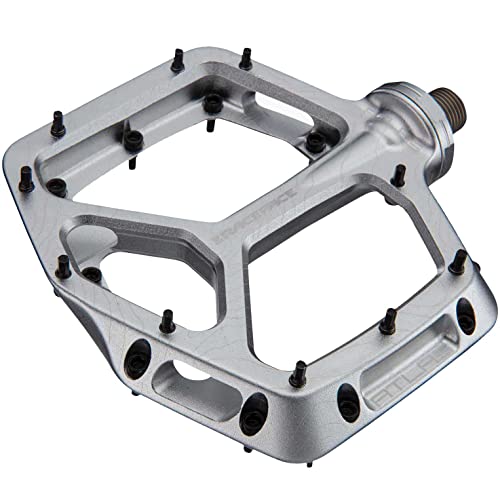
- 6061 aluminum body with chromoly axle
- 110 x 108mm platform with removable pins
- Includes replacement pins and pin washers
Best For: Riders wanting a dependable, serviceable MTB flat pedal
Value Composite Pedal
Large Chester Black Composite Pedals

- Nylon composite body with chromoly spindle
- Large 115 x 110mm platform for stability
- 8-pin layout with serviceable internals
Best For: Riders wanting a forgiving, durable flat pedal with value
Premium Flat Pedal Grip – Race Face Atlas Bike Pedal
Race Face pedals like the Atlas Bike Pedal are built for riders who want a thin, grippy platform with a locked-in feel. This model leans into a concave shape, sealed bearings, and threaded metal pins, making it a strong pick for mountain use where control matters.
Best For: Mountain bikers who want a slim platform pedal with a secure, high-grip feel.
Pros:
- Super thin concave platform design
- Fully sealed bearing construction
- Hex-head threaded pins add bite and security
- Aluminum and chromium-molybdenum steel construction
Cons:
- Designed for mountain bikes, so it is not the most universal choice
- Premium metal build may be more than casual riders need
The Atlas stands out as a performance-focused option in the Race Face pedals lineup, especially if you value a low-profile platform and dependable traction. Its build points clearly toward riders who prioritize feel and security on rougher terrain.
Simple Commuter Platform – RacefacePD20RIDORA
If you are comparing Race Face pedals for everyday riding, the Ride Pedals are a straightforward platform option for hybrid or commuter bikes. The nylon body keeps the design simple, while the listed dimensions and weight make it a practical choice for riders who want an uncomplicated pedal setup.
Best For: Hybrid and commuter riders looking for a basic nylon pedal.
Pros:
- Nylon construction keeps the pedal simple
- Made for hybrid or commuter bikes
- Black finish works with many builds
- Moderate size and weight for everyday use
Cons:
- Not positioned as a high-grip trail pedal
- Less aggressive than the Atlas-style platform options
The Ride Pedals are a practical, no-frills entry in the Race Face pedals range. They make the most sense if you want a reliable everyday platform rather than a more aggressive ride-focused design.
Lightweight Blue Platform – Race Face Atlas Bike Pedal
This Race Face pedals option keeps the Atlas formula but in a blue finish and a platform style aimed at triathlon use. It combines a super thin concave body, sealed bearings, and threaded pins, so the key buying consideration is whether you want that secure flat-pedal feel in a less traditional application.
Best For: Riders wanting a thin, grippy platform pedal in a blue finish.
Pros:
- Super thin concave platform
- Fully sealed bearing design
- Hex-head threaded pins for added security
- Blue color gives it a distinct look
Cons:
- Listed for triathlon bike use, so fit expectations should be checked
- Thread size details are less straightforward than the mountain version
For buyers focused on pedal feel and grip, this Atlas version offers the same core performance traits as the other Atlas model. The blue finish and flat platform styling make it a distinctive choice if you want function with a bit of visual flair.
Durable Trail Pedal Value – Race Face Ride Pedals Red
Among Race Face pedals, the Ride Pedals in red are aimed at trail, DH, FR, and DJ use, with a nylon platform and molded pins for added traction. The listed bearings, platform dimensions, and moderate weight point to a versatile pedal for riders who want a durable flat pedal without moving up to a metal platform.
Best For: Trail, DH, freeride, and dirt jump riders who want a nylon platform pedal.
Pros:
- Built for trail, DH, FR, and DJ riding
- Cartridge bearings and DU bushings
- 18 molded pins per pedal
- Platform size is 110mm x 101mm
Cons:
- Nylon body is less premium than aluminum models
- Weight is listed at 330g per pair, so it is not the lightest option
This Ride Pedals version is a solid middle-ground choice if you want proven flat-pedal basics for more aggressive riding styles. The combination of molded pins, cartridge bearings, and a stable platform makes it easy to understand why it fits a broad range of off-road use cases.
Atlas Wide Platform – Wide, Lightweight Alloy Platform
If you’re comparing Race Face pedals for aggressive trail, all-mountain, freeride, or downhill riding, the Atlas Pedal is built around a wide 6061-T6 aluminum platform with a double-concave shape for a planted feel. It uses 20 traction pins per pedal, a chromoly steel spindle, and sealed bearings to balance grip, strength, and serviceability.
Best For: Riders who want a wide, grippy platform pedal for trail, AM, freeride, or DH use.
Pros:
- Wide 101 x 114mm platform with a super-slim 12-14.5mm height
- Double concave shape and 20 SHCS hex traction pins for secure foot placement
- 4 sealed bearings and a maintenanceable design
- Chromoly steel spindle with 6061-T6 aluminum body
Cons:
- Platform pedals may feel too large for riders who prefer a compact shape
- High-pin design can be more aggressive than casual riders need
This is a straightforward choice if you want a durable, wide-contact Race Face pedal with a strong grip-focused design. The Atlas leans toward control and stability rather than minimalism.
Turbine Grip Pedals – Concave Aluminum Pedals
Among Race Face pedals, the Turbine Pedals are aimed at riders who want a durable aluminum platform with a secure, locked-in feel. The 6061 aluminum body, 3mm center concavity, 44 steel pins, and chromoly spindle are all geared toward traction, control, and long-term use on MTB and gravel rides.
Best For: Trail and enduro riders who want strong grip and a rebuildable pedal design.
Pros:
- 6061 aluminum body for durability and corrosion resistance
- 3mm center concavity helps create a locked-in foot feel
- 44 steel pins with adjustable washers for grip tuning
- Rebuildable bushing and sealed bearing system
Cons:
- Grip-focused design may be more pedal than casual riders need
- At 1.2 pounds, they are not the lightest option listed
The Turbine is a practical pick if you want Race Face pedals that emphasize traction, serviceability, and an ergonomic profile. It is a strong fit for riders who prioritize control on rough terrain.
Atlas Control – Kashmoney Platform Pedals
If you’re shopping Race Face pedals for a mountain bike platform setup, this Atlas version focuses on control and replacement-friendly details. It pairs a 6061 aluminum body with a chromoly steel axle, removable pins, and a 110 x 108mm platform size for a stable feel on the bike.
Best For: Mountain bikers who want a platform pedal with removable pins and a solid alloy build.
Pros:
- 6061 aluminum body with chromoly steel axle
- 110 x 108mm platform offers a stable footprint
- Removable pins make maintenance and setup easier
- Includes 4 replacement pins and 36 pin washers
Cons:
- Platform size may be more pedal than riders with smaller feet want
- Included notes do not list bearing details for comparison
This Atlas model is a good fit if you want the Race Face platform-pedal style with a straightforward, serviceable design. The removable hardware and sturdy materials make it easy to keep dialed in.
Performance Flat Pedal – Kash Money Aluminum Platform Pedals
If you want Race Face pedals with a more aggressive platform feel, the Turbine is built for riders who value grip and control on technical trails. The 6061 aluminum body, concave shape, and 44 adjustable pins with washers are aimed at keeping your feet planted when the terrain gets rough.
Best For: Mountain bikers who want a durable, serviceable flat pedal with strong traction and a locked-in feel.
Pros:
- Durable 6061 alloy body with a lightweight platform design
- Concave, multi-axis shape helps improve grip and stability
- 44 adjustable pins with washers for customizable traction
- Fully serviceable bushings and sealed bearings support long-term use
Cons:
- Platform pedal design may not suit riders who prefer clipless setups
- The aggressive pin layout may feel more demanding on casual rides
The Turbine is a strong pick if you want a performance-minded flat pedal that focuses on support, grip, and easy maintenance. Its asymmetric, anatomically shaped platform and chromoly spindle round out a design that’s clearly aimed at hard use.
Balanced Trail Pedal – Atlas Silver Aluminum Pedals
The Race Face pedals in the Atlas line are built around a 6061 aluminum body and chromoly axle, making them a solid option for riders who want a sturdy flat pedal for mountain biking. With a 110 x 108mm platform and removable pins, these pedals focus on dependable grip without unnecessary complexity.
Best For: Adult mountain bikers looking for a durable, serviceable flat pedal with a balanced platform size.
Pros:
- 6061 aluminum body with a chromoly steel axle for strength
- Removable pins let you service or adjust the setup
- 110 x 108mm platform offers a practical size for MTB use
- Includes replacement pins and pin washers in the box
Cons:
- At 1.1 pounds, it is not the lightest option in the lineup
- Its straightforward design may appeal more to riders who prioritize function over extras
Atlas pedals make sense if you want a no-nonsense flat pedal with serviceable hardware and a proven aluminum construction. They’re well suited to everyday trail riding and riders who want dependable parts that are easy to maintain.
Value Composite Pedal – Large Chester Black Composite Pedals
If you’re comparing Race Face pedals and want a reliable composite platform, the Large Chester is built for grip, comfort, and durability on mountain bike and BMX rides. Its nylon composite body, chromoly spindle, and 8-pin layout are designed to keep the pedal tough while still offering a forgiving feel.
Best For: Riders who want a durable large-platform flat pedal with good grip and vibration absorption.
Pros:
- Nylon composite body helps absorb vibration and adds durability
- Large 115 x 110mm platform improves stability and comfort
- 8-pin design, including 2 co-molded plastic pins, supports foot security
- Fully serviceable internals, sealed bearings, and lifetime warranty add value
Cons:
- Composite construction may not feel as premium as full aluminum options
- Riders wanting maximum pin adjustability may prefer a more aggressive platform
The Large Chester is a practical choice when you want a big, grippy pedal without moving to a heavier metal body. Its serviceable build and lifetime warranty make it especially appealing for riders who want long-term value.
How We Picked the Best Race Face Pedals
We prioritized real-world trail performance, platform size, traction, weight, durability, and value. We also considered how each model fits different rider needs, from casual all-mountain use to hard-charging gravity riding. Since Race Face Pedals are often chosen for their serviceable design and strong grip, we favored models that balance security underfoot with long-term reliability.
Quick Comparison
For most riders, the main differences come down to platform size, pin aggressiveness, and pedal body material. Larger platforms usually feel more stable and confidence-inspiring, while smaller or lighter designs can appeal to riders who want a lower-profile feel. More aggressive pin layouts increase traction but may feel harsher for casual use or frequent shoe changes.
Key Buying Factors for Race Face Pedals
Platform Size and Shape
A wider platform can improve support on rough descents and long days in the saddle. Riders with larger feet often prefer a bigger contact area, while those who like a nimble feel may choose a slimmer body.
Pin Grip and Traction
Pin configuration affects how locked-in your shoes feel. If you ride steep, technical terrain, look for stronger bite. If you want easier foot repositioning, a slightly milder setup may be a better fit.
Materials and Durability
Aluminum pedals typically offer higher-end feel and long-term toughness, while composite options can be lighter on the wallet and still provide solid performance for trail and recreational riding.
Weight and Pedal Feel
Some riders notice pedal weight during climbs or frequent accelerations. If that matters to you, compare the heaviest platforms against the lighter alternatives in the lineup.
Who Should Buy Which Race Face Pedals?
If you ride aggressive trails or want the most secure feel, choose a pedal with a larger platform and stronger pin engagement. If you’re building a versatile trail bike, a balanced mid-tier option is often the smartest pick. Budget-conscious riders should look for dependable composite models, while riders who value premium feel and maximum support may prefer the more robust aluminum choices in the Race Face Pedals range.
