
The best portable multi-fuel generators give you more ways to keep essential appliances, tools, or RV equipment running when utility power is unavailable. Gasoline, propane, and—on tri-fuel models—natural gas can each offer different advantages for storage, runtime, and convenience.
Our 2026 roundup includes high-output home-backup generators, quieter inverter models, and more compact RV-ready options. Compare output, fuel compatibility, controls, safety features, and transfer-switch readiness before choosing the right fit.
Best 10 Portable Multi-Fuel Generators Picks for 2026
Maximum-Output Home Backup
Westinghouse 18000W Tri-Fuel Generator

- 14,500 running and 18,000 peak watts on gasoline
- Runs on gasoline, propane, or natural gas
- Remote start, CO sensor, and transfer-switch readiness
Best For: High-demand residential emergency backup
Quiet RV Convenience
WEN DF360iX Dual-Fuel Inverter Generator

- 49-pound inverter design with quiet operation
- Gasoline and propane fuel flexibility
- RV-ready TT-30R outlet and CO Watchdog
Best For: Quiet RV trips and light backup power
Flexible Midrange Backup
Generac GP9500ETF Tri-Fuel Generator

- 9,500 running and 12,500 starting watts
- Gasoline, propane, or natural gas operation
- Electric start, AVR, COsense, and wheel kit
Best For: Midrange household and job-site backup
RV-Ready Value
Westinghouse 4650W Dual-Fuel Generator
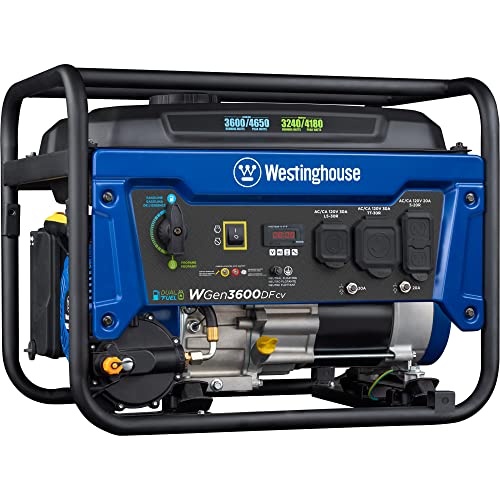
- 3,600 rated watts on gasoline
- RV-ready TT-30R and 30-amp outlets
- Up to 14 hours from its four-gallon tank
Best For: RV power and essential-load backup
Whole-Home Powerhouse
DuroMax XP13000EH Dual-Fuel Generator

- 13,000 starting and 10,500 running watts
- Gasoline or propane operation
- 50-amp transfer-switch-ready outlet
Best For: High-output home, RV, and jobsite backup
Quietest Flexible Backup
Westinghouse iGen12000TFc Tri-Fuel Inverter

- Runs on gasoline, propane, or natural gas
- Low-THD inverter power for electronics
- Up to 19 hours at 25% load
Best For: Quiet, flexible whole-home backup
Balanced Home Backup
Westinghouse WGen9500DF Dual-Fuel Generator

- 9,500 running and 12,500 peak watts
- Remote, electric, and recoil start
- 50-amp RV-ready outlet and transfer-switch connection
Best For: Versatile gasoline-and-propane home backup
Maximum Tri-Fuel Capacity
14,500W Tri-Fuel Home Backup Generator

- Gasoline, propane, and natural-gas operation
- 11,500 running and 14,500 peak watts
- Remote start and 19-hour gasoline runtime
Best For: High-output residential backup with three fuel choices
High-Output Dual-Fuel Pick
14,500W Gas and Propane Generator

- Runs on gasoline or propane
- 11,500 running and 14,500 peak watts
- Remote start with 19-hour gasoline runtime
Best For: Large home backup loads using gasoline or propane
Balanced Tri-Fuel Value

- Supports gasoline, propane, and natural gas
- 10,500 running and 13,500 peak watts
- Remote, electric, and recoil starting
Best For: Flexible residential backup with multiple start options
Maximum-Output Home Backup – Westinghouse 18000W Tri-Fuel Generator
For serious home backup needs, this portable multi-fuel generator combines high output with gasoline, propane, and natural-gas flexibility. It delivers up to 14,500 running watts on gasoline, supports transfer-switch connections, and offers remote electric start for easier operation.
Best For: Whole-home or high-demand residential backup where substantial wattage and three fuel options matter.
Pros:
- Powerful 14,500 running and 18,000 peak watts on gasoline.
- Runs on gasoline, propane, or natural gas.
- Remote and push-button starting, plus less than 5% THD for sensitive electronics.
- CO sensor and automatic low-oil shutdown add important safety protections.
Cons:
- At 348.3 pounds, it is considerably less portable than smaller generators.
- Transfer switch and automatic transfer switch systems are sold separately.
- Its 10.57-gallon fuel tank and open-frame design require substantial operating space.
This Westinghouse is best viewed as a portable alternative to a standby generator rather than a casual camping unit. Its tri-fuel capability, high output, and transfer-switch readiness make it a strong choice for demanding emergency backup, provided you can accommodate its size and weight.
Quiet RV Convenience – WEN DF360iX Dual-Fuel Inverter Generator
This WEN is a compact portable multi-fuel generator for RV trips, camping, and lighter residential backup. Its dual-fuel design accepts gasoline or propane, while inverter technology provides clean power for phones, laptops, and other sensitive electronics.
Best For: RV owners and campers who prioritize quiet operation, manageable weight, and flexible fuel choices.
Pros:
- Lightweight 49-pound design is easier to transport than open-frame alternatives.
- Quiet operation is comparable to a normal conversation.
- Includes a TT-30R RV outlet, USB ports, and a fuel-shutoff feature.
- CO Watchdog automatically shuts the unit down when dangerous carbon monoxide levels are detected.
Cons:
- Output is limited to 2,900 rated watts on gasoline and 2,600 on propane.
- It supports gasoline and propane, but not natural gas.
- The listed five-hour runtime and 1.5-gallon tank may require more frequent refueling.
The DF360iX favors portability and low noise over maximum capacity. It is a practical fit for RV-ready 120-volt loads and electronics, but shoppers running multiple large appliances should choose a higher-output model.
Flexible Midrange Backup – Generac GP9500ETF Tri-Fuel Generator
The Generac GP9500ETF is a versatile portable multi-fuel generator that balances substantial output with practical mobility. It provides up to 9,500 running watts, starts electrically, and can use gasoline, liquid propane, or natural gas for home backup, job sites, or RV-related needs.
Best For: Households needing strong midrange backup power and the option to connect to a natural-gas line.
Pros:
- Tri-fuel operation offers gasoline, propane, and natural-gas flexibility.
- Provides 9,500 running and 12,500 starting watts on gasoline.
- Electric start, AVR, COsense shutdown, and a digital hour meter support convenient operation.
- Includes a 7.5-gallon tank, wheel kit, folding handle, and transfer-switch compatibility.
Cons:
- At 219 pounds, it is portable but still requires two-person or careful assisted handling.
- Its natural-gas connection and transfer-switch setup may require additional planning.
- The supplied specifications list a 120-volt rating, so buyers should verify intended 120/240-volt applications before purchase.
With a useful mix of output, fuel flexibility, and transport features, this Generac occupies a practical middle ground between compact recreational units and very large home-backup generators. Its tri-fuel capability is particularly valuable for extended outages.
RV-Ready Value – Westinghouse 4650W Dual-Fuel Generator
For shoppers seeking an approachable portable multi-fuel generator, this Westinghouse model offers gasoline or propane operation in a smaller package than high-output home-backup units. It combines 3,600 rated watts on gasoline with an RV-ready TT-30R outlet and up to 14 hours of runtime per tank.
Best For: RV use, basic residential backup, and users who want useful output without moving a full-size tri-fuel generator.
Pros:
- Produces 3,600 rated watts on gasoline and 3,240 on propane.
- Includes household, RV-ready TT-30R, and L5-30R 30-amp outlets.
- Four-gallon tank supports up to 14 hours of runtime.
- CO and automatic low-oil shutdown provide added protection.
Cons:
- It does not support natural gas.
- At 108 pounds, it is heavier than inverter-style recreational generators.
- Its 3,600-watt rated output is not intended for large whole-home loads.
This model is a sensible compromise for RV owners and households covering essential circuits rather than an entire home. Its long stated runtime, useful 30-amp outlets, and dual-fuel operation make it more versatile than a basic gasoline-only portable generator.
Whole-Home Powerhouse – DuroMax XP13000EH Dual-Fuel Generator
If you need portable multi-fuel generators for serious outage protection, the DuroMax XP13000EH offers 13,000 starting watts and 10,500 running watts from gasoline or propane. Its electric start, transfer-switch-ready 50-amp outlet, all-metal construction, and no-flat tires make it a practical choice for substantial home backup demands.
Best For: Homeowners seeking high-output emergency power for a whole home, RV, or jobsite.
Pros:
- Provides up to 13,000 starting watts and 10,500 running watts.
- Runs on gasoline or propane, with a front-facing fuel selector.
- Includes electric start, a 50-amp transfer-switch-ready outlet, and no-flat tires.
- Heavy-duty all-metal frame and 100% copper windings support durability.
Cons:
- At 234 pounds, it is heavy to move and position.
- Its listed runtime is 3 hours, so extended outages may require refueling.
- It is an open-frame generator rather than a quiet enclosed inverter model.
The XP13000EH prioritizes raw output and rugged construction over compact portability. It is a strong fit when powering major household loads matters more than low weight or extended unattended runtime.
Quietest Flexible Backup – Westinghouse iGen12000TFc Tri-Fuel Inverter
Among portable multi-fuel generators, the Westinghouse iGen12000TFc stands out for combining gasoline, propane, and natural-gas compatibility with inverter power. It delivers up to 12,000 peak watts, has low THD for sensitive electronics, and can run up to 19 hours at 25% load.
Best For: Homeowners who want quiet, long-running backup power with three fuel options and electronics-friendly output.
Pros:
- Supports gasoline, propane, and natural gas.
- Produces up to 12,000 peak watts and 9,000 running watts on gasoline.
- Inverter output is rated at 3% or less THD for sensitive electronics.
- Offers remote start, parallel capability, a 50-amp outlet, and up to 19 hours of runtime at 25% load.
Cons:
- Its 191-pound weight still makes transport a two-person or equipment-assisted task for many users.
- Natural gas output is lower at 9,800 peak and 7,200 running watts.
- Its feature-rich design may be more generator than occasional users need.
The iGen12000TFc is the most versatile option here for fuel availability and quieter operation. Its inverter design, long low-load runtime, and digital data display make it especially compelling for extended residential backup.
Balanced Home Backup – Westinghouse WGen9500DF Dual-Fuel Generator
The Westinghouse WGen9500DF is a practical dual-fuel choice among portable multi-fuel generators, offering 12,500 peak watts and 9,500 running watts on gasoline. Remote electric start, a 6.6-gallon tank, a 50-amp RV-ready outlet, and transfer-switch-ready connectivity make it well suited to residential backup.
Best For: Homeowners wanting strong dual-fuel output, remote starting, and a useful mix of household and RV outlets.
Pros:
- Provides 9,500 running and 12,500 peak watts on gasoline.
- Supports gasoline and propane, with up to 12 hours of runtime on its 6.6-gallon tank.
- Includes remote, electric, and recoil starting options.
- Offers household receptacles, a transfer-switch-ready 30-amp outlet, and a 50-amp RV-ready outlet.
Cons:
- It has fewer fuel choices than a tri-fuel generator.
- The open-frame design may be louder than an enclosed inverter generator.
- Its listed voltage detail is less comprehensive than models with dedicated 120/240-volt specifications.
The WGen9500DF balances substantial output, convenient starting, and everyday outlet flexibility. Choose it when gasoline and propane are sufficient and you want a capable home-backup generator without moving to a tri-fuel inverter model.
Maximum Tri-Fuel Capacity – 14,500W Tri-Fuel Home Backup Generator
For shoppers comparing portable multi-fuel generators, this Westinghouse model stands out with gasoline, propane, and natural-gas operation plus up to 14,500 peak watts. Its remote electric start, transfer-switch readiness, and long gasoline runtime make it suited to substantial residential backup needs.
Best For: Homeowners who want high-output, three-fuel backup power with automatic-transfer-switch compatibility.
Pros:
- Uses gasoline, propane, or natural gas for flexible fueling.
- Produces 11,500 running watts and 14,500 peak watts on gasoline.
- Runs up to 19 hours at 25% load on its 9.5-gallon tank.
- Includes remote electric start, CO shutdown, and less than 5% THD.
Cons:
- Weighs 230 pounds, so portability is limited despite the open-frame design.
- Transfer switch and other home-integration equipment are sold separately.
With the broadest fuel flexibility in this group and strong output for residential loads, this is a practical choice when backup versatility matters more than compactness. Its pressure-lubricated 550cc engine and three-year limited warranty add useful ownership support.
High-Output Dual-Fuel Pick – 14,500W Gas and Propane Generator
This Westinghouse is a strong option among portable multi-fuel generators for buyers who rely on gasoline and propane rather than natural gas. It delivers 11,500 running watts, offers remote electric start, and is designed to pair with compatible transfer-switch equipment for home backup.
Best For: Households seeking high-wattage gasoline-and-propane backup power with convenient starting controls.
Pros:
- Supports gasoline and propane fuel sources.
- Provides 11,500 running watts and 14,500 peak watts on gasoline.
- Offers up to 19 hours of runtime at 25% load on a 9.5-gallon gas tank.
- Features remote electric start, CO shutdown, and less than 5% THD.
Cons:
- Does not support natural gas, unlike the tri-fuel alternatives.
- At 230 pounds, it is better suited to planned placement than frequent transport.
- Transfer-switch equipment is sold separately.
This model keeps the same substantial output and convenience features as the larger Westinghouse backup units while simplifying fuel selection to gasoline and propane. Choose it when those two fuels meet your needs and natural-gas capability is unnecessary.
Balanced Tri-Fuel Value – 13,500W Home Backup Generator
For buyers who want portable multi-fuel generators with natural-gas capability but do not need the highest output available, this 13,500-watt Westinghouse offers a balanced setup. It combines gasoline, propane, and natural-gas flexibility with remote electric start, recoil backup, and a 19-hour gasoline runtime.
Best For: Homeowners wanting versatile tri-fuel backup power with slightly lower output and multiple starting options.
Pros:
- Accepts gasoline, propane, and natural gas.
- Delivers 10,500 running watts and 13,500 peak watts on gasoline.
- Provides electric, remote-key-fob, and recoil starting options.
- Includes a fuel gauge, CO shutdown, and pressure-lubricated 500cc engine.
Cons:
- Produces less output than the 14,500-watt Westinghouse models.
- Its 230-pound weight limits easy manual transport.
- Transfer-switch equipment must be purchased separately.
This generator is a sensible middle ground for residential backup: it retains three-fuel flexibility and long runtime while giving users several ways to start the engine. It is particularly appealing when natural-gas access is important but maximum wattage is not the top priority.
How We Picked These Portable Multi-Fuel Generators
We selected models across the most useful power ranges and common use cases, from lightweight inverter generators for RVs and sensitive electronics to high-output units designed for home backup. We considered advertised starting and running wattage, fuel options, electric or remote starting, outlet configurations, transfer-switch readiness, portability, and built-in safety features such as carbon-monoxide monitoring.
Specifications can vary by configuration and fuel type, so confirm the manufacturer’s ratings, included accessories, operating instructions, and local installation requirements before buying.
Quick Comparison
| Best For | What to Prioritize | Typical Choice |
|---|---|---|
| Whole-home backup | High running wattage, transfer-switch readiness, electric start | Large tri-fuel or dual-fuel models |
| Emergency essentials | Balanced output, manageable size, simple controls | Midrange dual-fuel generators |
| RV travel | 30A RV outlet, portability, fuel shutoff | Compact dual-fuel inverter models |
| Sensitive electronics | Inverter technology and clean power delivery | Inverter generator |
Key Buying Factors for Portable Multi-Fuel Generators
Output and Load Planning
Start with the appliances you intend to run simultaneously. Refrigerators, sump pumps, well pumps, furnaces, and air conditioners can require substantial starting power. Compare running watts, not just peak or starting watts, and leave additional capacity for startup surges and future needs.
Fuel Flexibility
Dual-fuel models typically use gasoline and propane, while tri-fuel generators add natural gas. Gasoline often provides higher output, propane stores well, and natural gas can be convenient during extended outages if a suitable service connection is available. Check whether output changes between fuels.
Starting, Outlets, and Installation
Electric or remote start is convenient for larger units, but a dependable recoil backup can still be valuable. Look for the outlet types and amperage your equipment requires, including 30A or 50A connections. Transfer-switch-ready does not mean a transfer switch is included; have a qualified electrician handle permanent connections.
Safety and Operating Conditions
Carbon monoxide protection is important, but it does not replace safe placement. Operate any fuel-burning generator outdoors, far from doors, windows, and vents, and follow clearance and grounding guidance in the manual. Consider noise, wheel quality, cold-weather starting, maintenance access, and fuel storage as well.
Who Should Buy Which Portable Multi-Fuel Generators?
Choose a high-output tri-fuel model if you want maximum fuel flexibility for home backup and have access to natural gas. Choose a large dual-fuel generator if you need strong performance for major appliances but primarily plan to use gasoline or propane. Choose a midrange unit for essentials such as refrigeration, lighting, communications, and selected heating equipment. Choose a compact inverter model for RV trips, smaller loads, quieter operation, and cleaner power for compatible electronics.
Before purchase, verify your home’s electrical requirements, local rules, fuel availability, storage plan, and whether an electrician is needed. The best generator is the one that supplies enough sustained power while remaining practical and safe for the way you will actually use it.
