
The right enduro tires make steep braking zones, loose corners, and rough descents easier to manage—but grip is only part of the decision. Casing strength, rolling resistance, and fit matter just as much on a long ride.
These 10 listings cover aggressive front and rear options, including several variants of the same Maxxis models. Use the guide below to compare what matters before choosing a tire for your bike and trails.
Best 10 Mountain Bike Tires for Enduro Picks for 2026
Front-Wheel Grip
Michelin Wild Enduro 27.5 x 2.40

- Front-specific directional tread
- Gum-X rubber compound
- Tubeless-ready 60 TPI casing
Best For: Front traction on a 27.5-inch enduro bike
Fast-Rolling Rear
Maxxis Aggressor 29 x 2.30 EXO

- Built for firm, rocky trails
- Dual-compound rear tread
- Tubeless-ready EXO sidewalls
Best For: Fast rear rolling on hard-packed, rocky trails
Braking-Focused Rear
Maxxis Minion DHR II 26 x 2.40WT

- Rear-specific braking traction
- Supported cornering knobs
- Tubeless-ready EXO casing
Best For: Rear grip on a 26-inch bike
Balanced Front Tread

- Balances speed and traction
- Wide Trail tread profile
- Tubeless-ready EXO protection
Best For: Balanced front traction on a 29-inch bike
Rear Braking Pick
- Rear-specific braking traction
- Supportive side knobs
- 24-inch; tube required
Best For: 24-inch rear-wheel setups prioritizing braking traction
27.5-Inch Wide-Trail Pick
- Tubeless-ready 27.5x2.50WT
- EXO sidewall protection
- Wide Trail profile for wider rims
Best For: 27.5-inch setups seeking a tubeless-ready wide-trail DHF
Versatile Front-Tire Pick
- Balanced speed, braking, and cornering traction
- Dual Compound tread and EXO sidewalls
- Tubeless ready; E25 rated
Best For: 29-inch riders seeking balanced traction and rolling speed
Aggressive 26-Inch Front Pick
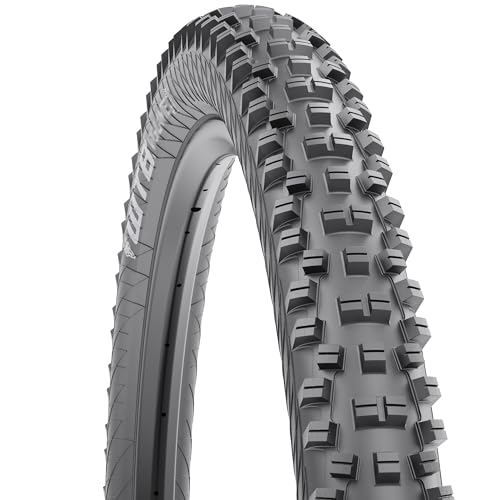
- Square lugs shed packed dirt
- Reinforced knobs support cornering
- Dual DNA compound pairs firmer center and softer sides
Best For: 26-inch front wheels on loose, rocky, or wet trails
Protected Rear-Tire Pick
Continental Kryptotal Rear 26 x 2.40

- Rear-specific mixed-terrain tread
- Enduro casing with Apex protection
- Soft compound; tubeless and E25 rated
Best For: 26-inch rear wheels on mixed-condition enduro rides
Front-Wheel Grip – Michelin Wild Enduro 27.5 x 2.40
Among mountain bike tires for enduro, the Michelin Wild Enduro is a front-specific choice for riders who prioritize steering grip and control. This 27.5 x 2.40 tire combines a directional tread with a Gum-X rubber compound for varied trail conditions.
Best For: Riders seeking a tubeless-ready front tire for a 27.5-inch mountain bike or e-MTB.
Pros:
- Front-optimized tread is designed for grip and predictable steering.
- Gum-X compound is intended to balance traction and durability.
- 60 TPI casing and folding bead offer a flexible, tubeless-ready setup.
Cons:
- Front-specific design is not the obvious choice for a rear tire.
- Listed size is limited to 27.5 x 2.40.
Choose it when front-end confidence matters most, and check that its wheel size and width suit your bike before ordering.
For mountain bike tires for enduro on hard-packed, rocky trails, the Maxxis Aggressor favors rear-wheel rolling speed without giving up cornering knobs. This 29 x 2.30 version uses a dual-compound tread and an EXO sidewall layer.
Best For: Riders who want a fast-rolling rear tire for firm, rocky terrain.
Pros:
- Designed specifically for high-speed, hard-packed rocky trails.
- Dual-compound tread balances rolling resistance and grip.
- EXO sidewall material adds cut and abrasion resistance; tubeless ready.
Cons:
- Its stated terrain focus is hard-packed rock rather than every trail condition.
- E25 rating applies only to light-duty e-bikes with assistance up to 16.1 mph.
This is the speed-oriented rear pick in the group; Maxxis specifically suggests pairing it with a Minion DHF or Assegai up front.
If braking and cornering control lead your search for mountain bike tires for enduro, the Maxxis Minion DHR II is a rear-specific option. This 26 x 2.40WT version combines supported side knobs, a dual-compound tread and a tubeless-ready EXO casing.
Best For: Riders with 26-inch wheels who prioritize rear braking and cornering traction.
Pros:
- Rear-focused tread is designed for strong braking and cornering traction.
- Widened side knobs provide additional support.
- Wide Trail profile is designed around modern wider rims.
Cons:
- This specific listing fits 26-inch wheels, not 27.5- or 29-inch wheels.
- EXO protection is described for applications up to light trail duty, so assess casing needs for more demanding riding.
The DHR II makes sense when rear-wheel control outweighs a fast-rolling emphasis. Confirm wheel diameter and rim compatibility for this WT size.
The Maxxis Minion DHF is a familiar choice among mountain bike tires for enduro when you want a front tire that balances rolling speed with braking and cornering traction. This 29 x 2.50WT model has dual-compound rubber, EXO sidewall protection and a tubeless-ready construction.
Best For: Riders seeking a 29-inch front tire with a balance of rolling speed and cornering grip.
Pros:
- Tread is designed to balance rolling speed, braking and cornering traction.
- Dual-compound construction combines two rubbers to balance grip and rolling resistance.
- Wide Trail profile is optimized for wider rims; EXO adds sidewall cut and abrasion resistance.
Cons:
- At a listed 1.02 kg, it is heavier than the listed Aggressor and DHR II variants here.
- E25 rating is limited to light-duty e-bikes with assistance up to 16.1 mph.
Pick this DHF when you want a wider 29-inch front option, and verify that the 2.50WT size suits your frame, fork and rim.
Rear Braking Pick – Maxxis Minion DHR II 24×2.30
For riders shopping for mountain bike tires for enduro on a 24-inch bike, this rear-specific Minion DHR II prioritizes braking and cornering traction. Its dual-compound tread balances grip with rolling resistance.
Best For: Riders with 24-inch wheels who want a rear tire with supportive cornering knobs and strong braking traction.
Pros:
- Widened side knobs provide cornering support.
- Rear-specific tread emphasizes braking traction.
- Dual compound balances grip and rolling resistance.
Cons:
- Non-tubeless construction requires a tube.
- The listed 24×2.30 size will not fit 26-, 27.5-, or 29-inch wheels.
This is the most rear-focused option here, but confirm the wheel size and tube requirement before buying.
27.5-Inch Wide-Trail Pick – Maxxis Minion DHF 27.5×2.50WT
If your search for mountain bike tires for enduro centers on a 27.5-inch wheel, this Minion DHF combines a tread designed for rolling speed, braking, and cornering traction with a tubeless-ready, wide-trail profile.
Best For: Riders using 27.5-inch wheels and wider rims who want a tubeless-ready DHF with EXO sidewall protection.
Pros:
- Dual-compound tread balances grip and rolling resistance.
- EXO material adds cut and abrasion resistance to the sidewalls.
- Wide Trail layout is optimized for wider rims; Maxxis cites 30 mm internal width as ideal for most applications.
Cons:
- The listed 27.5×2.50WT size requires compatible wheel and frame clearance.
- Maxxis describes EXO as suitable through light trail duty; riders seeking more substantial casing protection should assess their terrain and needs.
Check your rim width and clearance before choosing this version; its listed features make it a versatile option, not a guarantee against sidewall damage.
26-Inch Tubeless Pick – Maxxis Minion DHF 26×2.50WT
For a 26-inch bike, this tubeless-ready Minion DHF offers a specific fit option among mountain bike tires for enduro. Its directional tread is designed to balance rolling speed with braking and cornering traction.
Best For: Riders with 26-inch wheels who want a 2.50-inch wide-trail DHF with EXO sidewall protection.
Pros:
- Tubeless-ready construction.
- Dual compound balances grip and rolling resistance.
- EXO sidewalls add cut and abrasion resistance.
- Wide Trail tread layout is optimized for wider rims.
Cons:
- The 26×2.50WT size needs appropriate rim and frame clearance.
- Maxxis positions EXO protection for applications through light trail duty, so assess whether it meets your casing needs.
Choose this listing when you need the 26-inch size specifically, and verify fit before relying on its wide-trail profile.
Versatile Front-Tire Pick – Maxxis Minion DHF 29 x 2.30
Among mountain bike tires for enduro, this 29 x 2.30 Minion DHF is worth considering if you want a tread that balances rolling speed with braking and cornering traction. This version pairs Dual Compound rubber with a tubeless-ready design.
Best For: Riders seeking a 29-inch tire with predictable cornering grip and a balance of speed and traction.
Pros:
- Tread balances rolling speed, braking traction, and cornering grip.
- Dual Compound rubber combines two tread compounds for grip and rolling efficiency.
- EXO adds cut- and abrasion-resistant sidewall material.
Cons:
- This listing is specifically a 29 x 2.30 tire, so check wheel and frame fit.
- Maxxis describes EXO as suitable through light trail duty; riders prioritizing a heavier-duty casing should compare other options.
The DHF makes sense when versatile handling matters more than choosing a specialized heavy-duty casing. Its E25 rating also covers light-duty e-bike assistance up to 16.1 mph.
Aggressive 26-Inch Front Pick – WTB Vigilante 26 x 2.3
For riders comparing mountain bike tires for enduro on a 26-inch wheel, the WTB Vigilante puts its aggressive, square-lugged tread to work up front. Its lug spacing is designed to shed packed dirt when trails get wet.
Best For: 26-inch front-wheel setups tackling loose, rocky, muddy, or variable trail conditions.
Pros:
- Prominent, spaced lugs target traction and wet-condition dirt clearance.
- Reinforced side knobs support hard cornering.
- Dual DNA compound uses firmer center rubber and grippier side-knob rubber.
Cons:
- The 26 x 2.3 size will not suit other wheel diameters.
- Its front-focused tread may not be the first choice for riders shopping specifically for a rear tire.
Choose this Vigilante when front-end grip is the priority and your bike takes 26-inch tires. Note that the title specifies a wire bead and 30 tpi casing, so confirm those details match your setup.
Protected Rear-Tire Pick – Continental Kryptotal Rear 26 x 2.40
If you need mountain bike tires for enduro with a rear-specific design, this 26 x 2.40 Continental Kryptotal Rear targets mixed terrain. It balances braking traction, grip stability, and rolling resistance with a Soft compound and Enduro casing.
Best For: Riders building a 26-inch rear setup for mixed-condition enduro or gravity riding.
Pros:
- Rear-optimized tread balances braking traction and rolling resistance.
- Enduro single-ply casing includes Apex protection against snakebites.
- Soft compound is designed to balance grip with reasonable rolling resistance.
- Tubeless design and E25 e-bike rating add setup options.
Cons:
- Rear-specific design is not intended as a front-tire substitute.
- This listing fits 26-inch wheels and has a 2.40-inch stated width; verify clearance.
The Kryptotal Rear is the focused choice here for riders who want a protected rear casing without giving up the stated grip-to-rolling balance. Its E25 rating is also relevant to compatible e-bike setups.
How We Picked the Best Mountain Bike Tires for Enduro
We focused on the practical choices represented in the 10 selected listings: front versus rear tread, aggressive versus faster-rolling designs, casing and compound options, and compatibility details. Several listings share a model name, especially the Minion DHF and DHR II. Treat those as potential size or specification choices, not automatically as different tread designs; check each listing’s exact variant before buying.
Quick Comparison: Match the Tire to the Job
For a front tire, prioritize predictable cornering and braking grip; the Minion DHF and WTB Vigilante are front-oriented options in this selection. For the rear, the Aggressor emphasizes a faster-rolling approach, while the DHR II and Kryptotal Rear are worth comparing when braking traction is a priority. The Michelin Wild Enduro lineup offers another route for riders building a front-and-rear pairing. These are starting points, not guarantees: compound, casing, width, and trail conditions can change how a tire feels.
Key Buying Factors for Mountain Bike Tires for Enduro
Terrain and Tread
Open, prominent knobs can help clear loose dirt and mud, while a more closely spaced center tread often rolls more easily on firm ground. Choose for the conditions you ride most, rather than the most extreme trail you might encounter once a year. A rear-specific tread can be paired with a more aggressive front to balance control and pedaling effort.
Casing and Puncture Protection
Enduro riding puts tires under heavy cornering and impact loads. A sturdier casing may improve support and resistance to cuts, but usually adds weight. If you regularly strike sharp rocks, ride at low pressure, or use an e-bike, give casing strength more weight than a small saving in grams. Do not assume labels such as EXO, DD, or “Light” provide equivalent protection.
Compound, Size, and Setup
Softer rubber generally favors traction over wear and rolling efficiency. Confirm wheel diameter, tire width, rim compatibility, and available frame and fork clearance before ordering. Also verify whether the exact variant is tubeless-ready; a model name alone does not settle that question. If e-bike approval matters, check the rating of the specific tire rather than relying on a rating shown elsewhere in its product line.
Who Should Buy Which Mountain Bike Tires for Enduro?
Choose a grip-focused front tire if confidence on loose or steep descents is your main concern. Pick a faster-rolling rear option if your rides involve substantial climbing or firm, dry trails. Move toward tougher casings if punctures, rim strikes, or tire squirm are recurring problems. Riders who want a matched setup should compare front- and rear-specific offerings within the Michelin Wild Enduro lineup, while anyone choosing among repeated Maxxis listings should decide by the exact size, casing, and compound—not the name alone. The best Mountain Bike Tires for Enduro are the ones that fit your wheels and provide enough grip and protection for the trails you actually ride.
