
The best lightweight electric mountain bikes balance manageable weight with enough power, range, and suspension for mixed terrain. This roundup compares 10 options suited to trail riding, commuting, and recreational use.
Before choosing, consider more than peak motor wattage. Battery capacity, frame fit, tire design, gearing, brakes, and local e-bike regulations can have a bigger effect on real-world performance.
Best 10 Lightweight Electric Mountain Bikes Picks for 2026
Best Lightweight Pick
Qlife Racer 21-Speed Electric Mountain Bike
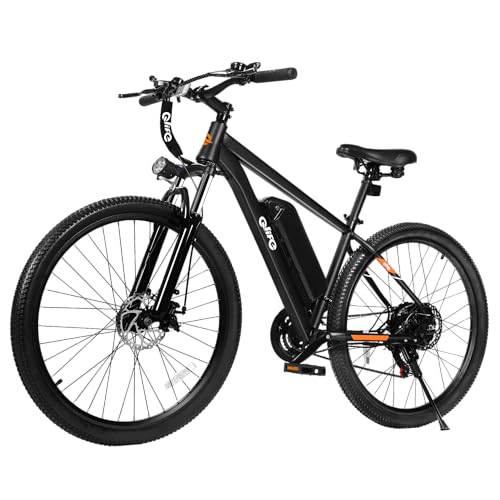
- 48.1-pound frame with 21-speed gearing
- Peak 1000W motor and four riding modes
- Up to 40 miles in pedal-assist mode
Best For: Riders prioritizing lighter weight and gearing flexibility
Best Trail-Ready Value
Funhang EB-M1 Electric Mountain Bike
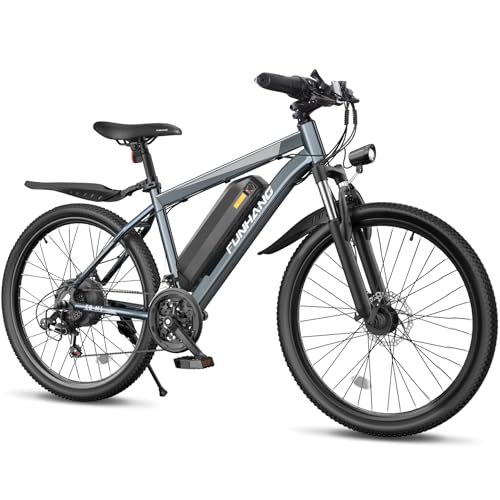
- 1000W peak motor with 48V removable battery
- Up to 50 miles with pedal assist
- Front suspension, fenders, and seven-speed drivetrain
Best For: Versatile trail, commuting, and starter-bike use
Best City-to-Trail Choice
Jasion EB5 Electric Mountain Bike

- 49.6-pound frame with minimalist design
- 1000W peak motor and 20 MPH listed speed
- Up to 40 miles with a removable battery
Best For: Commuters and casual riders mixing streets with trails
Long-Range Trail Power

- 1500W peak motor with up to 25 mph speed
- Removable battery rated for up to 65 miles
- 7-speed drivetrain with front shock absorber
Best For: Long-range commuting and moderate trail riding
Lightweight City Trail Pick

- Listed weight of 49.6 pounds
- 1000W peak motor with 20 mph top speed
- Four riding modes and removable 360Wh battery
Best For: Urban commuting, gravel, and shorter trail rides
Gear-Rich Mountain Option

- 21-speed drivetrain for varied terrain
- 1200W peak motor with claimed 28 mph speed
- Up to 55 miles in pedal-assist mode
Best For: Mixed-terrain rides needing broad gearing and smart features
Best All-Terrain Value
Funhang 26-Inch Fat-Tire Electric Mountain Bike

- 500W motor with 1000W peak output and 20 mph top speed
- Up to 55–60 miles in pedal-assist mode
- Rear rack, front suspension, and five riding modes
Best For: Versatile commuting, cargo carrying, and mixed-terrain riding
Best Compact Fat-Tire Pick
VV20D 20-Inch Electric Mountain Bike

- 20-inch all-terrain fat tires with front shock absorbers
- Up to 30–45 miles per charge from a removable battery
- 22 mph top speed with cruise control
Best For: Compact commuting and mixed-surface recreational riding
Best Balanced Trail Commuter
Loeook 26-Inch Electric Mountain Bike
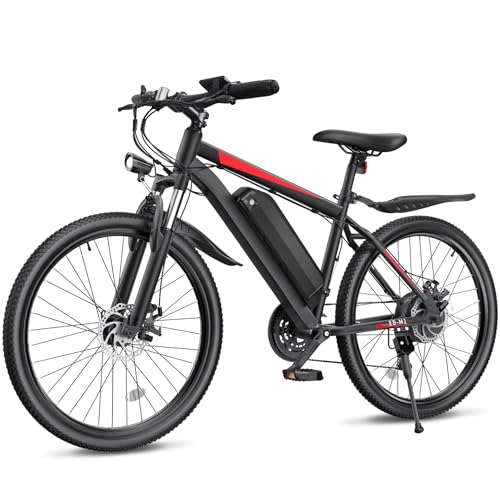
- 500W motor with 1000W peak output and 20 mph top speed
- Up to 40–50 miles in pedal-assist mode
- Seven speeds, front suspension, fenders, and five riding modes
Best For: Daily commuting, workouts, and moderate unpaved-trail riding
Best Lightweight Pick – Qlife Racer 21-Speed Electric Mountain Bike
The Qlife Racer is a practical choice for shoppers comparing lightweight electric mountain bikes. At 48.1 pounds, it combines a 21-speed drivetrain, front suspension, multiple riding modes, and a removable 48V battery for commuting, sightseeing, and hilly trails.
Best For: Riders who want a lighter e-mountain bike with extensive gearing and flexible throttle or pedal-assist options.
Pros:
- Light 48.1-pound design with 21 speeds for varied terrain.
- Peak 1000W brushless motor and four riding modes, including walking assist.
- Removable, waterproof, lockable battery rated for up to 40 miles with pedal assist.
- Front suspension, LCD display, headlight, and rear reflector are included.
Cons:
- Uses a carbon-steel frame and wheels rather than lighter premium materials.
- Throttle range is listed at up to 25 miles, below the pedal-assist estimate.
Choose the Racer if low weight and gearing flexibility matter more than maximum battery capacity. Its nearly assembled format and 12-month after-sale service also make it approachable for first-time e-bike buyers.
Best Long-Range Option – 1500W Peak Electric Bike
This 26-inch e-bike is aimed at riders who want long range and strong hill-climbing performance while staying within the lighter end of full-size electric bikes. Its 54.7-pound weight, 15Ah battery, dual suspension, and app controls suit daily transportation and mixed-terrain riding.
Best For: Commuters and recreational riders seeking extended pedal-assist range, a higher load limit, and connected ride tracking.
Pros:
- 1500W peak motor with 95Nm of torque and a listed 20 MPH top speed.
- 15Ah battery provides up to 80 miles with pedal assist.
- Dual suspension, seven-speed drivetrain, and 26-inch tires support ride comfort.
- App control, adjustable seat, lights, reflectors, and IPX4 water resistance add practical features.
Cons:
- At 54.7 pounds, it is heavier than the lightest options in this roundup.
- The supplied details list paved roads and urban terrain rather than mountain trails as its intended terrain.
- Its listed warranty is 180 days.
This model stands out for battery capacity and rider support rather than minimum weight. It is a strong fit when range, a 330-pound maximum recommendation, and app-based adjustments are higher priorities than easy lifting.
Best Trail-Ready Value – Funhang EB-M1 Electric Mountain Bike
The Funhang EB-M1 balances trail-oriented equipment with everyday usability, making it a versatile contender among lightweight electric mountain bikes. Its 48V removable battery, front shock absorber, fenders, seven-speed gearing, and multiple assist modes cover commuting, weekend rides, and unpaved paths.
Best For: Adult and teen riders who want a versatile starter e-bike for mountain terrain, unpaved trails, and daily transportation.
Pros:
- 500W motor with 1000W peak output for varied terrain.
- Removable 48V battery offers up to 40–50 miles in pedal-assist mode.
- Five working modes, five assist levels, and seven speeds allow detailed ride adjustment.
- Front suspension, fenders, dual disc brakes, headlight, horn, and reflectors improve everyday practicality.
Cons:
- The supplied notes do not specify the bike’s total weight, so its lightweight status is less clear.
- Full-electric range is listed at 25–30 miles, lower than the pedal-assist estimate.
- Only front suspension is specified.
The EB-M1 is compelling for buyers who want a feature-rich, trail-capable setup with safety certifications and a 12-month warranty. Consider it when versatility and included equipment matter more than having the lowest possible weight.
Best City-to-Trail Choice – Jasion EB5 Electric Mountain Bike
The Jasion EB5 is designed for riders who want a relatively light, straightforward electric bike that can move between urban streets and unpaved terrain. Its 49.6-pound frame includes a 1000W peak motor, removable battery, front suspension, seven speeds, and several riding modes.
Best For: Commuters and casual trail riders looking for a minimalist e-bike with manageable weight and practical controls.
Pros:
- 49.6-pound frame keeps it relatively manageable for a 26-inch e-bike.
- 1000W peak motor and 20 MPH listed top speed support everyday riding.
- Removable 360Wh battery is rated for up to 25–40 miles per charge.
- Front suspension, puncture-resistant tires, seven speeds, dual lights, and mechanical disc brakes are included.
Cons:
- Range is below the longest-range option in this roundup.
- Only front suspension is specified.
- The carbon-steel frame may not be as light as an aluminum-frame alternative.
The EB5 makes sense for buyers who value a clean design, adjustable display, and modest carrying weight. Its combination of urban and trail suitability gives it broad appeal, though riders seeking maximum comfort on rough terrain may prefer dual suspension.
Long-Range Trail Power – 1500W Electric Mountain Ebike
For riders comparing lightweight electric mountain bikes with extra hill-climbing power, this model pairs a 1000W rated brushless motor with a 1500W peak output and a removable 48V battery. Its 7-speed drivetrain, front shock absorber, and 26-inch tires make it suitable for mixed commuting and moderate trail use.
Best For: Adults who want long battery range, strong hill performance, and a comfortable commuter-to-trail e-bike.
Pros:
- Up to 25 mph and designed to handle slopes up to 30 degrees.
- Removable battery offers up to 65 miles per charge under stated conditions.
- 7-speed gearing, dual mechanical disc brakes, and front suspension add versatility.
- Arrives 95% pre-assembled and includes a 36-month warranty.
Cons:
- Its carbon-steel frame may be less portable than lighter frame materials.
- The stated range drops to about 45 miles at higher speeds.
- It uses mechanical rather than hydraulic disc brakes.
This is a practical choice when range and motor output matter more than minimizing overall weight. The step-through frame and adjustable seat also make it easier to tailor for everyday riding.
Lightweight City Trail Pick – Jasion EB5 Electric Bike
Among lightweight electric mountain bikes, the Jasion EB5 stands out for its listed 49.6-pound weight and straightforward hybrid setup. It combines a 1000W peak motor, removable 360Wh battery, front suspension, and 26-inch puncture-resistant tires for urban roads, gravel, and unpaved trails.
Best For: Riders who prioritize a lighter frame, removable charging, and flexible pedal-assist or throttle operation.
Pros:
- Listed weight is 49.6 pounds, making it more manageable than many heavier e-bikes.
- Removable battery provides a stated 25–40 mile range.
- Offers pedal assist, throttle, regular pedal, and booster modes.
- Includes 7-speed gearing, front suspension, lights, and mechanical disc brakes.
Cons:
- Its 20 mph top speed and range are more modest than some higher-powered options.
- The battery requires approximately 5–6 hours to charge.
- The carbon-steel frame may add weight compared with aluminum alternatives.
The EB5 is a sensible everyday option for riders who want a relatively light e-bike with useful trail capability. Its four riding modes make it adaptable, while the 25–40 mile range is better suited to daily trips than extended backcountry rides.
Gear-Rich Mountain Option – M200 27.5-Inch E-MTB
For riders seeking lightweight electric mountain bikes with broad gearing, the M200 combines a 1200W peak brushless motor with 21 speeds and 27.5-inch tires. Its removable 48V battery, front suspension, multiple riding modes, and NFC unlock system give it a versatile mix of trail and commuting features.
Best For: Riders who want extensive gear selection, higher claimed speed, and a mountain-oriented setup for mixed terrain.
Pros:
- 21-speed drivetrain provides broad gearing for climbs, descents, and cruising.
- 1200W peak motor reaches a stated top speed of 28 mph.
- Removable TUV-certified battery offers up to 55 miles in pedal-assist mode.
- Includes front suspension, dual disc brakes, headlight, and NFC unlocking.
Cons:
- Throttle range is stated at up to 40 miles, lower than the pedal-assist estimate.
- The supplied details list a carbon-steel frame, so it may not be as light as some alternatives.
- Warranty coverage is limited to one year.
The M200 is the most gear-focused choice in this group and offers useful control across varied terrain. Consider it when 21 speeds, a 27.5-inch wheel platform, and smart security features are more important than having the simplest setup.
Best All-Terrain Value – Funhang 26-Inch Fat-Tire Electric Mountain Bike
For riders comparing lightweight electric mountain bikes for commuting, trails, beach paths, or mixed terrain, the Funhang combines a 500W motor with 26-inch fat tires, front suspension, and a removable 48V battery. Its 7-speed drivetrain and multiple riding modes add flexibility, though the fat-tire design may feel less portable than a lighter trail bike.
Best For: Riders who want one versatile e-bike for commuting, cargo carrying, and varied outdoor terrain.
Pros:
- Fat tires provide grip and stability across gravel, sand, snow, and mountain surfaces.
- Battery is removable and rated for up to 55–60 miles in pedal-assist mode under stated conditions.
- Includes a rear rack rated to carry up to 60 pounds, lighting, front suspension, and dual disc brakes.
- Offers five riding modes, five pedal-assist levels, and a 7-speed system.
Cons:
- Its 26-by-4-inch tires and listed 330-pound capacity suggest a substantial bike rather than an especially lightweight option.
- Assembly is still required despite arriving 85% pre-assembled.
- Actual range varies with rider weight, riding style, and road conditions.
The Funhang is a practical choice when versatility and carrying capacity matter more than minimizing bike weight. UL 2849 and UL 2271 recognition, a 365-day warranty, and lifetime technical support add useful ownership reassurance.
Best Compact Fat-Tire Pick – VV20D 20-Inch Electric Mountain Bike
The VV20D is a compact option among lightweight electric mountain bikes, pairing 20-inch all-terrain fat tires with a 1000W peak motor and front shock absorbers. Its removable 249.6Wh battery is designed for up to 30–45 miles per charge, while the lower three-speed setup keeps controls simple.
Best For: Riders who prefer a compact fat-tire e-bike for commuting, leisure rides, and varied surfaces.
Pros:
- 20-inch fat tires and front shock absorbers are suited to city streets, mountain trails, snow, and beach paths.
- Removable battery can be charged indoors or outdoors and is rated for up to 30–45 miles per charge.
- 22 mph top speed with three selectable speed settings and cruise control.
- Arrives 90% pre-assembled and includes a one-year guarantee for the motor, battery, and charger.
Cons:
- At a listed 88 pounds, it is not lightweight in absolute terms despite its compact wheel size.
- The three-speed system offers less gearing flexibility than seven-speed alternatives.
- Battery capacity is lower than the other listed models, so range depends heavily on conditions and riding mode.
The VV20D stands out for riders who want compact wheels, all-terrain tires, and straightforward controls. Its weight and limited gearing are worth considering if portability or steep, technical trail riding is a priority.
Best Balanced Trail Commuter – Loeook 26-Inch Electric Mountain Bike
The Loeook offers a balanced setup for shoppers seeking lightweight electric mountain bikes that can handle both daily roads and unpaved trails. It uses a 500W motor with 1000W peak output, a removable 48V battery, front suspension, and 26-inch wheels, with seven speeds for adapting to changing terrain.
Best For: Riders who want a straightforward 26-inch e-bike for commuting, workouts, and moderate trail use.
Pros:
- 500W motor with 1000W peak output and a 20 mph top speed supports hills and mixed terrain.
- Removable 374.4Wh battery provides a stated 40–50-mile pedal-assist range.
- Seven-speed gearing, front suspension, fenders, an LCD display, and dual disc brakes improve everyday practicality.
- Five riding modes include throttle, pedal assist, cruise, and booster modes.
Cons:
- It is 85% pre-assembled, so final setup is still necessary.
- Pure-electric range is listed at 25–30 miles, below the pedal-assist estimate.
- Front suspension may provide less bump absorption than a full-suspension design.
The Loeook is a well-rounded choice for riders splitting time between pavement and trails. Its removable battery, useful accessories, and seven-speed drivetrain make it more adaptable than a basic commuter, while the 12-month warranty and lifetime technical support add value.
How We Picked the Best Lightweight Electric Mountain Bikes
We evaluated the selected bikes around the factors that matter most in daily use: claimed motor output, battery capacity, expected range, wheel and tire size, gearing, suspension, removable-battery convenience, top speed, and overall versatility. We also considered whether each design makes sense for paved commuting, gravel paths, moderate trails, or a combination of uses.
Manufacturer range and power figures are best treated as estimates. Rider weight, hills, assist level, temperature, tire pressure, terrain, and cargo can substantially change results. Always confirm current specifications, included equipment, warranty terms, assembly requirements, and local regulations before buying.
Quick Comparison
| What to Compare | Best For | What to Look For |
|---|---|---|
| Motor output | Hills and acceleration | A suitable legal class and enough torque for your terrain |
| Battery capacity | Longer rides | Higher watt-hours, preferably with a removable battery |
| Wheel and tire design | Ride comfort and control | 26-inch or 27.5-inch wheels; wider tires for loose surfaces |
| Gearing and brakes | Mixed terrain and safety | Multiple gears and reliable disc brakes |
| Weight and fit | Transport and handling | A frame size and total weight you can comfortably manage |
Key Buying Factors for Lightweight Electric Mountain Bikes
Weight, Frame Fit, and Handling
“Lightweight” is relative in the e-bike category, where batteries and motors add substantial mass. Check the complete bike weight, not just the frame, and make sure you can lift it onto a rack or carry it up stairs. A comfortable reach, suitable standover height, and adjustable saddle are more important than a low number alone.
Motor Power and Legal Limits
Peak wattage describes short-term output rather than constant performance. Torque, controller tuning, rider weight, and hill grade also affect climbing ability. Confirm whether the bike’s assist modes and maximum speed comply with your state or local e-bike rules, particularly if you plan to ride on public trails.
Battery, Range, and Charging
Battery watt-hours provide a more useful comparison than range claims alone. A removable battery simplifies indoor charging and may improve security. For regular commuting, leave a practical reserve rather than planning to use the full advertised range on every ride.
Suspension, Tires, and Brakes
Front suspension can reduce fatigue on broken pavement and light trails, while wider tires improve grip on gravel and dirt. Hydraulic or mechanical disc brakes should match the bike’s speed, rider weight, and terrain. Fat tires can add stability but may increase rolling resistance and weight.
Who Should Buy Which Lightweight Electric Mountain Bikes?
Choose a compact, moderate-power model if you prioritize easier storage, shorter commutes, and manageable handling. A higher-capacity battery is better for longer recreational rides or routes with frequent hills. Look for multiple gears and front suspension if you regularly switch between pavement, gravel, and moderate trails.
Riders carrying the bike often should prioritize the lowest practical weight and a removable battery. Those focused on traction should consider wider tires, while commuters should verify lighting, fenders, rack compatibility, and weather-resistant components. If you need aggressive trail performance, frequent jumps, or sustained high-speed riding, consider a purpose-built mountain e-bike rather than a comfort-oriented commuter model.
