
Choosing the right display can make your e-bike easier to read, easier to control, and more reliable on every ride.
This roundup focuses on the most practical LCD display for electric bike options for common voltages, connectors, and controller protocols in 2026.
Best 10 LCD Display for Electric Bike Picks for 2026
Simple Battery Monitor
Waterproof EN06 Battery-Reading LCD Screen

- Shows battery power and mileage
- Supports 24V, 36V, and 48V
- Fits 22.2mm handlebars
Best For: Riders who want a basic waterproof display with core ride data
Feature-Rich M5 Meter
No. 2 Protocol M5 Display with Cycling Computer Features

- Adds walk-assist and cruise control
- Supports 24V to 60V systems
- Needs No. 2 protocol and matching wiring
Best For: Riders who want extra ride data and controller-verified compatibility
Budget-Friendly 5-Pin LCD Upgrade

- Supports 24V, 36V, and 48V systems
- Fits about 22.2mm handlebars
- 5-pin wired connection with color-coded leads
Best For: Compatible e-bike riders wanting a simple handlebar LCD
Feature-Rich Color Display

- Supports 24V to 60V systems
- Color screen with real-time ride data
- IP67 waterproof build and USB charging
Best For: Commuters who want a weather-resistant color display with USB charging
Large Backlit S866 Display

- Adjustable for 24V to 60V bikes
- Backlit LCD improves low-light visibility
- Includes waterproof mini 5-pin wiring
Best For: Riders who want a readable backlit meter with broad voltage support
Ridstar Fit Pick
S866 LCD for Ridstar Q20/H20/H26 Pro

- Designed specifically for Ridstar Q20, H20, and H26 Pro
- Supports 24V, 36V, and 48V systems
- IP65 waterproof with bright backlight
Best For: Ridstar owners wanting a direct replacement screen
Feature-Rich Budget Pick
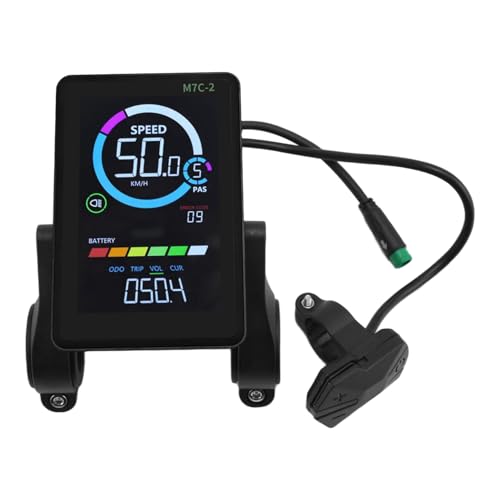
- Tracks battery, speed, trip, and odometer data
- Supports 24V to 60V systems
- Adds USB and UART connectivity
Best For: Riders wanting a simple multi-function meter
Multi-Voltage M5 Panel – Universal M5 LCD Display for Multi-Voltage Ebikes
If you need an LCD display for electric bike use across several common battery systems, this M5-style panel is built for broad compatibility. It supports 24V, 36V, 48V, and 60V setups, and it includes a wired 5-core cable plus a bracket sized for 22.2mm, 25.4mm, and 31.8mm bars.
Best For: Riders who want a wired, multi-voltage LCD display and can verify protocol and wiring before installation.
Pros:
- Supports 24V, 36V, 48V, and 60V systems
- Includes a 5-core common cable with 1800mm exposed length
- Fits 22.2mm, 25.4mm, and 31.8mm handlebars
- Rugged ABS, PC, aluminum alloy, tempered glass, and nylon construction
Cons:
- Requires the controller to follow No. 2 communication protocol
- Voltage defaults to 36V and must be adjusted if needed
- Installation depends on matching the line sequence and product dimensions
This is a practical choice if you want a straightforward wired display with wide voltage support, but it is best suited to users who can confirm controller compatibility in advance.
Simple Battery Monitor – Waterproof EN06 Battery-Reading LCD Screen
This LCD display for electric bike setups focuses on the essentials: battery power, mileage, and easy installation. It supports 24V, 36V, and 48V systems and is designed for 22.2mm handlebars, making it a practical upgrade for riders who want a simple readout.
Best For: Riders who want a basic, waterproof LCD screen that shows battery power and mileage.
Pros:
- Compatible with 24V, 36V, and 48V systems
- Displays real-time battery power and mileage
- Designed for 22.2mm handlebars
- Plastic shell is described as sturdy and waterproof
Cons:
- Less feature-rich than multifunction cycling computers
- No included components are listed
- Limited details are provided for advanced settings or protocol support
If your goal is a straightforward display that helps you monitor charge status and trip distance, this model keeps things simple while still covering the core ride data.
Feature-Rich M5 Meter – No. 2 Protocol M5 Display with Cycling Computer Features
If you want an LCD display for electric bike use that offers more ride data than a basic meter, this M5 panel adds several cycling computer features. It supports 24V, 36V, 48V, and 60V systems, includes a 5-core cable, and is made for common 22.2mm, 25.4mm, and 31.8mm handlebar sizes.
Best For: Riders who want a feature-rich wired display and can confirm No. 2 protocol compatibility.
Pros:
- Supports 24V, 36V, 48V, and 60V systems
- Includes walk-assist, cruise control, and mileage tracking
- Shows voltage and lets you modify wheel diameter and speed limits
- Comes with a waterproof connector and rugged housing materials
Cons:
- Requires the controller to use No. 2 communication protocol
- Line sequence must match for proper operation
- Default factory voltage is set to 48V and may need adjustment
This display is a stronger fit for riders who want more than basic speed readout, but compatibility checks are important before buying because protocol and wiring must line up correctly.
Smart Color Display – Color LCD Speedometer with USB Charging
For riders looking for a more advanced LCD display for electric bike setups, this color panel combines speedometer functions with smart features. It supports 24V, 36V, 48V, and 60V systems, uses UART No. 2 protocol, and adds a USB charging port for on-the-go device power.
Best For: Riders who want a color LCD display with Bluetooth, USB charging, and advanced ride information.
Pros:
- Color gradient LCD with turn signal indicators
- Supports Bluetooth and USB connectivity
- Built-in USB port can charge devices while riding
- IPX65 waterproof rating and rugged construction
Cons:
- Only works with controllers using UART No. 2 protocol
- Touchscreen input may be less familiar than button-only displays
- Higher-feature design may be unnecessary for basic users
This is the most feature-packed option in the group, especially if you value app connectivity and charging support, but it is also the most dependent on protocol matching.
Budget-Friendly 5-Pin LCD Upgrade – 24V to 48V No.2 Meter
If you need an LCD display for electric bike upgrades on a compatible No.2 system, this 5-pin meter covers the basics without adding complexity. It supports 24V, 36V, and 48V setups, mounts on standard 22.2mm handlebars, and gives you a clear readout of speed, mileage, battery status, and more.
Best For: Riders upgrading a compatible e-bike controller who want a simple, readable handlebar display.
Pros:
- Works with 24V, 36V, and 48V systems using the No.2 communication protocol.
- Fits approximately 22.2mm handlebars for straightforward mounting.
- LCD screen shows speed, mileage, battery status, and other ride data.
- 5-pin connector with a 25cm cable and color-coded wiring for easier setup.
Cons:
- Requires a compatible No.2 controller to function properly.
- Not a universal display for every e-bike setup.
Overall, this is a practical replacement-style display for riders who already know their controller protocol and want a dependable, easy-to-read panel. Its value is strongest in basic compatibility and simple day-to-day monitoring.
Feature-Rich Color Display – Waterproof LCD with USB
This LCD display for electric bike setups is aimed at riders who want a brighter, more capable dashboard. It supports 24V through 60V systems, uses UART No.2 protocol, and adds a color screen, waterproof connectors, and a built-in USB charging port for extra convenience.
Best For: Commuters and daily riders who want a color display with charging convenience and weather protection.
Pros:
- Supports 24V, 36V, 48V, and 60V electric bikes and scooters.
- Color LCD screen shows speed, battery level, mileage, and riding mode in real time.
- IP67 waterproof design helps protect against rain, dust, and splashes.
- Includes a USB charging port for phones or other devices while riding.
Cons:
- Uses a proprietary wired setup, so compatibility still depends on the controller.
- May be more display than needed for riders who only want basic readouts.
As a replacement display, this model stands out for its color screen and practical extras rather than just core function. It makes the most sense if you want a durable, all-weather panel with a little more everyday utility.
Large Backlit S866 Display – 24V to 60V Backlit Meter
If you want an LCD display for electric bike use with a larger, easier-to-see screen, the S866 is built around visibility and broad voltage adjustment. It supports 24V through 60V systems, uses a waterproof mini 5-pin connector, and includes backlighting for clearer viewing in low light.
Best For: Riders who want a compact but readable display with backlight and adjustable voltage support.
Pros:
- Adjustable for 24V, 36V, 48V, 52V, and 60V bicycles.
- Large LCD backlight display improves visibility in darker conditions.
- Waterproof construction and IP65 rating add durability for regular riding.
- Includes bracket and manual, with a handlebar fit for 22mm bars.
Cons:
- Default protocol is No.2, so compatibility must be confirmed before buying.
- Uses a mini 5-pin connector that may not match every setup.
- Requires voltage adjustment through P03 for normal use.
This is a solid pick if screen visibility matters more than extra features. Just make sure your controller, wiring, and connector match before installation, since the product notes emphasize checking compatibility carefully.
Ridstar Fit Pick – S866 LCD for Ridstar Q20/H20/H26 Pro
If you need an LCD display for electric bike replacement that matches a Ridstar setup, this S866 unit is built specifically for the Q20, H20, and H26 Pro. It supports 24V, 36V, and 48V systems and focuses on the basics riders check most often: speed, mileage, and battery level, with a bright backlight for easier reading in dim conditions.
Best For: Ridstar Q20, H20, and H26 Pro owners who want a direct, plug-and-ride screen replacement.
Pros:
- Made for Ridstar Q20, H20, and H26 Pro bikes
- Works with 24V, 36V, and 48V systems
- IP65 waterproof construction for rain, splashes, and dust
- Clear LCD with backlight for low-light visibility
Cons:
- Designed for specific Ridstar models, so compatibility is narrow
- Requires locating the controller in the main frame tube for installation
This is a practical choice if compatibility is your top priority and you want a straightforward replacement without extra setup complexity. The 10-minute plug-and-play install claim makes it especially appealing for riders who prefer simple repairs over custom wiring.
Feature-Rich Budget Pick – M7C-2 LCD Meter with USB
Kopinma M7C‑2 E‑Bike LCD Display Meter, 5‑Pin Electric Scooter Control Panel 24V 36V 48V 60V
Check Price On AmazonFor riders looking for a versatile LCD display for electric bike or e-scooter use, the M7C-2 focuses on core ride data and practical extras. It covers battery indicators, PAS level, speed, trip and odometer tracking, trip time, mile/km display, error warnings, and UART communication, with USB support listed in the product details.
Best For: Riders who want a multi-function LCD meter with common ride stats and USB support.
Pros:
- Shows battery, PAS level, speed, trip/ODO, trip time, and mile/km data
- Includes error warning and UART communication
- Works with 24V, 36V, 48V, and 60V systems
- USB support adds extra convenience
Cons:
- Compatibility depends on matching the 5-pin setup
- Product details are lighter on installation guidance than some alternatives
The M7C-2 makes sense if you want a broad feature set without moving into a more specialized controller-style display. Its value is in the mix of ride metrics, voltage flexibility, and simple LCD-panel functionality.
Advanced Control Pick – P3H UART No. 2 LCD Display
If you want an LCD display for electric bike upgrades with more control features, the P3H is built around UART No. 2 protocol and supports 24V, 36V, 48V, and 60V systems. It adds a vibrant screen plus practical ride functions like walk-assist, cruise control, trip and total mileage tracking, voltage display, and adjustable parameters such as wheel diameter and speed limits.
Best For: E-bike owners who already use UART No. 2 controllers and want more adjustability from their display.
Pros:
- Supports 24V, 36V, 48V, and 60V battery systems
- Includes walk-assist, cruise control, and mileage tracking
- Allows changes to wheel diameter and speed limits
- Built with IPX65 waterproof protection and durable materials
Cons:
- Only works properly with controllers using UART No. 2 protocol
- Compatibility requires careful checking before purchase
This is the strongest option here for riders who want a more configurable display rather than a basic readout. Just make sure the controller protocol matches, since that requirement is the key factor in whether it will work as intended.
How We Picked the Best LCD Display for Electric Bike
We focused on compatibility first, because the best LCD Display for Electric Bike use is the one that works with your controller, voltage range, and connector style. From there, we looked at screen readability, waterproofing, speed and battery data, USB charging, and handlebar fit.
We also prioritized models that cover the most common setups, including 24V, 36V, 48V, and 60V systems, plus widely used 5-pin and UART-based connections.
Quick Comparison
In general, simpler monochrome panels are best for riders who want basic ride data and easy installation, while color displays suit riders who want clearer visibility and more features. If your bike uses a specific protocol such as UART No. 2, matching that standard matters more than extra functions.
USB charging can be a useful bonus for commuting and longer rides, but it should never come at the expense of compatibility or weather resistance.
Key Buying Factors for an LCD Display for Electric Bike
Compatibility with Voltage and Protocol
Start with the basics: confirm your battery voltage and controller communication type. A display may list support for multiple voltages, but it still has to match your system protocol to function properly.
Connector Type and Pin Count
Check whether your setup uses a 5-pin, 6-pin, or other connector arrangement. Even a small mismatch can prevent the display from powering on or communicating with the controller.
Screen Style and Visibility
Choose a screen that is easy to read in sunlight and while riding. Riders who commute daily or ride at speed often prefer larger, higher-contrast displays.
Mounting and Handlebar Fit
Measure your handlebar diameter before buying. Many displays are made for standard 22.2 mm handlebars, but you should verify fit rather than assume it.
Weather Resistance and Build Quality
If you ride in rain or store your bike outdoors, waterproofing and durable housing matter. An LCD Display for Electric Bike use should survive vibration, moisture, and regular handling.
Who Should Buy Which LCD Display for Electric Bike?
Choose a basic LCD if you want simple speed, battery, and assist information with minimal setup. Pick a color or USB-equipped display if you commute often and want more convenience. Riders replacing a broken original unit should match the exact protocol and connector first, then compare features.
If you are upgrading a custom build, consider a display with broad voltage support and clear compatibility notes. For brand-specific bikes, an OEM-style match is usually the safest choice.
