
Transporting a kayak does not have to be difficult, even if you are buying your first roof carrier. The best kayak roof racks for beginners balance straightforward installation, dependable tie-down support, vehicle compatibility, and a manageable price.
This roundup compares J-bar carriers, soft roof pads, foam block systems, and kayak saddles so you can choose a setup that matches your vehicle, kayak, and experience level.
Best 10 Kayak Roof Racks for Beginners Picks for 2026
Best Heavy-Duty Pick
PIRIPARA 4-Piece J-Bar Kayak Rack

- 150-pound capacity for up to two kayaks
- Includes four tie-down straps
- Fits square, oval, and flat crossbars—not round
Best For: Beginners carrying two kayaks on compatible crossbars
Best No-Tools Option
HEYTRIP Universal Soft Roof Rack Pads

- No tools required for installation
- 80 kg maximum load capacity
- Includes straps, bow/stern ropes, and storage bag
Best For: Occasional paddlers without fixed roof rails or gutters
Best Folding J-Bar
Leader Accessories Folding Kayak Rack

- 150-pound capacity for two kayaks
- Folds flat for easier garage access
- Fits square and aerodynamic crossbars
Best For: Owners wanting a sturdy rack that folds between trips
Best Simple Foam Carrier
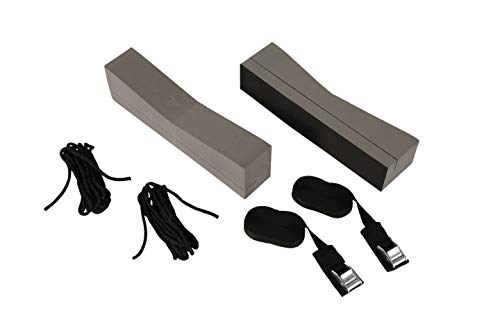
- Includes foam blocks, straps, and 20 feet of rope
- Angled blocks cushion the kayak
- Rack-free setup for car-top transport
Best For: Occasional car users wanting a basic foam-block system
Best for Easy Setup
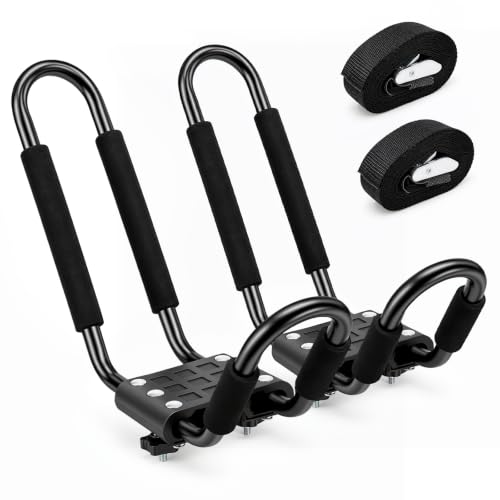
- 150-pound capacity per pair
- Tool-free quick-release installation
- Padded, rust-resistant alloy-steel construction
Best For: Solo kayakers needing a sturdy rack for one kayak
Best Soft-Rack Starter Kit

- Works with many cars, SUVs, and hatchbacks
- Protective padded, non-slip cargo surface
- Includes straps, hood loops, and storage bag
Best For: Occasional trips and vehicles without side rails
Best Budget J-Bar

- Low-cost carrier for one kayak
- Fits several crossbar shapes
- Includes padding, hardware, and tie-down straps
Best For: Beginners seeking a basic rack for lighter kayaks
Budget J-Bar Starter

- Two pairs carry up to two kayaks
- Includes four straps and mounting hardware
- Fits square, oval, and flat crossbars
Best For: Budget-conscious beginners transporting two kayaks
Adjustable Saddle Pick

- Adjusts through a 0-to-180-degree range
- Rubber pads help protect the hull
- Carries one kayak or canoe
Best For: Beginners wanting an adjustable carrier for one watercraft
High-Capacity J-Bar Choice

- Four racks are designed for two kayaks
- Includes four heavy-duty tie-down straps
- Wide-mouth J bars simplify loading
Best For: Beginners transporting two kayaks with higher capacity needs
Best Heavy-Duty Pick – PIRIPARA 4-Piece J-Bar Kayak Rack
For beginners comparing kayak roof racks for beginners, the PIRIPARA is a practical choice when you already have compatible square, oval, or flat crossbars and need to carry up to two kayaks. Its wide-mouth J-bar design is intended to make loading and unloading easier.
Best For: Beginners transporting two kayaks on a vehicle with non-round crossbars.
Pros:
- 150-pound total load capacity and alloy-steel construction.
- Includes four racks and four 8-foot heavy-duty tie-down straps.
- Adjustable padding helps protect kayaks during transport.
- Quick on/off hardware supports simpler installation and removal.
Cons:
- Not compatible with round crossbars.
- Its four-piece setup may be more equipment than needed for one kayak.
The PIRIPARA stands out for capacity and included hardware, but beginners should confirm their crossbar shape before buying. It is best suited to regular trips with one or two watercraft.
Best No-Tools Option – HEYTRIP Universal Soft Roof Rack Pads
The HEYTRIP soft rack is a beginner-friendly option for kayak roof racks for beginners because it requires no tools and works with vehicles with or without side rails or gutters. Foam padding and a non-slip mat cushion the load while the included straps secure it.
Best For: Occasional paddlers who want a portable roof-carrying system without installing fixed crossbars.
Pros:
- Universal design works with almost any vehicle, according to the supplied notes.
- Supports loads up to 80 kg.
- Includes two 15-foot straps and two bow-and-stern tie-down ropes.
- Foldable, cleanable, and supplied with a storage bag.
Cons:
- Soft pads provide a different setup than a fixed J-bar rack.
- Strap installation and load securing still require careful fitting.
This set is appealing when affordability, portability, and simple setup matter most. The included bow and stern lines are particularly useful for beginners learning to secure a long kayak load.
Best Folding J-Bar – Leader Accessories Folding Kayak Rack
For beginners seeking kayak roof racks for beginners that can stay installed more conveniently, the Leader Accessories rack uses a folding J-bar mechanism. It fits square and aerodynamic crossbars and folds flat to help with garage clearance when not in use.
Best For: Kayak owners who want a sturdy two-kayak rack that can fold down between trips.
Pros:
- Supports up to two kayaks or canoes with a 150-pound capacity.
- Folding design helps avoid full removal for standard garage-height limits.
- Foam padding covers contact points to help prevent scratches.
- Includes four heavy-duty tie-down straps and requires no specialized tools.
Cons:
- Not designed for round crossbars.
- Its 10.84-kilogram listed weight may feel substantial for some users.
The folding feature makes this a useful middle ground between permanent convenience and complete rack removal. Verify that your vehicle has compatible square or aerodynamic crossbars before installation.
Best Simple Foam Carrier – Attwood Rack-Free Kayak Kit
The Attwood kit keeps kayak roof racks for beginners straightforward with two foam blocks, adjustable straps, and bow-and-stern tie-down ropes. It is a rack-free transport system designed for placing a kayak directly on a car roof with cushioning between the boat and vehicle.
Best For: Beginners who need a basic foam-block carrier for transporting a kayak without a fixed rack.
Pros:
- Includes foam blocks, two adjustable straps, and 20 feet of rope.
- Angled foam blocks cushion the kayak and help prevent car-top scratches.
- Straps use sturdy poly webbing with vinyl-coated clips.
- Simple component set is easy to understand for first-time users.
Cons:
- The supplied notes specify compatibility with cars, not a broader range of vehicle types.
- Foam blocks do not provide the shaped support of a J-bar carrier.
- The listed warranty is 90 days.
This is a compact, uncomplicated starting point for occasional kayak transport. Beginners should follow the included strap and bow/stern tie-down setup carefully because the kit relies on securing the kayak directly to the vehicle.
Best for Easy Setup – Forluck Kayak J-Bar Carrier
For beginners comparing kayak roof racks for beginners, the Forluck J-Bar Carrier is a straightforward choice when you want sturdy support and a traditional roof-mounted design. It holds one kayak up to 150 pounds per pair and fits most square or oval factory and aftermarket crossbars.
Best For: Solo kayakers who want a durable J-bar rack with quick installation and substantial load capacity.
Pros:
- Supports up to 150 pounds per pair.
- EVA foam padding and rubber bases help protect the kayak and vehicle roof.
- Quick-release nuts allow tool-free installation and removal.
- Powder-coated alloy steel is designed for all-weather, rust-resistant use.
Cons:
- Requires compatible roof crossbars.
- Designed to carry one kayak per set.
The wide-mouth J-bar should make loading easier for first-time users, while the included straps and mounting hardware reduce the need to purchase additional essentials. Confirm your crossbar profile and vehicle fit before ordering.
Best Soft-Rack Starter Kit – Abahub Soft Roof Rack Pads
For beginners comparing kayak roof racks for beginners, the Abahub soft roof rack offers a flexible option without requiring permanent crossbars. Its padded setup is designed for sedans, SUVs, hatchbacks, and two- or four-door cars, with or without side rails.
Best For: Occasional kayakers and owners of vehicles without conventional roof crossbars.
Pros:
- Compatible with kayaks, surfboards, SUPs, canoes, and snowboards.
- Fits many vehicle styles, including cars with or without side rails.
- 1680D fabric, PVC reinforcement, and a non-slip bottom help protect cargo and reduce movement.
- Includes tie-down straps, ropes, hood loops, and a storage bag.
Cons:
- Soft-rack installation requires securing straps around the vehicle roof.
- Its supplied notes do not specify a maximum load capacity.
This kit is appealing when versatility and simple storage matter more than a fixed metal carrier. Follow the included setup steps and use the provided securing straps to keep the load stable during transport.
Best Budget J-Bar – A01 Kayak Roof Rack
A01 Kayak Roof Rack for SUV Car Top Roof Mount Carrier J Cross Bar Canoe Boat (1 Pairs)
Check Price On AmazonFor beginners comparing kayak roof racks for beginners, the A01 J-Bar is a simple, low-cost roof-mounted carrier for one kayak. It accommodates kayaks up to 36 inches wide and 100 pounds, and fits many round, square, oval, and flat crossbars within the stated size limits.
Best For: Budget-conscious beginners with compatible crossbars who want a basic J-style carrier.
Pros:
- Wide-mouth J-bar design helps with loading and unloading.
- Adjustable padding helps protect the kayak.
- Quick on/off hardware supports fast installation and removal.
- Includes mounting hardware and 12-foot tie-down straps.
Cons:
- Listed kayak capacity is limited to 100 pounds and 36 inches wide.
- Requires compatible crossbars; specified OEM bars should be within 2.5 inches wide and 1 inch thick.
- Supplied warranty information is limited to 30 days by default, with a possible 60-day offering.
The A01 focuses on essential J-bar functionality rather than extra features. Its pre-assembled design may be approachable for a first setup, but carefully check crossbar dimensions and kayak weight before buying.
Budget J-Bar Starter – Two-Kayak Roof Carrier
2 Pairs Kayak Roof Rack for Car Top Roof Mount Carrier | J Cross Bar, Canoe Boat Compatible
Check Price On AmazonFor beginners comparing kayak roof racks for beginners, this two-pair J-bar carrier offers a straightforward, low-cost way to transport up to two kayaks. Its wide-mouth design, adjustable padding, and quick on/off hardware make the basic loading and installation process more approachable.
Best For: Budget-minded beginners carrying two kayaks on square, oval, or flat crossbars.
Pros:
- Includes four racks and four tie-down straps for carrying two kayaks.
- Supports kayaks up to 36 inches wide and 75 pounds.
- Wide-mouth J bars help with loading and unloading.
- Rust-resistant coating and adjustable padding help protect the kayak.
Cons:
- Not suitable for round crossbars.
- The listed 75-pound capacity is lower than some competing options.
- Beginners need to check crossbar dimensions before purchasing.
This is a practical entry-level choice when affordability and two-kayak capacity matter most. Confirm your crossbar shape and size first, since compatibility is limited to square, oval, and flat bars.
Adjustable Saddle Pick – Aluminum Kayak Carrier
This adjustable saddle is a flexible option for beginners choosing kayak roof racks for beginners, especially if they want a carrier that accommodates different watercraft shapes. The aluminum frame, rubber pads, and 0-to-180-degree adjustment are designed for adaptable positioning and kayak protection.
Best For: Beginners carrying one kayak, canoe, SUP, or similar watercraft on compatible crossbars.
Pros:
- Adjustable from 0 to 180 degrees for versatile positioning.
- Aluminum construction and stainless hardware are designed for rust resistance.
- Rubber pads help prevent scratches and damage.
- Includes two 10-foot, 1.5-inch-wide tie-down straps.
Cons:
- Designed to carry one kayak or canoe.
- Compatibility is limited to crossbars up to 4⅓ inches wide.
- The supplied details list different load capacities, so verify the current specification before relying on the maximum rating.
Its adjustable saddle format is appealing for a first carrier because it can be positioned for different watercraft and loaded from either side. Check the crossbar width and confirm the load rating before installation.
High-Capacity J-Bar Choice – Four-Piece Kayak Rack
For beginners shopping kayak roof racks for beginners with higher carrying demands, this four-piece J-bar setup is built for transporting two kayaks. The wide-mouth racks, adjustable padding, and quick on/off hardware keep the design focused on practical loading and straightforward roof-rack use.
Best For: Families or beginners carrying two kayaks on square, oval, or flat crossbars.
Pros:
- Four alloy-steel racks can hold two kayaks.
- Listed total load capacity reaches up to 200 pounds.
- Includes four heavy-duty tie-down straps and universal mounting hardware.
- Rust-resistant coating and adjustable padding support repeated use and kayak protection.
Cons:
- Not compatible with round crossbars.
- The supplied details also list a 150-pound load capacity, so buyers should verify the applicable rating.
- A four-piece setup may be more equipment than needed for carrying one kayak.
This model stands out for beginners who need two-kayak capacity and want included straps and hardware. Because the notes show differing capacity figures, confirm the product’s current rating and your vehicle’s crossbar compatibility before use.
How We Picked the Best Kayak Roof Racks for Beginners
We focused on the factors that matter most to first-time buyers: installation simplicity, compatibility with common vehicles, kayak support, included straps, adjustability, storage, and overall practicality. The selection includes both systems that require crossbars and rack-free options for vehicles without a permanent roof rack.
We also considered different carrying needs. J-bar carriers are useful when you want a more secure, upright load position, while soft pads and foam blocks can be easier to store and move between vehicles. Weight capacity, kayak width, roof dimensions, and the quality of the tie-down points should always be confirmed before purchase.
Quick Comparison
- J-bar carriers: A space-efficient choice for SUVs, trucks, and cars with compatible crossbars. Folding models can simplify storage.
- Soft roof pads: Lightweight and portable, with no bulky metal frame. They are convenient for occasional trips but require careful strap placement.
- Foam block systems: A practical rack-free solution for many vehicles, typically using adjustable straps and bow-and-stern lines.
- Kayak saddles: Designed to cradle the hull and can offer smooth loading, but they generally need suitable crossbars.
- Two-pair carrier sets: Helpful for carrying two kayaks when the vehicle and crossbars have enough capacity and width.
Key Buying Factors for Kayak Roof Racks for Beginners
Vehicle and Crossbar Compatibility
Check whether the carrier fits factory or aftermarket crossbars, and verify the permitted bar width and spacing. Rack-free pads and foam blocks may work on vehicles without crossbars, but the roof material, door-frame clearance, and manufacturer instructions still matter.
Kayak Size and Load Capacity
Compare the carrier’s stated capacity with the kayak’s weight, length, width, and hull shape. Leave room for the weight of paddles and accessories, and never exceed your vehicle’s roof-load limit.
Loading and Tie-Down Design
Beginners should favor padded contact points, clear strap routing, and included bow and stern tie-downs. A carrier that is easy to load correctly is safer than a more complex model with features you will not use.
Storage and Weather Resistance
Folding J-bars and soft carriers are easier to store in a garage or trunk. Look for corrosion-resistant hardware and durable padding if you regularly drive in rain, salt air, or strong sunlight.
Who Should Buy Which Kayak Roof Racks for Beginners?
Choose J-bars if you have compatible crossbars and want a stable, space-saving way to transport one or two kayaks. Choose soft pads or foam blocks if portability, low cost, and occasional use are your priorities. Choose saddles if you want a supportive hull cradle and already use crossbars. For frequent trips, prioritize durable hardware, padded supports, and reliable tie-downs over the lowest upfront price.
