
A suitable enclosure can help protect a portable generator from rain, snow, sun, debris, and unwanted attention while it runs or sits in storage. The right choice depends on your generator’s dimensions, heat output, ventilation needs, and how much noise reduction you want.
We’ve gathered 10 generator enclosures ranging from lightweight running covers to lockable metal boxes and larger shelters. Use the guide below to compare fit, airflow, durability, security, and installation requirements before buying.
Best 10 Generator Enclosures Picks for 2026
Best Overall Weather Protection
GenArmor Waterproof Running Cover

- Waterproof heavy-duty tarpaulin
- Bolted metal frame for stability
- Fits most 4,000W–13,000W generators
Best For: Outdoor users wanting durable weather protection and easy access
Best Heavy-Duty Enclosure
Galvanized Steel Generator Box

- Galvanized steel construction
- Ventilation, drainage, and exhaust system
- Interior fits many generators up to 15,000W
Best For: Dedicated installations requiring maximum enclosure durability
Best Noise-Reduction Package

- Approximately 40%–50% noise reduction
- Includes ZPipe, acoustic mat, and grommet
- Fits generators up to 30-by-30-by-32 inches
Best For: Outdoor users seeking quieter operation with included accessories
Best Compact Tent Design

- Compact 28-by-20-by-20-inch design
- Heavy-duty 1680D canvas with nylon lining
- Pointed roof and roll-up ventilation flaps
Best For: Owners of smaller compatible generators needing compact rain protection
Best for Easy Setup

- Corrosion-resistant aluminum construction
- Cooling fan and ventilated design
- Noise-reducing panels and included lock
Best For: Large portable generators needing robust outdoor protection
Best Weatherproof Cover

- Waterproof 900D Oxford fabric
- Wind-secure buckle and drawcord
- Fits many 10,000–15,000W generators
Best For: Lightweight outdoor coverage against rain and sun
Best Compact Steel Box
Lockable Outdoor Generator Enclosure
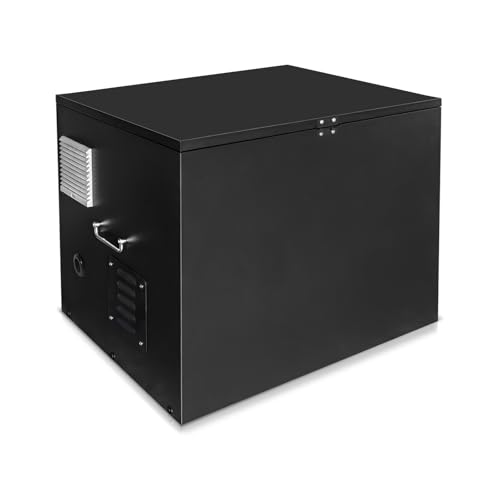
- Powder-coated heavy-gauge steel body
- 12V fan and exhaust ventilation
- Lockable hasp for a padlock
Best For: Compact outdoor, RV, truck, and trailer installations
Heavy-Duty Permanent Protection

- Galvanized steel with weather-resistant coating
- Includes cooling and exhaust-management components
- Lockable, bolt-down design for permanent installations
Best For: Large generators used in fixed outdoor installations
Compact Outdoor Storage

- Compact 28" x 22" x 22" footprint
- Ventilation openings help support airflow
- Top-opening access with latch-ready security
Best For: Small portable generators in backyards, RVs, or trailers
Flexible Noise and Weather Shield

- Galvanized-steel panels for all-season protection
- Noise reduction claimed up to 50%
- Converts between barrier and tent-style configurations
Best For: Portable generator use at events, campsites, and job sites
Best Overall Weather Protection – GenArmor Waterproof Running Cover
For shoppers comparing generator enclosures, the GenArmor running cover offers a practical balance of waterproof protection, sturdy construction, and easy access. Its heavy-duty tarpaulin and integrated metal frame are designed for most 4,000W to 13,000W generators.
Best For: Outdoor generator owners who need a durable, waterproof running cover with broad compatibility.
Pros:
- Waterproof tarpaulin helps protect against outdoor weather.
- Bolted frame-and-fabric construction improves stability in strong winds.
- Access panels allow quick refueling and power-panel access.
- Includes a 5-year warranty and customer service support.
Cons:
- At 14 pounds, it is less lightweight than a basic fabric cover.
- Fit should be checked against the generator-specific sizing guidance.
The GenArmor is a strong all-around pick for users who prioritize weather resistance and straightforward maintenance access without moving to a heavy steel enclosure.
Best Heavy-Duty Enclosure – Galvanized Steel Generator Box
Among generator enclosures, this galvanized-steel box is designed for substantial outdoor protection, ventilation, and sound reduction. Its 39.4-by-35-by-35.5-inch interior accommodates many generators up to 15,000 watts, while the venting and exhaust components support operation inside the enclosure.
Best For: Permanent or semi-permanent installations needing a robust, weather-resistant steel enclosure with ventilation and access features.
Pros:
- High-temperature galvanized steel construction resists rust and impact.
- Insulated top and double-layer air inlets help reduce noise and manage airflow.
- Drainage holes and weather-resistant coating help handle rain, ice, and snow.
- Front operation window, lock, exhaust fan, and included exhaust pipe add convenience.
Cons:
- At 243 pounds, it is not easy to move frequently.
- Assembly is required because Box A and Box B form the enclosure.
- Its large footprint may not suit compact spaces.
This is the most substantial option in the roundup, but its weight and installation requirements make it better suited to a dedicated generator location than portable use.
Best Noise-Reduction Package – Zombiebox Lite Large Shelter
This Zombiebox package stands out among generator enclosures for combining noise reduction with a complete outdoor setup. It includes the enclosure, a secondary ZPipe exhaust system, an acoustic isolation mat, and a grommet for routing fuel lines and power cords.
Best For: Outdoor users who want a ready-to-use enclosure package that balances sound reduction, generator capacity, and maneuverability.
Pros:
- Designed to reduce generator noise by approximately 40% to 50%.
- Includes the exhaust system, rubber acoustic mat, and cable-routing grommet.
- 35-by-39-by-39-inch interior accommodates generators up to 30-by-30-by-32 inches.
- Its 125-pound weight is lighter than the steel enclosure in this roundup.
Cons:
- It is still a heavy 125-pound enclosure for frequent relocation.
- Compatibility depends on matching the generator to the interior dimensions.
The Zombiebox is a practical middle ground for buyers who value quieter operation and a bundled installation setup without choosing the heaviest steel cabinet.
Best Compact Tent Design – Pointed-Roof Generator Cover
For compact generator enclosures, this pointed-roof tent provides waterproof coverage while helping prevent water and debris from collecting on top. Its roll-up flaps support ventilation and access, while the opening roof makes refueling more convenient.
Best For: Owners of compatible portable generators who want a compact, weather-resistant tent with a supported roof frame.
Pros:
- Pointed roof helps shed water and debris.
- 1680D marine-grade canvas and 210D nylon lining provide heavy-duty weather protection.
- Stainless-steel bracket and support wires create a rigid roof structure.
- Roll-up flaps assist with heat dissipation, exhaust, and cable access.
Cons:
- The 28-by-20-by-20-inch size limits compatibility to smaller generators.
- Fit must be checked carefully against the generator’s dimensions and frame.
- It is a weather cover rather than a sound-insulated enclosure.
This tent is a good choice when space is limited and the generator fits its compact dimensions, especially for users who prefer a lightweight fabric-style shelter over a rigid box.
Best for Easy Setup – Hudson Aluminum Generator Box
For shoppers comparing generator enclosures, the Hudson Generator Box is a substantial aluminum option designed for outdoor protection, ventilation, and noise reduction. Its 39.4-by-32-by-31.7-inch interior accommodates many heavy-duty and portable generators, while the integrated fan and vent openings support airflow during extended use.
Best For: Homeowners who need a lockable, weather-resistant enclosure for a large portable generator.
Pros:
- Aluminum construction resists corrosion and harsh weather.
- Louvered vents, airflow openings, and a high-speed cooling fan help manage heat.
- Phenolic foam-lined front and side panels help reduce operating noise.
- Includes a durable lock and weighs 95.2 pounds for its size.
Cons:
- Its large footprint may not suit compact generators or tight spaces.
- At 95.2 pounds, it is heavier than a fabric cover.
This is a feature-rich choice when protection, ventilation, security, and quieter operation matter more than portability. Confirm your generator’s dimensions before ordering.
Best Weatherproof Cover – QH.HOME 900D Generator Cover
If you want simple generator enclosures for storage rather than a rigid shed, this waterproof fabric cover is a lightweight alternative. The 900D Oxford fabric has a waterproof coating, UPF50+ UV resistance, and a stated tear strength of up to 1,000N for outdoor protection.
Best For: Owners who need a lightweight cover for most 10,000- to 15,000-watt generators.
Pros:
- 900D tear-resistant Oxford fabric is rated for temperatures as low as -22°F.
- Waterproof coating helps keep the generator dry.
- Central buckle, Velcro, and adjustable drawcord help secure the cover in wind.
- UPF50+ fabric is designed to resist fading from sun exposure.
Cons:
- It provides cover protection but not the rigid security or noise reduction of a box enclosure.
- The 30-by-30-by-26-inch size requires careful fit checking.
This cover is a practical, portable way to protect a compatible generator from rain, dust, snow, wind, and sun. Measure your equipment first, especially if it has attached accessories.
Best Compact Steel Box – Lockable Outdoor Generator Enclosure
This generator enclosure combines a compact steel body with ventilation and a lockable hasp, making it suitable for outdoor, RV, truck, and trailer setups. Its 30-by-22-by-24-inch interior is designed for most standard portable generators, and the included hardware supports assembly in about 30 minutes.
Best For: RV, truck, trailer, and outdoor users seeking a compact lockable steel enclosure.
Pros:
- Heavy-gauge, powder-coated steel provides durable weather-resistant protection.
- 12V cooling fan and exhaust vents support airflow and help reduce noise.
- Hasp accommodates a padlock for added theft deterrence.
- Includes assembly hardware and instructions.
Cons:
- Padlock is not included.
- The 30-by-22-by-24-inch interior may not fit larger generators.
- Steel construction weighs 42 pounds and may be less corrosion-resistant than aluminum.
Choose this model when you want more structure and security than a cover without moving up to a very large enclosure. Verify generator clearance and allow for proper ventilation during installation.
Heavy-Duty Permanent Protection – 18,000W Generator Enclosure
For high-output equipment, this generator enclosures option combines galvanized-steel construction with ventilation, soundproof lining, and an included exhaust kit. Its 45″ W x 35.9″ D x 41″ H internal capacity is designed for many 18,000-watt generators, but dimensions should be checked carefully before ordering.
Best For: Permanent outdoor installations needing weather protection, exhaust management, and added security.
Pros:
- Galvanized steel with a rust-resistant powder coating for year-round outdoor use.
- Includes cooling fan, air poles, and an exhaust pipe kit.
- Soundproof foam lining, lockable doors, and a base suitable for bolting to concrete.
- Pre-scored 50-amp outlet port simplifies power-cord routing.
Cons:
- Heavy 323-pound construction may require multiple people for installation.
- Large footprint and permanent-installation design are less suitable for portable setups.
- Ships in three separate boxes that may arrive on different days.
This is the most substantial choice of the three for large generators and fixed outdoor use. Confirm generator dimensions, installation requirements, and local exhaust-safety considerations before purchase.
Compact Outdoor Storage – Metal Generator Box
This compact generator enclosures option provides a metal outdoor storage box for suitably sized portable generators. It measures 28″ L x 22″ W x 22″ H and uses ventilation openings, a top-opening hinge, and a latch-ready design for practical backyard, RV, or trailer storage.
Best For: Smaller portable generators that need a compact, ventilated outdoor storage solution.
Pros:
- Metal construction helps protect against rain, snow, and sunlight.
- Side ventilation openings support airflow during use.
- Pre-assembled hinge provides convenient top-opening access.
- Pre-punched panel holes simplify alignment and assembly without special tools.
Cons:
- The 28″ x 22″ x 22″ dimensions limit compatibility with larger generators.
- Notes describe storage and ventilation features but do not specify an included exhaust kit or soundproof lining.
- Final installation requires tightening the panels after temporary screw fixation.
At 30 pounds, this box is notably easier to handle than heavy permanent enclosures. Measure the generator and allow for any required operating clearances before choosing it.
Flexible Noise and Weather Shield – Portable Generator Shelter
This generator enclosures solution is a flexible galvanized-steel shelter for portable generators up to 12,000 watts. Its three-panel design can stand as a noise barrier or cover the generator as a weather-protective tent, making it useful for temporary outdoor applications.
Best For: Camping, festivals, food trucks, construction sites, and other portable generator setups.
Pros:
- 22-gauge galvanized steel resists rust and corrosion in outdoor conditions.
- Designed to reduce generator noise by up to 50% while maintaining airflow.
- Two-way configuration works as either a sound barrier or protective cover.
- Updated hardware and packaging are intended to improve setup and transit protection.
Cons:
- Fits portable generators up to 12,000 watts, so it is not intended for larger units.
- Water resistance is described for rain, snow, and storms, but the product is not presented as a fully enclosed shed.
- Listed as non-returnable, increasing the importance of checking fit before ordering.
Choose this model when portability and sound control matter more than a lockable, permanent enclosure. Its two-way layout adds flexibility, but verify the generator’s dimensions and operating arrangement first.
How We Picked These Generator Enclosures
We compared the selected models by construction, intended use, interior capacity, ventilation design, weather resistance, noise-control features, portability, and security. Running covers and tents are judged primarily on airflow, waterproofing, and setup. Rigid boxes and sheds receive more attention for impact resistance, storage, locking, sound reduction, and compatibility with larger generators.
Always confirm the manufacturer’s clearance, ventilation, and installation instructions. An enclosure should never trap exhaust or restrict the airflow needed to cool the engine.
Quick Comparison
| Enclosure type | Best for | Main advantage | Watch for |
|---|---|---|---|
| Running cover or tent | Temporary outdoor use | Portable, lightweight weather protection | Needs careful venting and anchoring |
| Metal generator box | Security and storage | Durable, impact-resistant construction | Weight, heat management, and fit |
| Insulated or acoustic shelter | Noise-sensitive locations | Sound reduction and weather coverage | Higher cost and ventilation complexity |
| Large generator shed | High-wattage equipment | More room for airflow and accessories | Requires more installation space |
Key Buying Factors for Generator Enclosures
Fit and Clearances
Measure the generator at its widest, longest, and tallest points, including wheels, handles, fuel fittings, and exhaust components. Choose an enclosure with enough working clearance for airflow, maintenance, and safe exhaust routing rather than selecting a cover based only on wattage.
Ventilation and Exhaust
Look for vent panels, intake openings, heat-dissipation features, or a compatible vent kit. Exhaust must be directed safely away from people, windows, doors, and enclosed spaces. Never use a generator in a garage, shed, or other occupied enclosed area, even with an enclosure.
Weather and Material Durability
Waterproof Oxford fabric and reinforced tarps are convenient for portable protection, while aluminum and steel offer greater rigidity and security. Check seams, fasteners, corrosion resistance, roof design, and anchoring options if the enclosure will remain outdoors.
Noise Control and Access
Acoustic barriers or insulated panels may reduce perceived noise, but they cannot replace safe ventilation. Confirm that doors, service panels, fuel access, and emergency shutdown controls remain reachable.
Who Should Buy Which Generator Enclosures?
Choose a running cover or tent if you need affordable, portable protection during storms, camping, backup power, or occasional outdoor operation. Prioritize waterproofing, roof drainage, anchoring, and open ventilation.
Choose a metal or lockable box if theft, impact, or long-term outdoor storage is your main concern. Verify that the generator fits with adequate clearance and that the box has a safe ventilation and exhaust solution.
Choose a larger shed or heavy-duty enclosure for high-output generators, extended runtime, or installations requiring extra room around the machine. These models are best when you have a stable, level location and can follow the required setup instructions.
Choose an acoustic enclosure when reducing operating noise matters, such as near a campsite or property boundary. Treat sound reduction as a secondary benefit after exhaust safety, cooling, and weather protection.
